

A Michelin Bib Gourmand soba-ya in Kitashinchi, Sobadokoro Toki sits at the accessible end of Osaka's dining spectrum without any reduction in seasonal discipline. The menu spans sake-friendly appetizers, soba-and-sushi lunch sets, and winter oyster soba in white miso, all served under a shimenawa rope that marks the entrance as something older than the surrounding bar district.
Pearl is the En Primeur Club membership app — saves, bookings, and concierge access live there. Same editors, same standards.
- Address
- Japan, 〒530-0003 Osaka, Kita Ward, Dojima, 1 Chome−3−4 谷安ビル 1F
- Phone
- +81 6-6348-5558
- Website
- soba-toki.com
- Directions
- Get directions
 Saves & bookings on Pearl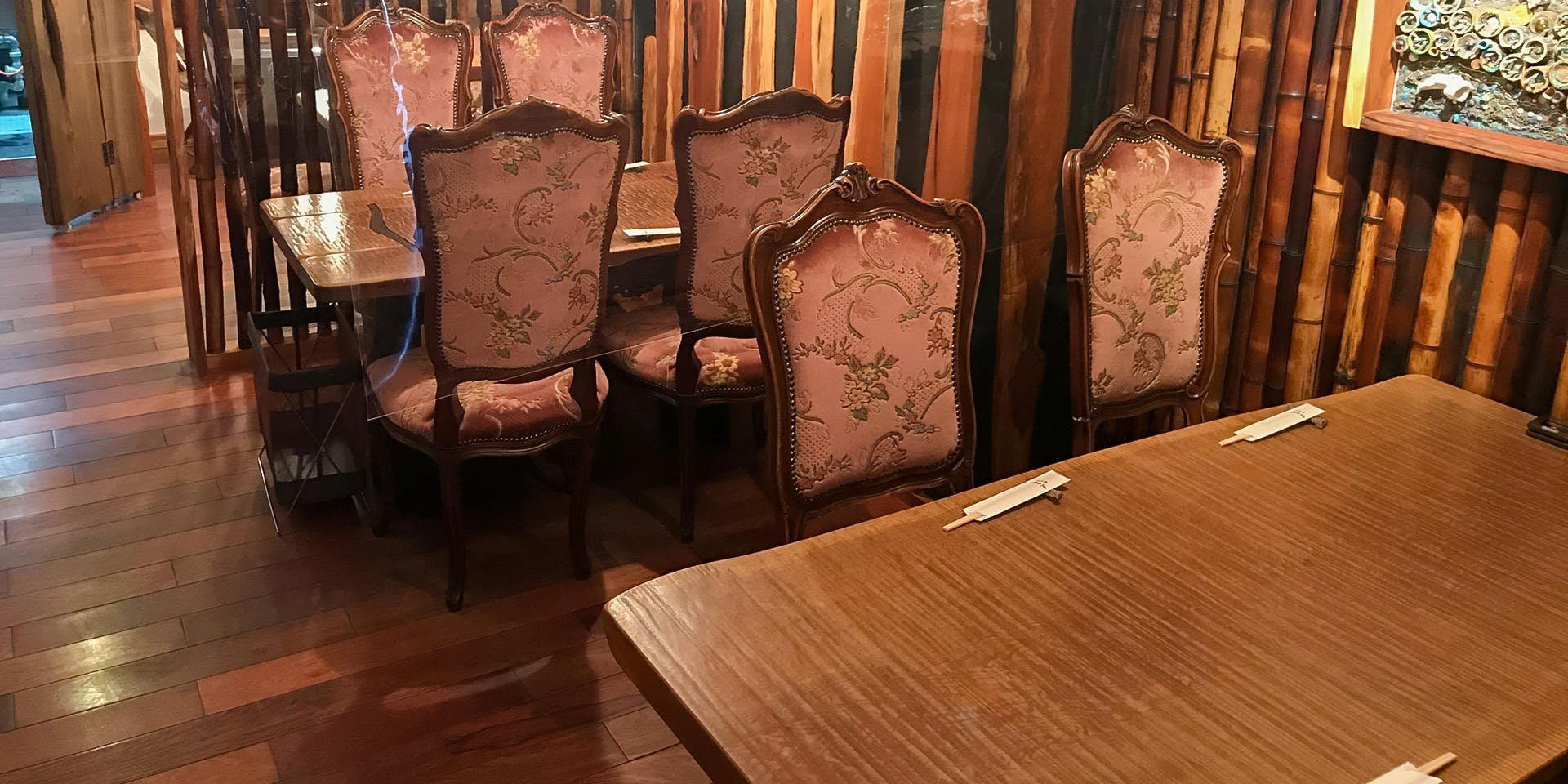
A Shimenawa Over the Door and Soba on the Table
Approach Sobadokoro Toki from Kitashinchi's network of narrow drinking streets and the first thing you register is the twisted straw rope above the entrance. A shimenawa, traditionally hung at Shinto shrines to demarcate sacred space, hangs here over a city soba-ya, framing a wooden block inscribed with the phrase Senkyaku Banrai: may customers arrive in the thousands and tens of thousands. The wish functions as both aspiration and operating policy. The doors stay open late, and the room holds a working-district energy that belongs specifically to Osaka's Kita Ward, where the salaryman economy of Dojima meets the after-dark geography of Kitashinchi.
Kitashinchi is one of Japan's most concentrated entertainment districts, a few blocks where expense-account dining and neighbourhood regulars coexist in the same tight alleyways. At this price tier, ¥ on a four-point scale, Toki operates in a register that differs sharply from the kaiseki rooms and multi-course French houses nearby. Osaka's premium dining tier includes addresses like Ayamedo and the ¥¥¥¥ kitchens of Hajime and Fujiya 1935 a few minutes' walk away in the broader Namba-to-Nakanoshima corridor. Toki makes no argument with those rooms. It occupies a different function: a Michelin Bib Gourmand recipient for 2025, recognized for quality at a price point that keeps the cover charge low while the seasonal discipline stays consistent.
Lunchtime: Soba Meets Sushi
The midday service at Toki operates in a register that evening soba-ya visits rarely deliver. Across Japan's soba tradition, lunch and dinner represent genuinely different experiences: daytime service tends toward faster pacing, simpler orders, and a food-forward clientele, while evening service opens the kitchen's full range to customers who arrive with more time and often a bottle of sake in mind. Toki leans into that structural difference rather than smoothing it over.
The lunch-specific pairing of soba accompanied by sushi is the detail most likely to catch a visitor off guard. Soba and sushi are not natural companions in most Japanese meal structures; each has its own rhythm and its own register of satisfaction. Bringing them together at midday positions Toki's lunch as something closer to a composed meal than a quick bowl, which at the ¥ tier represents a genuine value argument. Lunchtime footfall in Kitashinchi skews toward office workers from the Dojima financial district, and a dual-format set plays well for that demographic without compromising the kitchen's soba credentials.
Contrast with evening service matters here. By night, the menu expands toward sake-pairing appetizers, and the room shifts from efficient to unhurried. The sprawling menu design, which the venue's own framing describes as ranging from appetizers that accompany sake to seasonal soba dishes, suggests the kitchen is structured to serve both modes without cross-contamination. The daytime customer gets a tighter, higher-value proposition; the evening customer gets the full menu arc. Both experiences take place inside the same ¥ bracket, which makes Toki's price positioning across service periods more coherent than many comparable soba-ya in Osaka's neighbouring districts.
For a broader picture of how Osaka soba-ya vary in format and positioning, see Naniwa Okina, Shitennoji Hayauchi, Soba Takama, and Sobakiri Arabompu.
The Seasonal Calendar as Menu Architecture
Japan's soba tradition assigns considerable weight to seasonal ingredient rotation, and Toki's kitchen organizes around that calendar with specificity rather than gesture. In summer, chilled curry soba arrives decorated with vegetables, a preparation that reads as both practical, cold noodles in Osaka's humid heat, and compositionally deliberate, the curry broth providing enough weight to make the dish a meal rather than a palate cleanser. In winter, oyster soba in white miso soup addresses the cold from a different angle: the miso base supplies warmth and depth, while the oysters carry Osaka's coastal proximity into a bowl that could only exist in this part of Japan's production calendar.
The seasonal pivot between these two preparations illustrates how Toki uses the soba format as a chassis for ingredient-led cooking rather than a fixed product. This approach places it in conversation with a broader pattern across Kansai dining, where seasonal responsiveness is a baseline expectation rather than a distinguishing feature. What distinguishes Toki's version is the application of that logic at the ¥ price tier, a register where seasonal dish design often gives way to standardized menus. The 2025 Bib Gourmand recognition reflects exactly this quality-to-price argument.
For comparison, the soba tradition in Tokyo operates across a similarly segmented price range. Akasaka Sunaba and Azabukawakamian each represent the Tokyo soba continuum, where long-established houses carry a different kind of institutional weight than Osaka's more informal working-district style.
Where Toki Sits in Osaka's Price Spectrum
Osaka's recognized dining scene skews toward the upper end. The city's most decorated rooms, kaiseki houses like Naniwa Okina, the Japanese course format at Kashiwaya Osaka Senriyama and Taian, and the innovative kitchens of La Cime and Fujiya 1935, all operate at ¥¥¥ or ¥¥¥¥. Toki's ¥ positioning means it serves a different planning function for visitors who want Michelin-recognized quality without the commitment of a multi-course dinner.
| Venue | Cuisine | Price Range | Recognition | Service Format |
|---|---|---|---|---|
| Sobadokoro Toki | Soba | ¥ | Bib Gourmand 2025 | À la carte, lunch and dinner |
| Soba Takama | Soba | Not listed | EP Club listed | À la carte |
| Kashiwaya Osaka Senriyama | Japanese | ¥¥¥ | Michelin starred | Course menu |
| Taian | Kaiseki | ¥¥¥ | Michelin starred | Course menu |
| Hajime | French, Innovative | ¥¥¥¥ | Michelin starred | Tasting menu |
The gap between Toki and the starred tier is not a quality gap so much as a format difference. Bib Gourmand classification by Michelin explicitly recognizes value rather than volume of courses or price-per-head ambition. That makes Toki a practical choice for visitors who have allocated one or two evenings to Osaka's premium tier and want to fill remaining meals with recognized quality at a lower price point.
Planning a Visit
Sobadokoro Toki is located at 1 Chome-3-4 Dojima, Kita Ward, Osaka, in the Taniyasu Building 1F. The Kitashinchi area is walkable from Osaka Station and Higobashi subway station, making it direct to combine a visit with the broader Nakanoshima cultural district or Namba dining strip. The doors remain open late, which gives the venue flexibility as either a dinner destination or a late-evening stop after heavier courses elsewhere.
2 across 379 responses, a score that for a working-district soba-ya in a competitive neighbourhood represents steady, repeat-customer satisfaction rather than peak-experience outliers. Reservations are recommended, especially for peak dinner hours in Kitashinchi.
For dining elsewhere in the Kansai and broader Japan network, consider Gion Sasaki in Kyoto, akordu in Nara, Harutaka in Tokyo, Goh in Fukuoka, 1000 in Yokohama, and 6 in Okinawa.
A Lean Comparison
Comparable venues nearby, for context on price, style, and recognition.
| Venue | Cuisine | Price | Notes |
|---|---|---|---|
| Sobadokoro TokiThis venue — the venue you are viewing | Kita, Traditional Handmade Soba | $$ | Not listed |
| Hommachi Seimenjo Chukasobakobo | Chūō, Authentic Japanese Ramen | $$ | Not listed |
| Oribe | Not listed | $$$ | Nishi, French-Infused Teppanyaki & Okonomiyaki |
| Tonkatsu KATSU Hana | Chūō, Premium Regional Tonkatsu | $$$ | Not listed |
| Doshincho Washoku Zui | Not listed | $$$ | Kita, Traditional Japanese Kaiseki Omakase |
| Shunzen Kiraku | Chūō, Naniwa Kappo | $$$ | Not listed |
Recognition history
Dated appearances from independent guides and award organizations, with the underlying list record or original source where available.
Michelin Bib Gourmand
Michelin
Michelin Bib Gourmand
Michelin
Tabelog 100 #7 · No. 7
Tabelog · Tabelog 100 - Soba - WEST - 2025
Continue exploring
More in Osaka
Restaurants in Osaka
Browse all →




Bars in Osaka
Browse all →




Hotels in Osaka
Browse all →




Wineries in Osaka
Browse all →
At a Glance
- Cozy
- Classic
- Casual Hangout
- After Work
- Open Kitchen
- Sake Program
Current opening hours
- Monday
- 11:30 AM–2 PM, 6 PM–12 AM
- Tuesday
- 11:30 AM–2 PM, 6 PM–12 AM
- Wednesday
- 11:30 AM–2 PM, 6–11 PM
- Thursday
- 11:30 AM–2 PM, 6 PM–1 AM
- Friday
- 11:30 AM–2 PM, 6 PM–1 AM
- Saturday
- Closed
- Sunday
- Closed
Hours can change for holidays and private events. Last verified .
Warm wood tones and subtle lighting create a cozy, inviting atmosphere.