Sānsān
On a quiet stretch of the Hang in Rotterdam's city centre, Sānsān occupies a position that rewards attention. The name, a soft tripling of the number three, hints at a considered Asian-inflected sensibility in a city whose dining scene has long defaulted to French technique. For those tracking where Rotterdam's mid-to-upper register is heading, Sānsān is a reference point worth bookmarking.
Pearl is the En Primeur Club membership app — saves, bookings, and concierge access live there. Same editors, same standards.
- Address
- Hang 33, 3011 GG Rotterdam, Netherlands
- Phone
- +31104115681
- Website
- sansan33.nl
- Directions
- Get directions
 Saves & bookings on Pearl
Rotterdam's Dining Scene and Where Sānsān Sits Within It
Rotterdam's restaurant culture has spent the better part of two decades reorganising itself around a small cluster of French-technique houses at the top of the market. Parkheuvel, FG - François Geurds, and Fred collectively anchor the city's Michelin-decorated tier, each operating at the €€€€ price point and broadly fluent in the language of modern European fine dining. Below that summit, a second group of addresses, places like Amarone and Fitzgerald, work the creative Modern French register with slightly more room to experiment. What has been slower to arrive in Rotterdam, compared to Amsterdam or even Nijmegen, is a kitchen that takes Asian culinary grammar as its primary structural logic rather than its decorative accent. Sānsān, at Hang 33, addresses that gap.
The address itself is a mild provocation. The Hang is a short pedestrian street in central Rotterdam, close enough to the Blaak area to draw a natural footfall but not loud about it. In a city where high-end dining often announces itself through waterfront positioning or parkside terraces, a restaurant on a compact inner-city street signals a different kind of confidence: the assumption that the work inside is sufficient reason to arrive.
The Cultural Grammar Behind the Name
Across East and Southeast Asia, the repetition of a character or syllable carries specific weight. In Mandarin and Japanese contexts, tripling a word or number intensifies it, softens it, or marks it as a term of endearment depending on register. The name Sānsān holds all of those resonances simultaneously: three repeated, the number carrying connotations of balance and completeness in Chinese numerological tradition. It is a quiet signal about the kind of cultural fluency the restaurant is operating with, not the surface-level pan-Asian shorthand that became common in European bistros through the 2010s, but something more structurally rooted.
That distinction matters in the Dutch context. The Netherlands has a long, complicated relationship with Asian cuisines, shaped by its colonial history in Indonesia and the subsequent generations of Indonesian, Chinese, and Surinamese communities who built restaurant cultures in every major Dutch city. Rotterdam in particular, with its port history and dense migrant communities, has a serious depth of everyday Asian cooking. What tends to be rarer is the fine-dining translation of that depth, the kind of project that brings Asian culinary logic into a room where the service tempo, the wine list architecture, and the spatial design are operating at the same register as the food. That is the more demanding version of the proposition, and it is the one that addresses like Atomix in New York City or Ciel Bleu in Amsterdam have shown is achievable at the highest level.
Approaching the Room
The structural assignment here is atmospheric, and it is worth being precise about what that means in this context. Walking the Hang is a different experience from approaching the Maas waterfront or the formal avenues around Museumpark. The scale is human, the facades close together, and the ambient noise lower than central Rotterdam's main arteries. A restaurant on this street benefits from that compression: you arrive already slightly decelerated, which is the correct mental state for a meal that expects you to pay attention.
What the address and name together suggest is a room that does not rely on dramatic spatial gestures. The signal is inward-facing rather than outward-performing, which places Sānsān in a cohort of European restaurants, across cities from Copenhagen to Lyon, that have moved away from the grand-room model toward something more compressed and deliberate.
Where Sānsān Fits in the Dutch Fine Dining Network
The Dutch restaurant scene at the serious end is more geographically distributed than its international reputation suggests. De Librije in Zwolle and 't Nonnetje in Harderwijk demonstrate that decorated cooking is not concentrated in the Randstad alone. De Nieuwe Winkel in Nijmegen has built a credible reputation around plant-forward technique. Brut172 in Reijmerstok, De Bokkedoorns in Overveen, De Groene Lantaarn in Staphorst, De Lindehof in Nuenen, and De Lindenhof in Giethoorn each represent the country's appetite for serious cooking outside its major cities. Aan de Poel in Amstelveen sits close enough to Amsterdam to draw from that city's international visitor base. Within that national picture, Rotterdam has historically punched below its economic weight in fine dining relative to Amsterdam. That gap has been narrowing, and addresses like Sānsān, occupying territory that Rotterdam's existing decorated houses have not claimed, are part of what is closing it.
For readers tracking the Dutch scene systematically, the comparison is instructive. The leading end in Rotterdam currently defaults to European frameworks. A kitchen working from Asian cultural roots, at the address and seriousness level that Sānsān signals, is doing something the city's existing decorated roster does not cover. That positional distinctiveness, rather than any specific award or star count, is the meaningful data point at this stage. See our full Rotterdam restaurants guide for a broader map of where the city's dining energy is currently concentrated.
Planning a Visit
Sānsān is located at Hang 33 in the 3011 GG postcode, walkable from Rotterdam Centraal and within easy reach of the Blaak metro and tram interchange. For a restaurant in this positioning bracket, a reservation is the expected default: kitchens operating at this register typically manage covers tightly, and arriving without a booking is a meaningful risk. Those travelling from Amsterdam might usefully combine a visit with other south Holland dining, since the intercity train makes same-day returns direct.
How Sānsān Rotterdam compares with similar nearby venues.
| Venue | Cuisine | Price |
|---|---|---|
| Asian Glories | Chinese | €€ |
| Amarone | Modern French | €€€ |
| Umami by Han | Asian | € |
Continue exploring
More in Rotterdam
Restaurants in Rotterdam
Browse all →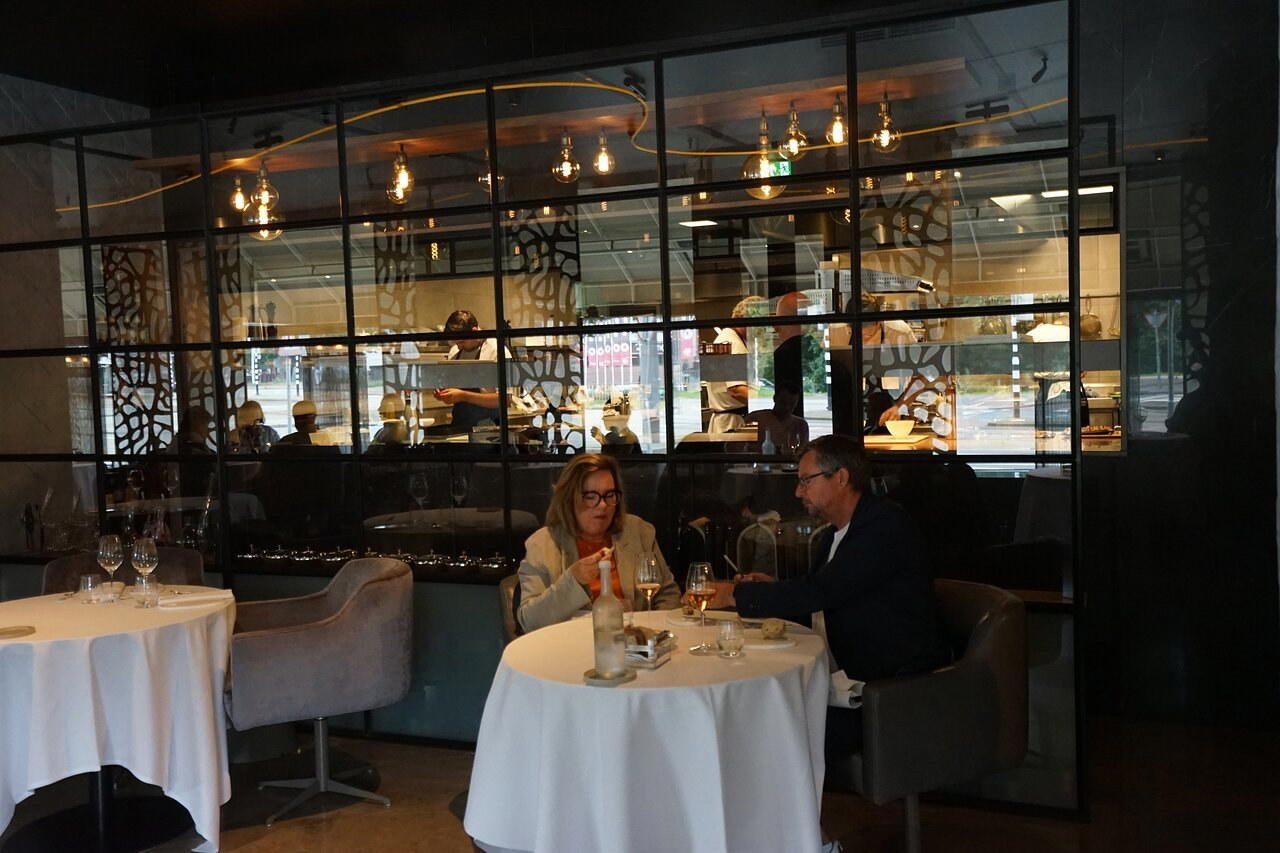
Bars in Rotterdam
Browse all →
Hotels in Rotterdam
Browse all →
Wineries in Rotterdam
Browse all →
At a Glance
- Cozy
- Group Dining
- Casual Hangout
- Open Kitchen
- Beer Program
Current opening hours
- Monday
- Closed
- Tuesday
- 12–10 PM
- Wednesday
- 12–10 PM
- Thursday
- 12–10 PM
- Friday
- 12–10 PM
- Saturday
- 12–10 PM
- Sunday
- 12–10 PM
Hours can change for holidays and private events. Last verified .
Cozy atmosphere in a quiet lane off the city center with nice seating for sharing dishes.
Know Before You Go
- Getting there
- Hang 33, 3011 GG Rotterdam, Netherlands