

1 Michelin Star · Tabelog 100 #73
Our verdict
Holding a Michelin star since 2024, SINAE occupies the upper tier of Osaka's French dining scene with a philosophy encoded in its name: simple, natural, essence. The kitchen treats domestic seasonal produce as primary material, using classical technique with a restraint that lets the ingredients speak. Pure-white vessels and a beige dining room in Fushimimachi provide the quiet frame for that precision.

Pearl is the En Primeur Club membership app, where members save venues, book tables and use the concierge.
The menu
What to order
- Shrimp bisque
- Venison with cep mushrooms
- Omi beef tartare
Where Osaka's French Scene Practises Restraint
Osaka's French restaurants have spent the past decade sorting themselves into two readable camps. At the leading end, kitchens like La Cime and Différence work in the ¥¥¥¥ bracket with tasting menus built around European technique pushed into overtly contemporary territory. A smaller, quieter cluster operates at ¥¥¥ and pursues a different register entirely: seasonal Japanese produce read through French grammar, with the edit doing more work than the flourish. SINAE belongs to that second group. Its name is an acronym, simple, natural, essence, and the kitchen treats those words as a discipline rather than a marketing position.
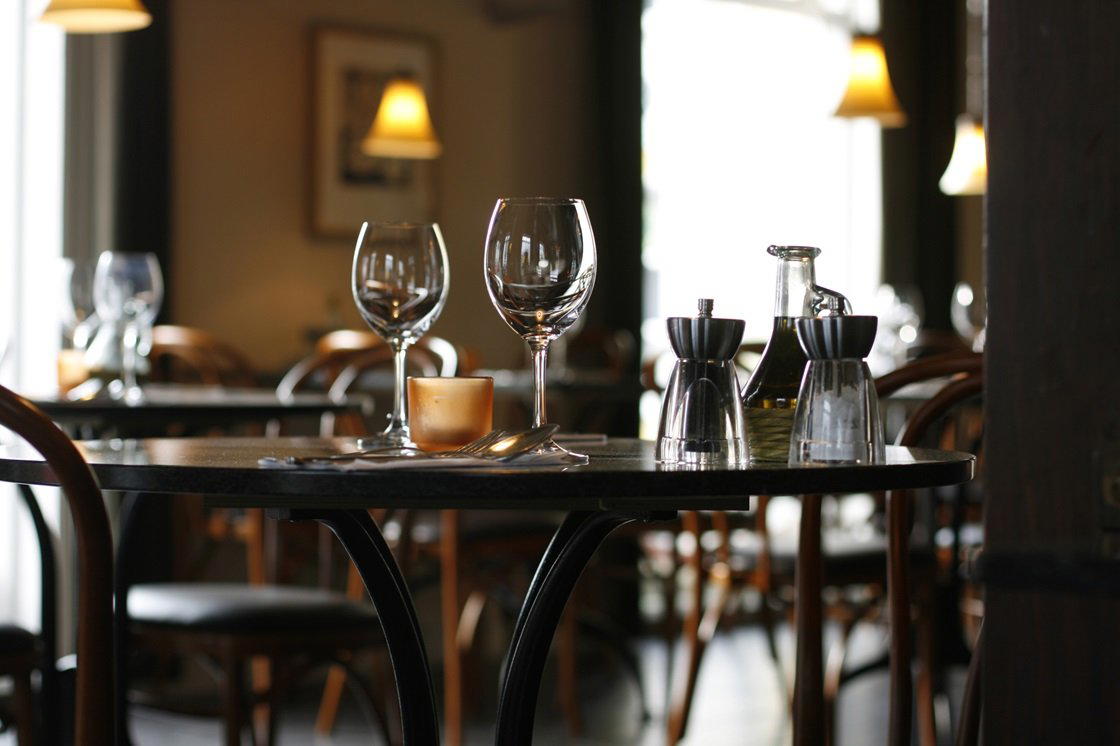
The room in Fushimimachi, on the 2nd and 3rd floors of the Kusunoki Building, reinforces that logic before a plate arrives. Beige is the dominant note. The walls, the table surfaces, and the general light all sit in the same warm, muted register, and the effect is deliberate: the dining room asks nothing of you, so that what arrives on the table can ask everything. The vessels are pure white, chosen so that the food's own colours read without competition from the ceramic. It is a design approach that shares a philosophy with the cooking, strip back, reveal, trust the material.
The French-Japanese Tension That Defines the Menu
The New French conversation in Japan runs along a specific fault line. Classical French training, with its repertoire of reductions, emulsions, and structural precision, meets a Japanese ingredient culture built around seasonality, restraint, and respect for the unmodified. The two traditions are not naturally at odds, both value technique, but they pull differently on the question of intervention. French classicism tends toward transformation; Japanese ingredient philosophy tends toward revelation. How a kitchen resolves that tension is what gives it a distinct identity.
At SINAE, the resolution favours the Japanese side of the argument. Domestic seasonal ingredients are the primary material, and preparation is described, in the awards data the kitchen has put into circulation, as delicate, a word that signals an approach where the cook's job is to draw out rather than to overlay. Aromas and flavours are preserved rather than concentrated into something new. That is not a naive position; it requires more precision, not less, to hold a delicate flavour at its peak than to reduce it into something louder. The Michelin inspectors, who awarded the restaurant a star in 2024, appear to have read that register accurately.
This positions SINAE differently from the ¥¥¥¥ innovators operating elsewhere in Osaka. LE PONT DE CIEL and nent work in formats where the chef's intervention is the visible subject. SINAE's format makes the ingredient the subject. Neither is a more correct reading of what French cooking should be in Japan; they are different bets about where the interest lies. SINAE's bet is on material over transformation, and a 2024 Michelin star suggests the argument is convincing at least a significant audience.
For a broader map of how this tension plays out across Japanese cities, the comparison set extends well beyond Osaka. Sézanne in Tokyo sits in a peer conversation about how French classical rigour translates into a Tokyo context, while akordu in Nara works with regional Japanese produce through a European technical lens. Each represents a different solution to the same underlying question about authority and authorship in cross-cultural fine dining.
Fushimimachi and Chuo Ward: The Neighbourhood Context
Chuo Ward is Osaka's central business and commercial core, and Fushimimachi specifically is one of its older commercial streets, with a character that sits between financial district utility and low-key cultural depth. It is not a neighbourhood that draws visitors for its own sake, which means the restaurants that hold serious reputations here are drawing on merit rather than foot traffic. A ¥¥¥ French table in this district is competing primarily on the quality of the experience itself rather than on the ambient energy of the surrounding block.
That context matters for how to approach the booking. Fushimimachi addresses tend to attract diners who have made a deliberate choice to eat there, which means the room skews toward a clientele that is either local and repeat-visiting or visiting Osaka specifically for its restaurant culture. Both groups tend to book well ahead.
How SINAE Sits Against Its Osaka Peers
The most useful comparison set for SINAE is not the city's ¥¥¥¥ innovators but the mid-high bracket French tables, and in that bracket, the competition is less about creative ambition than about execution consistency, sourcing credibility, and the quality of the room. La Bécasse offers another data point in Osaka's French tradition, and together these restaurants form a layer of the city's dining culture that sits below the international-attention tier but well above accessible bistro French.
Across Japan more broadly, the question of how to cook French food with Japanese ingredients is being answered in ways that range from the overtly theatrical to the nearly invisible. Harutaka in Tokyo and Gion Sasaki in Kyoto approach their respective traditions with similar levels of material seriousness, even in different cuisines. Goh in Fukuoka and 1000 in Yokohama extend the picture further, showing how regional Japanese cities are each developing distinct answers to similar fine-dining questions. Even further afield, 6 in Okinawa demonstrates that the French-Japanese conversation is not confined to the main island's major cities. For a European reference point on classical French at the high end, Hotel de Ville Crissier in Crissier provides the benchmark against which training lineages are often measured.
Planning Comparison: SINAE and Osaka French Peers
| Venue | Price Tier | Cuisine Approach | Michelin Recognition |
|---|---|---|---|
| SINAE | ¥¥¥ | French, seasonal domestic produce, restraint-led | 1 Star (2024) |
| La Cime | ¥¥¥¥ | French, contemporary European | Multiple stars |
| La Bécasse | French tradition | Recognised | |
| HAJIME | ¥¥¥¥ | French, Innovative | Three Stars |
| Fujiya 1935 | ¥¥¥¥ | Innovative | Three Stars |
Planning Your Visit
SINAE is located at 2 Chome-4-12 Fushimimachi, Chuo Ward, Osaka, on the 2nd and 3rd floors of the Kusunoki Building. The ¥¥¥ price positioning puts it at a more approachable level than the city's ¥¥¥¥ tasting-menu restaurants, though it remains firmly in the premium tier. With a 2024 Michelin star now attached to the name, forward booking is the sensible approach; the small scale of the current review record suggests availability has not yet become as constrained as it likely will as recognition spreads. For a broader picture of where SINAE sits in the city's overall dining offer, the full Osaka restaurants guide maps the complete range. Osaka's broader hospitality picture, including accommodation options near Chuo Ward, is covered in our Osaka hotels guide. Supplementary reading for a full visit: Osaka bars, Osaka wineries, and Osaka experiences complete the picture.
Frequently asked questions
What do people recommend at SINAE?
SINAE holds a Michelin star awarded in 2024 for a French menu built around seasonal Japanese domestic produce. The kitchen's defining approach is preparation that preserves the natural aromas and flavours of each ingredient rather than transforming them through layering or reduction. Pure-white vessels are used specifically to let the food's own colour read clearly. Given the restraint-led ethos, the dishes that draw the most attention from the restaurant's audience are those where the seasonal ingredient selection is at its sharpest, which, in practical terms, means the menu shifts with what Japanese domestic sourcing can deliver at any given time of year.
Is SINAE reservation-only?
At a Michelin-starred French table in Osaka's Chuo Ward priced at ¥¥¥, walk-in availability is not a realistic expectation. SINAE received its first Michelin star in 2024, and recognition at that level typically tightens availability considerably within the months following the announcement.
What is SINAE known for?
SINAE is recognised within Osaka's French dining scene for a philosophy its name spells out directly: simple, natural, essence. The Michelin star awarded in 2024 provides the formal credential, but the kitchen's identity rests on a specific position within the French-Japanese fine-dining conversation, one that treats domestic seasonal ingredients as primary and French technique as the frame rather than the subject. The beige dining room and white ceramic presentation are extensions of the same editorial logic: everything is arranged to make the ingredient, not the production, the focus of the meal.
In Context: Similar Options
A small set of peers for context, based on recorded venue fields.
| Venue | Cuisine | Price | Awards | Notes |
|---|---|---|---|---|
| SINAEThis venue (the venue you are viewing) | Modern French with Japanese Influences | $150–200 | 1 Michelin Star · Tabelog 100 #73 | Not listed |
| HAJIME | Avant-Garde Japanese Fine Dining | $300–500 | 3 Michelin Stars · World's 50 Best #83 | French, Innovative |
| La Cime | Modern French with Japanese Ingredients | $150–200 | 2 Michelin Stars · World's 50 Best #13 | French |
| Kashiwaya Osaka Senriyama | Seasonal Kaiseki Omakase | $200–300 | 3 Michelin Stars · La Liste Top Restaurants | Japanese |
| Taian | Traditional Japanese Kaiseki Omakase | $150–200 | 3 Michelin Stars · La Liste Top Restaurants | Kaiseki, Japanese |
| Fujiya 1935 | Modern Japanese with European influences | $100–150 | 2 Michelin Stars · La Liste Top Restaurants | Innovative |
Recognition history
Dated appearances from independent guides and award organizations, with the underlying list record or original source where available.
Michelin 1 Star
Michelin
Tabelog 100 #73 · No. 73
Tabelog · Tabelog 100 - French - WEST - 2025
Full recognition history (3 entries)
Michelin 1 Star
Michelin
Continue exploring
More in Osaka
Restaurants in Osaka
All restaurants in Osaka →


Bars in Osaka
All bars in Osaka →


Hotels in Osaka
All hotels in Osaka →


Wineries in Osaka
Browse all →
Details
- Intimate
- Elegant
- Cozy
- Sophisticated
- Modern
- Date Night
- Special Occasion
- Celebration
- Open Kitchen
- Sake Program
- Local Sourcing
- Tasting Menu
Current opening hours
- Monday
- Closed
- Tuesday
- 5:30–10:30 PM
- Wednesday
- 12–2:30 PM, 5:30–10:30 PM
- Thursday
- 5:30–10:30 PM
- Friday
- 5:30–10:30 PM
- Saturday
- 12–2:30 PM, 5:30–10:30 PM
- Sunday
- 12–2:30 PM
Hours can change for holidays and private events. Hours as of .
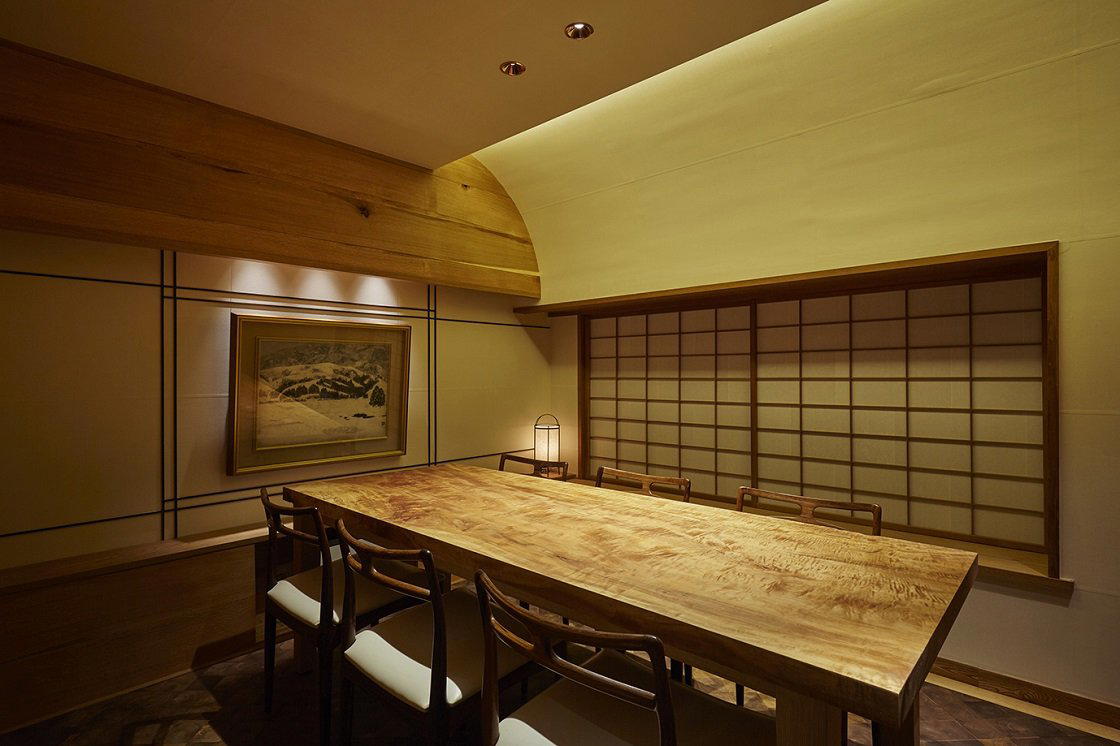
Cozy and elegant salon-like space with modern Japanese aesthetics, warm lighting, and intimate table seating.