
Chisou Sottakuito (馳走啐啄一十) gives Hiroshima a serious kaiseki address built around seasonality, sequence, and restraint rather than spectacle. Chef Hisama Hirano’s restaurant is ranked No. 150 on the 2026 OAD Top Restaurants in Japan list, placing it in a national conversation that often overlooks Hiroshima beyond oysters and okonomiyaki.
Pearl is the En Primeur Club membership app — saves, bookings, and concierge access live there. Same editors, same standards.
- Address
- Japan, 〒730-0043 Hiroshima, 広島市中区Naka Ward, Fujimicho, 5−1 随木ビル1階, Hiroshima, Chugoku, Japan
- Phone
- +81 82-249-0957
 Saves & bookings on Pearl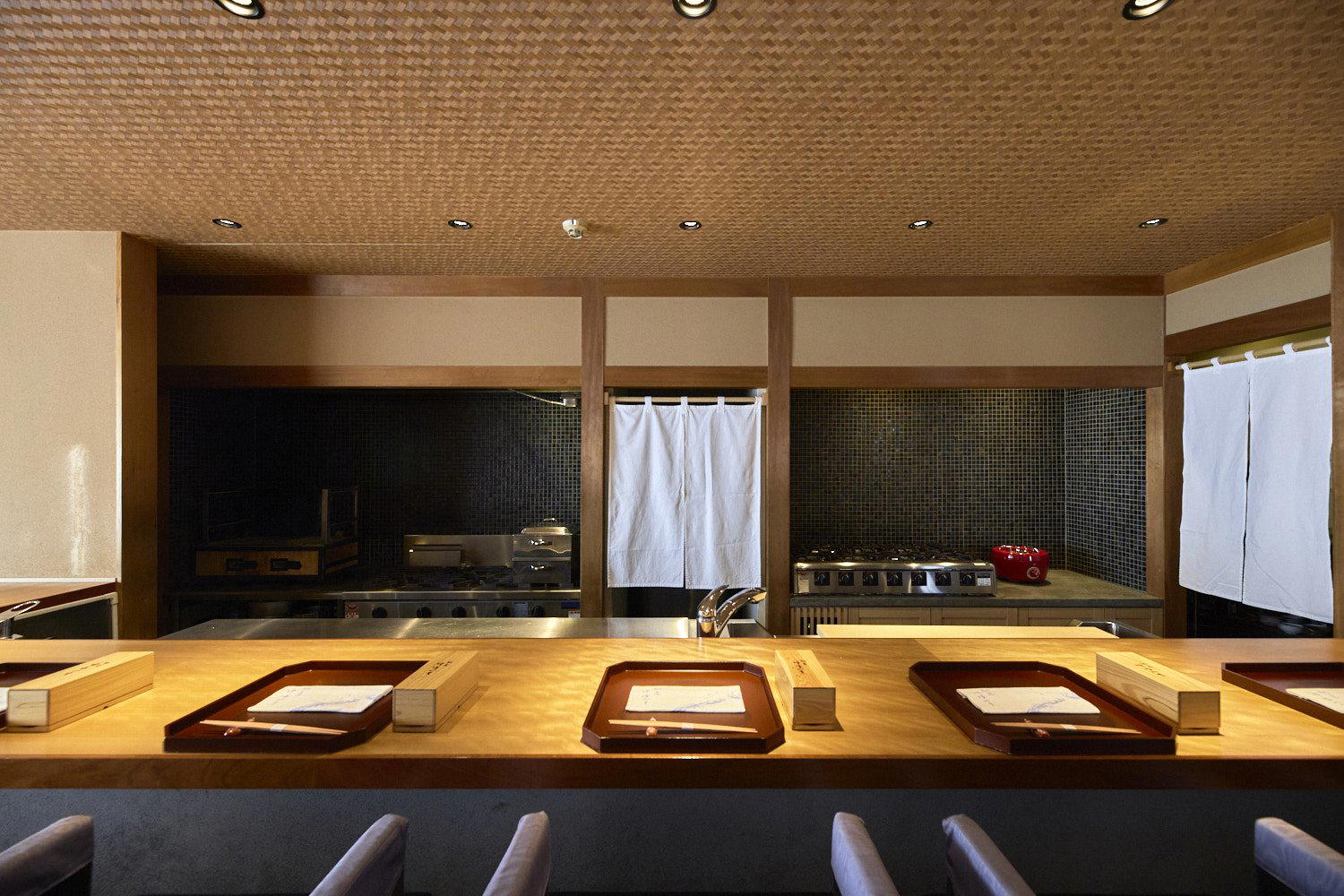
Fujimicho sits away from Hiroshima’s riverfront postcard angles, in the denser middle of Naka Ward where small buildings, tight street frontage, and ground-floor restaurants shape the evening rhythm. In that setting, kaiseki reads differently from the grand ryotei image of Kyoto. The form is still formal: a sequence of small courses, seasonal references, controlled pacing, and an aesthetic that values proportion as much as flavor. But in Hiroshima, the tradition has to share the city’s table with Setouchi seafood, local sake culture, okonomiyaki counters, hotel dining rooms, and casual post-work restaurants. Chisou Sottakuito (馳走啐啄一十) matters because it gives that spectrum a serious, low-noise kaiseki point of reference.
Kaiseki is often misunderstood as a parade of luxury ingredients. At its better end, it is closer to editing: what to leave bare, what to warm, what to cool, when to let a broth carry the course, when to let rice close the argument. The Japanese term behind the restaurant’s name, sottaku, refers to the coordinated moment when a chick pecks from inside the egg and the parent bird taps from outside. In dining terms, it suggests timing rather than excess. That is the useful way to read this address: less as a trophy meal and more as a study in sequence, season, and restraint.
Kaiseki in Hiroshima has to speak softly against louder local signatures
Hiroshima’s food identity is usually reduced to two poles: oysters and okonomiyaki. Both are valid, but they flatten the city’s broader dining culture. The Seto Inland Sea gives chefs a different seasonal vocabulary from landlocked interior Japan, while the city’s drinking culture pulls serious restaurants into conversation with sake, grilled fish, and counter formats. Kaiseki here does not need to imitate Kyoto to be persuasive. Its strength comes from using the grammar of multi-course Japanese dining to make local product feel precise rather than folkloric.
That distinction matters for travelers planning one serious meal in Hiroshima. A kaiseki dinner asks for attention across the whole arc, not a single dish that photographs neatly. The first courses usually establish season and temperature; the middle section gives weight to fish, simmered preparations, or grilled work; the final stretch resolves around rice, soup, and sweets. Even without listing a menu, the format tells the reader what kind of evening to expect: measured, quiet, and built on cumulative detail.
Recognition helps separate serious small restaurants from the mass of polite dining rooms in regional Japanese cities. Chisou Sottakuito is ranked No. 150 on the 2026 OAD Top Restaurants in Japan list, with Hisama Hirano named as chef. OAD is not Michelin, and it should not be read as the same kind of signal, but it is a useful marker for restaurants that appeal to experienced diners tracking Japan beyond the usual Tokyo-Kyoto-Osaka route. For Hiroshima, that national placement is meaningful because it puts the city’s kaiseki conversation into a broader Japanese frame.
The meal is about cadence, not theater
The stronger kaiseki rooms in Japan tend to resist over-explanation. The craft is in the order of the meal, the seasonal register, the calibration of temperature, and the transition from one vessel or texture to the next. That makes this kind of restaurant poorly served by breathless language. If the cooking is working, the guest notices balance before technique. A course should not need to announce itself as ambitious; it should make the following course feel inevitable.
Chef Hisama Hirano’s name is attached to the restaurant’s national OAD listing, which gives the address a clear authorial anchor without turning the meal into a personality story. That is the right scale for kaiseki criticism. Chef biography matters only insofar as it explains discipline, consistency, and point of view. The dining tradition itself remains the larger subject: a seasonal sequence in which each course depends on the one before it.
Hiroshima also changes the stakes. In Tokyo, serious kaiseki competes against an enormous luxury dining market. In Kyoto, it competes against history and ceremony. In Hiroshima, it has a different role: it offers a quieter counterweight to the city’s casual food fame. That makes the restaurant useful for travelers who want one meal that slows the itinerary down and frames the region through Japanese course structure rather than through a single local specialty.
How to place it in a Hiroshima itinerary
For readers building a Hiroshima dining map, this is the formal kaiseki stop rather than the everyday local-color stop. The same trip can hold a broader spread: Nakashima for another serious Hiroshima restaurant reference, Akai (Creative Cuisine) for a different contemporary register, ANDERSEN for the city’s European-inflected bakery culture, Bishu Bikou Hamai for sake-led dining context, and Butter Cake no Nagasaki Do for a local sweet that belongs to a different, more casual Hiroshima rhythm. The point is not to rank them against one another; it is to understand how many registers the city supports.
Travelers continuing through Japan can also use the category lens rather than chase identical experiences. Kaiseki in Tokyo, for instance, operates in a larger and more competitive luxury market, with addresses such as Ajihiro, Kaiseki in Tokyo and Akasaka Asada, Kaiseki in Tokyo showing how the form changes under metropolitan pressure. More casual or category-specific stops elsewhere, including -Grilled beef Sukiyaki- KAMAKURA TANUKIAN 鎌倉 たぬき庵 in Kamakura. 鮪と炭火焼き うお炭 秋葉原店 in Tokyo.cafe in Osaka.know in Kumamoto, (Shoku) Vietnam in Kawasaki, and [Curry Senmon Ten] Maruyama Kyoju. in Sapporo, underline the same lesson: Japan rewards diners who choose by format, not by fame alone.
For the wider trip, use Our full Hiroshima restaurants guide to balance formal dining with neighborhood meals, then layer in Our full Hiroshima hotels guide, Our full Hiroshima bars guide, Our full Hiroshima wineries guide, and Our full Hiroshima experiences guide. Chisou Sottakuito is the choice when the evening should be quiet, seasonal, and structured, with the city seen through kaiseki’s disciplined lens rather than through a louder signature dish.
Comparable venues nearby, for context on price, style, and recognition.
| Venue | Cuisine | Price | Notes |
|---|---|---|---|
| Chisou Sottakuito (馳走啐啄一十)This venue — the venue you are viewing | Kaiseki | $$$$ | Not listed |
| 馳走啐啄一十 | Seasonal Kaiseki Omakase | $$$$ | Naka |
| Teppanyaki Atago | Modern Japanese Teppanyaki & Wagyu | $$$$ | Naka |
| Takanobashi Kiyotan | Traditional Japanese Izakaya with Omakase | $$$ | Naka |
| Tenko Honten | Traditional Edomae Tempura | $$$$ | Naka |
| Shusai Takenoshita | Traditional Japanese Izakaya & Seafood | $$$ | Naka |
Recognition history
Dated appearances from independent guides and award organizations, with the underlying list record or original source where available.
Opinionated About Dining Top Restaurants in Japan Ranked #150
Opinionated About Dining
Continue exploring
More in Hiroshima
Restaurants in Hiroshima
Browse all →
Bars in Hiroshima
Browse all →
At a Glance
- Elegant
- Intimate
- Sophisticated
- Quiet
- Date Night
- Business Dinner
- Special Occasion
- Solo
- Chefs Counter
- Standalone
- Sake Program
- Local Sourcing
A calm, refined counter-dining atmosphere that feels intimate and quietly upscale, with an emphasis on seasonal Japanese craftsmanship.