Google: 3.7 · 534 reviews
Sessonan

A Tabelog Bronze Award-winning French restaurant in rural Ibaraki, Sessonan sits at Tabelog 3.95 with 105 Google reviews averaging 4.3 — numbers that signal something serious is happening well outside Japan's metropolitan dining circuit. The address alone, a quiet corner of Hitachiomiya, sets expectations: this is French cooking shaped by its agricultural surroundings, not by proximity to Michelin inspectors.
 Discover on Pearl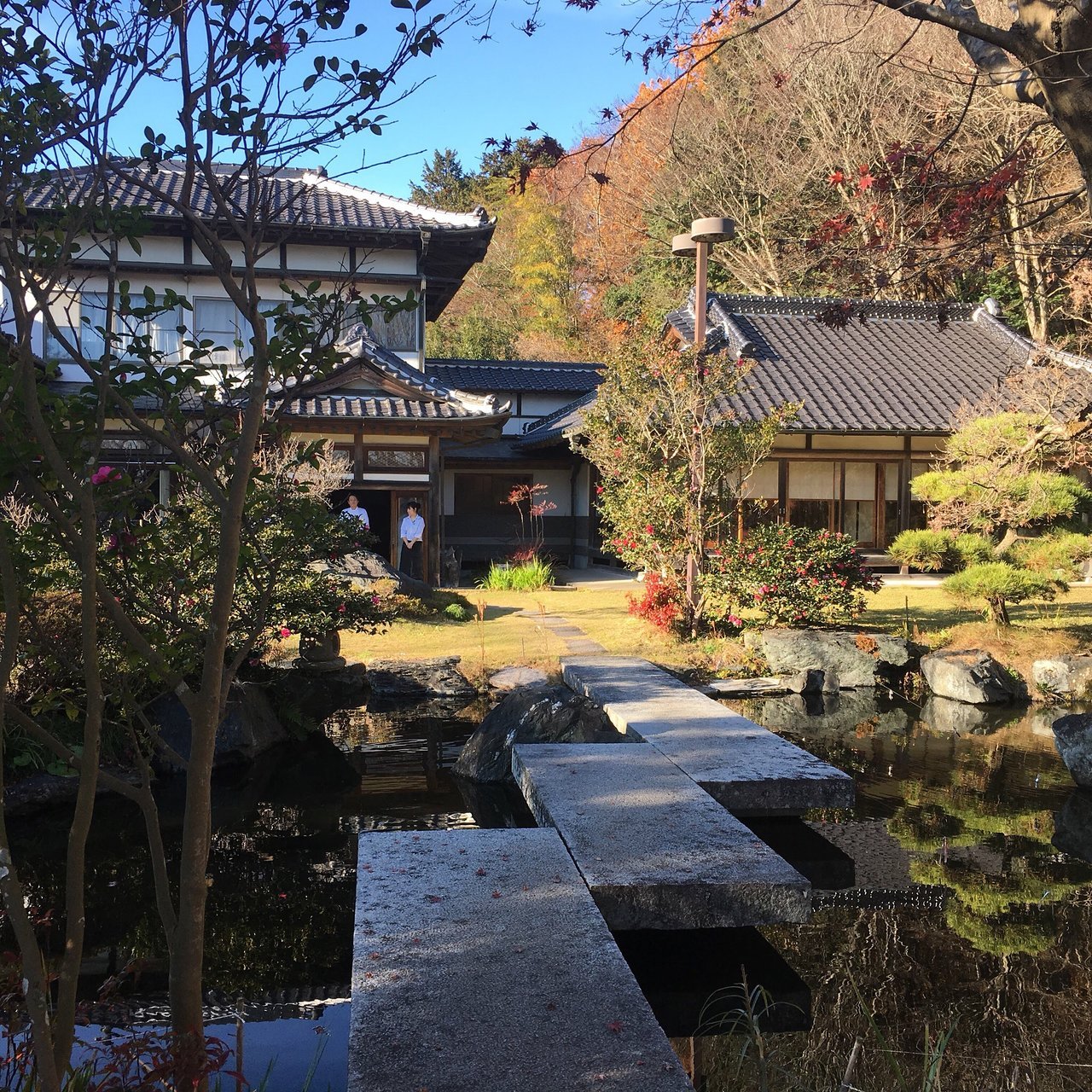
French Cooking at the Edge of Ibaraki's Farmland
The road into Hitachiomiya doesn't prepare you for a French restaurant. Ibaraki Prefecture's interior is agricultural territory — rice paddies, vegetable plots, the kind of landscape where the horizon is wide and the nearest convenience store is a five-minute drive. Sessonan sits at 150-1 Shimo Murata inside this rural fabric, and that address is not incidental to the cooking. In Japan's provinces, the French restaurant that survives and earns a Tabelog Bronze Award with a score of 3.95 does so because it has found a logic for being exactly where it is, drawing from the ingredients around it rather than importing a metropolitan idiom into unfamiliar terrain.
This is a pattern worth understanding before you arrive. Japan's regional French scene has, over the past two decades, developed a second tier of serious practitioners working outside Tokyo, Osaka, and Kyoto. Restaurants like akordu in Nara and affetto akita in Akita have demonstrated that award-level French cooking in Japan is no longer confined to major urban corridors. Sessonan belongs to that regional cohort, with a Tabelog Bronze for 2025 placing it alongside properties whose scores typically sit in a narrow band between 3.85 and 4.10 — competitive enough to draw guests from Mito, Utsunomiya, and occasionally Tokyo, while operating at a remove from the capital's pricing and pace.
The Sourcing Argument
Ibaraki is one of Japan's most productive agricultural prefectures, ranking consistently among the leading producers of vegetables including natto soybeans, lotus root, peppers, and a broad range of leafy crops. That agricultural density is the premise on which a French kitchen in Hitachiomiya can make a sourcing argument that a Tokyo restaurant , however well-resourced , cannot replicate with the same directness. Proximity to producers compresses the supply chain: what grows in the valley to the north or the fields along the Naka River basin can arrive at the kitchen the same morning it was harvested, without passing through a Tokyo wholesale market or a refrigerated logistics chain.
This matters in French cooking because classical French technique has always been calibrated around the quality of primary ingredients. The stocks, the reductions, the butter-based sauces , these processes do not disguise inferior produce; they amplify whatever the ingredient brings to the pan. A restaurant positioned in Ibaraki's agricultural interior, with the relationships and sourcing discipline to use that proximity well, is operating with a structural advantage that its urban peers cannot buy at any price point. For guests coming from outside the region, the sourcing story is itself part of the meal's context, in the same way that visiting Aji Arai in Oita frames the meal against Kyushu's fishing culture, or a dinner at Goh in Fukuoka gains meaning from that city's relationship with northern Kyushu's produce.
Where Sessonan Sits in the Broader Picture
A Tabelog Bronze Award at 3.95 places Sessonan in a recognisable tier of Japanese dining. For context, the scores that define Japan's most decorated French restaurants , places like HAJIME in Osaka, which holds three Michelin stars alongside a Tabelog score in the 4.5 range , represent the category ceiling. Sessonan is not in that bracket, nor is it trying to be. Its score aligns it with serious regional French tables where the cooking is technically proficient, the sourcing is considered, and the dining experience is calibrated for a local audience with some destination visitors mixed in.
The Google rating of 4.3 across 105 reviews adds a second data point worth reading carefully. A score that high, over that many reviews, in a city the size of Hitachiomiya, implies that the restaurant is performing consistently for a mixed audience of regulars and first-timers. In Tokyo or Osaka, 105 Google reviews might represent a slow month. In Hitachiomiya, it represents a sustained reputation built over time, mostly through word of mouth rather than press coverage or social media amplification. That's a different kind of validation than you get from a restaurant in a major city that cycles through high volumes and receives review traffic by default.
For comparison, the French restaurants in Japan that operate at the highest level of metropolitan recognition , such as HAJIME or the progressive Japanese-French hybrids at places like 1000 in Yokohama , are benchmarked against an international peer set that includes places like Le Bernardin in New York City or Atomix. Sessonan operates in a different register entirely: it is a regional French table whose reference points are local, seasonal, and agricultural rather than metropolitan and international.
Planning a Visit
Hitachiomiya is accessible from Tokyo via the Suigun Line through Mito, a journey of roughly two to two-and-a-half hours depending on connections. The city is not a standard day-trip destination from the capital, which means most visitors combine a meal at Sessonan with at least one night in the area. For accommodation options in the region, see our full Hitachiomiya hotels guide. If you're building a wider itinerary around the visit, our full Hitachiomiya restaurants guide covers the broader dining picture, and our experiences guide covers the prefecture's cultural and natural draws, which include the Fukuroda Falls and the Naka River valley.
Sessonan is closed on Mondays, the second and third Tuesdays of each month, and observes summer, winter, and year-end holiday closures. That irregular Tuesday closure is worth checking before you travel, since it's easy to overlook and a trip built around a specific date could be disrupted. Booking ahead is advisable given the restaurant's limited size and the distance most guests travel to reach it. There is no published phone number or website in currently available data, so contact and reservation arrangements are leading confirmed through local concierge services or platforms like Tabelog directly.
Guests exploring comparable French cooking in rural or regional Japan may want to track akordu in Nara, which applies a similarly place-rooted logic to its menu, or consider the contrast offered by 6 in Okinawa, where the regional ingredient story is built around a completely different agricultural and marine environment. For further reading on Japan's dining circuit beyond the major cities, our guides covering Ajidocoro in Yubari District, Abon in Ashiya, and Gion Sasaki in Kyoto map the spectrum of serious Japanese restaurant cooking from regional to metropolitan. You can also find broader context in Harutaka in Tokyo for the capital's premium end, and our Hitachiomiya bars guide and wineries guide for what else the area offers around the table.
Comparison Snapshot
These are the closest comparables we have in our database for quick context.
| Venue | Cuisine | Price | Awards | Notes |
|---|---|---|---|---|
| Sessonan | Tabelog Bronze Award 2025 Score: 3.95 Cuisine: French / Ibaraki Hours: ■Closed o… | This venue | ||
| Harutaka | Sushi | ¥¥¥¥ | Michelin 3 Star | Sushi, ¥¥¥¥ |
| RyuGin | Kaiseki, Japanese | ¥¥¥¥ | Michelin 3 Star | Kaiseki, Japanese, ¥¥¥¥ |
| HAJIME | French, Innovative | ¥¥¥¥ | Michelin 3 Star | French, Innovative, ¥¥¥¥ |
| L'Effervescence | French | ¥¥¥¥ | Michelin 3 Star | French, ¥¥¥¥ |
| HOMMAGE | Innovtive French, French | ¥¥¥¥ | Michelin 2 Star | Innovtive French, French, ¥¥¥¥ |
Continue exploring
More in Hitachiomiya

At a Glance
- Romantic
- Scenic
- Hidden Gem
- Elegant
- Intimate
- Date Night
- Special Occasion
- Celebration
- Private Dining
- Open Kitchen
- Garden
- Historic Building
- Standalone
- Sake Program
- Farm To Table
- Local Sourcing
- Garden
Intimate and relaxing atmosphere in a converted farmhouse with tatami rooms and sunken seating, offering a serene countryside setting.