

Tabelog Bronze #362
Our verdict
Open since December 1991, Ohtsu has held the Tabelog Bronze Award every year from 2020 through 2026 and carries a Tabelog score of 4.39, an unusual consistency for a 14-seat French restaurant operating outside Tokyo. Located in Mito's Shiraume district, it runs on a reservation-only model across lunch and dinner sittings, with per-person spend typically landing between JPY 30,000 and JPY 49,999.

Pearl is the En Primeur Club membership app, where members save venues, book tables and use the concierge.
French Cuisine at the Edge of the Kanto Plain
Provincial French restaurants in Japan occupy a peculiar position. Away from the dense critic attention of Tokyo or Osaka, they either drift toward comfortable routine or sharpen into something more deliberate, shaped by the constraints of sourcing in a non-metropolitan market and the need to earn repeat business from a smaller local pool. The better ones in this category tend to develop a quiet authority that their city counterparts, buoyed by novelty traffic, never quite need to build. Mito's Ohtsu falls into that second group. Opened on 6 December 1991 in the Shiraume district, it has been running a reserved-only French service for over three decades, accumulating seven consecutive Tabelog Bronze Awards from 2020 through 2026 and three selections for the Tabelog French EAST "Tabelog 100" (2021, 2023, 2025). A Tabelog score of 4.39 places it well inside the upper tier of French restaurants across eastern Japan, competing on recognition with city-based peers rather than trading on regional novelty.
A Small Room, a Specific Contract with the Diner
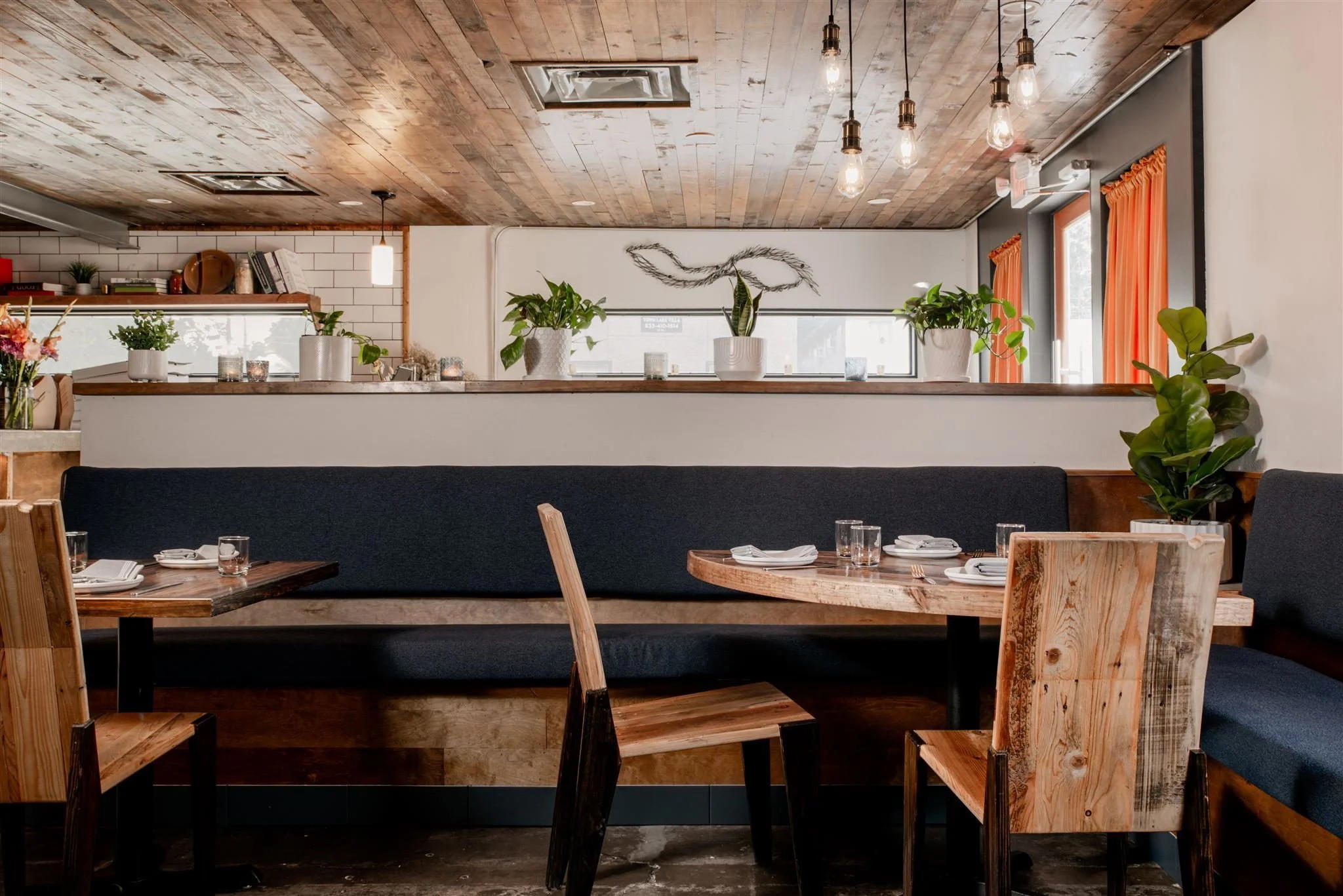
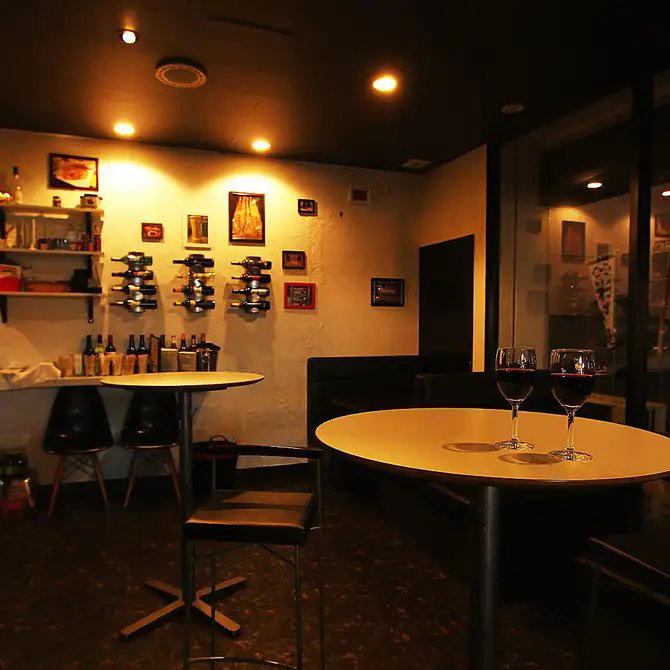
The physical setting communicates what kind of agreement you are entering. Ohtsu operates from a house restaurant format, a converted residential structure rather than a purpose-built dining room, with 14 seats in total and a private room accommodating up to six guests, available for an additional 10,000 yen. The dining space faces street trees, and the room is described across its records as stylish and relaxed rather than formal or theatrical. At this scale, every seat carries weight. The kitchen has no statistical buffer of large tables and high covers; the 14-seat constraint means each service is a considered event.
That constraint informs the reservation-only policy. Lunch runs from 12:00 to 15:00 with a last food order at 12:30, and dinner from 18:00 to 22:00 with a last food order at 20:00. The closing schedule is non-fixed, averaging approximately seven closures per month, predominantly on Mondays. Reservations are accepted through Ikkyu, Japan's dedicated platform for high-end restaurant bookings. Dietary restrictions and allergies must be declared at booking, with the kitchen adjusting ingredient preparation accordingly. Cancellation fees apply to late changes, a standard indicator that the kitchen is working with pre-ordered product rather than general mise en place.
What the Sourcing Emphasis Tells You
This combination is editorially significant in the context of Ibaraki prefecture. Mito sits within reach of the Pacific coast, the Kashima-Nada sea, running along Ibaraki's eastern edge, produces distinctive cold-current catches including hirame (flounder), karei (flatfish), and sea bass varieties that differ in texture from warmer-water equivalents. French kitchens in the region that commit to local marine sourcing are working with product that rivals what Tokyo's wholesale markets receive, often at greater proximity to the point of landing.
That fish-forward orientation places Ohtsu in a specific tradition within French cooking in Japan: the style associated with precision treatment of raw or lightly cooked seafood, where the sourcing decision is the preparation decision. Restaurants operating in this register, such as Le Bernardin in New York City, which has built its entire reputation around the primacy of fish over sauce, treat sourcing transparency as the central editorial statement of the menu. In a Japanese provincial context, where direct supplier relationships are more accessible than in a city wholesale system, this approach carries particular credibility. The emphasis on wine as a program category, rather than as an afterthought, suggests the kitchen expects to match that sourcing rigour at the table throughout the meal.
For comparison: among the French restaurants that have drawn national attention in Japan's regions, the conversation tends to cluster around places like HAJIME in Osaka or akordu in Nara, both of which have built identities around specific philosophical frameworks for ingredient sourcing. Ohtsu's sustained Tabelog recognition across a longer operational timeline, thirty-plus years versus the decade-long runs of more recently celebrated peers, suggests a different kind of institutional knowledge at work, one built through accumulated supplier relationships rather than a founding manifesto.
The Award Record in Context
Seven consecutive Tabelog Bronze Awards, combined with repeated Tabelog 100 selections for French EAST, constitute a meaningful track record on Japan's most widely consulted restaurant rating platform. Tabelog's scoring system is resistant to inflation, a 4.39 places Ohtsu in a bracket shared by restaurants in much larger cities with denser review populations. The French EAST Tabelog 100 selection is a curated shortlist rather than a scored ranking, meaning it reflects editorial judgment about significance within the eastern Japan French dining category, not just aggregate score. Being selected in 2021, 2023, and 2025 across different competitive cycles suggests the recognition is recurrent rather than circumstantial.
That award consistency also signals operational stability at a price point where provincial restaurants are most exposed to attrition. Maintaining those prices in Mito for over thirty years, with consistent award recognition, points to a kitchen that has not needed to discount to sustain demand.
Getting There and Planning Your Visit
Ohtsu is located at 1 Chome-5-4 Shiraume in Mito, Ibaraki, approximately ten minutes on foot from the south exit of Mito Station on the JR Joban Line. The Joban Line connects Mito directly to Ueno Station in Tokyo in around 75 minutes on the limited express, making a day trip viable from the capital, lunch reservations with the 12:30 last food order require prompt arrival from a morning train. By car, the restaurant is around 15 minutes from Mito Minami Interchange on the Kita Kanto Expressway, with parking for three cars on-site (height and slope restrictions apply) and coin parking available nearby.
Payment is by credit card (Visa, Mastercard, JCB, Amex, Diners Club); electronic money and QR code payments are not accepted. A 10% service charge applies. The private room, capped at six guests, carries a room fee of 10,000 yen and is worth requesting at the time of reservation for small groups who prefer a contained dining environment. The restaurant is non-smoking throughout.
For visitors building a broader Mito itinerary alongside a meal at Ohtsu, the city's dining, accommodation, and entertainment options are mapped in our full Mito restaurants guide, our full Mito hotels guide, our full Mito bars guide, our full Mito wineries guide, and our full Mito experiences guide. Readers exploring French restaurants at comparable price points across Japan may also want to consider Goh in Fukuoka, Aji Arai in Oita, or Ajidocoro in Yubari District. For context on Japan's broader high-end dining scene, Harutaka in Tokyo, Gion Sasaki in Kyoto, 6 in Okinawa, Abon in Ashiya, and Atomix in New York City offer useful reference points for the standards this tier of restaurant is measured against internationally.
Frequently asked questions
Would RESTAURANT Ohtsu be comfortable with kids?
At JPY 30,000 to JPY 49,999 per person in a 14-seat house restaurant, this is not a format suited to families with young children. Ohtsu operates on a reservation-only basis with set sitting times and a 10% service charge, signalling a deliberately quiet, unhurried room.
What should I expect atmosphere-wise at RESTAURANT Ohtsu?
Ohtsu occupies a house restaurant format, meaning a compact, residential-scale space rather than a formal hotel dining room. With only 14 seats total and private rooms accommodating up to six guests, the atmosphere is close and personal. Seven consecutive Tabelog Bronze Awards confirm a consistent standard, but the scale keeps the experience low-key relative to equivalent-priced Tokyo venues.
Is RESTAURANT Ohtsu award-winning?
RESTAURANT Ohtsu has received recognition including:
What do regulars order at RESTAURANT Ohtsu?
Given the reservation-only, set-sitting structure common at Tabelog Bronze level, expect a fixed course format rather than à la carte ordering. Dietary restrictions and allergies should be communicated at the time of booking, as ingredients are prepared according to the reservation.
Comparison Snapshot
Comparable venues nearby, for context on price, style, and recognition.
| Venue | Cuisine | Price | Awards | Notes |
|---|---|---|---|---|
| RESTAURANT OhtsuThis venue (the venue you are viewing) | French Fine Dining | Not listed | Tabelog Bronze #362 | Not listed |
| Koji Koji | Sri Lankan | Not listed | Tabelog 100 #47 | Akatsuka |
| Taverna Hamburg | Italian-inflected hamburg steak & meat house | Not listed | Tabelog 100 #43 | Mito |
| Shirakawa | Teppanyaki & Hitachi Beef Steakhouse | $100–150 | Tabelog 100 #91 | Minami-machi |
| Nuriya Izumichou oodoori | Traditional Unagi (Eel) Restaurant | $30–50 | Tabelog 100 #24 | Izumicho, Mito |
| Karma | Indian curry house | $10–20 | Tabelog 100 #33 | Mito |
Recognition history
Dated appearances from independent guides and award organizations, with the underlying list record or original source where available.
Tabelog Bronze #362
Tabelog
The Japan Times Destination Restaurants Destination Restaurants Selection #4
The Japan Times Destination Restaurants
Full recognition history (4 entries)
Tabelog Bronze
Tabelog
Tabelog 100 #57 · No. 57
Tabelog · Tabelog 100 - French - EAST - 2025
Continue exploring
More in Mito
Details
- Elegant
- Sophisticated
- Intimate
- Date Night
- Special Occasion
- Standalone
- Local Sourcing
- A La Carte
Current opening hours
- Monday
- Closed
- Tuesday
- 6–9 PM
- Wednesday
- 6–9 PM
- Thursday
- 6–9 PM
- Friday
- 6–9 PM
- Saturday
- 6–9 PM
- Sunday
- 6–9 PM
Hours can change for holidays and private events. Hours as of .
Elegant atmosphere with beautifully presented dishes and attention to detail like ironed tablecloths.