
Kyoto’s Gion dining map is often read through kaiseki counters and tempura rooms, but dumpling houses tell a sharper late-night story. Senmon Ten Gion honten sits in that narrower category: a compact gyoza specialist with counter seating, take-out, English menu support, sake, and Tabelog 100 Dumplings recognition in 2019 and 2024.
Pearl is the En Primeur Club membership app — saves, bookings, and concierge access live there. Same editors, same standards.
- Address
- Japan, 〒605-0084 Kyoto, Higashiyama Ward, 花見小路 清本町380−3 竹会館 1F
- Phone
- +81 75-532-0820
- Website
- ys-holdings.co.jp
 Saves & bookings on Pearl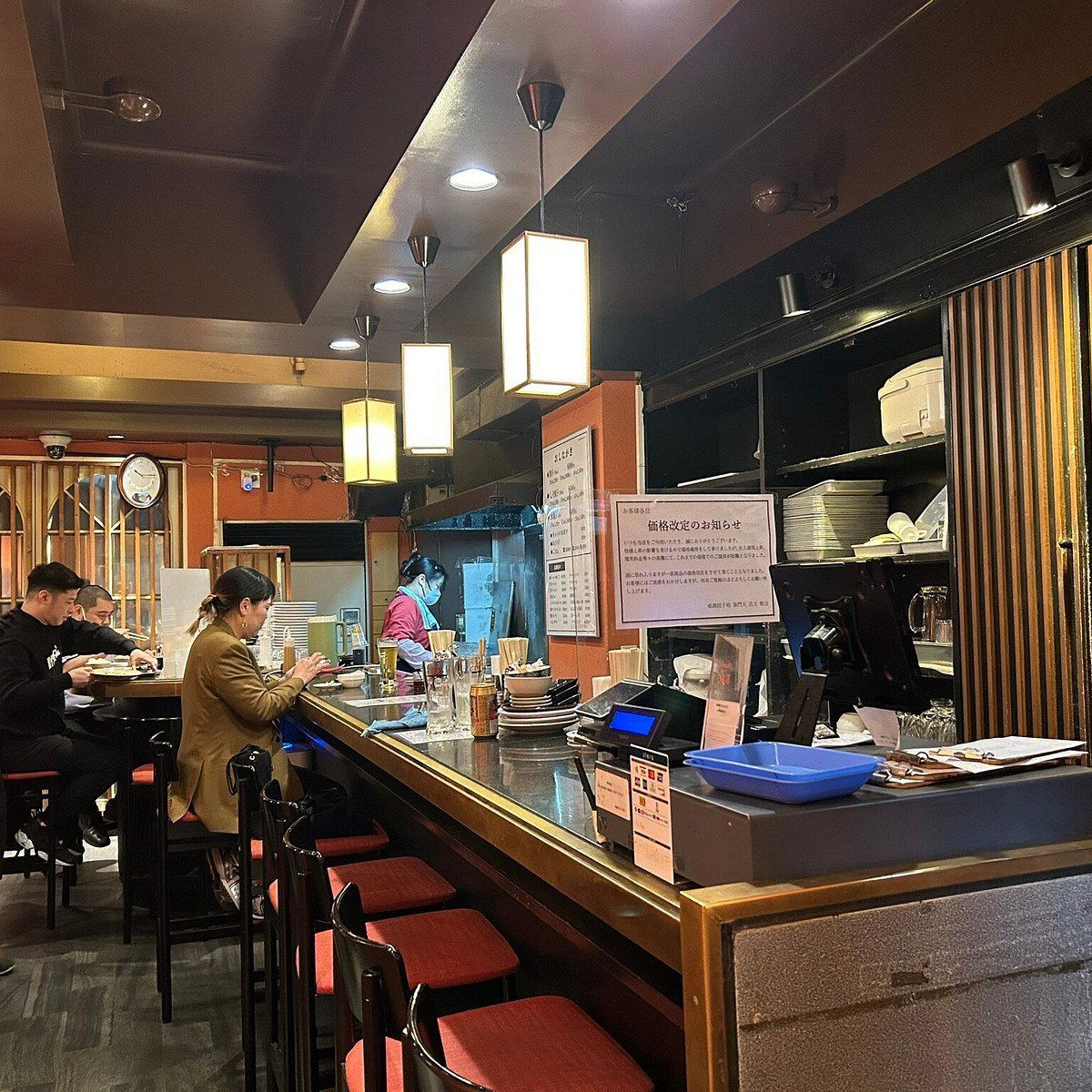
After the formal dinner hour, Hanamikoji’s lanes around Gion-Shijo shift from kimono traffic and reservation-only counters to smaller rooms for a second stop: dumplings, sake, and seats close enough to the kitchen to feel immediate rather than ceremonial. In Kyoto, gyoza plays a different role from kaiseki: compact, repeatable, quick to understand, and still disciplined when the menu stays narrow.
That is the useful lens for Senmon Ten Gion honten. The point is not luxury coding; Kyoto has enough of that. More interesting is how a dumpling specialist works inside Gion, a district internationally associated with formal Japanese dining. Its Tabelog 100 Dumplings selections in 2019 and 2024 place it in a national gyoza category rather than Kyoto’s higher-priced kaiseki conversation. That distinction matters: the meal belongs to Kyoto’s informal evening economy, while the recognition shows the format is judged seriously.
A gyoza menu built for repetition, not ceremony
Specialist dumpling shops live or fail by menu architecture. A broad menu can dilute the reason to go; a focused one asks the kitchen to repeat a few gestures consistently. Here, the category is dumpling-led, with sake as the relevant pairing and take-out available alongside dine-in. That combination defines the room’s purpose. It is not reaching for tasting-menu grammar. It is built for a compact order, short stay, and food that fits between a drink and the rest of the night.
Kyoto’s formal Japanese restaurants often use sequence as statement: seasonal progression, controlled counter view, chef-led tempo. Dumpling dining is leaner. Repetition is the argument. A diner can judge heat, wrapping, filling balance, and pacing without a long menu narrative. In Gion, where many restaurants trade on inherited atmosphere, that directness gives the category its own authority.
The comparison with nearby high-formality dining helps. Our full Kyoto restaurants guide covers the city’s range from casual specialists to ceremonial rooms; within that spread, Kyoboshi and Gion Endo sit closer to tempura’s performance tradition, while Kappo Umetsu and Yukifuran Sato speak to kappo and kaiseki expectations. Senmon Ten Gion honten is a separate decision: not where to stage a long Kyoto dinner, but where to place a precise dumpling stop without changing the night’s tone.
Gion's casual counter culture has its own hierarchy
Visitors can misread Gion as one dining register: polished entrances, set menus, rooms that require planning. The district is more layered. Around formal addresses are compact counters, snack bars, and late-service rooms that absorb diners before and after bigger reservations. A dumpling shop here is not an afterthought; it is part of the machinery that keeps the neighbourhood working after dark.
Format details sharpen the picture. The room is small, with counter seating and limited table seats, so the experience is closer to a tight urban specialist than a family-style dining room. Private rooms and private use are not offered, reinforcing the public, quick-turn, counter-forward style. Smoking is allowed, placing the room nearer older Japanese nightlife habits than the polished non-smoking dining rooms now common in hotel-adjacent Kyoto.
The Tabelog score of 3.67 and Tabelog 100 Dumplings 2024 selection are useful trust signals because gyoza is a crowded, highly regional category in Japan. Kyoto does not dominate dumpling conversation the way Utsunomiya or Hamamatsu do, so a Gion shop on a national dumpling list has relevance beyond tourist convenience. It also explains why the venue belongs in a serious Kyoto plan even when spend and format are casual.
For a broader food itinerary, avoid treating Kyoto as only temples and kaiseki. Pair formal meals with focused specialists: dumplings here, sweets at Aburi Mochi Honke Nemoto Kazariya, or compact formats such as 3TOKU6MI Shijo karasuma ten, 551蓬莱, [ki:], and Abbesses. That mix reads the city better than a schedule made only of long-form Japanese dinners.
How to place it in a Kyoto night
The practical appeal is timing and flexibility. Dine-in service runs in the evening, take-out starts earlier, and Sunday closure makes it a six-day option rather than a daily fallback. Reservations are unavailable, so the move is tactical: arrive ready to wait or use it as a moving piece around Gion-Shijo, not the night’s immovable anchor. English menu support lowers friction for visitors, while card, transport IC, and QR payments make the transaction easier than at many older small restaurants in Japan.
That makes the venue especially useful for solo diners and small groups. Counter seating suits a short meal, and the format does not require full-course reservation choreography. It also suits travellers who want a Kyoto food itinerary with texture: a serious dumpling stop after a bar, before a late walk through Gion, or between more structured meals elsewhere in the city.
Planning Kyoto should also look beyond restaurants. Our full Kyoto hotels guide helps decide whether to stay near Gion, the station, or quieter temple districts; Our full Kyoto bars guide maps the city’s drinking rooms; Our full Kyoto wineries guide and Our full Kyoto experiences guide fill the wider itinerary. For a wider Japan comparison of compact, category-led dining, see -Grilled beef Sukiyaki- KAMAKURA TANUKIAN 鎌倉 たぬき庵 in Kamakura. 鮪と炭火焼き うお炭 秋葉原店 in Tokyo.cafe in Osaka.know in Kumamoto, (Shoku) Vietnam in Kawasaki, [Curry Senmon Ten] Maruyama Kyoju. in Sapporo, Jōdo Saké Bar in Los Angeles, and Onigiri Time in Pasadena.
The critical read is simple: this is where Gion’s dining hierarchy becomes less formal and more useful. Senmon Ten Gion honten gives Kyoto visitors a recognized dumpling specialist in a neighbourhood often defined by ceremony, and that contrast is exactly why it earns space in a serious food itinerary.
Peers Worth Knowing
Comparable venues at a glance for context.
| Venue | Cuisine | Price | Notes |
|---|---|---|---|
| Senmon Ten Gion hontenThis venue — the venue you are viewing | Kyoto Gion one‑bite gyoza specialty shop | $ | Not listed |
| Shinjuku Menya Fuuka | Kyoto ramen and tsukemen | $ | Shimogyō |
| Fuka Fuchomae honten | Traditional Kyoto Japanese sweets & nama-fu shop | $ | Kamigyō |
| Kissa Tirol | Classic Kyoto kissaten & yoshoku cafe | $ | Nakagyō |
| Menya Sanda | Kyoto chicken paitan ramen & tsukemen | $ | Ukyō |
| Okashi Tsukasa Nakamura Ken | Traditional Kyoto Wagashi & Cafe | $ | Nishikyō |
Recognition history
Dated appearances from independent guides and award organizations, with the underlying list record or original source where available.
Tabelog 100 #18 · No. 18
Tabelog · Tabelog 100 - Dumplings - 2024
Continue exploring
More in Kyoto
Restaurants in Kyoto
Browse all →
Bars in Kyoto
Browse all →

Hotels in Kyoto
Browse all →
Wineries in Kyoto
Browse all →
At a Glance
- Lively
- Classic
- Cozy
- Well Known
- Intimate
- Late Night
- Casual Hangout
- Solo
- After Work
- Standalone
- Historic Building
- Beer Program
- Sake Program
- Street Scene
Current opening hours
- Monday
- 5 PM–12:30 AM
- Tuesday
- 5 PM–12:30 AM
- Wednesday
- 5 PM–12:30 AM
- Thursday
- 5 PM–12:30 AM
- Friday
- 5 PM–12:30 AM
- Saturday
- 5 PM–12:30 AM
- Sunday
- Closed
Hours can change for holidays and private events. Last verified .