On Dundas West, Saving Grace occupies a position in Toronto's mid-neighbourhood dining scene where weekend brunch has become a civic ritual. The room draws a mix of locals and visitors who treat the address as a reliable seasonal anchor, returning when the menu shifts and the line outside tells you something has changed. It sits at a price point and register that the city's $$$$ counters, Alo, Sushi Masaki Saito, deliberately leave open.
- Address
- 907 Dundas St W, Toronto, ON M6J 1V9, Canada
- Phone
- +1 416 703 7368
- Website
- instagram.com
- Directions
- Get directions
Dundas West and the Politics of the Neighbourhood Table
There is a tier of Toronto dining that receives almost none of the award infrastructure lavished on the city's fine-dining circuit, no Michelin stars, no 50 Best placements, no tasting-menu press cycles, yet exerts a stronger daily influence on how residents actually eat. Dundas Street West, running through Beaconsfield Village and Trinity Bellwoods, is one of the primary addresses for that tier. The street's dining character is shaped by proximity to a dense residential core: it feeds the same people repeatedly, across seasons, and the venues that last on this stretch do so because they read neighbourhood appetite with accuracy rather than because they have imported a grand culinary concept.
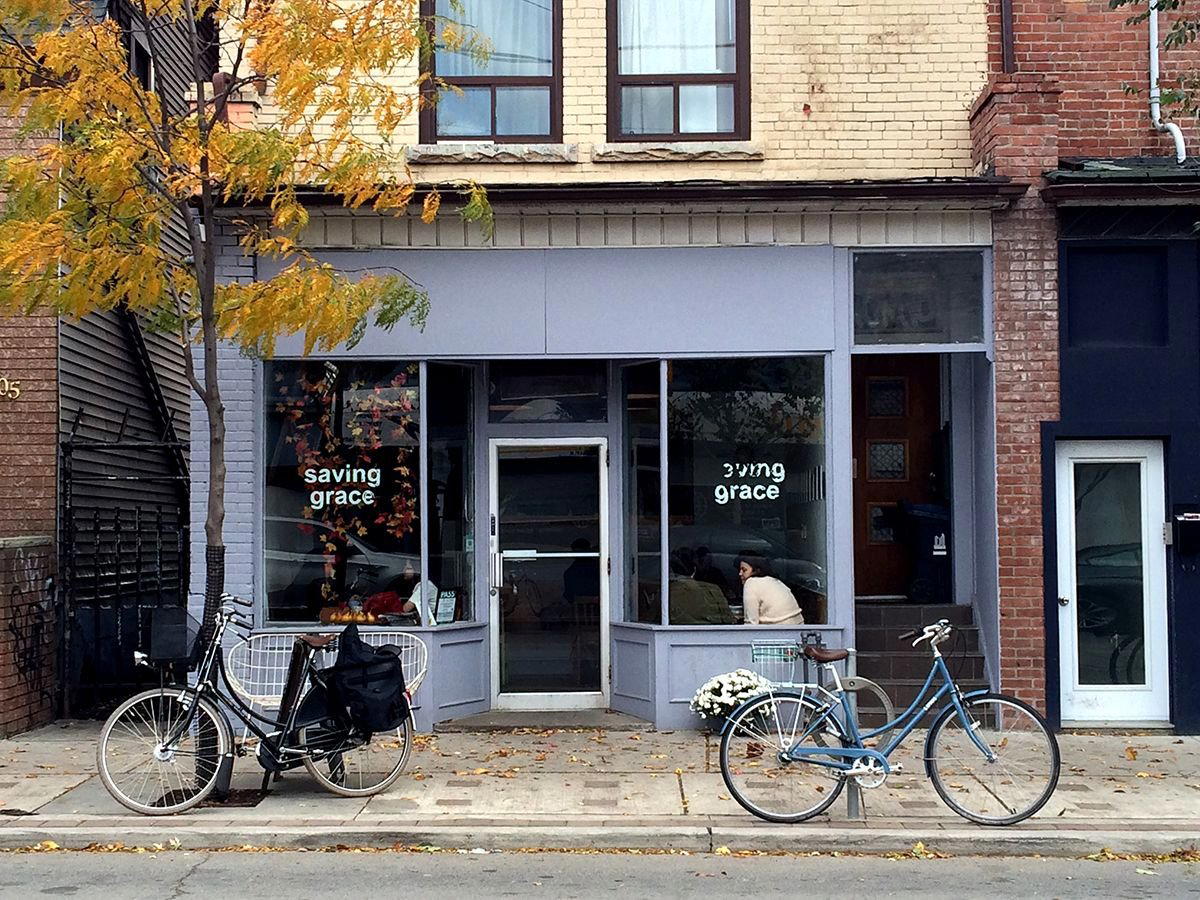
Saving Grace, at 907 Dundas St W, operates inside this logic. Its position on the strip places it among a cohort of neighbourhood spots that have, over time, become informal institutions, not through critical decoration but through repetition and reliability. The format is brunch-anchored, which in Toronto's west-end context is less a casual choice than a deliberate positioning. Brunch here is the meal the city takes seriously at the neighbourhood level, and the lineups that form outside addresses like this one on weekend mornings function as a form of local endorsement that no award body replicates.
How the Meal Unfolds
Brunch as a format is easy to dismiss, eggs, coffee, a pastry, but the venues on Dundas West that have built real followings understand that the arc of the meal matters as much as any individual dish. At Saving Grace, the sequencing follows a pattern common to the better neighbourhood brunch addresses in Toronto: the room is small enough that pacing is not accidental, and the menu is edited tightly enough that choices carry weight. You are not working through a laminated document of forty options. The edit forces a kind of attention.
In cities like New York or San Francisco, where tasting-progression formats have become the dominant mode at serious restaurants, places like Le Bernardin or Lazy Bear, the multi-course architecture is explicit, announced, and priced accordingly. The neighbourhood brunch occupies the opposite pole: the progression is implicit, driven by how food arrives and how the room breathes, but it is a progression nonetheless. At its better executions on this stretch of Dundas, a meal at Saving Grace reads as: something sharp and acidic to open the appetite, something substantial at the centre, something sweet to close. That is not a tasting menu. It is, however, a considered arc.
The distinction matters because Toronto's $$$$ tier, Alo, Sushi Masaki Saito, Aburi Hana, DaNico, Don Alfonso 1890, makes the progression formal and expensive. The neighbourhood tier makes it informal and accessible. Both are legitimate. They serve different functions in the city's dining ecology, and understanding the distinction helps a visitor allocate their time and money across Toronto's full range rather than defaulting to the award-tier by reflex.
The West-End Room and What It Signals
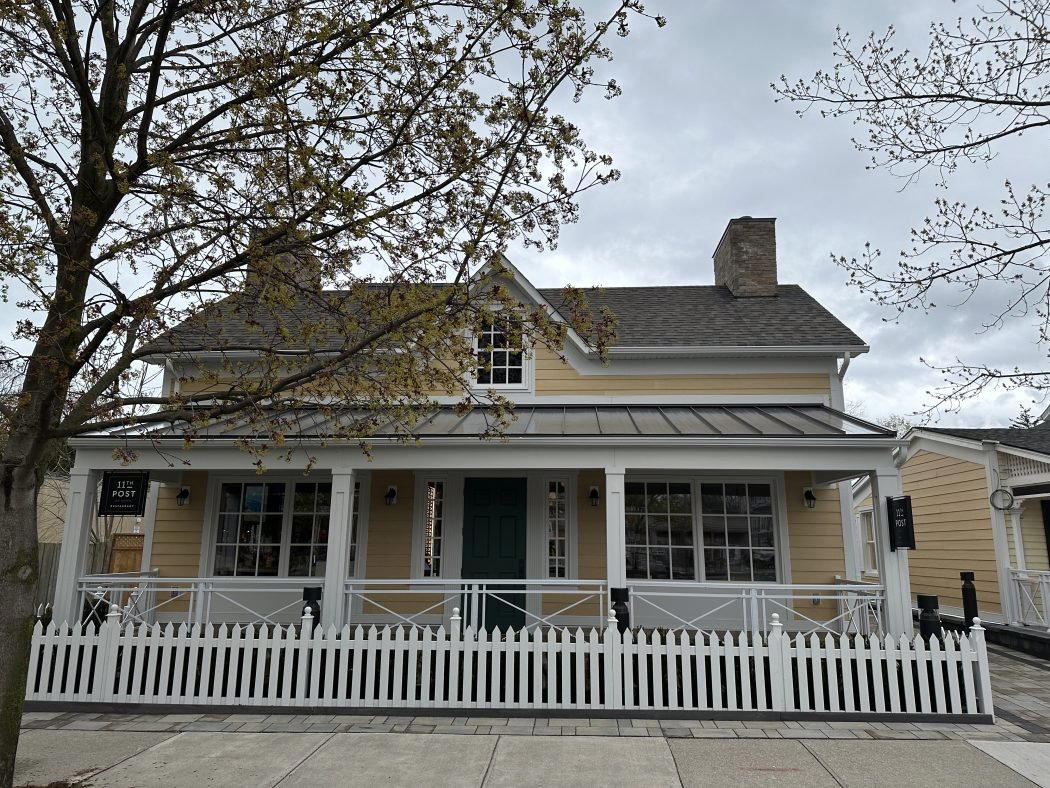
Rooms on Dundas West tend to be narrow, painted in a palette that reads as considered without being designed in the high-hospitality sense, and lit by whatever natural light the facade allows. The physical environment at addresses in this range communicates a specific social contract: you are not here for ceremony, you are here because the food is worth the wait and the coffee is good enough to hold you while you queue. The room does not perform hospitality; it delivers it at a lower temperature.
This positions Saving Grace inside a broader pattern visible in neighbourhood-anchored dining across Canadian cities, from AnnaLena in Vancouver to Européa in Montreal, though both occupy higher price registers. The common thread is a commitment to a specific postal code rather than a demographic abstraction. The room at the restaurant is legible to Beaconsfield Village residents in a way that a hotel dining room in the Financial District is not, and that legibility is a deliberate editorial choice about who the venue is for.
Saving Grace in the Wider Canadian Context
Canada's restaurant ecology is broader and more geographically distributed than its award coverage suggests. Destination addresses, Tanière³ in Quebec City, Eigensinn Farm in Singhampton, Fogo Island Inn Dining Room, Restaurant Pearl Morissette in Lincoln, attract visitors who plan itineraries around them. Neighbourhood anchors like Saving Grace operate on a different logic: they are discovered rather than planned, and they reward visitors who spend enough days in a city to eat where residents eat rather than only where the guides point.
Ontario's restaurant tier between destination dining and fast-casual includes addresses like The Pine in Creemore, which serves a regional community with a similar seriousness of purpose. In Toronto specifically, Dundas West is one of several corridors, along with Roncesvalles, the Junction, and parts of Leslieville, where this middle tier concentrates. The restaurant sits in good company on that map, even if the company rarely appears in the same sentence.
For context outside Ontario, comparable neighbourhood brunch anchors in other provinces, think Cafe Brio in Victoria or Busters Barbeque in Kenora, demonstrate that the format is not uniquely urban or uniquely Toronto. What varies is density: Toronto's west end has enough of these addresses within walking distance that a visitor can spend a long weekend moving between them and read the neighbourhood's dining character in full. The restaurant is one chapter of that reading. For the full picture, see our full Toronto restaurants guide.
Further afield, Narval in Rimouski represents another register of serious neighbourhood cooking in a smaller Canadian city, proof that the pattern is national, not metropolitan.
Know Before You Go
- Address: 907 Dundas St W, Toronto, ON M6J 1V9
- Neighbourhood: Beaconsfield Village / Trinity Bellwoods, Toronto West End
- Format: Neighbourhood brunch address; walk-in and weekend queue culture standard for this tier
- Price tier: Mid-range; significantly below the city's $$$$ fine-dining tier
- Leading approach: Weekday visits reduce wait times; weekend mornings draw the longest queues on this stretch of Dundas
- Getting there: Streetcar access via the 505 Dundas route; parking on side streets
Nearby-ish Comparables
Comparable venues nearby, for context on price, style, and recognition.
| Venue | Cuisine | Price | Notes |
|---|---|---|---|
| Saving GraceThis venue — the venue you are viewing | Canadian Brunch Diner | $$ | Not listed |
| Cafe Belong | Seasonal Canadian Cafe | $$ | Governor's Bridge |
| Steam Whistle Kitchen | Contemporary Canadian Gastropub | $$ | Entertainment District |
| Starving Artist | Canadian Waffle Brunch | $$ | Corso Italia-Davenport |
| The Chefs' House | Contemporary Canadian | $$ | Corktown |
| Ramona's Kitchen | Comfort Canadian Brunch | $$ | Leaside |
Continue exploring
More in Toronto
Restaurants in Toronto
Browse all →



Bars in Toronto
Browse all →



Hotels in Toronto
Browse all →


At a Glance
- Cozy
- Rustic
- Brunch
- Casual Hangout
- Standalone