





On College Street, Quetzal anchors Toronto's serious Mexican dining with an eight-metre indoor fire pit and tortillas pressed from nixtamalised heirloom corn. Chef Steven Molnar's open-fire technique draws on regional Mexican tradition while sourcing Canadian produce, earning consistent recognition from La Liste and Opinionated About Dining. The bar programme, built around mezcal, tequila, and reimagined Mexican classics, runs parallel to the kitchen in ambition.
Pearl is the En Primeur Club membership app — saves, bookings, and concierge access live there. Same editors, same standards.
- Address
- 419 College St, Toronto, ON M5T 1T1, Canada
- Phone
- +1 647-347-3663
- Website
- quetzaltoronto.com
- Directions
- Get directions
 Saves & bookings on Pearl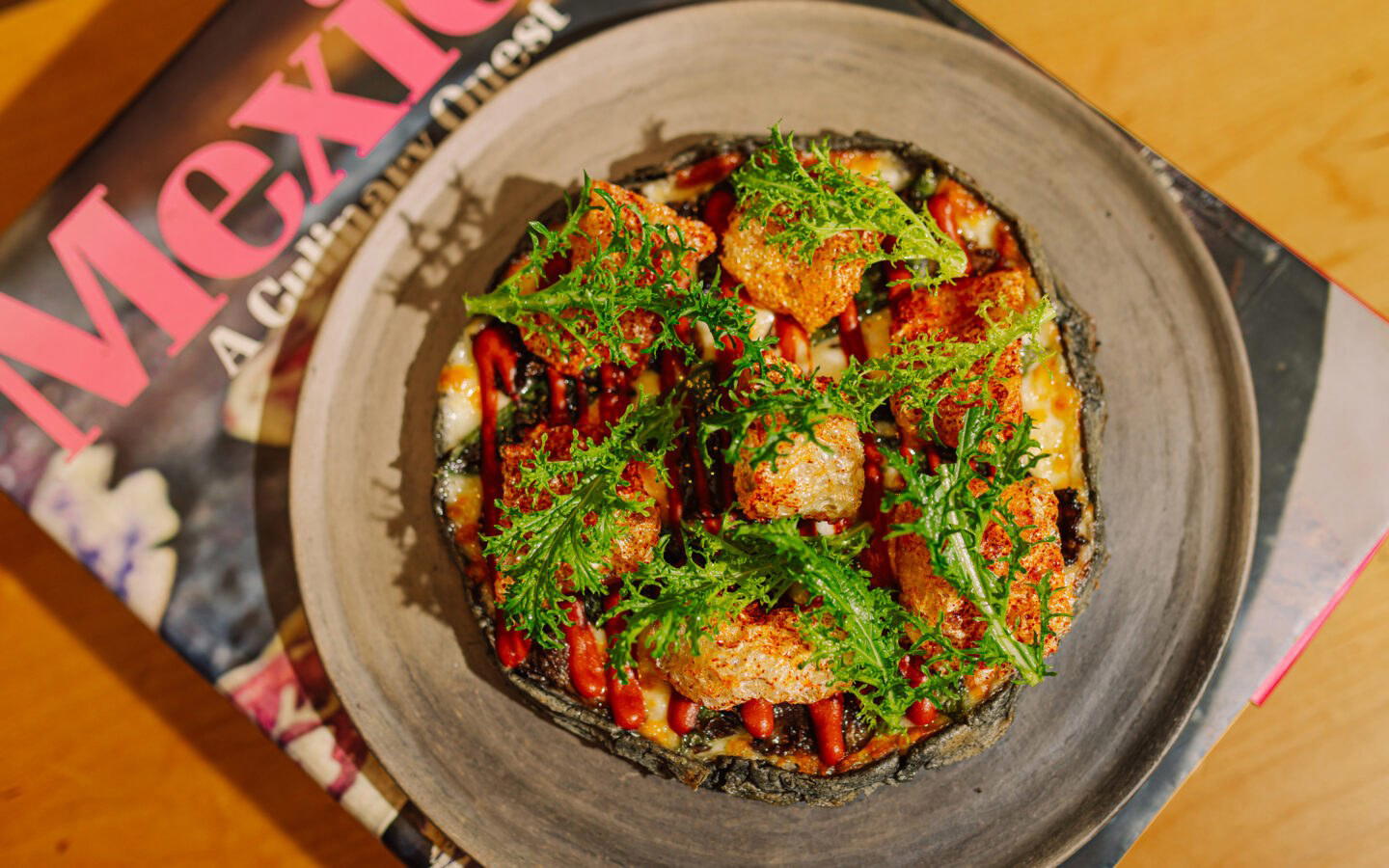
Smoke, Structure, and the Logic of the Comal
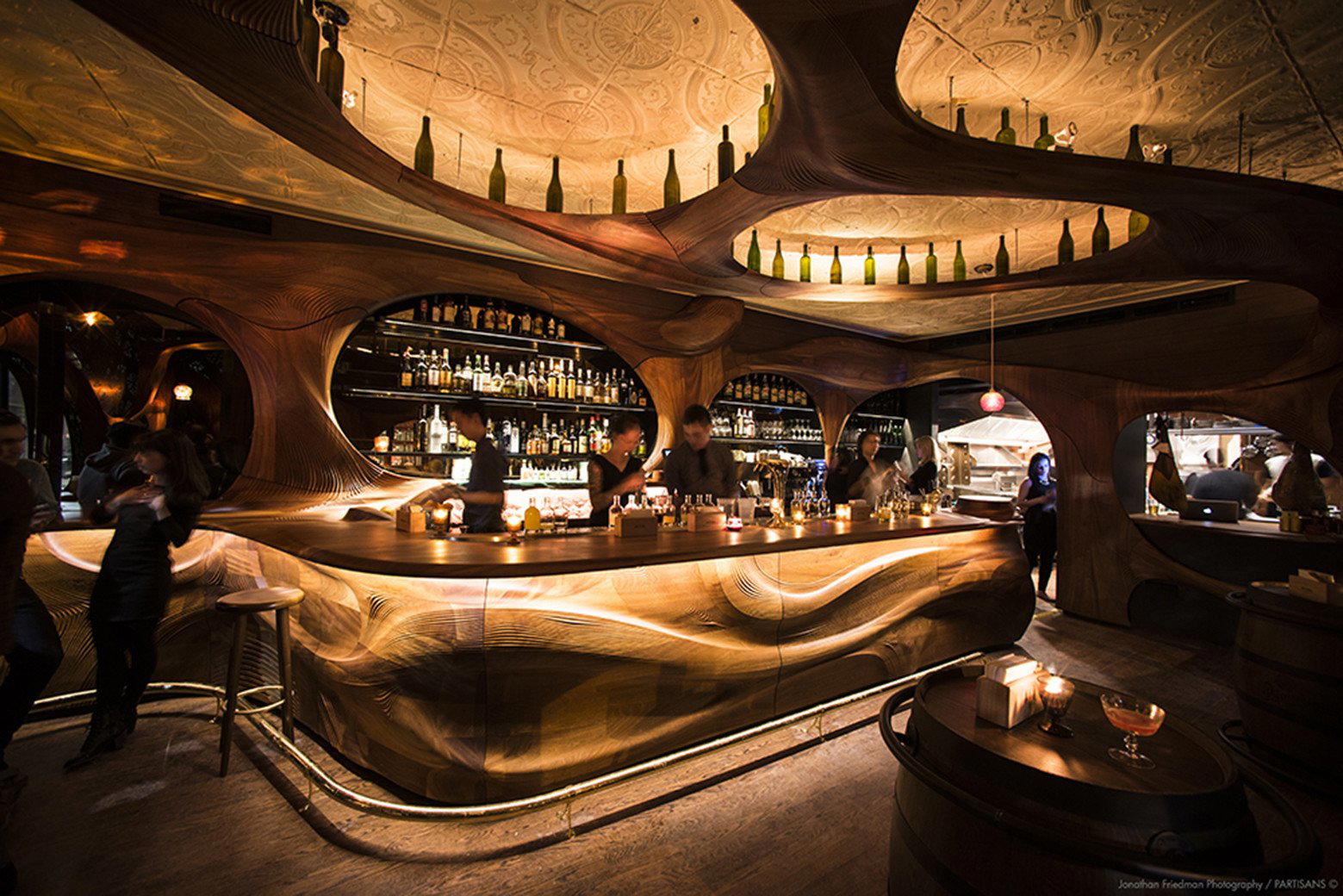
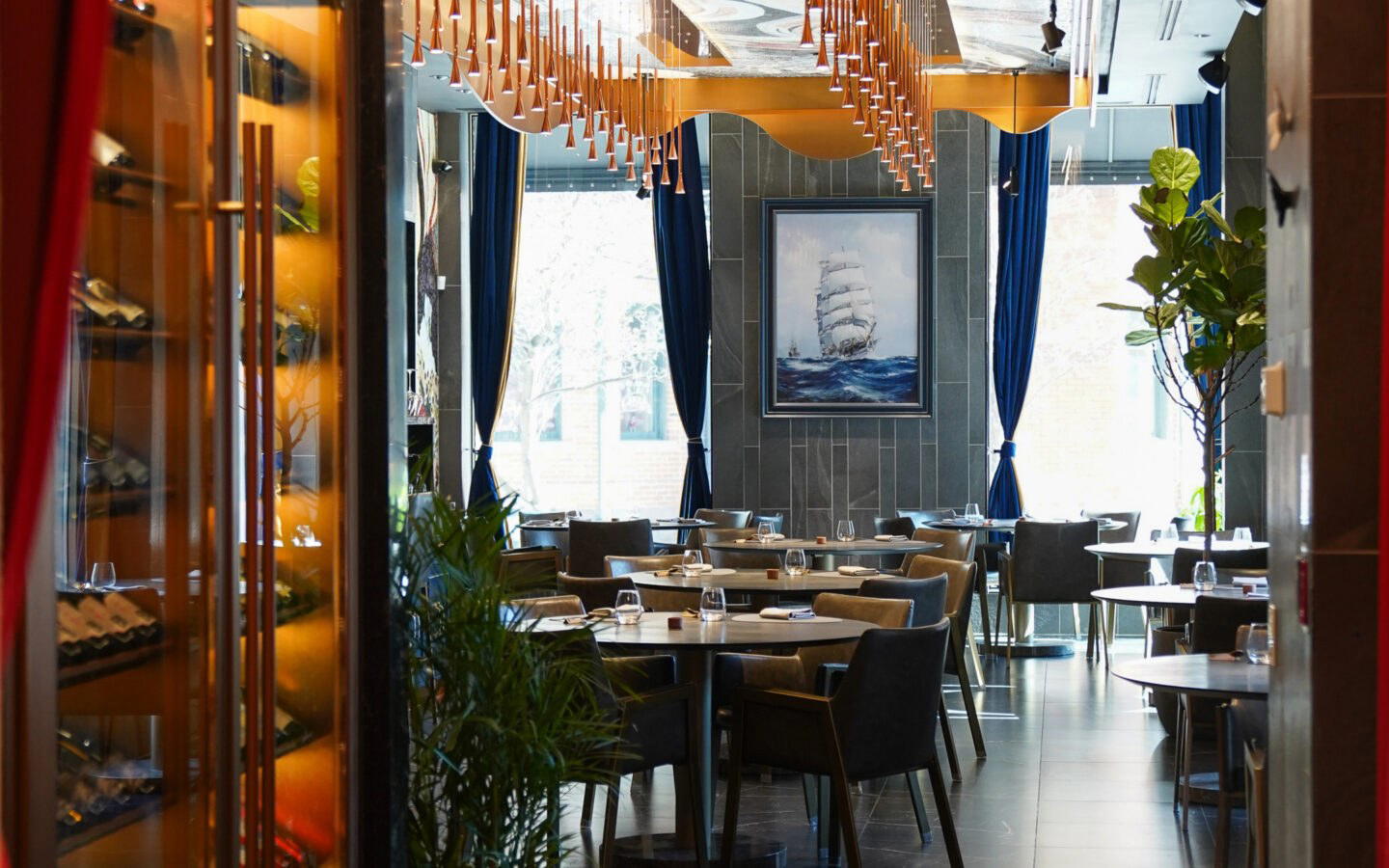
Walk into Quetzal on College Street and the first thing that registers is not the food, it is the smell. Wood smoke has settled into the room's Partisans-designed interior, threading through the undulating ceiling that curves above the dining room like the billowing canvas of a Mexican market stall. The air carries a particular density, the kind that means the fire has been burning for hours before service starts. By the end of the meal, your jacket will carry it home.
The room itself is a studied piece of design: turquoise leather banquettes run one wall, a long bar and open kitchen occupy the other, with counter stools for diners who want a direct line of sight to the flames. The eight-metre fire pit running the length of the kitchen is not décor, it is the operational core of the restaurant, and nearly every dish on the menu is shaped by proximity to it.
Where the Mole Tradition Meets an Open Flame
Mexican cuisine carries among the more technically demanding sauce traditions in the world. Mole is the clearest example: a preparation that can involve thirty or more ingredients, days of preparation, and a calibration of bitterness, sweetness, heat, and depth that leaves almost no margin for error. In Mexico City, restaurants like Pujol have spent years refining aged mole madre programmes that treat the sauce as a living preparation, fed and replenished over years. Quetzal approaches the mole tradition through the lens of open-fire cooking and Northern sourcing, which creates a different register of flavour entirely.
The mole blanco served with gindara, B.C. black cod marinated in salsa verde, grilled over fire, finished with charred caraflex cabbage and finger lime, is built from hazelnuts, parsnips, garlic, onion, and serrano chilies. It is a Canadian-ingredient interpretation of a central Mexican sauce tradition, and the shift in base material (parsnips standing in where more tropical starch might anchor a southern mole) gives the dish an earthiness that reads differently from the chile-chocolate axis most diners associate with the form. The fire underneath the cod does what fire always does to fat: it draws it out, concentrates it, and gives the exterior a texture that no oven-roasted preparation can approximate.
This is the editorial point worth sitting with. The mole tradition is not simply about complexity for its own sake, it is about layering and calibrating flavour sources that are individually intense but collectively coherent. When applied to an open-fire programme using Canadian seasonal produce, as Quetzal does, the result is neither strictly regional Mexican nor standard Canadian fine dining. It occupies a specific middle zone that Toronto's dining scene has been building toward since around 2015, when chefs trained in European classical technique began pivoting toward Mexican and Spanish culinary structures. Quetzal is among the more sustained examples of that shift.
The Tortilla as Baseline Standard
Among open-fire Mexican programmes in North America, and there are more of them now than a decade ago, from Denver's Alma Fonda Fina to a growing cohort of taquería-adjacent counter formats, the tortilla is the clearest signal of intent. Quetzal imports Mexican heirloom corn, nixtamalises it in-house, and double-grinds the masa before pressing and cooking to order on an earthenware comal at the end of the kitchen line. The process matters because nixtamalisation, the alkaline treatment of dried corn that unlocks its nutritional profile and develops flavour, cannot be shortcut without degrading the result. A tortilla made from pre-ground commercial masa and a tortilla made from in-house nixtamalised heirloom corn taste like different categories of food.
The masa extends across the menu beyond the tortilla. Memela, a thick, oblong masa preparation, arrives filled with melted quesillo, smoky preserved shiitakes, and chicharrón, demonstrating the kitchen's willingness to work across the full repertoire of masa-based preparations rather than collapsing everything into the taco format that most North American diners default to.
The Kitchen's Range
Chef Steven Molnar's training at Institut Paul Bocuse and subsequent time at Nota Bene in Toronto, Brasserie le Nord in Lyon, Restaurant Toqué in Montreal, and the Spanish-focused Bar Isabel and Bar Raval in Toronto provides a specific set of technical tools: sauce construction, fat management, protein cookery under high heat, and the discipline to know when complexity serves the dish and when it obscures it. That background reads in the menu's structure.
Ceviches and aguachiles run clean and acid-forward. The carne cruda, a nod to Veracruz, uses AAA Ontario flat iron, hand-cut rather than ground, dressed with olives, fried capers, toasted sesame seeds, and guajillo chili oil. The raw protein preparations function as textural contrast to the fire-heavy main courses: brightness against smoke, cold against warm, acidity against char.
Grilled meats include secreto al pastor, a cut taken from the shoulder of the pig, slow-cooked and then finished over fire, served with charred pineapple, the caramelisation of the fruit working against the fat of the pork in a way that is structurally identical to the vertical spit format of traditional trompo al pastor, translated for a wood-fire kitchen. Desserts run to finesse: tres leches cake and horchata cream are finished with sea buckthorn, a Canadian berry with enough acidity to cut the richness of both preparations.
Molnar's approach is technical, curious, and willing to follow an idea into unfamiliar territory. That intellectual disposition is visible in the menu's range without being a distraction from the food's coherence.
The Bar Programme
Agave spirits are a natural pairing for open-fire cooking, the shared terroir of smoke, earth, and mineral char creates a continuity between glass and plate that many other wine pairings have to work harder to achieve. Quetzal's bar programme centres on mezcal and tequila, translated into cocktails that run alongside, rather than subordinate to, the kitchen's output. Non-alcoholic options include homemade libations and reimagined Mexican classics, a category that receives genuine creative attention rather than the token inclusion it often gets at spirit-forward restaurants. The wine list is solid with considered choices calibrated for high-flavour cooking, but the cocktail programme is the more natural companion to the menu's smoke and spice.
Where Quetzal Sits in Toronto's Dining Scene
Toronto's Mexican dining operates across a wide register. At the accessible end, College Street itself supports taquerías and cantina formats, including Campechano and Puerto Bravo. Quetzal operates in a different tier, dinner-only, Wednesday through Sunday, with a format and price point that positions it closer to the city's serious tasting-counter restaurants than to its casual Mexican peers.
In Toronto's broader fine-dining cohort, it sits alongside Alo, Sushi Masaki Saito, and Aburi Hana as part of a small group of restaurants with sustained international recognition. La Liste placed Quetzal at 76 points in its 2026 rankings, and Opinionated About Dining ranked it 499th in its 2024 North American casual list.
For a wider view of where Quetzal sits within Canada's open-fire and produce-driven dining movement, the comparison extends to Tanière³ in Québec City, AnnaLena in Vancouver, Jérôme Ferrer - Europea in Montreal, Narval in Rimouski, The Pine in Creemore, and Restaurant Pearl Morissette in Lincoln, a cohort of kitchens that collectively define what Canadian-ingredient fine dining looks like in the mid-2020s.
Comparable Spots
Comparable venues nearby, for context on price, style, and recognition.
| Venue | Cuisine | Price | Notes |
|---|---|---|---|
| QuetzalThis venue — the venue you are viewing | Modern Wood-Fired Mexican | $$$$ | Not listed |
| Sushi Masaki Saito | Edomae-Style Omakase | $$$$ | Annex |
| Alma Toronto | Modern Chinese Fusion | $$$ | Wallace Emerson |
| Shoushin | Edomae Omakase | $$$$ | Lawrence Park North |
| Don Alfonso 1890 | Modern Italian Fine Dining | $$$$ | Harbourfront |
| Gia | Plant-Forward Italian | $$$ | Little Italy |
Recognition history
Dated appearances from independent guides and award organizations, with the underlying list record or original source where available.
Canada's 100 Best Restaurants #4
Canada's 100 Best
La Liste Top Restaurants
La Liste
Opinionated About Dining Casual in North America Ranked #104
Opinionated About Dining
World's 50 Best North America's Best Restaurants #8
World's 50 Best
Canada's 100 Best Restaurants #8
Canada's 100 Best
Michelin 1 Star
Michelin
Opinionated About Dining Casual in North America Ranked #572
Opinionated About Dining
The Best Chef One Knife
The Best Chef
World's 50 Best North America's Best Restaurants #11
World's 50 Best
Opinionated About Dining Casual in North America Ranked #499
Opinionated About Dining
Opinionated About Dining Casual in North America Recommended
Opinionated About Dining
Continue exploring
More in Toronto
Restaurants in Toronto
Browse all →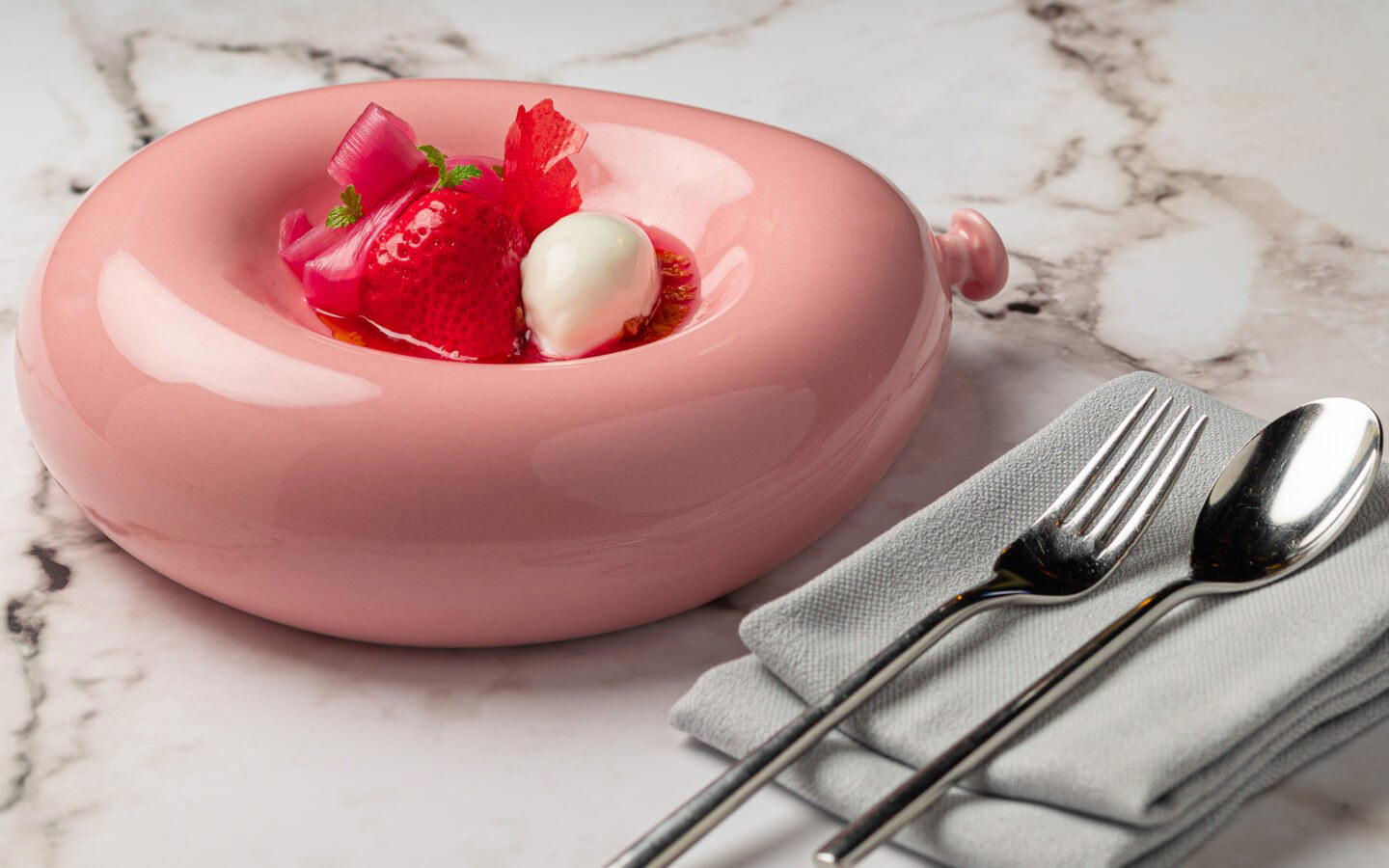
Bars in Toronto
Browse all →
Hotels in Toronto
Browse all →

At a Glance
- Trendy
- Modern
- Lively
- Intimate
- Energetic
- Date Night
- Special Occasion
- Celebration
- Open Kitchen
- Chefs Counter
- Craft Cocktails
- Local Sourcing
Current opening hours
- Monday
- Closed
- Tuesday
- Closed
- Wednesday
- 6–10 PM
- Thursday
- 6–10 PM
- Friday
- 6–10 PM
- Saturday
- 6–10 PM
- Sunday
- 6–10 PM
Hours can change for holidays and private events. Last verified .
Warm, atmospheric space with soft lighting, woodsmoke aroma from the open kitchen, and a relaxed yet energetic vibe.