Our verdict
The Chefs' House occupies the second floor of a King Street East address in Toronto, operating as the public-facing dining room of George Brown College's culinary program. The format puts student chefs at the pass under faculty supervision, producing a rotating menu that tracks both the academic calendar and seasonal Canadian produce. For a city with no shortage of tasting-menu options in the four-digit price range, it sits in an unusually accessible tier.

Pearl is the En Primeur Club membership app, where members save venues, book tables and use the concierge.

A Teaching Kitchen That Seats the Public
Toronto's fine-dining corridor has migrated steadily westward over the past decade, clustering around the Entertainment District and King West. King Street East, by contrast, retains a quieter institutional character, and it is in that context that The Chefs' House occupies its second-floor room above street level at 215 King St E. The address belongs to George Brown College, and the dining room is the college's working laboratory for culinary and hospitality students, opened to the public during the academic year. That origin shapes everything about the space, the menu, and the value equation in ways that distinguish it from any independently operated restaurant in the city.
In most Canadian cities, culinary school dining rooms operate as semi-private affairs, used primarily for internal assessments or industry previews. Toronto's version runs closer to a functioning restaurant, with table reservations, a structured service model, and a seasonal menu that changes as the curriculum advances. The format places The Chefs' House inside a small category of North American teaching restaurants that have built genuine public reputations, comparable in model (though not in cuisine or setting) to institutions such as Le Bernardin in New York City, where the rigour of formal culinary tradition shapes every plate that leaves the kitchen.
The Room: Second Floor, Deliberate Design
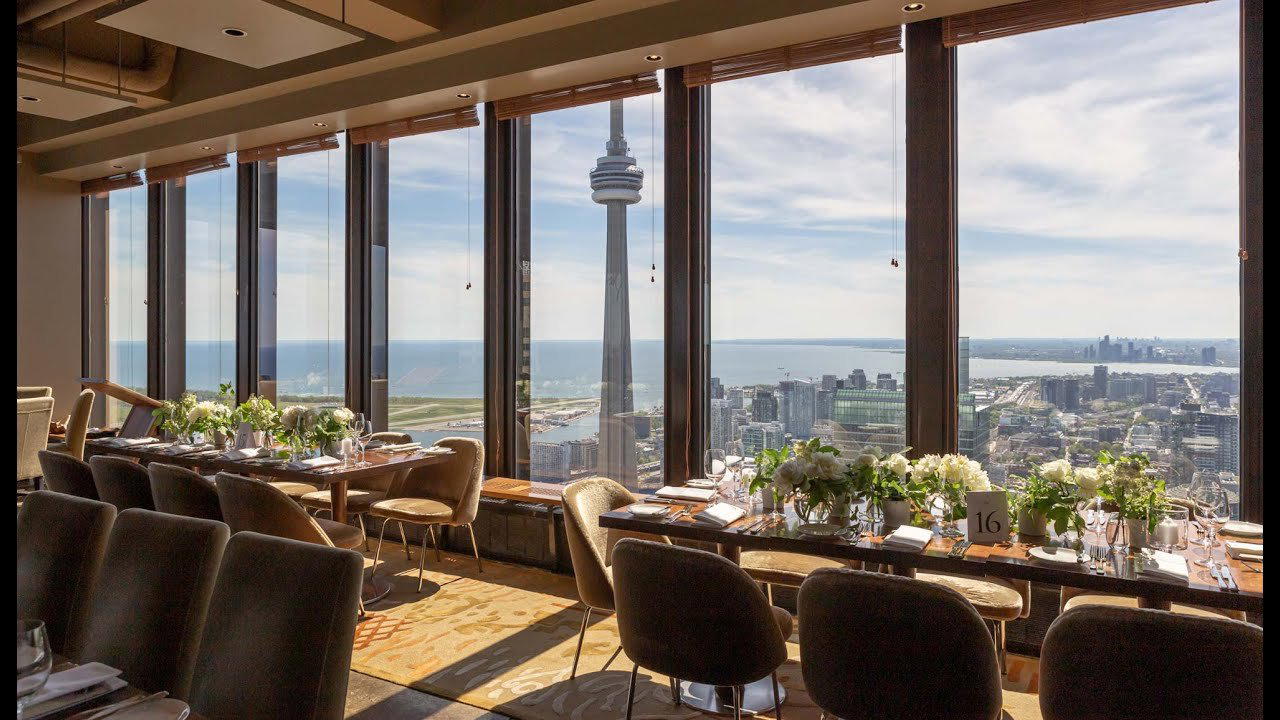
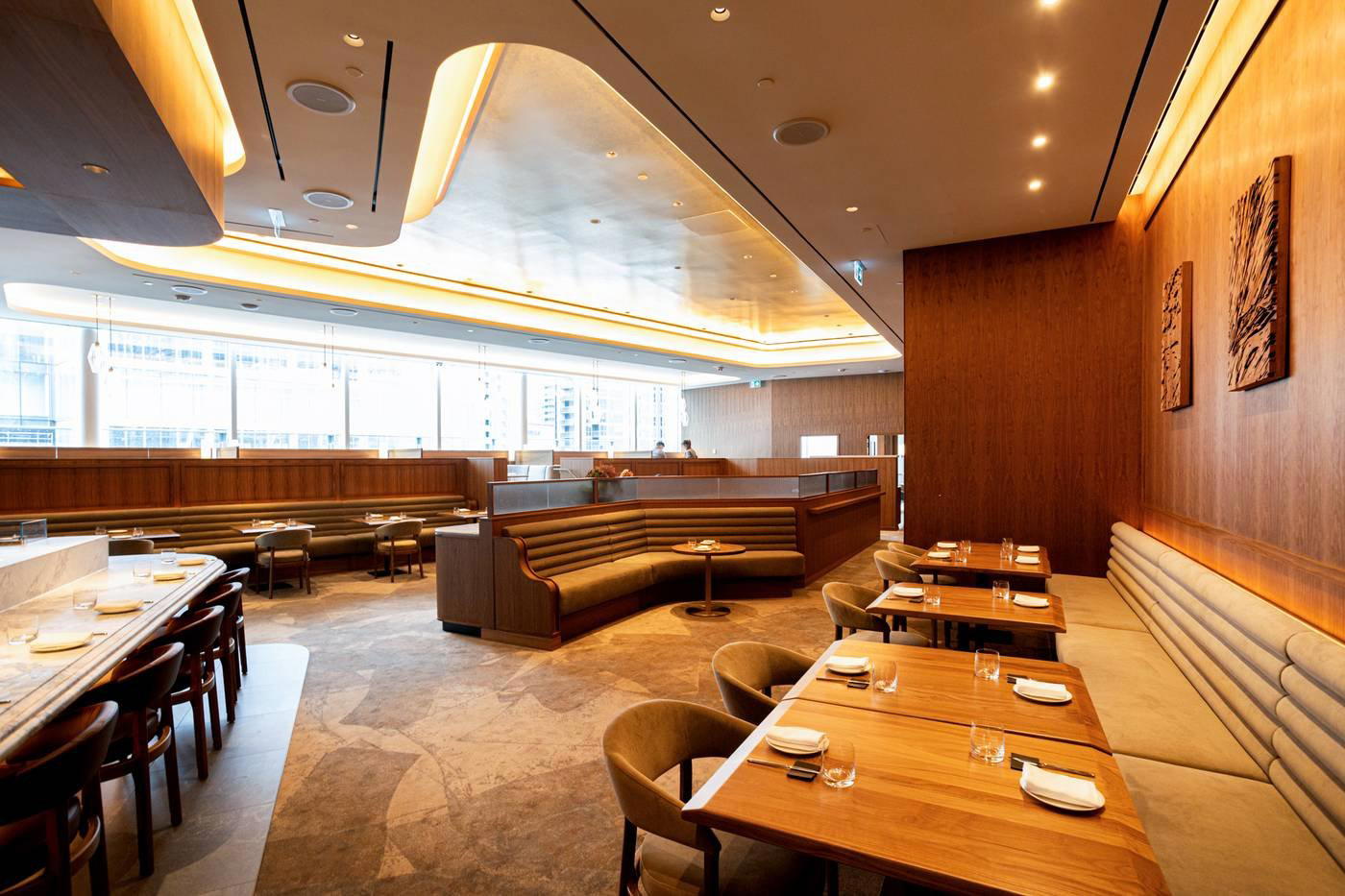
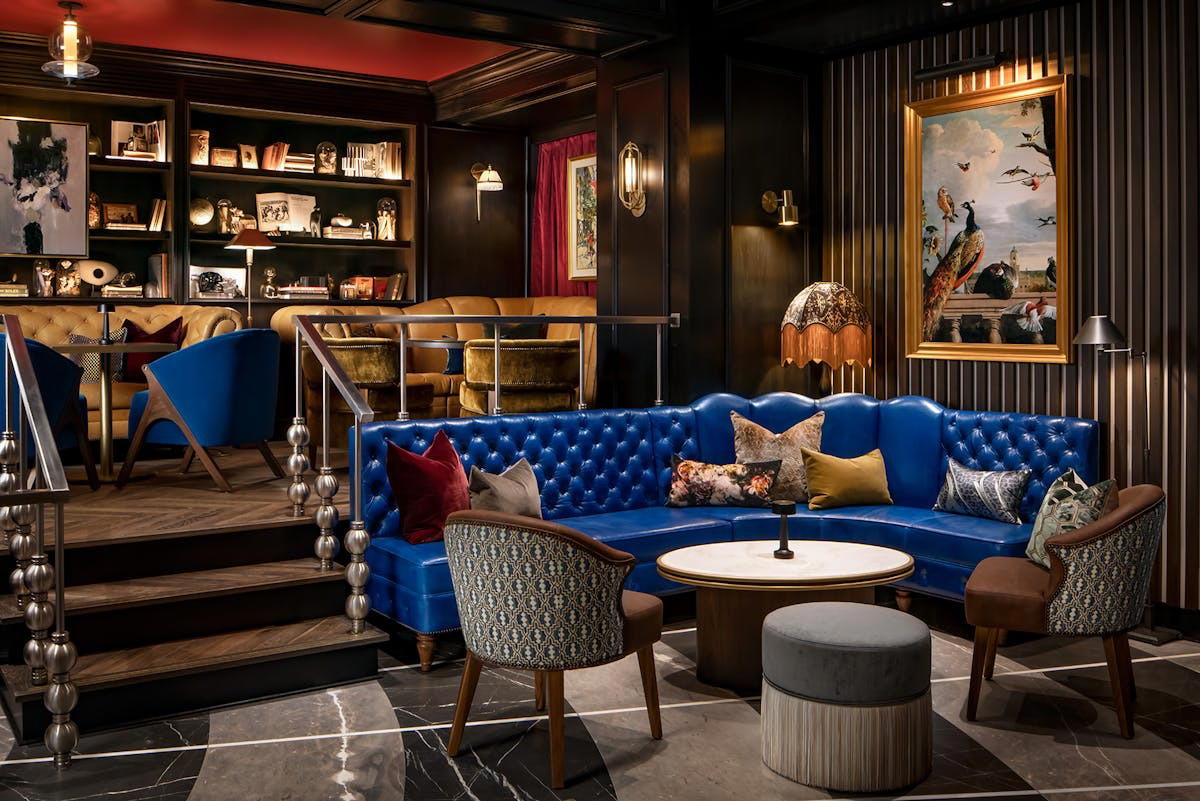
Teaching restaurants face a structural design challenge: the space must function simultaneously as a professional dining room and a controlled learning environment. The Chefs' House resolves this by arranging the dining room so that the kitchen operation remains visible or at least legible to guests, reinforcing the educational transparency that defines the format. The second-floor position separates the room from street noise without isolating it from the building's academic energy. Natural light from the King Street elevation gives the space a daytime quality that many Toronto dining rooms sacrifice in favour of evening-only atmospherics.
The physical container reads more like a serious restaurant than a canteen, which is a deliberate signal. Tablecloths, proper glassware, and a formally trained front-of-house team operated by hospitality students create a setting where the educational mission is demonstrated rather than announced. Visitors arriving for the first time often note the contrast between the institutional address and the composed interior, a gap that the college has evidently worked to close over successive iterations of the space.
Compared to the high-compression dining rooms of Toronto's tasting-menu tier, where Alo runs its celebrated contemporary format or Aburi Hana delivers kaiseki within an intimate envelope, The Chefs' House operates at a different scale and with a different spatial logic. The room accommodates a larger party count and a less pressured pace, which suits the learning rhythm of the kitchen team.
Menu Format and Seasonal Range
The menu at The Chefs' House follows the academic calendar rather than the conventional restaurant cycle of quarterly updates. This produces a more compressed rotation: dishes change as student cohorts progress through modules, which means a repeat visit two months apart can yield an entirely different menu. The seasonal anchor is consistent with broader Toronto culinary patterns, where Canadian produce windows, Ontario Niagara-region wines, and Indigenous ingredient traditions have all entered the mainstream fine-dining conversation over the past five years.
Toronto's premium dining tier has moved firmly toward format diversity. Sushi Masaki Saito operates at the strict omakase end; DaNico and Don Alfonso 1890 anchor the Italian-contemporary segment. The Chefs' House occupies a different register entirely, offering a structured multi-course format at a price point well below the city's $$$$ tier. That gap is the editorial argument for its inclusion in any honest account of where Toronto eats.
Across Canada, the teaching-restaurant model has produced some genuinely respected tables. Tanière³ in Quebec City and AnnaLena in Vancouver represent what happens when culinary ambition operates outside the institutional framework; The Chefs' House represents what happens when the institution itself becomes the ambition. The comparison is instructive rather than hierarchical.
Who Is Dining Here and Why
The guest profile at The Chefs' House is broader than a typical fine-dining room. Students from George Brown's culinary program bring family during assessments; neighbourhood regulars return for the value-to-quality ratio; food-curious visitors treat it as a counterpoint to the city's more established reservation lists. That mix produces a room with a different energy than the self-selecting clientele of Toronto's destination restaurants, where the price of entry alone filters the audience.
For visitors already working through Toronto's more demanding reservation calendars, whether chasing the counter at a Japanese fine-dining room or timing an approach to one of the city's contemporary tasting menus, The Chefs' House provides a different kind of access. The booking window is shorter, the commitment lower, and the format rewards curiosity over status signalling. That is not a consolation prize. It is a different kind of dining proposition.
Ontario's broader culinary geography offers similar contrasts of register and format. Eigensinn Farm in Singhampton and Restaurant Pearl Morissette in Lincoln both operate outside Toronto's restaurant economy while contributing to the province's culinary reputation. The Pine in Creemore and Barra Fion in Burlington point to the same diffusion of serious cooking beyond the city core. The Chefs' House sits at the intersection of urban accessibility and institutional seriousness, a combination that has no direct equivalent in the Toronto market. See our full Toronto restaurants guide for broader context on how the city's dining scene is structured across neighbourhoods and price tiers.
Elsewhere in Canada, Jérôme Ferrer - Europea in Montreal and Narval in Rimouski demonstrate how the country's French culinary inheritance continues to shape menus well outside Quebec's borders. Aux Anciens Canadiens in Quebec takes a heritage route; Bearspaw Golf Club in Calgary works within an entirely different hospitality model. Against that range, The Chefs' House represents Toronto's most direct engagement with cooking as a practised discipline rather than a finished product. And for a city that now competes seriously with Atomix in New York City for the attention of travelling diners, that kind of institutional depth matters.
Planning Your Visit
The Chefs' House operates during the George Brown College academic year, which generally runs September through April, with service pausing during semester breaks and examination periods. Visitors should confirm current service dates directly with George Brown College before planning around a specific date. Reservations: Bookings are accepted and recommended, particularly for lunch service during peak academic periods. Dress: Smart casual is appropriate given the formal table settings and structured service format. Budget: Pricing sits well below Toronto's $$$$ fine-dining tier, making it one of the more accessible multi-course formats in the city. Location: 215 King St E, second floor, in the St. Lawrence Market neighbourhood, accessible by TTC streetcar on King Street.
Frequently asked questions
Where exactly is The Chefs' House?
The Chefs' House is located at 215 King St E 2nd Floor, Toronto, ON M5A 1J9, Canada, Toronto.
Can I dine at The Chefs' House if I'm not affiliated with George Brown College?
The Chefs' House is open to the general public during the George Brown College academic year, running roughly September through April at 215 King St E in Toronto. No affiliation with the college is required; the restaurant functions as a genuine public dining room, not a closed faculty or student event. Service pauses between semesters and during breaks, so confirming the current operating schedule before visiting is essential.
What do regulars order at The Chefs' House?
Because the menu follows the George Brown College academic calendar rather than a fixed rotation, returning guests orient around the current semester's featured techniques and seasonal produce rather than signature dishes. What carries through each visit is the structure: a multi-course format executed by students under professional supervision at 215 King St E. Regulars tend to come back for the progression of the meal rather than any single item.
Should I book The Chefs' House in advance?
Reservations are advisable, particularly around student assessment periods and during the narrower windows of the September-to-April operating season. The dining room sits on the second floor of 215 King St E and has finite capacity; service does not run year-round. Check availability directly, as the academic calendar creates distinct busy and closed periods that differ from conventional restaurant schedules.
What is The Chefs' House known for?
The Chefs' House is the public-facing restaurant of George Brown College's culinary program in Toronto, where students in professional training cook and serve a full dining-room experience for paying guests. It occupies an unusual position in the city's restaurant scene: the kitchen is a graded learning environment, but the meal is structured as genuine fine dining rather than a casual practicum. That dual function, operating at 215 King St E from September through April, is the defining characteristic that separates it from both culinary schools and conventional restaurants.
What if I have allergies at The Chefs' House?
As a teaching restaurant operating under George Brown College oversight, The Chefs' House has structured kitchen protocols that include instructor supervision of food preparation. Diners with dietary restrictions or allergies should communicate those clearly at the time of booking and again on arrival, since menu compositions shift with each semester's curriculum. The supervised kitchen environment means allergen concerns are handled with more institutional accountability than a typical independent restaurant.
Is The Chefs' House good value for money?
The Chefs' House offers a multi-course dining experience produced by culinary students under professional instruction, which typically places its pricing well below comparable structured tasting menus elsewhere in Toronto. The trade-off is the academic-year operating window and variability tied to the curriculum cycle rather than a fixed menu. For guests who prioritise the format and location on King St E over restaurant-industry consistency, the value proposition is strong.
Comparable Options
Comparable venues nearby, for context on price, style, and recognition.
| Venue | Cuisine | Price | Notes |
|---|---|---|---|
| The Chefs' HouseThis venue (the venue you are viewing) | Contemporary Canadian | $30–50 | Not listed |
| Starving Artist | Canadian Waffle Brunch | Not listed | Corso Italia-Davenport |
| Oliver & Bonacini Hospitality | Modern Canadian Fine Dining | $50–100 | Uptown Yonge |
| Bymark | Modern Canadian Fine Dining | $50–100 | Financial District |
| Soho House Toronto | Canadian-Inspired House Kitchen | Not listed | Entertainment District |
| Tha Phae Tavern | Northern Thai Fusion Bar | $20–30 | Queen West |