Michelin Plate
Our verdict
Sasa holds a Michelin Plate (2024), positioning it among Zhongshan District's most consistent sushi addresses. In a Taipei market where omakase counters have multiplied sharply over the past decade, Sasa occupies the premium tier without the extended waitlists of the city's starred rivals. The address on Lane 42, Section 2 of Zhongshan North Road keeps it close to the district's quieter residential corridors.

Pearl is the En Primeur Club membership app — saves, bookings, and concierge access live there. Same editors, same standards.
- Address
- No. 6, Lane 42, Section 2, Zhongshan N Rd, Zhongshan District, Taipei City, Taiwan 104
- Phone
- +886 2 2561 1246
- Hours
- Mon ClosedTue–Sun 12–2:30 PM, 6–10 PM
- Website
- facebook.com
- Directions
- Get directions
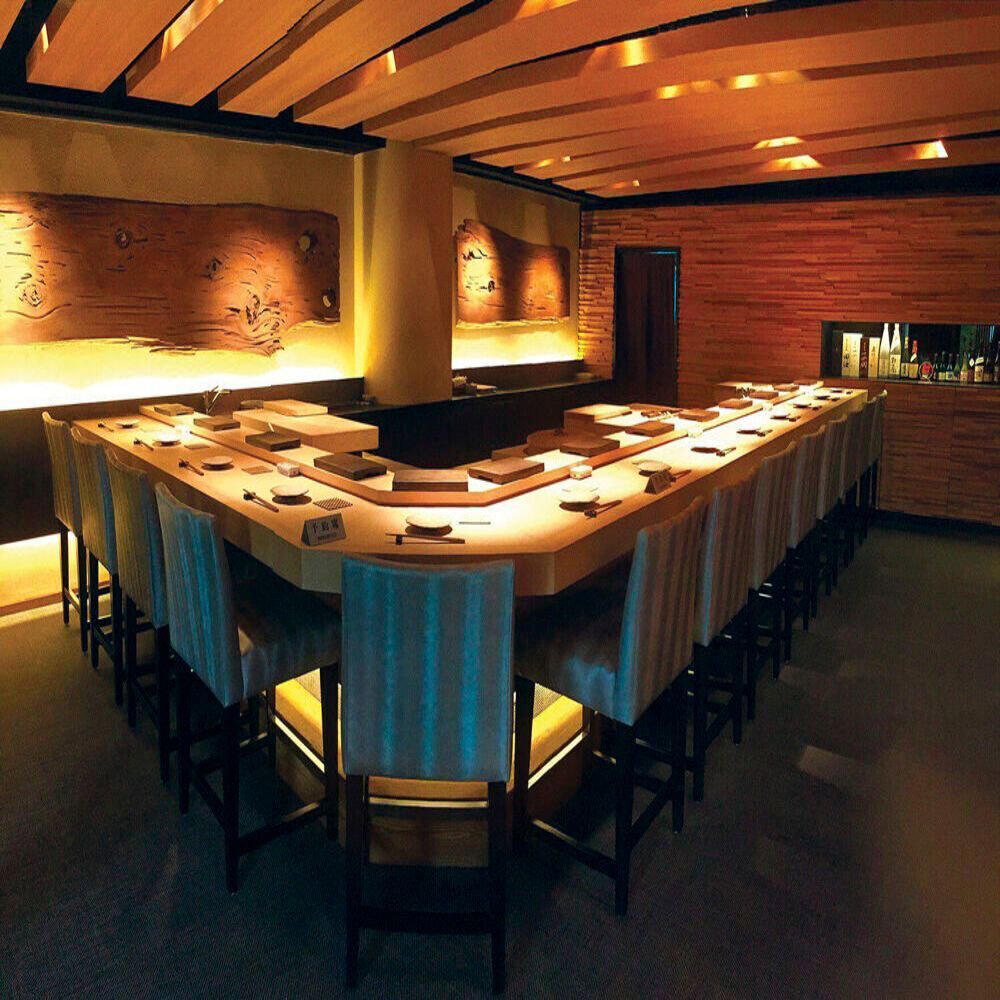
The Counter, the Calendar, and the Case for Zhongshan
Taipei's omakase scene has been quietly reordering itself for the better part of a decade. What began as a handful of Japanese-trained chefs operating intimate counters has expanded into a recognisable tier structure: starred rooms drawing international attention, mid-level counters competing aggressively on ingredient sourcing, and a smaller cohort that maintains Michelin recognition without the reservation chaos of the leading bracket. Sasa, a sushi restaurant on Lane 42 off Zhongshan North Road Section 2, sits in that third category.
The approach to the restaurant reflects something about Zhongshan itself. The district occupies a middle register in Taipei's dining geography: not the concentrated prestige of Da'an or the tourist density of Xinyi, but a residential-commercial blend where serious restaurants tend to settle in for the long term rather than chase visibility. Lane 42 is that kind of street. The building is unremarkable from the outside, which is broadly true of this entire tier of Taipei dining. The counter inside is where the format does its work.
How Tokyo's Seasonal Logic Translates to Taipei
Japanese omakase is, at its structural core, a calendar-driven format. The chef's selection moves with the fish market's supply, which in turn moves with the season. Spring brings different shellfish than autumn; winter produces the fatty tuna cuts that summer cannot. At Tokyo counters like Harutaka, the seasonal rotation is treated as a central organising principle, not a marketing phrase. The same logic travels with the format when it crosses into Taipei's sushi tier.
Taiwan's own seasonal calendar introduces a secondary layer. Warm-water species from the nearby Pacific supplement or substitute for cold-water Japanese imports depending on the time of year. The interplay between Japanese sourcing protocols and Taiwanese market availability is one of the more interesting tensions in Taipei's premium sushi rooms. Summer heat affects transport and holding conditions. Winter months, roughly November through February, tend to concentrate the strongest ingredient windows: heavier fish, better fatty cuts, more predictable cold-chain arrivals. For counter dining, this makes cooler months a marginally stronger time to visit, not because the kitchen changes its discipline, but because the raw material available at market does.
Taipei's sushi tier as a whole has been building this seasonal sophistication over several years. Venues like Sushi Akira and Sushi Ryu operate counters that similarly structure their menus around what arrives from Toyosu and what the local market offers at any given moment. Sasa's Michelin Plate positions it within this competitive cohort rather than above it, which is worth being clear about: the Plate recognises consistent quality, not the starred distinction that places a venue in a separate conversation.
The $$$$ Tier in Context
At the four-dollar-sign price level, Taipei's omakase market now competes on sourcing credentials and format execution rather than on novelty. The format itself, a sequential counter meal with the chef composing each piece, is familiar enough that repetition is the main risk. What separates one $$$$ counter from another is the tightness of the seasonal rotation, the quality of the rice programme (temperature, seasoning, grain compression), and the pace of service.
For a city-wide view of how this tier compares across dining styles, our full Taipei restaurants guide covers the range from Michelin-starred Cantonese at Le Palais to the modern European-Asian convergence at Logy and the Taiwanese-French work at Taïrroir. Sushi occupies a specific corner of that map, one that values restraint and technical repetition over experimentation. That is both its discipline and its constraint: the format rewards visitors who understand what they are measuring.
Comparable sushi formats in the broader region include Sushi Shikon in Hong Kong and Shoukouwa in Singapore, both of which operate at the starred level with the allocation and reservation pressure that implies. Sasa sits below that tier in terms of formal recognition, which in practical terms means it is a more accessible entry point into premium counter sushi for visitors who have not already secured reservations at the city's starred rooms.
Zhongshan's Place in Taipei Dining
For visitors building a longer itinerary, Zhongshan District offers a density of serious restaurants within a walkable corridor along Zhongshan North Road. The premium sushi address on Lane 42 sits within easy reach of the district's other dining options, and the neighbourhood's lower tourist footprint compared to Da'an means that the surrounding area tends toward regular local clientele rather than visiting crowds. This affects the room's ambient register: counter dining in Zhongshan generally runs quieter and more focused than the same format in higher-traffic districts.
Taiwan's dining scene extends well beyond Taipei, and visitors with time to travel should note that the island's Michelin coverage now spans multiple cities. JL Studio in Taichung and GEN in Kaohsiung represent what the regional scene produces outside the capital. For a very different price register and format, A Cun Beef Soup in Tainan and Akame in Wutai Township show the breadth of Taiwan's recognised dining outside metropolitan sushi. For context on staying near Zhongshan, our full Taipei hotels guide covers the range of options in the district and beyond; our Taipei bars guide, wineries guide, and experiences guide cover the rest of the city's premium circuit. For a mountain retreat with an entirely different tempo, Volando Urai Spring Spa and Resort in Wulai District is within day-trip distance.
One further sushi counter worth noting for comparison purposes is Kitcho, which occupies a different position in Taipei's Japanese dining map and provides a useful reference point for understanding how the city's Japanese-format restaurants have differentiated their positioning.
Know Before You Go
Address: No. 6, Lane 42, Section 2, Zhongshan North Road, Zhongshan District, Taipei 104
Price range: $$$$
Recognition:
Cuisine: Sushi (omakase counter format)
Booking: Advance reservations recommended; walk-in availability is not confirmed and should not be assumed at this price tier
Leading timing: Cooler months (November through February) align with stronger cold-water fish supply and more consistent cold-chain arrivals from Japan
Getting there: Zhongshan North Road is served by the MRT Zhongshan Station (Red and Green lines); Lane 42 is a short walk from the main road
Frequently asked questions
What's the price range at Sasa?
Pricing at Sasa is listed as $$$$.
How do I find Sasa?
Sasa is located at No. 6, Lane 42, Section 2, Zhongshan N Rd, Zhongshan District, Taipei City, Taiwan 104, Taipei.
What kind of recognition has Sasa received?
Sasa has received recognition including: Michelin Plate (2024).
What's the best thing to order at Sasa?
Sasa operates as an omakase counter, so the kitchen makes every selection for you. The format is entirely chef-directed, with the progression driven by seasonal availability at the fish market. Arriving with dietary restrictions communicated in advance is the practical move; otherwise, the counter does the work.
What kind of cuisine does Sasa serve?
Can I walk in to Sasa?
Walk-in availability at a Michelin Plate-recognised omakase counter in Taipei is rarely viable. Fixed seat counts and advance bookings are standard at the $$$$-tier sushi format, and Zhongshan counters at this level tend to fill weeks out. check the venue's official channels to check current lead times before planning around it.
What's the signature at Sasa?
Omakase counters don't carry a fixed signature dish in the menu-item sense. At Sasa, the selection rotates with the season and the fish market's supply, which is structurally the point. The 2024 Michelin Plate recognition reflects the kitchen's consistency across that rotating format, not a single standout preparation.
At a Glance
Comparable venues nearby, for context on price, style, and recognition.
| Venue | Cuisine | Price | Awards | Notes |
|---|---|---|---|---|
| SasaThis venue — the venue you are viewing | Traditional Edomae Omakase | $100–150 | Michelin Plate | Not listed |
| Uosho | Kanto-style Unagi | Not listed | Michelin Plate | Sanzhong, Kanto-style Unagi |
| Kiku | Kappo | Not listed | 1 Michelin Star | Dunhuang, Kappo |
| Sushi Touryuumon | Japanese Omakase | Not listed | Michelin Plate | Checeng, Japanese Omakase |
| Adachi | Traditional Japanese Omakase | $300–500 | Not listed | Jingxin, Traditional Japanese Omakase |
| Robin's Teppanyaki | Classic Teppanyaki | $150–200 | Michelin Plate | Kangle, Classic Teppanyaki |
Recognition history
Dated appearances from independent guides and award organizations, with the underlying list record or original source where available.
Michelin Plate
Michelin
Full recognition history (2 entries)
Michelin Plate
Michelin