
2 Michelin Stars
Our verdict
For those tracking Spanish contemporary cooking across Asia, this is the reference address.

Pearl is the En Primeur Club membership app — saves, bookings, and concierge access live there. Same editors, same standards.
- Address
- No. 61號GF, Section 1, Jianguo N Rd, Zhongshan District, Taipei City, Taiwan 10489
- Phone
- +886 2 2500 6832
- Hours
- Daily 8 AM–10 PM
- Website
- hotelmvsa.com
- Directions
- Get directions
- Booking
- Book on the venue's website
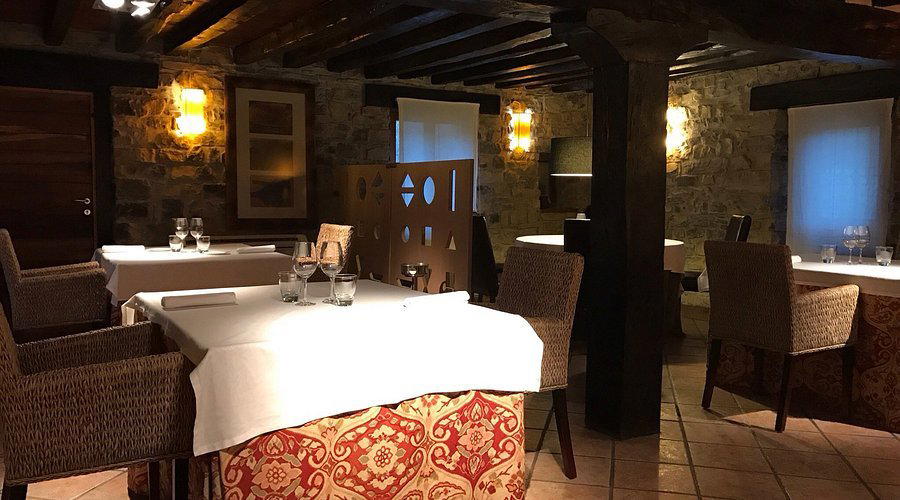
Molino de Urdániz operates outside that template. Navarra's culinary identity is built on different materials: the white asparagus of the Ebro valley, Piquillo peppers from Lodosa, lamb from the highlands, truffle from the Pyrenean foothills. The cooking vocabulary is less demonstrably theatrical than the Catalan avant-garde, which means it reads differently to diners whose reference for Spanish food runs through elBulli's legacy. What it offers instead is a coherent regionalism, a kitchen with a specific geographic argument rather than a style positioned for international legibility. Most European restaurants that expand into Asia adopt a more internationally palatable register, French with Asian accents, or fusion formats designed to reduce friction for unfamiliar audiences. A kitchen rooted in Navarran tradition, operating at two-star level in a city where Spanish fine dining has no established audience baseline, is making a different kind of argument about what the format can sustain. The area runs north from Zhongxiao up toward the Xingtian Temple corridor, with a concentration of mid-range to high-end restaurants distributed across its residential and commercial blocks. It lacks the density of Xinyi's hotel-anchored luxury corridor but carries a quieter operational logic: restaurants here tend to draw from a local professional clientele rather than from hotel guests or tourist traffic. Whether that translates to a specific atmosphere is difficult to specify without sourced sensory data, but the structural positioning is meaningful: this is a standalone restaurant competing on food rather than on lobby hotel prestige. The pattern is different from the French luxury hotel model, where a Robuchon or a Ducasse brand travels within a known hospitality infrastructure. Spanish contemporary restaurants operating abroad tend to do so as singular outposts rather than multi-city brand expansions, which means each placement is a discrete editorial argument about where and why Spanish cooking has an audience.
For readers tracking the Spanish contemporary category across European cities, the comparison set includes 20° Restobar in Düsseldorf, El Jardín de Orfila in Madrid, and ESTIMA by Catalana in Erfurt, each operating in a different city context but sharing the same genre. In Asia, the comparison is harder to draw because the category is thin. JL Studio in Taichung has drawn international attention for its Southeast Asian-inflected tasting menu. GEN in Kaohsiung represents the southern city's emerging fine-dining tier. At the more deeply local end, A Cun Beef Soup in Tainan and No specific signature dishes are confirmed in the sourced data available to EP Club at time of publication, and we do not speculate on menu specifics. What the two Michelin stars across 2024 and 2025 do confirm is that the inspectors found consistency and high cooking craft across multiple visits. Given the Navarran culinary tradition that anchors the kitchen, ingredients associated with that region, asparagus, Piquillo peppers, game, Pyrenean produce, are likely to appear as structural elements of the menu, but the precise dishes should be verified through direct contact with the restaurant before booking.Know Before You Go
Frequently asked questions
What's Molino de Urdániz known for in terms of accolades?
Molino de Urdániz has received recognition including: Michelin 2 Stars (2025); Michelin 2 Stars (2024).
What's the must-try dish at Molino de Urdániz?
What the two consecutive Michelin stars (2024 and 2025) do confirm is that the kitchen operates at a level where the tasting menu, as a whole, is the format worth committing to. Chef David Yárnoz's Spanish contemporary approach, rooted in Navarran rather than Catalan tradition, is the defining context for whatever arrives at the table.
How do I find Molino de Urdániz?
Molino de Urdániz is located at No. 61號GF, Section 1, Jianguo N Rd, Zhongshan District, Taipei City, Taiwan 10489, Taipei.
Side-by-Side Snapshot
| Venue | Cuisine | Price | Awards | Notes |
|---|---|---|---|---|
| Molino de UrdánizThis venue — the venue you are viewing | Modern Spanish Contemporary | Not listed | 2 Michelin Stars | Not listed |
| logy | Modern Japanese-Taiwanese Fusion Omakase | $100–150 | 2 Michelin Stars · World's 50 Best #22 | Modern European, Asian Contemporary |
| Le Palais | Fine Dining Cantonese | $150–200 | 3 Michelin Stars · La Liste Top Restaurants | Cantonese |
| Taïrroir | Taiwanese-French Fusion Fine Dining | $150–200 | 3 Michelin Stars · La Liste Top Restaurants | Taiwanese/French, Taiwanese contemporary |
| Mudan Tempura | Michelin-Starred Tempura | Not listed | 2 Michelin Stars · La Liste Top Restaurants | Tempura |
| de nuit | Contemporary French | $150–200 | 1 Michelin Star · Star Wine List | French Contemporary |
Recognition history
Dated appearances from independent guides and award organizations, with the underlying list record or original source where available.
Michelin 2 Stars
Michelin
Full recognition history (3 entries)
Michelin 2 Stars
Michelin
Michelin 2 Stars
Michelin
Continue exploring
More in Taipei
Restaurants in Taipei
Browse all →
Bars in Taipei
Browse all →
Hotels in Taipei
Browse all →
Wineries in Taipei
Browse all →
Details
- Elegant
- Sophisticated
- Classic
- Date Night
- Business Dinner
- Celebration
- Special Occasion
- Wine Cellar
- Private Dining
- Hotel Restaurant
- Extensive Wine List
- Tasting Menu
- Set Menu
- Vegetarian Friendly
- Gluten Free Options
- Pescatarian Friendly
Current opening hours
- Monday
- 8 AM–10 PM
- Tuesday
- 8 AM–10 PM
- Wednesday
- 8 AM–10 PM
- Thursday
- 8 AM–10 PM
- Friday
- 8 AM–10 PM
- Saturday
- 8 AM–10 PM
- Sunday
- 8 AM–10 PM
Hours can change for holidays and private events. Last verified .
Elegant dining area adorned with Spanish-themed paintings and a dramatic glazed wine cellar, creating a sophisticated and classic atmosphere.