Our verdict
Saran Shinsaibashimise Korean Restaurant is a casual Korean restaurant at Japan, 〒542-0082 Osaka, Chuo Ward, Shimanouchi, 2 Chome−13−30 1F, with conversational pacing for dinner.

Pearl is the En Primeur Club membership app, where members save venues, book tables and use the concierge.
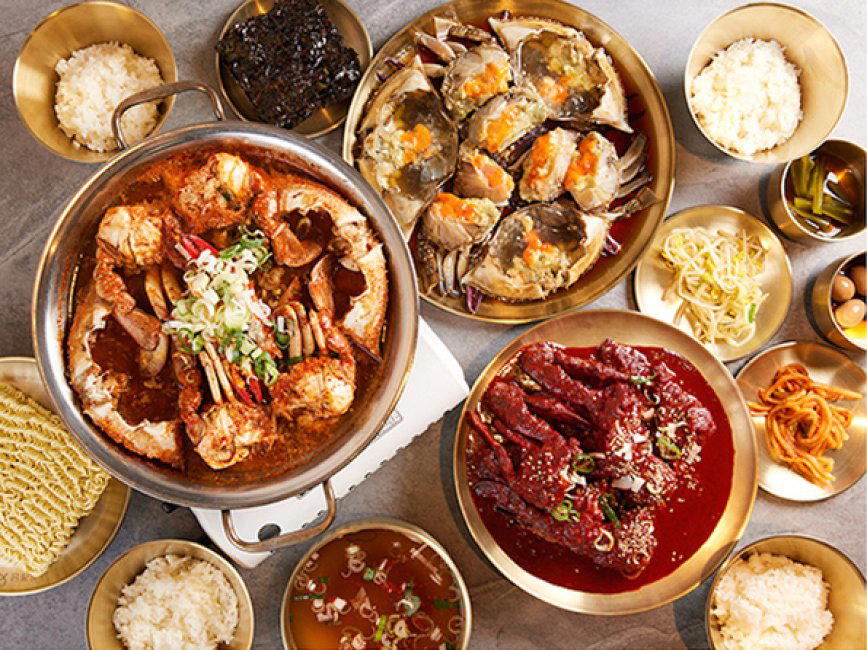
Where Osaka Eats Korean: The Shimanouchi Context
Shimanouchi sits in Chuo Ward as one of Osaka's more compressed dining corridors, a few blocks south of the Shinsaibashi shopping strip where the foot traffic thins and the restaurants grow more local in character. Korean cuisine has deep roots in the Osaka dining fabric, partly because the city has historically hosted one of Japan's largest Zainichi Korean communities, concentrated in areas like Tsuruhashi to the east. That cultural presence has shaped how Osaka eats Korean food differently from Tokyo: the cooking tends to be less filtered through fusion trends and more grounded in the kind of meat-heavy, ferment-forward tradition that predates the current Korean food boom across Asia. Saran Shinsaibashimise Korean Restaurant, located at 2-chome 13-30 Shimanouchi on the ground floor, operates within that longer culinary lineage rather than outside it.
The Dining Ritual: Pacing, Customs, and How the Meal Moves
Korean dining in Japan operates under a distinct set of rhythms that differ from both washoku kaiseki and the izakaya model. Dishes arrive collectively rather than sequentially, the table filling quickly with small plates of banchan alongside a central protein, whether that is grilled meat, a bubbling jjigae, or a cold noodle course. The grill, where present, becomes the social axis of the meal: diners manage their own cooking, turning cuts at a pace they control, adjusting doneness by preference. This format demands a different kind of attention from the diner than a tasting menu counter requires. There is no passive receipt of a chef's sequence. The meal is participatory.
In Osaka's Korean restaurants, this participatory quality tends to be taken seriously. The banchan are not decorative fillers but calibrated to complement what follows, with kimchi at varying stages of fermentation, namul seasoned with sesame, and pickled vegetables that cut through rendered fat. A well-run Korean meal in this city is structured, even if the structure is informal. Understanding that the pacing belongs partly to the diner is the first piece of intelligence a first-time visitor needs. Ordering too quickly collapses the rhythm; the better approach is to establish the protein anchor, let the table settle, then call in additional plates as the meal finds its pace.
For visitors arriving from destinations where Korean cuisine skews toward the K-BBQ spectacle format, Osaka's neighbourhood Korean rooms tend to de-emphasise the theatrical and focus on the food itself. A reservation or early arrival is advisable for dinner service, particularly on weekends when Shinsaibashi-area foot traffic peaks. The ground-floor format at the Shimanouchi address suggests a compact, accessible room rather than a multi-floor operation, which typically means a shorter wait than larger Korean chains in busier corridors.
Osaka's Korean Table in Regional Perspective
Positioning this kind of Korean restaurant within Osaka's broader dining map requires acknowledging what surrounds it. Osaka's fine-dining tier runs toward kaiseki and French-Japanese hybrids: HAJIME in Osaka operates at the three-Michelin-star level, while restaurants like Ajikitcho Bunbuan and Calendrier represent the city's commitment to considered, structured dining experiences. Korean cuisine in Osaka occupies a different tier: not a luxury format, but a culturally embedded one with its own internal standards of quality. The distinction matters because travellers comparing across categories will be measuring the wrong things. A Korean restaurant in Shimanouchi is not competing with Ajihei Sonezaki or Aka to Shiro on tasting menu architecture. It is competing on ingredient quality, fermentation depth, grill execution, and the intangible of whether it feels like a place that takes its cuisine seriously on its own terms.
Across Japan's dining capitals, Korean restaurants have grown more sophisticated in how they present themselves to an international audience. Harutaka in Tokyo and the kaiseki traditions of Gion Sasaki in Kyoto reflect one end of the spectrum. Korean cooking in Osaka, drawing on the city's longstanding community connections, reflects a more populist but no less committed tradition. For reference beyond Japan, Atomix in New York City demonstrates how Korean culinary technique can be expressed at the highest fine-dining register, though that framing is deliberately distant from what neighbourhood Korean restaurants in Osaka are doing or intend to do.
Shimanouchi as a Dining Address
Chuo Ward contains some of Osaka's most concentrated restaurant activity. Shimanouchi's position places it within walking distance of Shinsaibashi station on the Midosuji Line, making it reachable from most central Osaka hotels without requiring transfers. The neighbourhood itself runs quieter than the Dotonbori strip two blocks north, which makes it more hospitable for the kind of meal that benefits from a lower ambient noise level. Restaurants here tend to draw a local evening crowd supplemented by visitors who have moved past the tourist corridor. That composition affects service calibration: staff are accustomed to regular diners with established preferences, which can work in a first-time visitor's favour if they signal openness to recommendation. See our full Osaka Shi restaurants guide for broader neighbourhood mapping and category context.
Nearby comparison dining, including options across the Chuo Ward mid-range, gives a sense of the price bracket most Korean restaurants in this area occupy: accessible relative to Osaka's kaiseki tier, positioned to draw a repeat local clientele rather than a special-occasion visitor set. Az and Goh in Fukuoka both represent the kind of chef-driven formal dining that Korean neighbourhood restaurants in this area explicitly are not trying to replicate. The value comparison across regional options, including akordu in Nara and Bistro Ange in Toyohashi, underscores how Osaka's mid-range dining across all categories tends to offer stronger ingredient-to-price ratios than comparable cities.
Planning Your Visit
Saran Shinsaibashimise is located at 2-chome 13-30 Shimanouchi, Chuo Ward, Osaka, on the ground floor of its building. The Shinsaibashi area is serviced by Shinsaibashi station on the Osaka Metro Midosuji and Nagahori Tsurumiryokuchi lines, placing the restaurant within a short walk of central Osaka transit. As with most Korean restaurants in this corridor, dinner service on Friday and Saturday evenings will see the highest competition for tables. Arriving before peak service or visiting on a weekday evening generally offers a more comfortable entry.
Frequently asked questions
Is Saran Shinsaibashimise Korean Restaurant a family-friendly restaurant?
Korean dining formats tend to work well for mixed-age groups. Shared plates and grilled proteins at the centre of the table create a participatory structure that suits families, and Shimanouchi's quieter position south of the Shinsaibashi strip means the immediate surroundings are less congested than the Dotonbori corridor. Ground-floor access at 2-chome 13-30 Shimanouchi, Chuo Ward also removes the staircase friction common in multi-storey Osaka dining buildings.
How would you describe the vibe at Saran Shinsaibashimise Korean Restaurant?
Shimanouchi runs at a lower volume than Dotonbori, which sits a short walk north, making this part of Chuo Ward better suited to a sit-down meal than a bar crawl. The ground-floor address at 2-chome 13-30 Shimanouchi points toward a neighbourhood-facing room rather than a destination showpiece. Expect a convivial, table-centred atmosphere shaped by the communal logic of Korean dining rather than the counter precision of Osaka's washoku tier.
How does Saran Shinsaibashimise compare to Osaka's established Korean dining hub at Tsuruhashi?
Tsuruhashi, east of Chuo Ward, is the historical centre of Osaka's Korean community and carries decades of institutional weight in yakiniku and Korean home cooking. Saran Shinsaibashimise's address in Shimanouchi places it inside the Shinsaibashi commercial zone rather than that community context, which typically means a different customer mix and a room oriented toward Osaka's central dining crowd rather than the neighbourhood regulars that anchor Tsuruhashi's market stalls and restaurant rows.
What's the must-try dish at Saran Shinsaibashimise Korean Restaurant?
Visiting with an open order strategy, letting staff guide the table through the day's strengths, is the approach that works across most Korean dining formats in this part of the city.
Cuisine and Credentials
Comparable venues nearby, for context on price, style, and recognition.
| Venue | Cuisine | Price | Awards | Notes |
|---|---|---|---|---|
| Saran Shinsaibashimise Korean RestaurantThis venue (the venue you are viewing) | Korean Restaurant | Not listed | Not listed | Not listed |
| Yoshino Sushi | Traditional Osaka Hakozushi | $10–20 | Not listed | Chūō |
| お好み・鉄板焼 堀川 | Okonomiyaki & Teppanyaki | $30–50 | Not listed | Kita |
| Usamitei Matsubaya | Historic Osaka Udon & Soba Shop | $10–20 | Tabelog 100 #15 | Chūō |
| き田たけ うどん | Traditional Udon | $10–20 | Tabelog 100 #100 | Chūō |
| Pizzeria da Tigre | Authentic Neapolitan Pizza | $10–20 | 50 Top Pizza Asia-Pacific #19 | Nishi |
Continue exploring
More in Osaka
Restaurants in Osaka
All restaurants in Osaka →
Bars in Osaka
All bars in Osaka →
Hotels in Osaka
All hotels in Osaka →

Wineries in Osaka
Browse all →
Details
- Casual Hangout
- A La Carte
Current opening hours
- Monday
- 5:30 PM–12 AM
- Tuesday
- 5:30 PM–12 AM
- Wednesday
- 5:30 PM–12 AM
- Thursday
- 5:30 PM–12 AM
- Friday
- 5:30 PM–12 AM
- Saturday
- 5:30 PM–12 AM
- Sunday
- 5:30 PM–12 AM
Hours can change for holidays and private events. Hours as of .
Casual dining atmosphere typical of neighborhood eateries.