On the second floor of an FK Leisure Building in Doyamacho, Kita Ward, this okonomiyaki and teppanyaki address occupies a format that Osaka treats as everyday currency: the iron griddle as both cooking tool and social conductor. The menu splits between the griddled pancake tradition and the broader teppanyaki repertoire, placing it squarely in the casual-counter culture that defines the city's mid-register dining.
Pearl is the En Primeur Club membership app — saves, bookings, and concierge access live there. Same editors, same standards.
- Address
- Japan, 〒530-0027 Osaka, Kita Ward, Doyamacho, 17−1 FKレジャービル 2F
- Phone
- +81663631020
- Website
- horikawa-okonomi.com
- Directions
- Get directions
 Saves & bookings on Pearl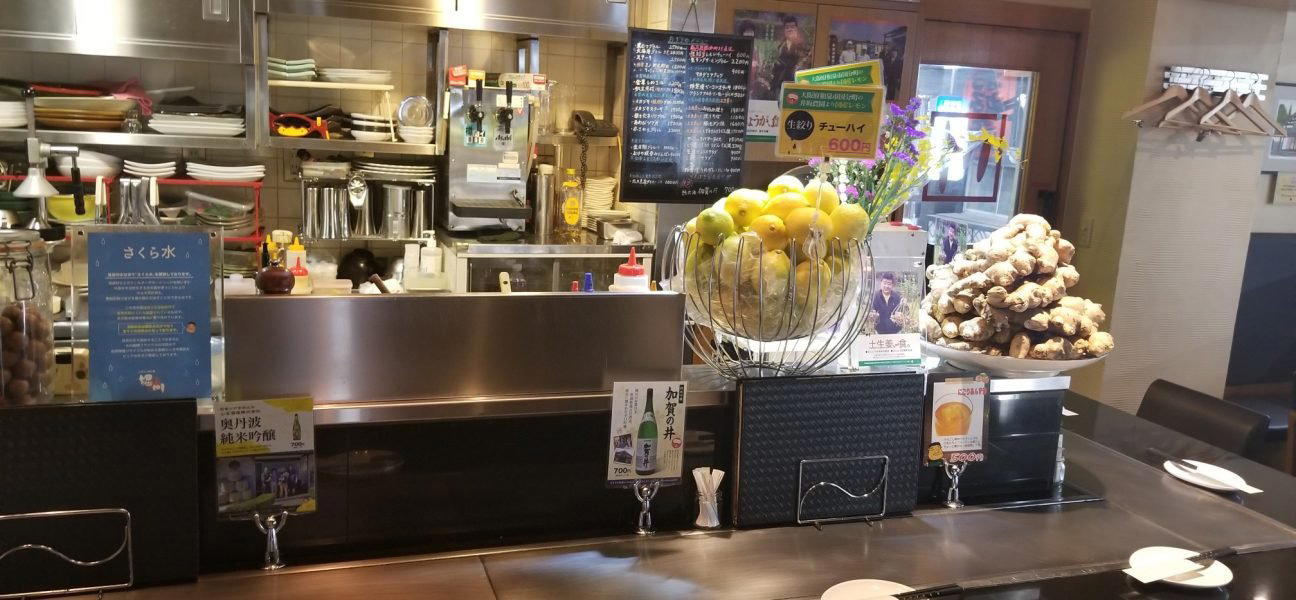
The Iron Griddle as Osaka's Organizing Principle
Osaka's relationship with teppanyaki and okonomiyaki is structural, not incidental. The iron plate sits at the center of the city's dining identity in a way that has no real equivalent elsewhere in Japan: it is simultaneously a cooking method, a social format, and a price-access signal that cuts across income brackets and neighborhoods. In Kita Ward's Doyamacho district, where after-work drinking culture and neighborhood restaurants overlap with the commercial density of central Osaka, that griddle tradition takes on a particular texture. The streets here are not the tourist circuit of Dotonbori, and the clientele reflects that: local workers, regulars from nearby offices, and visitors who have moved past the obvious landmarks toward the city's daily rhythm.
お好み・鉄板焼 堀川 occupies the second floor of the FK Leisure Building at 17-1 Doyamacho, a placement that signals something useful about Osaka's restaurant geography. Upstairs rooms in this part of Kita Ward tend to serve regulars rather than passing foot traffic. The format self-selects for intent: you climb the stairs because you already know where you're going, or because someone directed you there. That spatial logic shapes the atmosphere before a dish arrives.
Menu Architecture: Two Traditions, One Surface
The dual billing of okonomiyaki and teppanyaki is worth examining as a structural choice rather than a simple menu decision. These are not equivalent formats with identical customer appeal. Okonomiyaki, the batter-and-cabbage pancake that Osaka claims as its own against Hiroshima's layered interpretation, is a participatory dish in many of its traditional settings: batter delivered to the table, the griddle shared, cooking as conversation. Teppanyaki, in its broader non-performative form, positions the cook as technician and the diner as observer, with proteins, vegetables, and starches worked across the plate surface in sequence.
Combining both under one roof is a deliberate statement about range. It positions a venue to serve the quick solo lunch of a griddled pancake alongside the more structured meal of teppan-cooked protein, without requiring two separate kitchens or two separate dining formats. In practice, this architecture allows a single address to function across different occasions, a flexibility that matters in a neighborhood like Doyamacho where the same customer might arrive three times a week in entirely different states of hunger and time constraint.
The comparison set for this type of address in Osaka runs wide. At the mass-market end, chains like Dotonbori Kukuru have standardized okonomiyaki for high-volume tourist throughput. At the specialist end, long-running independent counters in Namba and Shinsaibashi maintain single-format discipline, serving okonomiyaki only and building identity around that restriction.堀川 uses the teppanyaki complement to extend the menu's reach without abandoning the okonomiyaki anchor that roots it in Osaka's vernacular tradition.
Kita Ward's Dining Register
Doyamacho is not a neighborhood that generates significant international food press, which is partly why its restaurant stock reflects actual local demand rather than positioning for external audiences. Kita Ward as a whole contains some of Osaka's most formally recognized dining, including addresses that operate in the same tier as HAJIME in Osaka and the kaiseki tradition that connects Osaka to the broader Kansai continuum represented by venues like Gion Sasaki in Kyoto and Ajikitcho Bunbuan. But those formal registers and the teppan-and-griddle neighborhood counter inhabit the same city without tension. Osaka's dining culture has always distributed itself across price points more fluidly than Tokyo's.
The mid-register okonomiyaki and teppanyaki address in a second-floor Kita Ward room is its own coherent category. It is not aspiring toward the precision counter formats of Ajihei Sonezaki or the contemporary French craft of Calendrier, nor is it competing with the French-accented technical work at Aka to Shiro or Az. It occupies a different quadrant of the city's offer entirely, one that most visitors to Osaka should spend time in regardless of how much of their trip is allocated to formally recognized restaurants.
That category context matters when you consider what Osaka's iron-griddle tradition actually teaches about the city's food values. Speed, directness, flavor density, and communal informality are not compromises in this setting: they are the intended outcome. The same values that animate the city's takoyaki stands and kushikatsu counters run through the okonomiyaki room, expressed in a slightly more composed format.
Practical Orientation
The address at 17-1 Doyamacho places 堀川 within walking distance of Namba Hana-michibashi and the broader Umeda commercial zone, making it accessible from both the central Kita shopping district and the transit interchange that feeds much of northern Osaka. For visitors staying in or around Umeda, this part of Doyamacho is a logical evening direction when the goal is a neighborhood meal rather than a destination reservation. Reservations are recommended, and the restaurant is open Monday through Saturday from 5:30 to 9:30 PM, with Sunday closed.
Travelers who move between Kansai's more formal addresses and a room like 堀川 tend to find a useful recalibration. The iron griddle in a second-floor Osaka room is not a lesser version of Japanese dining. It is a different and equally coherent expression of it.
Standing Among Peers
Comparable venues nearby, for context on price, style, and recognition.
| Venue | Cuisine | Price | Notes |
|---|---|---|---|
| お好み・鉄板焼 堀川This venue — the venue you are viewing | Okonomiyaki & Teppanyaki | $$ | Not listed |
| Feu 北新地 | japanese | Not listed | Kita |
| 焼鳥 市松 | Japanese Omakase | $$ | Kita |
| Okonomiyaki Izakaya Gen | Osaka-Style Okonomiyaki Izakaya | $$ | Chūō |
| 長樂 | japanese | Not listed | Kita |
| 食堂たのし | Modern Japanese Izakaya | $$ | Kita |
Continue exploring
More in Osaka
Restaurants in Osaka
Browse all →




Bars in Osaka
Browse all →


Hotels in Osaka
Browse all →




Wineries in Osaka
Browse all →
At a Glance
- Classic
- Cozy
- Casual Hangout
- After Work
- Open Kitchen
- Sake Program
Current opening hours
- Monday
- 5:30–9:30 PM
- Tuesday
- 5:30–9:30 PM
- Wednesday
- 5:30–9:30 PM
- Thursday
- 5:30–9:30 PM
- Friday
- 5:30–9:30 PM
- Saturday
- 5:30–9:30 PM
- Sunday
- Closed
Hours can change for holidays and private events. Last verified .
Casual counter-front atmosphere with lively teppan grilling and昭和下町情緒.