
SAN TORA brings Sapporo-trained ramen discipline to Yamabukicho, a quieter Shinjuku pocket better known for daily-neighbourhood eating than destination dining. Its Tabelog Ramen TOKYO 100 selections from 2021 through 2025 place it in Tokyo’s serious ramen conversation, while the compact counter-and-table format keeps the experience closer to a local lunch room than a trophy reservation.
Pearl is the En Primeur Club membership app — saves, bookings, and concierge access live there. Same editors, same standards.
- Address
- Japan, 〒162-0801 Tokyo, Shinjuku City, Yamabukicho, 362 プレステージ362 1階
- Phone
- +81 3-6265-3989
- Website
- tabelog.com
 Saves & bookings on Pearl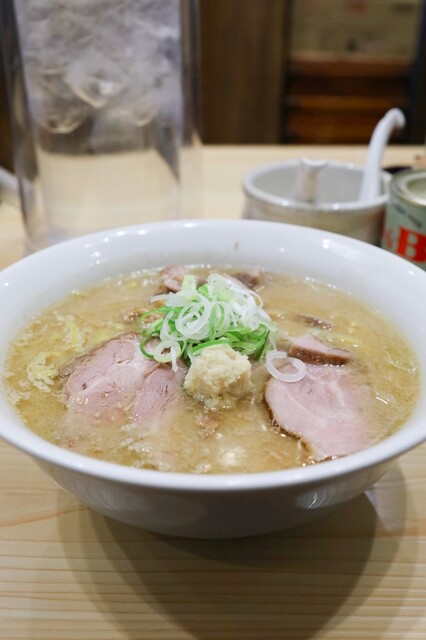
Yamabukicho does not announce itself with the glare of Shinjuku’s station-side dining corridors. The approach is quieter: office blocks, residential streets, and people eating between errands rather than performing a night out. Here, ramen is not a tasting-menu substitute or tourist spectacle; it is a tightly engineered bowl served at a pace that respects broth and queue.
SAN TORA belongs to the Tokyo ramen category where restraint tells the story. The address sits by Edogawabashi, close enough to Kagurazaka for spillover diners, but culturally closer to the city’s working ramen rooms than the polished restaurant clusters further west. Its Tabelog Ramen TOKYO 100 selections in 2021, 2022, 2023, 2024, and 2025 give the shop a measurable signal in a city where ramen reputation is built through repeat visits, narrow specialisation, and unforgiving comparison.
Sapporo grammar in a Tokyo neighbourhood bowl
Tokyo ramen is often discussed through micro-genres: clear shoyu, heavy tonkotsu, chicken-based paitan, seafood-driven broths, and regional imports adapted for the capital. The Sapporo thread carries different expectations: depth, heat management, and a bowl designed for momentum as much as delicacy. SAN TORA’s public backstory explains that grammar without turning the shop into a personality piece: the opening figure trained for 17 years at Sumire in Sapporo and worked across the Sapporo main store, Hokkaido branches, the Shin-Yokohama Ramen Museum, Kyoto, and other restaurant launches.
That credential places the ramen in a lineage, not a vague “Hokkaido-inspired” category. In Tokyo, where regional ramen can be softened for broad appeal, Sapporo training signals structure first, then variation. The menu architecture is therefore the editorial point. A narrow-format ramen shop asks diners to judge execution within a limited frame, not by breadth. That discipline also makes nearby single-speciality rooms compelling, from udon counters such as Kamaage Udon Hatsutomi to casual Edogawabashi staples like Naniwaya Edogawabashi. The appeal lies in repetition, not reinvention.
The price band keeps the restaurant in ramen’s democratic lane. At JPY 1,000 to JPY 1,999, it sits with everyday specialist dining rather than special-occasion restaurants. In Tokyo, low price does not mean low scrutiny. Ramen audiences compare soup balance, noodle handling, toppings, heat, and service tempo with the seriousness another diner might reserve for sushi rice or tempura batter.
A compact room built for turnover, not lingering
The physical format reinforces the food. Fifteen seats, split between seven counter seats and eight table seats, is not rare for Tokyo ramen, but it decisively shapes the experience. Counter seating makes the meal linear: order, eat while the bowl is at its intended temperature, clear the seat. Tables broaden the room for pairs or families, useful in a neighbourhood where school-age children are welcomed and the restaurant is not framed purely as solo-counter dining.
Reservation-free ramen is a specific Tokyo ritual. It rewards timing and patience rather than concierge access. SAN TORA does not operate like the city’s higher-priced reservation restaurants, and that is part of its category logic. Compare that with Tori Takuchu, another Tokyo venue in the supplied comparison set with a JPY 10,000 to JPY 14,999 range: the decision is not merely cuisine, but what kind of evening the diner is buying. One is a planned restaurant appointment; the other is a focused bowl whose value depends on immediacy.
Yamabukicho sharpens the case. This is not the Shinjuku of department-store basements and late-night towers, nor the fully staged charm of Kagurazaka’s slope. It sits between them, making ramen feel native to the area’s daily cadence. For travellers mapping a broader Tokyo eating day, the neighbourhood connects naturally with Kagurazaka yakitori at 124. KAGURAZAKA (Yakitori), Shinjuku dining such as 12/10 Shinjuku ten, or the visual-café culture represented by 2D Cafe. Treat the area as part of central Tokyo’s smaller food circuits, not a single-destination detour.
Why the recognition matters in Tokyo's ramen hierarchy
Tabelog’s Hyakumeiten lists are not casual decorations in Japan’s dining culture. For ramen, the TOKYO 100 designation sorts a crowded field where many shops are competent and fewer earn sustained attention. The restaurant’s repeated selection from 2021 through 2025 indicates continuity, not a single-year spike. Its listed Tabelog score of 3.81 adds another public benchmark, useful because Tokyo ramen ratings move within narrow margins.
The menu structure also explains why recognition can persist. Specialist ramen rooms do not need long menus; they need a coherent house style and enough consistency that repeat diners understand the reason to return. The restaurant sits closer to the city’s serious everyday specialists than to concept-heavy restaurants. Shinga, another Tokyo comparison venue in a similar low-price range, occupies that practical end of dining, where the meal is judged against frequency and value rather than ceremony.
The broader EP Club read is simple: this is a ramen stop for travellers who care about regional technique and Tokyo dining context, not those chasing a theatrical room. It pairs well with a day treating food as a sequence of precise formats: curry at 3 Chome no Curry Ya San, seafood-leaning casual dining at . 鮪と炭火焼き うお炭 秋葉原店, then a ramen bowl carrying Sapporo discipline into Shinjuku’s quieter edge.
For wider planning, use Our full Tokyo restaurants guide alongside Our full Tokyo hotels guide, Our full Tokyo bars guide, Our full Tokyo wineries guide, and Our full Tokyo experiences guide. Japan itineraries can widen beyond Tokyo through -Grilled beef Sukiyaki- KAMAKURA TANUKIAN 鎌倉 たぬき庵 in Kamakura.cafe in Osaka.know in Kumamoto, (Shoku) Vietnam in Kawasaki, [Curry Senmon Ten] Maruyama Kyoju. in Sapporo, and [ki:] in Kyoto. For readers tracking Japanese food culture in the United States, Jōdo Saké Bar in Los Angeles and Onigiri Time in Pasadena show how specific formats travel, adapt, and find new audiences.
Comparable Options
Nearby venues at a similar price tier for orientation.
| Venue | Cuisine | Price | Notes |
|---|---|---|---|
| SAN TORAThis venue — the venue you are viewing | Sapporo-style miso ramen | $ | Not listed |
| Jikasei Chuka Soba Toshioka | Ramen & Tsukemen Counter | $ | Shinjuku |
| Baika Tei Kagurazaka honten | Japanese Traditional Sweets | $ | Shinjuku |
| Ichijoryu Ganko Sohonke Bunke Yotsuya Arakicho | Classic Japanese ramen counter | $ | Shinjuku |
| Taiyaki Wakaba | Traditional Japanese taiyaki & wagashi shop | $ | Shinjuku |
| Gyusuji Curry Chiisana Curry Ya | Japanese Beef Tendon Curry & Curry Udon | $ | Shinjuku |
Recognition history
Dated appearances from independent guides and award organizations, with the underlying list record or original source where available.
Tabelog 100 #79 · No. 79
Tabelog · Tabelog 100 - Ramen - TOKYO - 2025










At a Glance
- Lively
- Cozy
- Solo
- Family
- Casual Hangout
- After Work
- Late Night
- Standalone
Current opening hours
- Monday
- 11 AM–3 PM, 5:30–8 PM
- Tuesday
- 11 AM–3 PM, 5:30–8 PM
- Wednesday
- 11 AM–3 PM, 5:30–8 PM
- Thursday
- 11 AM–3 PM, 5:30–8 PM
- Friday
- 11 AM–3 PM, 5:30–8 PM
- Saturday
- 11 AM–3 PM, 5:30–8 PM
- Sunday
- 11 AM–3 PM, 5:30–8 PM
Hours can change for holidays and private events. Last verified .
Compact, no-frills ramen shop with counter and a few tables, bright and efficient rather than decorative, packed with ramen fans and a bustling, energetic feel during service.