Sama Beirut occupies a quiet stretch of Fidicinstraße in Kreuzberg, bringing Lebanese cooking into one of Berlin's most culinarily restless neighbourhoods. The address places it within easy reach of the canal-side dining corridor while sitting apart from the tourist-facing crowd. For a city that has absorbed Middle Eastern culinary traditions more deeply than almost any other European capital, Sama Beirut represents a considered rather than casual entry point into that tradition.
Pearl is the En Primeur Club membership app — saves, bookings, and concierge access live there. Same editors, same standards.
- Address
- Fidicinstraße 43, 10965 Berlin, Germany
- Phone
- +4917660380527
- Website
- sama-beirut.berlin
- Directions
- Get directions
 Saves & bookings on Pearl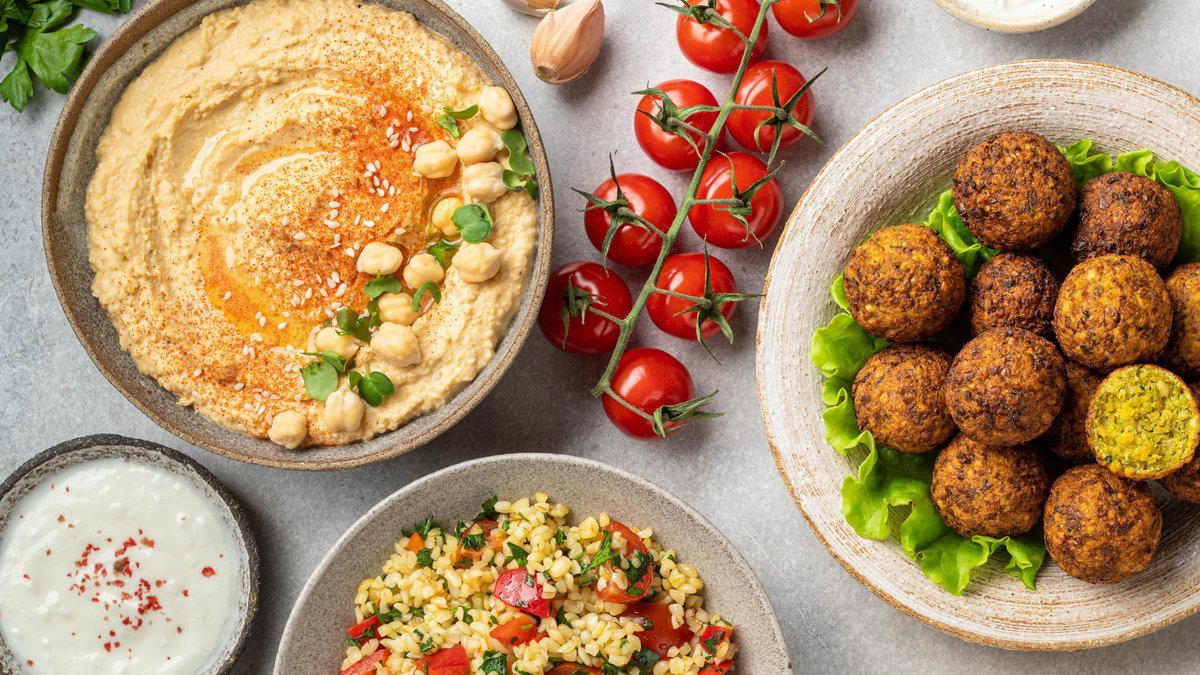
Kreuzberg's Culinary Gravity and Where Sama Beirut Sits Within It
Fidicinstraße runs through the quieter southern edge of Kreuzberg, a few blocks from the Landwehrkanal and well away from the Bergmannstraße weekend crowds. The street has none of the self-conscious cool of Graefekiez to the east, which makes it a telling address for a Lebanese restaurant: Sama Beirut arrives in a part of the neighbourhood where the audience tends to be local, repeat, and harder to impress with surface novelty. In a city where Middle Eastern food spans everything from late-night shawarma counters on Sonnenallee to more considered sit-down formats in Prenzlauer Berg, that positioning matters.
Berlin's relationship with Lebanese and broader Levantine cooking is longer and more layered than most European cities. A significant Lebanese diaspora presence, sustained across multiple generations, means the city has a reference population that knows what the food is supposed to taste like. This raises the bar for any restaurant working in that tradition: the audience includes people for whom this is comfort food, not curiosity. That context shapes how Sama Beirut reads against the Berlin dining scene more broadly.
The Neighbourhood as Context for the Table
Kreuzberg has historically been Berlin's most porous district, absorbing successive waves of migration and turning that friction into something culturally generative. The food scene here does not operate on the same logic as the tasting-menu corridor in Mitte, where venues like Rutz, FACIL, and Nobelhart & Schmutzig operate within a Michelin-facing framework. Kreuzberg dining tends to be assessed differently: longevity, neighbourhood loyalty, and the quality of the everyday meal count for more than formal recognition. CODA Dessert Dining and Restaurant Tim Raue operate in a Berlin that runs parallel to, but distinct from, the neighbourhood restaurant circuit Sama Beirut occupies.
That separation is not a deficit. A Lebanese kitchen working at Fidicinstraße 43 is playing a different game to the city's creative tasting-menu rooms, and the absence of awards infrastructure does not diminish the case for the address. Particularly durably interesting eating in Berlin happens outside the formal recognition system entirely.
Lebanese Cooking in the European Context
Lebanese cuisine occupies an unusual position in European dining. It carries genuine complexity, built around a meze tradition that rewards slow, shared eating, and a cooking grammar that includes fermented dairy, charcoal-grilled proteins, herb-heavy salads, and bread baked to order. At its most considered, it is among the more complete cuisines for a table to share: there is almost no course structure, just a continuous accumulation of dishes that balance fat, acid, heat, and freshness with a precision that takes years to calibrate correctly.
The challenge for any Lebanese restaurant outside Lebanon is sourcing. Pomegranate molasses, dried limes, quality tahini, and the specific varieties of flatbread that define the meze table are available in Berlin, but not uniformly and not always at the grade a serious kitchen requires. Restaurants that close this sourcing gap tend to earn a different kind of loyalty than those relying on ambient ethnic-food goodwill. Whether the restaurant addresses this gap is best judged at the table.
For diners coming from a broader German fine dining context, the comparison set is instructive. The discipline required to execute a well-constructed Lebanese spread is not less rigorous than what goes into the European tasting menus at JAN in Munich or Restaurant Haerlin in Hamburg; it is simply differently applied, across more dishes at lower individual price points, with technique that is often invisible because it produces food that looks rustic.
What to Order and How to Approach the Menu
For first-time visitors, useful guidance is structural rather than dish-specific. Start with the cold meze: this is where kitchens reveal their standards most clearly. Hummus texture, the balance of tahini to lemon, the quality of the olive oil used as a finish, the freshness of the tabbouleh herb ratio (it should be overwhelmingly parsley, with bulgur as a seasoning rather than a base) are all reliable calibration points. Hot meze comes next, and here the question is timing: dishes should arrive hot, in sequence, not stacked on a table all at once. Grilled proteins, if the kitchen is serious, should carry char marks that are structural rather than decorative.
Sharing is not just culturally appropriate at a Lebanese table; it is functionally necessary to understand what a kitchen can do across its range. A table of two ordering four or five dishes will see less than a table of four ordering ten to twelve.
Sama Beirut in the Berlin Dining Year
Spring and early summer are the months when Levantine cooking aligns most naturally with Berlin's outdoor eating habits. The herb-forward dishes that anchor Lebanese meze, fattoush, tabbouleh, and preparations built around fresh cucumber and tomato, are seasonal in the strictest sense: they are significantly better when the produce is in season, and the contrast between a winter and summer version of these dishes at a serious restaurant is marked. If the kitchen sources regionally for these components, late May through September is the window when those dishes will perform at their highest level.
Kreuzberg in summer also operates at a different social tempo from the rest of the year. The neighbourhood fills with people who are genuinely spending the evening outside, moving between addresses, and treating dinner as a longer, more expansive occasion. The restaurant's position in the southern part of the district puts it at the edge of that circuit rather than its centre, which, for a sit-down Lebanese meal that asks for time rather than a quick pass, is an advantage.
For those travelling from outside Berlin who want to triangulate the restaurant against the wider German restaurant landscape, the country's most formally recognised kitchens, from Schwarzwaldstube in Baiersbronn and Vendôme in Bergisch Gladbach to Victor's Fine Dining by Christian Bau in Perl, Waldhotel Sonnora in Dreis, ES:SENZ in Grassau, Schanz in Piesport, Bagatelle in Trier, and Aqua in Wolfsburg, operate in a different register entirely. So do internationally benchmarked kitchens like Le Bernardin in New York City or Atomix in New York City. The restaurant is not in conversation with that tier; it is in conversation with the neighbourhood itself, which is the right frame for assessing it.
Planning Your Visit
The address is Fidicinstraße 43, 10965 Berlin, in southern Kreuzberg.
Same-City Peers
Comparable venues nearby, for context on price, style, and recognition.
| Venue | Cuisine | Price | Notes |
|---|---|---|---|
| Sama BeirutThis venue — the venue you are viewing | Authentic Lebanese Street Food | $$ | Not listed |
| forn simsim | Levantine Manakish | $$ | Prenzlauer Berg |
| NENI Berlin | Middle Eastern Fusion with Mediterranean & Austrian Influences | $$ | Tiergarten |
| Bobbe Speisesalon | Kosher Israeli-Mediterranean | $$$ | Wilmersdorf |
| Jemenitisches Restaurant | Authentic Yemeni | $$ | Neukolln |
| Byblos Restaurant Berlin | Authentic Lebanese | $$$ | Wilmersdorf |
Continue exploring
More in Berlin
Restaurants in Berlin
Browse all →
Bars in Berlin
Browse all →
Hotels in Berlin
Browse all →

At a Glance
- Lively
- Trendy
- Casual Hangout
Current opening hours
- Monday
- 11 AM–11:30 PM
- Tuesday
- 11 AM–11:30 PM
- Wednesday
- 11 AM–11:30 PM
- Thursday
- 11 AM–11:30 PM
- Friday
- 11 AM–11:30 PM
- Saturday
- 11 AM–11:30 PM
- Sunday
- 11 AM–11:30 PM
Hours can change for holidays and private events. Last verified .
Casual fast-food atmosphere with a focus on fresh, lively street eats.