Sahara Imbiss on Ebersstraße in Berlin's Schöneberg district sits at the practical end of the city's eating spectrum, a neighbourhood counter that has served the local community through Berlin's many reinventions. With no formal booking system and a walk-in format, it operates in a register entirely separate from the city's Michelin-starred dining scene, offering an unfiltered read on everyday Berlin eating culture.
Pearl is the En Primeur Club membership app — saves, bookings, and concierge access live there. Same editors, same standards.
- Address
- Ebersstraße 74, 10827 Berlin, Germany
- Phone
- +493084436844
- Website
- saharaimbiss.de
- Directions
- Get directions
 Saves & bookings on Pearl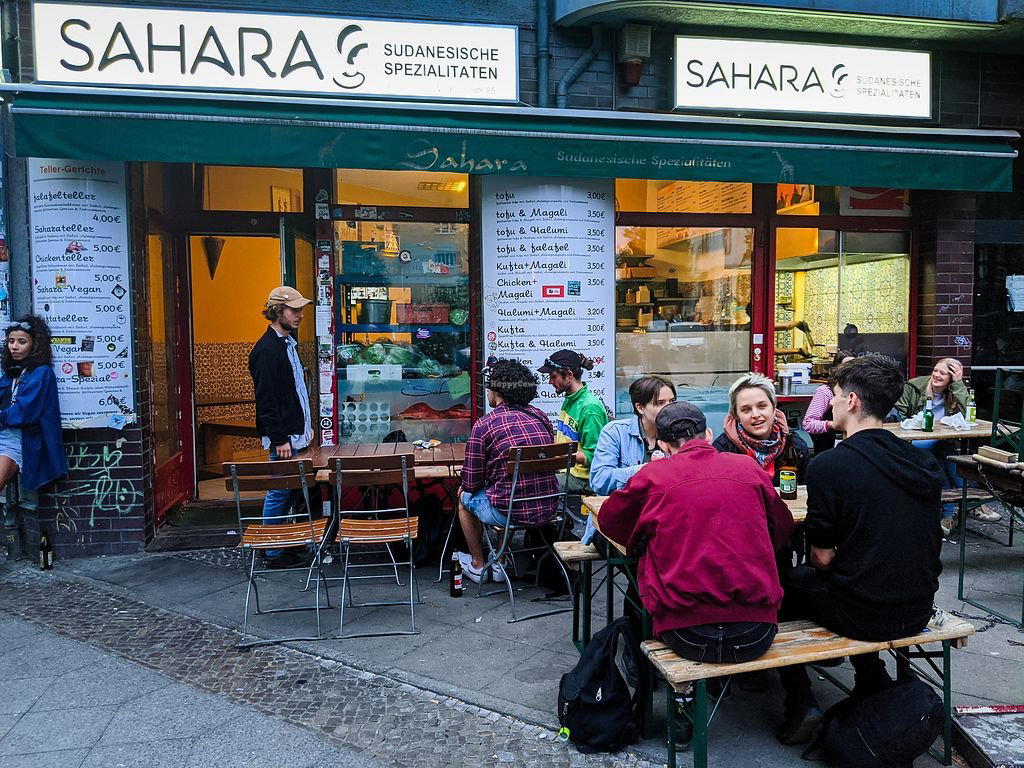
Schöneberg's Street-Level Eating Culture
Berlin's dining identity is frequently discussed through its fine-dining tier: Rutz, the creative discipline of Nobelhart & Schmutzig, the contemporary European precision of FACIL, or the dessert-led experiment of CODA Dessert Dining. But the city's eating culture has always operated simultaneously on a much more immediate register: the Imbiss. That word, roughly translating as snack bar or quick-bite counter, describes a format that has defined Berlin street life across every political and economic era the city has passed through. Sahara Imbiss, at Ebersstraße 74 in Schöneberg, sits within that tradition.
Schöneberg is not a neighbourhood that trades on gastro-tourism. It lacks the concentrated restaurant density of Mitte or the self-conscious food scene of Prenzlauer Berg. What it has is a working residential character, a history of community eating, and the kind of local loyalty that sustains small food operations across decades rather than across trend cycles. An Imbiss on a side street here is not a statement; it is a function. That functional clarity is, in its own way, a position.
The Imbiss Format and Its Place in Berlin's Evolution
To understand where Sahara Imbiss sits, it helps to understand what the Imbiss format has meant to Berlin across time. Through the divided-city years, through reunification, through the wave of gentrification that followed the early 2000s, and through the more recent arrival of international fine-dining investment, the Imbiss counter remained a constant. It fed construction workers, night-shift nurses, students, and increasingly, the kind of diner who wanted no part of tasting menus or reservation windows.
Sahara Imbiss reflects Berlin's enduring Imbiss tradition: a format-driven neighbourhood counter that serves its district without fanfare. Berlin's restaurant economy has bifurcated sharply over the past fifteen years. At one end, places like Restaurant Tim Raue have built international reputations that compete with destination restaurants in any European capital. At the other end, the Imbiss has stayed stubbornly, deliberately unchanged in format, even as the demographic mix of its customers has shifted. The result is a category that now carries a certain cultural weight it did not seek: the Imbiss as document of a city's pre-gentrification texture.
Germany's wider fine-dining circuit has moved in a different direction entirely. Restaurants like Aqua in Wolfsburg, JAN in Munich, Schwarzwaldstube in Baiersbronn, and Vendôme in Bergisch Gladbach represent a tier of German dining that benchmarks against Paris and Tokyo rather than against the neighbourhood it occupies. ES:SENZ in Grassau, Victor's Fine Dining by Christian Bau in Perl, and Waldhotel Sonnora in Dreis belong to that same refined circuit. Even Hamburg's Restaurant Haerlin, Schanz in Piesport, and Bagatelle in Trier operate in a register defined by technique, sourcing philosophy, and tasting menu architecture. The restaurant does not compete with any of them, and that is the point: the Berlin food spectrum is wide enough to hold both ends without contradiction.
What the Address Tells You
Ebersstraße sits in a part of Schöneberg that has not been substantially remodelled by the wave of concept restaurants and natural wine bars that reshaped areas like Neukölln or Kreuzberg in the 2010s. The street-level businesses here are the kind that serve the people who actually live in the surrounding blocks: pharmacies, small grocers, and food counters. An Imbiss in this context is not a nostalgia project or a deliberate positioning move. It is simply the format that works for this location, this customer base, and this price register.
Berlin has seen significant pressure on exactly this kind of business over the past decade. Rising rents have forced closures across the city's traditional Imbiss stock, particularly in areas attractive to development. The survival of a neighbourhood counter on a residential side street is, in that context, a data point about the specific economics of Schöneberg rather than a personal triumph story. The neighbourhood still supports the format; that is what matters.
How It Fits the Broader Berlin Itinerary
For anyone building a Berlin eating itinerary across multiple price points and formats, the Imbiss occupies a specific and non-substitutable slot. A meal at a Schöneberg counter between a morning at the Winterfeldtmarkt and an evening reservation at a Michelin-level table is not slumming; it is range. Berlin's food culture has always rewarded readers who move between registers rather than staying exclusively at one level. The city's fine-dining options are well documented, and our full Berlin restaurants guide maps them in detail. But the Imbiss tier is where you read the city's everyday character most directly.
For international reference points: the gap between Berlin's Imbiss culture and its Michelin tier is not so different from the gap between a New York counter and a reservation-only kitchen like Le Bernardin or the tasting-menu precision of Atomix. Every serious food city carries both registers, and the quality of the lower register is often a more honest indicator of a city's food health than the quality of its starred tables.
Planning a Visit
The restaurant is open daily from 11 AM to 12 AM. Reservations: Walk-in friendly. Dress: No dress code applies to an Imbiss counter. Budget: Around $10 per person. Getting there: Ebersstraße 74 is in Schöneberg, Berlin.
Price Lens
Comparable venues nearby, for context on price, style, and recognition.
| Venue | Cuisine | Price | Notes |
|---|---|---|---|
| Sahara ImbissThis venue — the venue you are viewing | Schoneberg, Sudanese Falafel Imbiss | $ | Not listed |
| Afropot | Not listed | $ | Tiergarten, Authentic West African Ghanaian Street Food |
| Langano | Kreuzberg, Authentic Ethiopian | $$ | Not listed |
| Munchies | Not listed | $ | Kreuzberg, American Comfort Food & Mexican Tacos |
| Aspendos | Schöneberg, Turkish Döner & Grill | $ | Not listed |
| Burgermeister | Kreuzberg, Classic American Burgers | $ | Not listed |
Continue exploring
More in Berlin
Restaurants in Berlin
Browse all →
Bars in Berlin
Browse all →
Hotels in Berlin
Browse all →

At a Glance
- Lively
- Casual
- Casual Hangout
- Open Kitchen
Current opening hours
- Monday
- 11 AM–12 AM
- Tuesday
- 11 AM–12 AM
- Wednesday
- 11 AM–12 AM
- Thursday
- 11 AM–12 AM
- Friday
- 11 AM–12 AM
- Saturday
- 11 AM–12 AM
- Sunday
- 11 AM–12 AM
Hours can change for holidays and private events. Last verified .
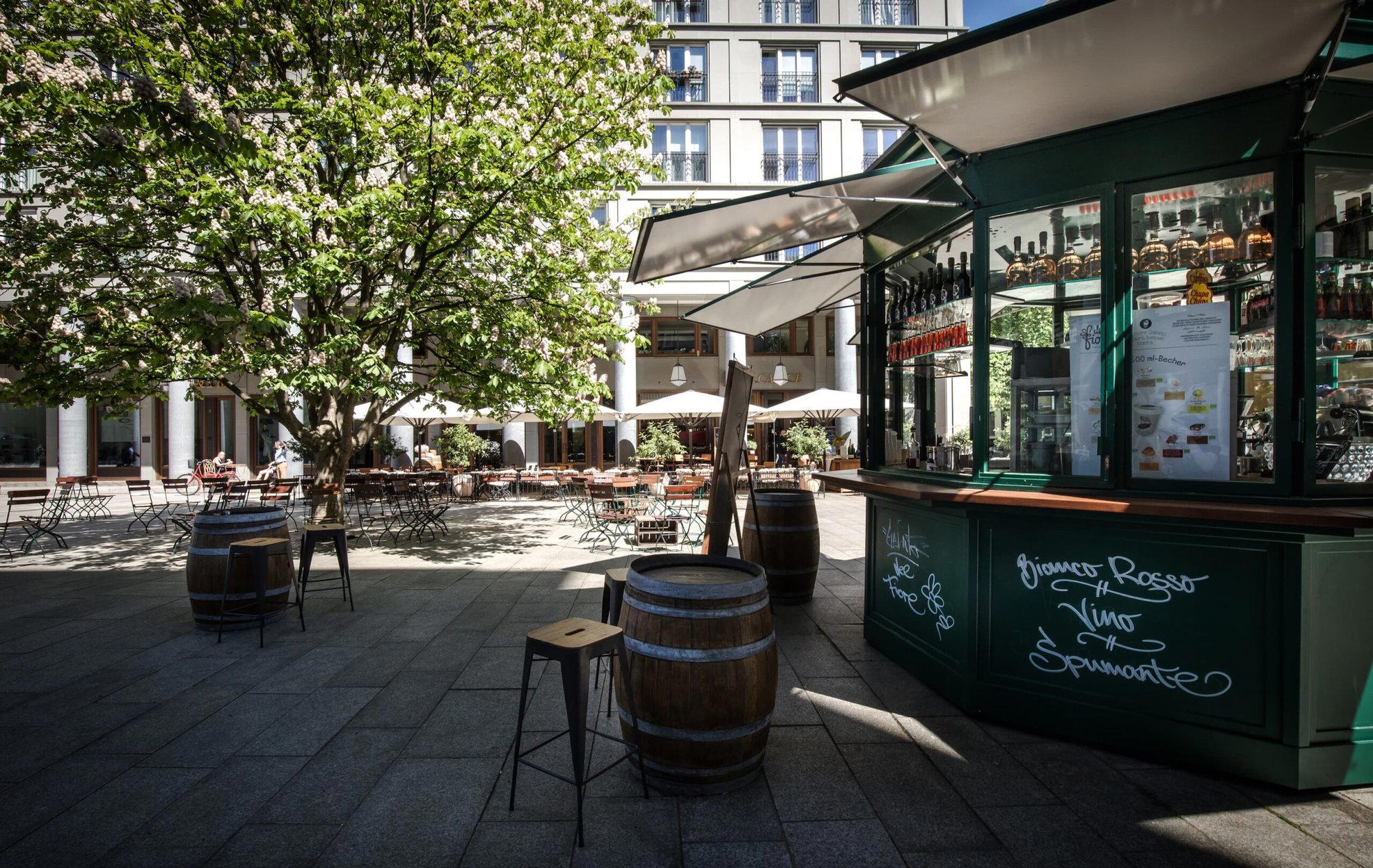
Lively and casual with graffiti art, wooden tables, and a bustling local atmosphere enhanced by friendly service.