Afropot operates from within the Manifesto Market at Potsdamer Platz, placing African cooking inside one of Berlin's more democratic food hall formats. The setting is casual and open, drawing a regular crowd that returns for the cooking rather than the ambience. For a city whose fine-dining tier, from Rutz to CODA, skews heavily European, it represents a distinct alternative in the broader Berlin food conversation.
Pearl is the En Primeur Club membership app — saves, bookings, and concierge access live there. Same editors, same standards.
- Address
- Manifesto Market, Inside the Potsdamer Platz Arkaden ( now known as the Playce- the Playce on the Ground floor within the Manifesto Market, Alte Potsdamer Str. 7, 10785 Berlin, Germany
- Phone
- +4915167700776
- Website
- afropotberlin.de
- Directions
- Get directions
 Saves & bookings on Pearl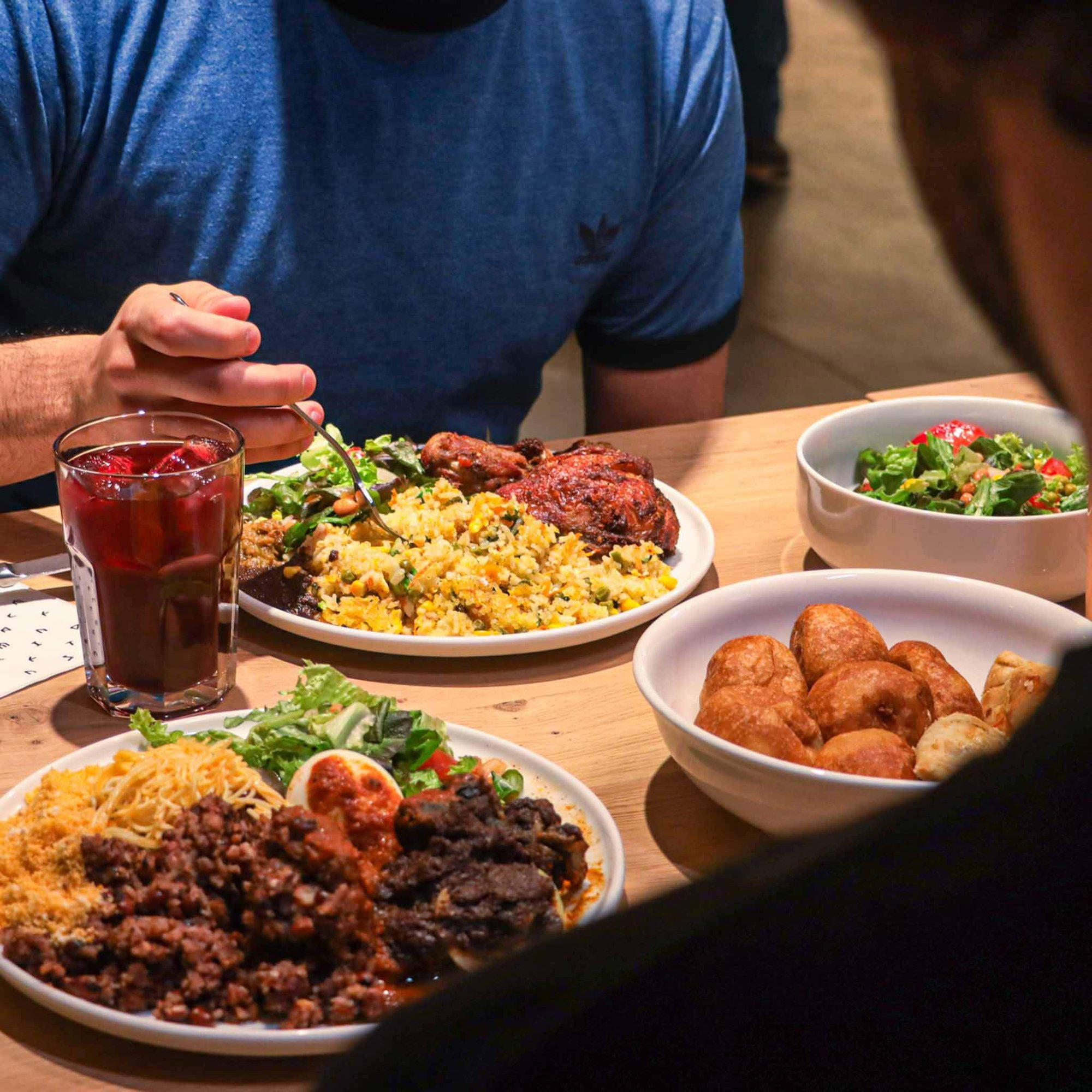
A Different Register at Potsdamer Platz
Berlin's food hall moment has been slower to arrive than in London or Copenhagen, but Manifesto Market at the Playce, housed in what was once the Potsdamer Platz Arkaden on Alte Potsdamer Str. 7, has given the format a credible home in the city centre. The ground floor operates as an open, multi-vendor space where the logic is democratic: no dress code, no booking window, no tasting menu preamble. Afropot sits within that context, and for regulars, that positioning is part of the appeal. You arrive when you want, eat what you want, and the African cooking does the work without ceremony.
This matters more than it might initially seem. Berlin's formal dining tier, anchored by Michelin-recognised rooms like Rutz, Nobelhart & Schmutzig, and FACIL, operates on a reservation calendar and a set of European culinary references that leave little room for the breadth of African food traditions. Afropot addresses that gap not by staging a formal corrective but by simply showing up in a format that Berliners already know how to use. The food hall removes friction, and the regulars arrive accordingly.
What the Regulars Know
In food hall environments, loyal customers are one reliable source. They have already filtered out the novelty-visit crowd and made a considered decision to return. At Afropot, the pattern follows what you see at the better African food counters across Europe: the draw is specificity, not a generalised idea of a continent. African cuisines span fermented, slow-braised, spiced, and smoked traditions that have almost no representation in Berlin's restaurant scene above the street-food tier, and regulars at a counter like this are there because they have found something they cannot easily find elsewhere.
That specificity is the informal contract of the regular's relationship with a place. They are not returning because of a concept, they are returning because particular dishes work, and because the counter's rhythm suits how they eat. In food hall settings specifically, that rhythm tends to involve a communal, unhurried pace: you share the wider space with strangers, but your transaction with the counter is direct and personal. For a city whose fine-dining culture is as codified as Berlin's, compare the experience to the long tasting format at CODA Dessert Dining or the austere seasonal menus at Restaurant Tim Raue, this is a genuinely different kind of commitment.
African Cooking in the Berlin Context
To understand what Afropot represents in city terms, it helps to map where African cooking sits in Berlin's food infrastructure. The city has a significant African diaspora population and a corresponding network of neighbourhood restaurants, particularly in districts like Wedding and Neukölln, but that network rarely penetrates the more visible central food venues. Manifesto Market changes that calculus slightly by placing an African counter inside a space that attracts a cross-section of the city: office workers, tourists arriving from the nearby S-Bahn connections, and the food-aware Mitte crowd.
German fine dining, for reference, has developed its own strong regional identity, Schwarzwaldstube in Baiersbronn, Aqua in Wolfsburg, and Vendôme in Bergisch Gladbach define a tier of European-rooted precision cooking that has little structural interest in African food traditions. That tier's dominance makes the presence of a counter like Afropot in a central Berlin food hall more consequential, not less. It fills a lane that Germany's formal dining ecosystem does not address.
The Manifesto Market Setting
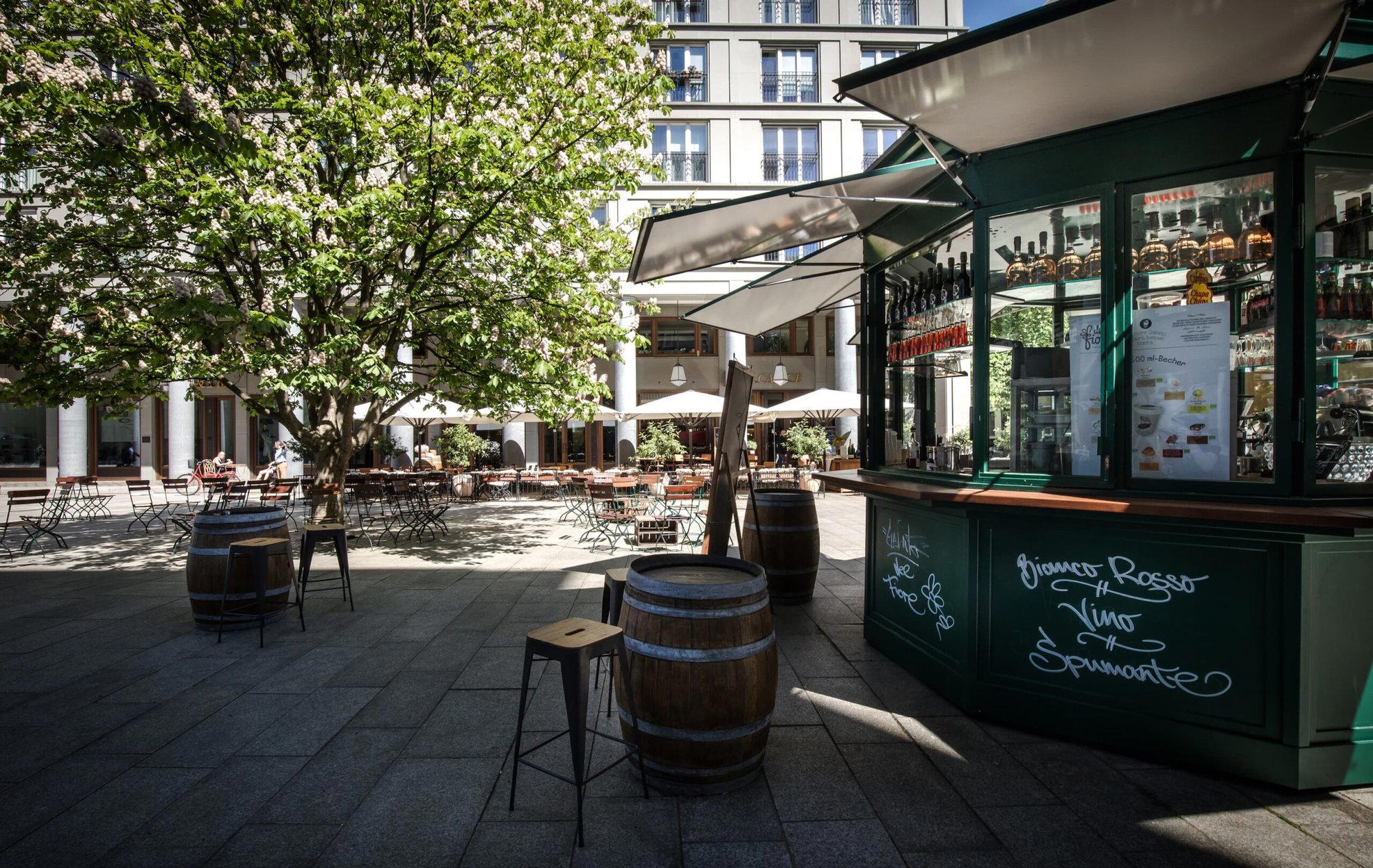
The Playce building's ground floor Manifesto Market is the kind of food hall that works because it does not try to be a restaurant. The format is intentionally loose: multiple vendors, shared seating, the ambient noise of a working commercial space. Potsdamer Platz itself is one of Berlin's more transit-heavy zones, with direct U-Bahn and S-Bahn access making the location direct for visitors staying across a wide range of central districts. There is no booking required and no price floor imposed by a tasting format, which means the entry point is determined by what you order rather than by a set menu logic.
For regulars, that lack of ceremony is the point. The food hall model rewards counters whose cooking is direct enough to hold attention without staging. It is a more demanding test than it appears: in a formal restaurant, atmosphere and service carry a share of the experience. At a food hall counter, the food absorbs a much higher proportion of the reader's attention. Counters that survive and build loyalty in that environment are doing something right at the level of the dish.
Placing Afropot in the Broader Dining Week
A practical question for EP Club readers planning a Berlin visit is how Afropot fits alongside the city's other dining commitments. The answer is that it occupies a different slot entirely from the city's Michelin-level rooms or the regional German dining that defines destinations like JAN in Munich, Restaurant Haerlin in Hamburg, or Waldhotel Sonnora in Dreis. There is no competition between the formats. A dinner at Schanz in Piesport or Victor's Fine Dining by Christian Bau in Perl is a three-hour commitment; a stop at Afropot in Manifesto Market is a lunch or an early evening meal that leaves the rest of the day intact.
That flexibility is genuinely useful in a city like Berlin, where the dining map runs from neighbourhood Imbiss counters up through the full European fine-dining tier. Afropot at Manifesto Market functions as one of the more accessible entry points into African cooking in a central location, and for readers building a week's itinerary, which might equally include checking the full Berlin restaurants guide for the city's broader range, it represents a low-friction, high-specificity stop worth building in. For comparative international reference, the food hall model as a vehicle for serious ethnic cooking has also found traction in markets like New York, where Le Bernardin anchors the formal tier while more democratic formats have expanded access to global cuisines, and San Francisco, where the communal dining format pioneered by venues like Lazy Bear has influenced how Californians think about shared food environments. Berlin is working through a similar evolution, and Manifesto Market is part of that shift.
For more context on where Afropot sits within Germany's wider restaurant conversation, the Bagatelle in Trier and ES:SENZ in Grassau represent what the formal German dining tier looks like at its most ambitious, a useful contrast to the deliberately informal register that a Manifesto Market counter inhabits.
Planning Your Visit
Afropot operates within Manifesto Market on the ground floor of the Playce at Alte Potsdamer Str. 7, 10785 Berlin. Potsdamer Platz is served by U2, S1, S2, and S25, making it among the more transit-accessible points in central Berlin. The food hall format means no advance booking is required, and the open-seating arrangement accommodates solo diners, couples, and groups without the need for a reservation. The market is open daily from 11 AM to 8 PM. There is no dress code and no minimum spend.
- Waakye
- Jollof Rice with Chicken
- Fried Plantains
- Fufu with Peanut Sauce
- Omotuo
- Banku
A Pricing-First Comparison
Comparable venues nearby, for context on price, style, and recognition.
| Venue | Cuisine | Price | Notes |
|---|---|---|---|
| AfropotThis venue — the venue you are viewing | Not listed | $ | Not listed |
| Puffer-Imbiss | Not listed | $ | Kreuzberg, Traditional German Potato Pancakes |
| Dan Thai Food | Wedding, Authentic Thai Street Food | $ | Not listed |
| Izmir Köftecisi | Kreuzberg, Authentic Turkish Köfte Grill | $ | Not listed |
| Ebert | Wilmersdorf, Traditional German | $ | Not listed |
| Sahara Imbiss | Schoneberg, Sudanese Falafel Imbiss | $ | Not listed |
Continue exploring
More in Berlin
Restaurants in Berlin
Browse all →
Bars in Berlin
Browse all →
Hotels in Berlin
Browse all →


At a Glance
- Casual
- Trendy
- Bohemian
- Casual Hangout
- Solo
- Group Dining
- Open Kitchen
- Standalone
Current opening hours
- Monday
- 11 AM–8 PM
- Tuesday
- 11 AM–8 PM
- Wednesday
- 11 AM–8 PM
- Thursday
- 11 AM–8 PM
- Friday
- 11 AM–8 PM
- Saturday
- 11 AM–8 PM
- Sunday
- 11 AM–8 PM
Hours can change for holidays and private events. Last verified .
Casual, energetic street-food atmosphere with cheery mint-green decor in a Kreuzberg Altbau setting; friendly staff and accessible, unpretentious dining experience.