This listing is retired after a June 2026 status audit found the place inactive at its stored address.
- Address
- Piazza dell'Emporio, 28, 00153 Roma RM, Italy
- Phone
- +39 06 3211 0120
- Website
- romeo.roma.it
- Directions
- Get directions
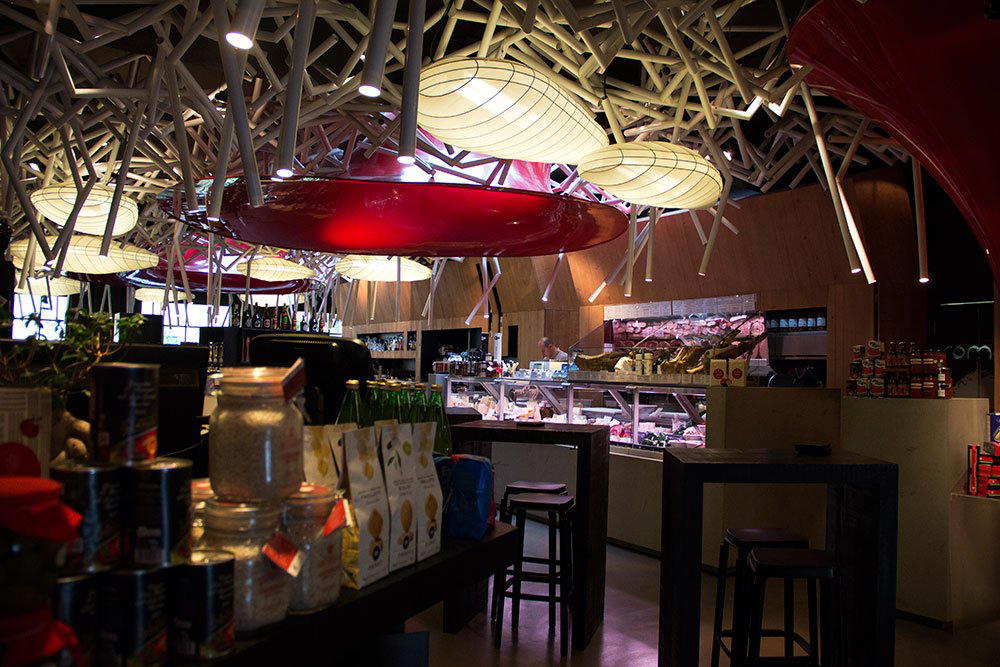
Where Testaccio's Food Logic Plays Out on a Single Piazza
Testaccio has a food reputation that predates Rome's modern dining scene by several generations. The neighbourhood around the old slaughterhouse, the Mattatoio, built a cooking culture around offal, abundance, and the kind of everyday pleasure that required no special occasion. That tradition still shapes what people expect from the area's restaurants and bakeries, not ceremony, but quality at close range. Romeo Chef & Baker, positioned on Piazza dell'Emporio, sits inside this logic. The address puts it on a square that connects the Tiber embankment to the grid of Testaccio's market streets, giving it the foot traffic of a neighbourhood anchor rather than a destination address.
The format itself reflects a broader Italian tendency to dissolve the boundaries between bakery, café, and full-service dining. Rather than choosing a single register, Romeo operates across them simultaneously, bread and pastry production alongside a kitchen that runs through service hours. This kind of layered offer has become more common across Italian cities as operators respond to changing meal patterns, but Testaccio gives it a particular grounding. A neighbourhood that has always eaten at all hours, at counters as often as tables, is a natural home for a venue that refuses a single identity.
What the Regulars Actually Come Back For
The pattern that defines a genuinely local dining address is not the first visit but the third and the tenth. In Testaccio, where residents have generations of alternative options within walking distance, the Campo de' Fiori market, the covered Mercato Testaccio, the trattorias on Via Galvani, a venue earns its repeat clientele through consistency rather than novelty. Romeo's role as both bakery and restaurant means its regulars often arrive at different times of day for different things: morning bread, a counter lunch, an evening table.
Bakery component is worth treating seriously. Rome has been slower than Milan or Naples to develop a culture of serious bread production as a standalone attraction, but that gap has narrowed over the past decade. Venues that make their own bread to a high standard now use it as a credibility signal, the quality of what arrives before the first course tells a practised diner something concrete about the kitchen's priorities. At a venue that names itself partly after this function, the bread is not incidental to the experience.
For returning visitors specifically, the dual identity of the space creates an unwritten menu that a first-time diner cannot fully access. Knowing which counter to approach, which time of day suits which format, which items are worth the detour, this is the layer of knowledge that regular clientele accumulates and that guides one useful visit. In Rome's food culture, where the gap between tourist meal and local meal can be significant, this insider knowledge carries real weight. For those planning a first visit, arriving with the orientation of a local means treating the bakery and the full dining room as separate but related opportunities.
Romeo in the Context of Rome's Broader Dining Spectrum
Rome's restaurant scene in 2024 covers a wider range of formats and price points than it did fifteen years ago. At the high end, addresses like La Pergola hold three Michelin stars and operate in the formal international register. Creative contemporary kitchens like Acquolina, Enoteca La Torre, and Il Pagliaccio have built serious reputations in the fine-dining tier, while places like Achilli al Parlamento work in a more wine-centred format. Romeo occupies a different position in this architecture: neighbourhood-anchored, multi-format, and oriented around the kind of daily return that fine-dining tasting menus cannot sustain.
Across Italy more broadly, the venues that attract sustained critical attention tend to fall at the two poles: highly formal destination restaurants, Osteria Francescana in Modena, Le Calandre in Rubano, Piazza Duomo in Alba, and deeply rooted regional addresses like Dal Pescatore in Runate or Uliassi in Senigallia. The middle ground, the neighbourhood institution that does multiple things well without aspiring to a tasting-menu format, is often less visible in the critical conversation but more durable in practice. Romeo fits this middle tier in Rome's geography.
Internationally, the neighbourhood multi-format model has precedent in cities with strong food cultures: the kind of all-day venues in San Francisco documented at places like Lazy Bear, or the serious technical programs at New York's Le Bernardin, represent different ends of the formality spectrum. Romeo's interest lies elsewhere, in the daily utility that keeps a local neighbourhood fed across all meal occasions.
Piazza dell'Emporio: Getting the Logistics Right
Piazza dell'Emporio sits between the Tiber embankment and the interior of Testaccio, within easy reach of Piramide metro station on Line B. The square is accessible on foot from Trastevere across the Ponte Sublicio in under ten minutes, making it a practical stop for visitors based on the opposite bank. Testaccio as a whole is a walkable neighbourhood, the covered market on Via Galvani, the Mattatoio cultural space, and the main restaurant street on Via Marmorata are all within a short radius of Piazza dell'Emporio. Given the multi-format nature of the venue, timing the visit to the right part of the day matters more than advance booking pressure for the bakery and counter components.
Cost and Credentials
Comparable venues nearby, for context on price, style, and recognition.
| Venue | Cuisine | Price | Notes |
|---|---|---|---|
| Romeo Chef & BakerThis venue — the venue you are viewing | Ripa, Modern Italian Bakery & Bistro | $$$ | Not listed |
| Trattoria al Moro | Trevi, Traditional Roman Trattoria | $$$ | Not listed |
| Urbana 47 | Monti, Modern Roman Locavore | $$$ | Not listed |
| Doney Restaurant & Café | Ludovisi, Modern Italian Mediterranean | $$$ | Not listed |
| Osteria La Gensola | Not listed | $$$ | Trastevere, Traditional Roman & Sicilian Seafood |
| Il Margutta | Campo Marzio, Modern Italian Vegetarian | $$$ | Not listed |
Continue exploring
More in Rome
Restaurants in Rome
Browse all →
Bars in Rome
Browse all →
Hotels in Rome
Browse all →

At a Glance
- Modern
- Elegant
- Trendy
- Date Night
- Casual Hangout
- Open Kitchen
- Craft Cocktails
Contemporary art museum atmosphere in a transformed former workshop with stylish, pretentious decor that transports guests out of traditional Rome.