Retama



Set within La Caminera country estate in the plains of Ciudad Real, Retama anchors its three tasting menus firmly in La Mancha's larder: wild rabbit, estate partridge, and wild boar drawn from the surrounding land. Nordic-inflected minimalism in the dining room keeps the focus on produce rather than spectacle. The kitchen operates Thursday through Sunday evenings, with Saturday and Sunday lunch service added.
Pearl is the En Primeur Club membership app — saves, bookings, and concierge access live there. Same editors, same standards.
- Address
- Cam. de Altamar, s/n, 13740 Torrenueva, Ciudad Real, Spain
- Phone
- +34 926 34 47 33
- Website
- hotellacaminera.com
- Directions
- Get directions
 Saves & bookings on Pearl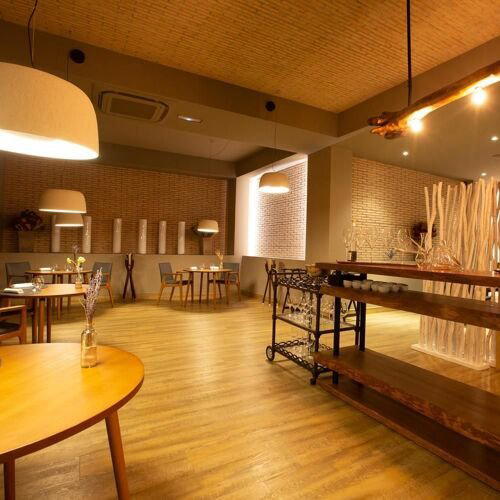
Retama is a one-Michelin-star restaurant in Torrenueva, Ciudad Real, serving modern La Mancha cuisine at about $100 per person. Approach Retama from the Camino de Altamar and the Central Meseta announces itself before the restaurant does. The land here is broad and unhurried, dotted with the yellow-blossomed retama shrub that gives the restaurant its name. That shrub, common across this stretch of the Castilian plateau, is not an incidental detail: it signals the foundational premise of the kitchen inside, which is that the ingredients on the plate should be traceable to the territory you can see from the table.
La Mancha's Larder on the Plate
The tasting-menu operations that hold sustained critical attention, from Arzak in San Sebastián and Mugaritz in Errenteria to Disfrutar in Barcelona and El Celler de Can Roca in Girona, are embedded in regions with strong existing ingredient cultures and dense food tourism infrastructure. Interior Castile operates differently. The produce here, game birds, wild rabbit, wild boar, escabeches built from estate vegetables, does not arrive via a celebrated coastal supply chain. It comes from the land the restaurant occupies.
Retama sits within La Caminera, a country hotel that includes a nine-hole golf course and a private aerodrome, which positions it in a niche category of Iberian hospitality: the self-contained estate restaurant with its own production territory. Chef Miguel Ángel Expósito works with that territory directly, structuring his menus around what the estate and its surrounding region yield. Wild rabbit is prepared à la royale. Partridge, described on the menu as a "sequence of partridge from our estate," moves through the kitchen in multiple preparations. Wild boar shank and beetroot escabeche round out a list of dishes that reads like an inventory of the meseta rather than a demonstration of global technique.
That framing matters because it distinguishes Retama from the category of modern Spanish restaurants that source globally and use provenance as garnish. Here, provenance is the architecture. The modern techniques applied in the kitchen serve the ingredient rather than transcending it, which places Retama closer philosophically to producers like Ricard Camarena in València and Azurmendi in Larrabetzu, where land-use and supply integrity underpin the tasting menu format, than to the more abstracted creativity of DiverXO in Madrid or Quique Dacosta in Dénia.
Three Menus, One Territory
The kitchen offers three tasting menus: Tradición, Finca La Caminera, and Retama. Each title signals a different depth of engagement with the region, from the broader arc of La Mancha culinary tradition through to the specific produce of the estate itself. The Retama menu draws most tightly on what the surrounding land provides. The Tradición menu grounds the progression in the historical recipes of the region, reinterpreted through contemporary technique rather than simply recreated.
This triptych format reflects a recognition that guests arrive with different levels of prior knowledge and appetite for immersion. What is less common at this price point is the degree to which all three menus remain anchored to a single geography. There is no menu here that pivots to Mediterranean technique or international reference points as a concession to variety.
For context within Spain's broader modern-cuisine conversation, Retama operates at €€€, below the €€€€ pricing of Aponiente in El Puerto de Santa María, Martin Berasategui in Lasarte-Oria, or Atrio in Cáceres. That positioning makes it one of the more accessible entry points into serious tasting-menu dining in interior Spain, particularly given the estate setting, which removes the need for a restaurant-hotel split that adds cost at comparable rural properties elsewhere in Europe.
The Room and Its Relationship to the Landscape
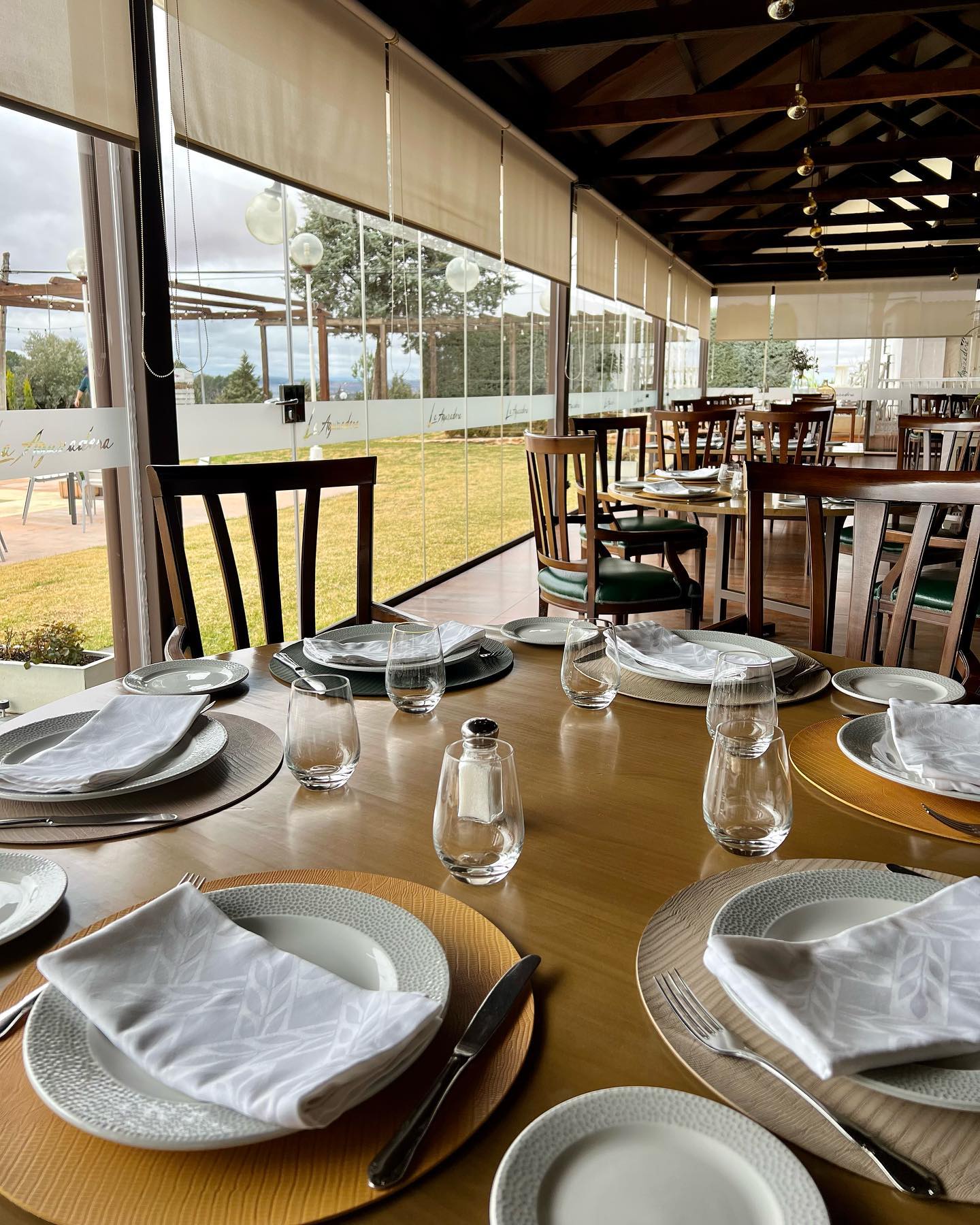
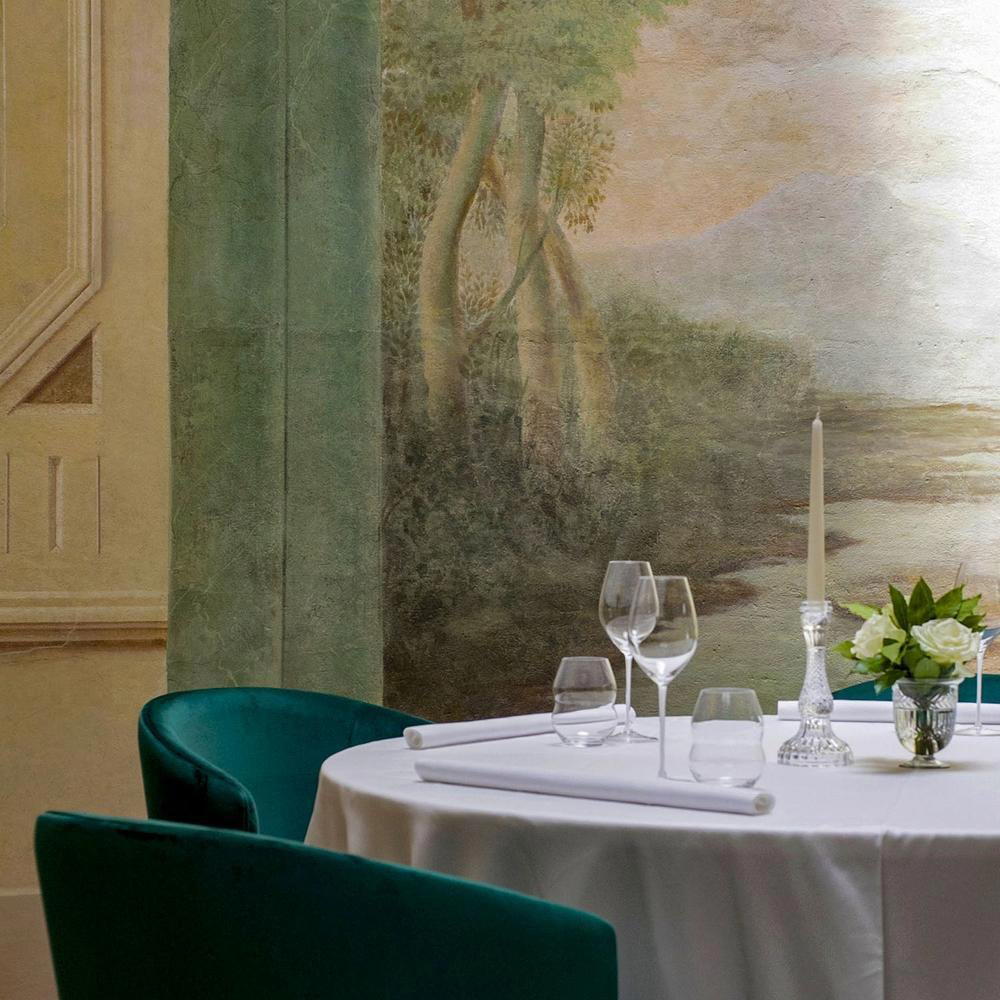
The dining room at Retama runs counter to the aesthetic expectations a Spanish country estate might set. The interior leans Nordic: bare tables, restrained decoration, minimal surface clutter. This is a deliberate editorial choice rather than an oversight, and it functions to redirect attention toward the countryside visible from the dining room windows. The Central Meseta is not a dramatic landscape in the way that coastal Andalusia or the Pyrenean foothills are dramatic. It earns attention through repetition and scale, through the quality of light across flat agricultural land and the way the retama shrub organises the middle distance. A spare dining room does not compete with that; it frames it.
The parallel in Northern European fine dining is deliberate. Restaurants operating in this register, from Frantzén-lineage operations like Frantzén in Stockholm to its international extensions such as FZN by Björn Frantzén in Dubai, use controlled environments to focus perception on the food. At Retama, that controlled environment also frames the view, creating a dual object of attention: the plate and the plateau.
Planning Your Visit
Retama operates on a restricted schedule that reflects the estate context rather than a high-volume urban restaurant model. The kitchen opens Thursday and Friday evenings from 8:30 PM to 11 PM, with Saturday extending to both a lunch service from 1:30 PM to 3:15 PM and dinner from 8:30 PM to 11 PM. Sunday adds the same lunch window but no evening service. Monday and Tuesday are closed.
The practical implication is that a Saturday visit is one flexible option, allowing either a lunch that extends into an afternoon on the estate or an evening meal with the full Castilian night around it. Guests travelling from Madrid, roughly two hours south by road via the A-4, would find the Saturday lunch particularly logical, allowing a same-day return without needing to extend to an overnight stay, though the La Caminera hotel makes a longer stay worth considering.
Given the estate's limited profile and restricted operating hours, booking well in advance is essential for weekend dates. For a full picture of dining options in the area, see our full Torrenueva restaurants guide, as well as guides to hotels, bars, wineries, and experiences in Torrenueva.
How It Stacks Up
Comparable venues nearby, for context on price, style, and recognition.
| Venue | Cuisine | Price | Awards | Notes |
|---|---|---|---|---|
| RetamaThis venue — the venue you are viewing | Modern La Mancha Cuisine | $$$ | Michelin 1 Star | Not listed |
| Radis | Modern Spanish Fine Dining | $$$ | Michelin 1 Star | city center |
| Coto de Quevedo Evolución | Traditional Spanish Game-Focused Fine Dining | $$$$ | Michelin 1 Star | Torre de Juan Abad |
| Oria | Modern Mediterranean with Basque Influences | $$$$ | Michelin 1 Star | La Dreta de l'Eixample |
| La Tasquería | Modern Spanish Offal (Casquería) | $$$ | Michelin 1 Star | Rios Rosas |
| El Molino de Alcuneza | Modern Spanish Farm-to-Table | $$$$ | Michelin 1 Star | Sigüenza |
Recognition history
Dated appearances from independent guides and award organizations, with the underlying list record or original source where available.
Guía Repsol 1 Sol
Guía Repsol
Macarfi 7.8 Food Rating
Macarfi
Michelin 1 Star
Michelin
Michelin 1 Star
Michelin
Michelin 1 Star
Michelin
Continue exploring
More in Torrenueva
Restaurants in Torrenueva
Browse all →
Hotels in Torrenueva
Browse all →
At a Glance
- Elegant
- Modern
- Intimate
- Cozy
- Date Night
- Special Occasion
- Hotel Restaurant
- Extensive Wine List
- Local Sourcing
- Garden
Current opening hours
- Monday
- Closed
- Tuesday
- Closed
- Wednesday
- Closed
- Thursday
- Closed
- Friday
- 8:30–11 PM
- Saturday
- 1:30–3:15 PM, 8:30–11 PM
- Sunday
- 1:30–3:15 PM
Hours can change for holidays and private events. Last verified .
Restrained yet charming with bare tables and Nordic-inspired decor, offering delightful countryside views.