Set along the Vilches-Linares road in the olive-grove country of Jaén, Hacienda La Marquesa occupies a rural estate that anchors itself firmly in the agricultural architecture of Andalusia's interior. The property sits at kilometre 6.8 of the CM-3204, placing it between two historically significant towns in the Sierra Morena foothills. For travellers seeking a counterpoint to Spain's coastal and urban hotel circuits, this is a distinctly inland proposition.

Pearl is the En Primeur Club membership app — saves, bookings, and concierge access live there. Same editors, same standards.
- Address
- Ctra. Vilches - Linares, Km 6,8, 23220 Vilches, Jaén, Spain
- Phone
- +34 698 59 59 78
- Directions
- Get directions
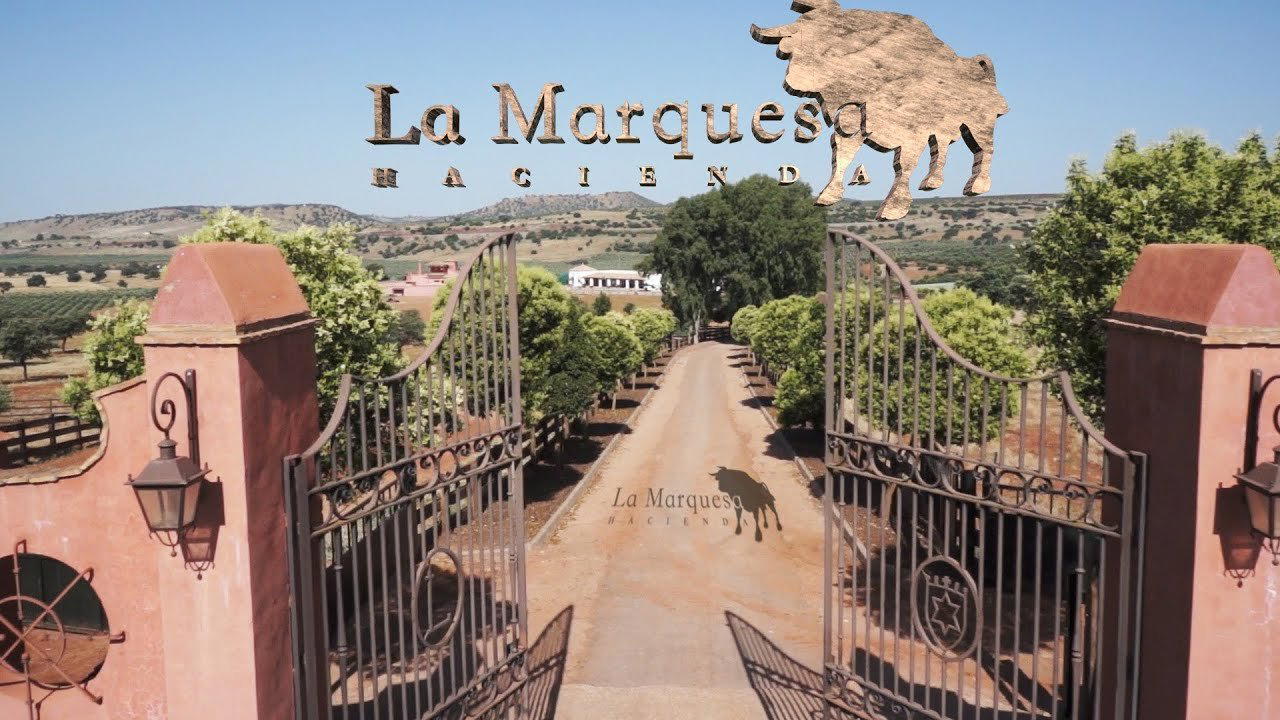
Stone, Soil, and the Architecture of Andalusia's Interior
Spain's premium accommodation market has long defaulted to two gravitational poles: the urban luxury of Madrid and Barcelona, and the coastal draw of Mallorca, Ibiza, and Marbella. Properties like Mandarin Oriental Ritz, Madrid, Mandarin Oriental Barcelona, and Marbella Club Hotel define one end of the spectrum. Hacienda La Marquesa occupies a different axis entirely: the rural interior of Andalusia, where the architecture is agricultural rather than palatial, and the surrounding landscape is defined by olive groves and the low ridgelines of the Sierra Morena rather than by coastline or city grid.
In the province of Jaén, the hacienda typology carries specific weight. These were working estates, built around olive oil production, with architecture that evolved from function rather than ornament. The thick-walled cortijo construction common to this region was designed to moderate the extremes of the Andalusian climate: insulating against the fierce summer heat and retaining warmth through cold winter nights. When a hacienda is repurposed for hospitality, the structural logic of the original building becomes an asset, not an obstacle. Walls that once kept oil-pressing rooms cool now create a particular quality of interior quiet that contemporary builds rarely replicate.
The Vilches-Linares Road: Placing the Property in Its Terrain
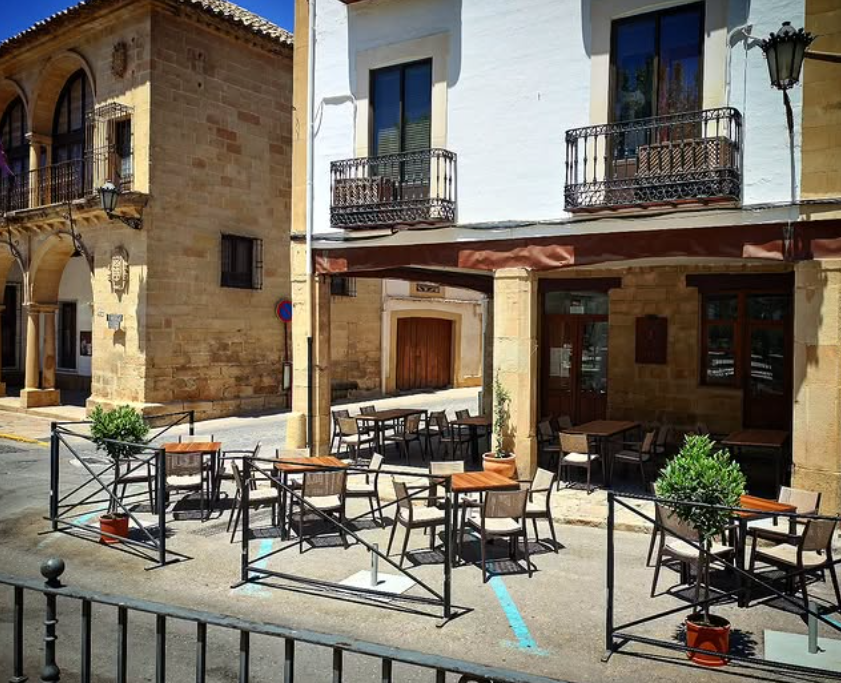
Hacienda La Marquesa sits at kilometre 6.8 of the Ctra. Vilches-Linares road, in the municipality of Vilches in the province of Jaén. The positioning is significant not just geographically but contextually. Vilches and Linares are two of the smaller historic towns in eastern Andalusia, and the road between them passes through terrain that feels resolutely agricultural. Jaén province produces more olive oil than any other in Spain, and the view from most points along this corridor confirms it: row after row of grey-green olive trees on ochre soil, extending across undulating ground toward the distant Sierra. This is not a postcard version of Andalusia. It is the working version, and a property sited here makes an implicit argument about what kind of Spain it wants to represent.
For a broader orientation, our full Vilches restaurants guide maps the area's food and hospitality options in detail. Travellers comparing rural Andalusian stays might also consider the converted monastery model at Abadía Retuerta LeDomaine in Teruel, where the heritage architecture serves a similar function but within a wine estate context, or the walled fortress conversion at Cap Rocat in Cala Blava, which applies a comparable logic of repurposed historical structure to a coastal Mallorcan setting.
Hacienda Architecture and What It Communicates
The hacienda as a building type is underappreciated in the broader conversation about Spain's architectural heritage. While the country's paradores network has done significant work converting castles, monasteries, and convents into hospitality properties, the working agricultural estate represents a quieter and arguably more honest tradition. At Hacienda La Marquesa, the address on the Vilches-Linares road situates the property within a corridor of similar estates, many of which remain in private hands or active agricultural use. This context matters: it places the property inside a living tradition rather than a museified one.
Elsewhere in Spain, the design-led rural property category has developed its own vocabulary. Mas de Torrent Hotel and Spa in Torrent (Catalonia) applies a similar principle of converted agricultural architecture to a Costa Brava setting. Terra Dominicata in Escaladei situates hospitality within a working wine estate in the Priorat, where the physical structures carry centuries of viticultural history. In each case, the architectural inheritance shapes the guest experience in ways that purpose-built luxury properties cannot easily replicate. The question worth asking at Hacienda La Marquesa is how the original hacienda fabric has been preserved or adapted, and whether the interior reads as a coherent extension of the exterior's Andalusian agricultural character.
The Jaén Interior and Its Wider Context
Jaén's interior is one of the least-visited corners of Andalusia among international travellers, which makes it worth understanding on its own terms before arriving. The province sits between the Sierra Morena to the north and the Sierras Subbéticas to the south, with the Guadalquivir valley running through its centre. The towns of Úbeda and Baeza, both UNESCO World Heritage Sites for their Renaissance architecture, lie roughly 30 kilometres south of Vilches, and they anchor the cultural argument for spending time in this part of the region. Linares, the nearest significant town to the property, is a former mining centre with a different kind of historical character.
This interior Andalusian circuit — Vilches, Linares, Úbeda, Baeza — sits well outside the standard tourist routing that connects Seville, Córdoba, and Granada. For travellers willing to build an itinerary around Jaén's specific assets (olive oil culture, Renaissance townscapes, Sierra Morena hiking), Hacienda La Marquesa's position on the Vilches-Linares road makes geographical sense as a base. Properties operating in this mode, using their rural address as a programming asset rather than an inconvenience to be apologised for, occupy a specific and increasingly sought-after niche within Spanish hospitality. Compare this positioning to the wine-estate model at Torre del Marqués Hotel Spa and Winery in Sardoncillo, where the agricultural context is similarly central to the offer.
Planning a Stay
Hacienda La Marquesa is accessible by road from both Vilches and Linares, with the property signposted at kilometre 6.8 on the connecting road between the two towns. The nearest airports with reliable international connections are Granada (approximately 120 kilometres west) and Málaga (approximately 200 kilometres southwest), making a hire car the practical approach for most stays. Given the rural address and the absence of public transport on this road corridor, self-driving or pre-arranged transfers are the realistic options. For travellers exploring the wider region, the Parque Natural de Despeñaperros lies immediately north, offering one of the more dramatic natural passages through the Sierra Morena.
Those building a wider Andalusian or southern Spain itinerary might benchmark Hacienda La Marquesa against other heritage rural properties in the network, including Atrio Restaurante Hotel in Cáceres, which combines heritage architecture with a serious restaurant program, or Pepe Vieira Restaurant and Hotel in Poio for a Galician coastal counterpoint. For those extending north or east, Canfranc Estación, a Royal Hideaway Hotel illustrates how Spain's heritage property market has broadened well beyond Andalusia in recent years.
At-a-Glance Comparison
| Venue | Price | Awards |
|---|---|---|
| Hacienda La MarquesaThis venue — the venue you are viewing | Not listed | Not listed |
| Mandarin Oriental Ritz, Madrid | Not listed | 3 Michelin Keys · World's 50 Best #71 |
| Four Seasons Hotel Madrid | Not listed | 2 Michelin Keys · World's 50 Best #66 |
| La Residencia, A Belmond Hotel, Mallorca | Not listed | 2 Michelin Keys · La Liste Top Hotels |
| Mandarin Oriental Barcelona | Not listed | 2 Michelin Keys · La Liste Top Hotels |
| Rosewood Villa Magna | $300–500 | 2 Michelin Keys · La Liste Top Hotels |
Continue exploring
More in Vilches
Hotels in Vilches
Browse all →
Restaurants in Vilches
Browse all →
Wineries in Vilches
Browse all →
Details
- Romantic Getaway
- Weekend Escape
- Historic Building
rustic and serene