Restoran "Nego"
Our verdict
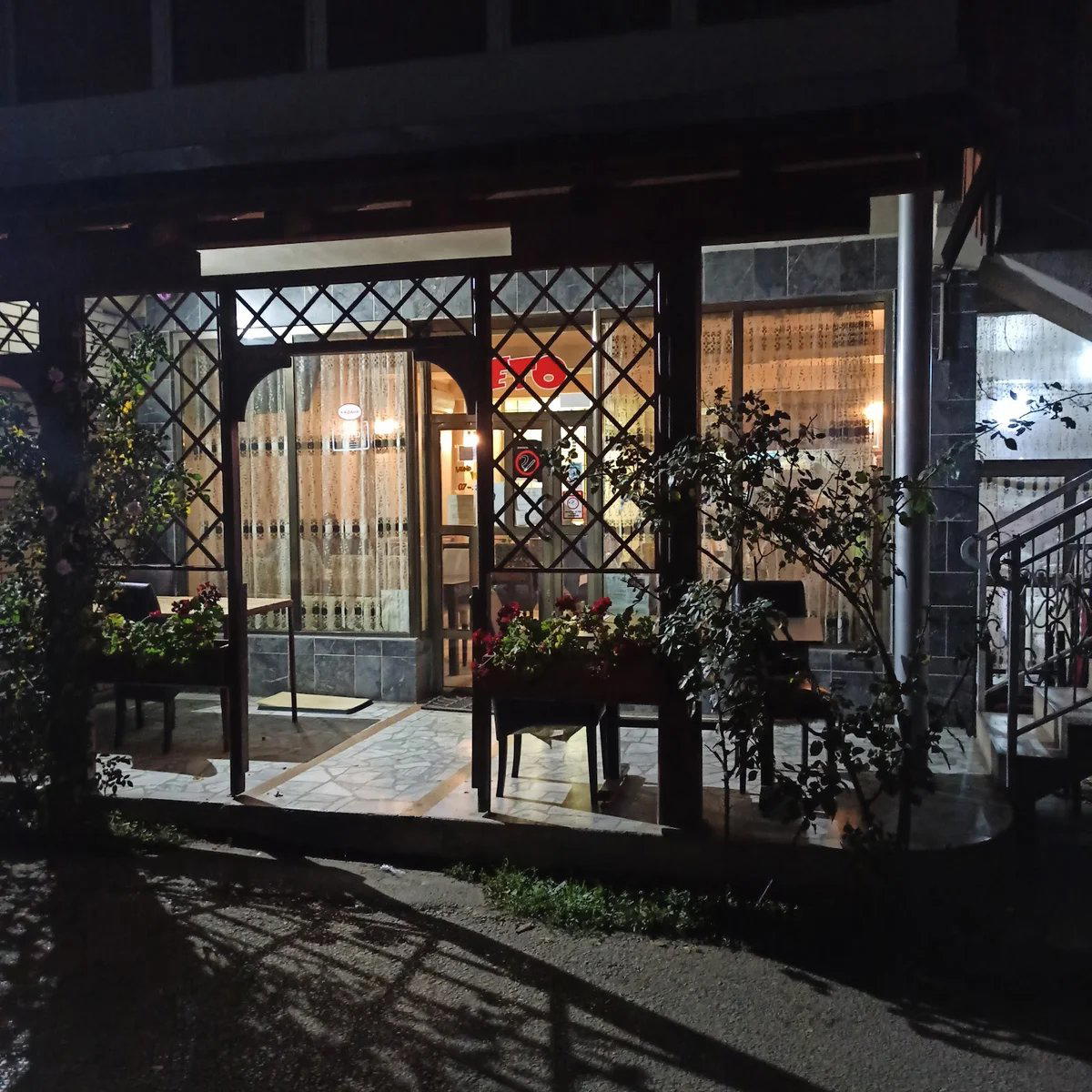
Restoran Nego sits on Vuka Karadžića in Kuršumlija, a town in southern Serbia's Toplica district where local tradition shapes the table more reliably than any trend. In a region where proximity to pasture, river, and forest determines what gets cooked, the restaurant occupies a straightforward position in the town's dining fabric. Travellers passing between Niš and Kopaonik will find it worth factoring into the route.

Pearl is the En Primeur Club membership app — saves, bookings, and concierge access live there. Same editors, same standards.
The menu
What to order
- Barbecue
- Sausages
Where Southern Serbia's Larder Defines the Table
Kuršumlija sits at the confluence of the Toplica and Kosanica rivers in a part of Serbia where the distance between field and kitchen is measured in minutes rather than miles. The Toplica district is sheep country, river-fish country, and orchard country, and the restaurants that endure here tend to do so because they maintain a direct relationship with those sources rather than because they have cultivated a particular aesthetic or imported a fashionable format. Restoran Nego, addressed at Vuka Karadžića 17, operates within that tradition. The street itself runs through the commercial core of a town of roughly 12,000 people, and arriving on foot you get the particular Serbian town-centre texture: low-rise buildings, a river not far off, the unhurried pace of a place that has never been in competition with Belgrade or Novi Sad for culinary attention. That absence of competitive pressure is, in its own way, a quality signal — what survives here survives because locals return.
The Sourcing Logic of Toplica Cooking
Understanding what ends up on tables in this part of Serbia requires a short geography lesson. The Toplica valley and its surrounding hills produce lamb that grazes on highland pasture, freshwater fish from the Toplica and its tributaries, and a range of foraged and cultivated vegetables shaped by a continental climate with warm summers and cold winters. Cured meats, slow-cooked stews, and wood-fired preparations are not heritage-tourism gestures here — they are practical responses to how food has always been preserved and cooked in this terrain. This is the broader context in which a restaurant like Nego operates: not as a standalone creation but as an expression of a regional larder that predates it by centuries.
Serbian cuisine in the south has strong overlaps with the broader Balkan tradition, roštilj (grilled meat), sarma (stuffed cabbage or vine leaves), and ajvar (roasted pepper condiment) appear across the region, but Toplica cooking carries its own emphases. The proximity to Kosovo and North Macedonia introduces flavour registers that differ from those of Vojvodina to the north or Šumadija to the west. Travellers already familiar with restaurants like ETNO PODRUM BRKA in Niš or Koliba Etno Restoran in Leskovac will recognise the southern Serbian register, though the Toplica valley introduces its own local specificity.
The Town and Its Dining Fabric
Kuršumlija is not a city with a stratified restaurant scene. It does not have a fine-dining tier competing against a casual tier in the way that Belgrade does, where the gap between somewhere like Langouste and a neighbourhood kafana is measured in both price and format. Here, the distinctions are subtler: a restaurant is judged on the quality of its meat, the depth of its stews, the hospitality of its service, and whether the rakija on the table was made by someone the owner knows. Nego sits within this framework. The address on Vuka Karadžića places it centrally, accessible to both locals going about their day and travellers who have driven up from Niš, roughly 80 kilometres to the southeast, or who are continuing toward Kopaonik, the ski mountain whose resorts, including the Grand in Kopaonik, represent a different and more tourist-oriented hospitality tier entirely.
For travellers building a route through southern Serbia, Kuršumlija is a logical stop rather than a detour. The Đavolja Varoš geological formation, a protected natural monument of eroded rock towers, draws visitors to the area, and the town functions as a practical base. A meal at a centrally located restaurant like Nego fits the rhythm of that kind of travel: substantive, local, without the staging of a tourist destination.
How This Fits the Wider Serbian Table
Across Serbia, there is a clear split between restaurants that have oriented themselves toward urban or international audiences and those that serve their immediate communities. The former category includes city venues such as Kafe Restoran Maša in Novi Sad or Aleksandar Gold in Uzice, which operate with a degree of self-consciousness about presentation and format. The latter category, community restaurants in smaller towns, tends to receive less editorial attention but often delivers more consistent access to regional cooking traditions. Restoran Nego belongs to the second group. So, in different ways, do places like Kod Brana in Čačak, Kafana Studenac in Bajina Bašta, and Kafana Pećinar Ljubiš in Cajetina, each rooted in its own subregional tradition rather than in a curated national or international identity.
The comparison is worth making because it clarifies what kind of experience is on offer. A traveller expecting the format discipline of a Belgrade tasting menu or the river-fish theatrics of Čarda Zlatna Kruna in Apatin should recalibrate. What southern Serbian town restaurants offer is directness: short distance from source to plate, cooking shaped by local habit rather than external expectation, and pricing that reflects a local rather than a tourist economy.
Planning a Visit
Kuršumlija is most practically reached by car from Niš, which has the nearest airport with regular domestic and some international connections. The drive along the Toplica valley takes under two hours and passes through agricultural land that contextualises the cooking before you arrive. For travellers continuing to Kopaonik for skiing or hiking, Kuršumlija sits on a natural route and a meal here breaks the journey usefully. As with most restaurants in smaller Serbian towns, arriving mid-afternoon or early evening tends to yield more attentive service than peak weekend lunch periods, when local family gatherings can fill a dining room quickly. No booking infrastructure or website is listed for Nego at this time, which is consistent with how most restaurants of this type operate, walk-in, cash-friendly, oriented toward regulars. Travellers unfamiliar with the regional context might also consult our full Kuršumlija restaurants guide before planning their stop.
For those building a longer southern Serbia itinerary, pairing a Kuršumlija stop with dinner in Niš, where ETNO PODRUM BRKA offers a more produced take on the same regional tradition, gives a useful comparative frame. Alternatively, the route west toward KAFANA DUKAT in Pirot introduces the Nišava valley's distinct culinary character. Either way, Kuršumlija and its restaurants function as an honest cross-section of how southern Serbia actually eats, which is a different kind of value from what you find at either end of the formal dining spectrum represented by, say, Le Bernardin in New York or Atomix.
Frequently asked questions
Is Restoran "Nego" suitable for children?
Kuršumlija restaurants of this type generally operate as family-oriented spaces where children are a normal part of the dining room, not an afterthought. The address on Vuka Karadžića 17 puts it in a town-centre location accessible on foot. No specific children's menu is documented, but southern Serbian table formats — shared portions, grilled meats, seasonal sides — tend to work well across age groups.
What's the vibe at Restoran "Nego"?
Kuršumlija is a small town in the Toplica valley, and Nego sits within that context: this is neighbourhood dining, not a destination restaurant calibrated for outside audiences. Expect a room that serves locals as its primary function, with the informal cadence that comes with that. The address on Vuka Karadžića places it centrally, which in a town this size means it likely draws a cross-section of the community rather than a specific social bracket.
Is Restoran "Nego" a good option for visitors passing through Kuršumlija on the way to southern Serbia's spa towns?
Kuršumlija sits on the route toward Prolom Banja and Lukovska Banja, two of southern Serbia's established spa destinations, making it a logical stopping point. Nego's central address on Vuka Karadžića 17 positions it as a practical midday or early evening option rather than a detour. The regional cooking tradition of the Toplica valley gives context to what the kitchen is likely drawing from, even without a published menu on record.
What's the best thing to order at Restoran "Nego"?
No specific menu is documented for Nego, so naming a single dish would be speculation. What is known is that the Toplica valley — the agricultural zone surrounding Kuršumlija — produces lamb, pork, fresh dairy, and seasonal vegetables that define the southern Serbian table. In restaurants of this type and location, those local inputs tend to drive the kitchen's strongest offerings rather than any imported ingredient or technique.
Where do I go for Restoran "Nego"?
Restoran "Nego" is located at Vuka Karadžića 17, Kuršumlija, Serbia, Kursumlija.
In Context: Similar Options
Comparable venues nearby, for context on price, style, and recognition.
| Venue | Cuisine | Price | Notes |
|---|---|---|---|
| Restoran "Nego"This venue — the venue you are viewing | Serbian Barbecue & Pizza | Not listed | Not listed |
| Restoran Kod Jukića | Balkan Barbecue | Not listed | Sjenica |
| etno restoran Gaziya | Traditional Serbian Ethnic Cuisine | Not listed | Novi Pazar |
| ETNO PODRUM BRKA | Traditional Serbian | Not listed | Jelašnica |
| KAFANA DUKAT | Authentic Serbian Kafana | Not listed | Pazar |
| ŽUPAN | Serbian Grill & Traditional | $10–20 | Soko Banja |
Continue exploring
More in Kursumlija
Restaurants in Kursumlija
All restaurants in Kursumlija →
Hotels in Kursumlija
Browse all →

Details
- Cozy
- Classic
- Casual Hangout
- Group Dining
- Family
- Standalone
- A La Carte
Current opening hours
- Monday
- 7 AM–12 AM
- Tuesday
- 7 AM–12 AM
- Wednesday
- 7 AM–12 AM
- Thursday
- 7 AM–12 AM
- Friday
- 7 AM–12 AM
- Saturday
- 7 AM–12 AM
- Sunday
- 7 AM–12 AM
Hours can change for holidays and private events. Last verified .
Casual and conversational, with a direct local restaurant atmosphere.