
Restaurante Ferreiro occupies a quietly residential stretch of Tetuán, one of Madrid's less-touristed northern districts, where the dining proposition tends toward honest execution over spectacle. The address places it outside the central circuit of Madrid's high-profile creative kitchens, which tells you something useful about who it is for and what it prioritises.
Pearl is the En Primeur Club membership app — saves, bookings, and concierge access live there. Same editors, same standards.
- Address
- C. del Aviador Zorita, 32, Tetuán, 28020 Madrid, Spain
- Phone
- +34915539342
- Website
- restauranteferreiro.com
- Directions
- Get directions
 Saves & bookings on Pearl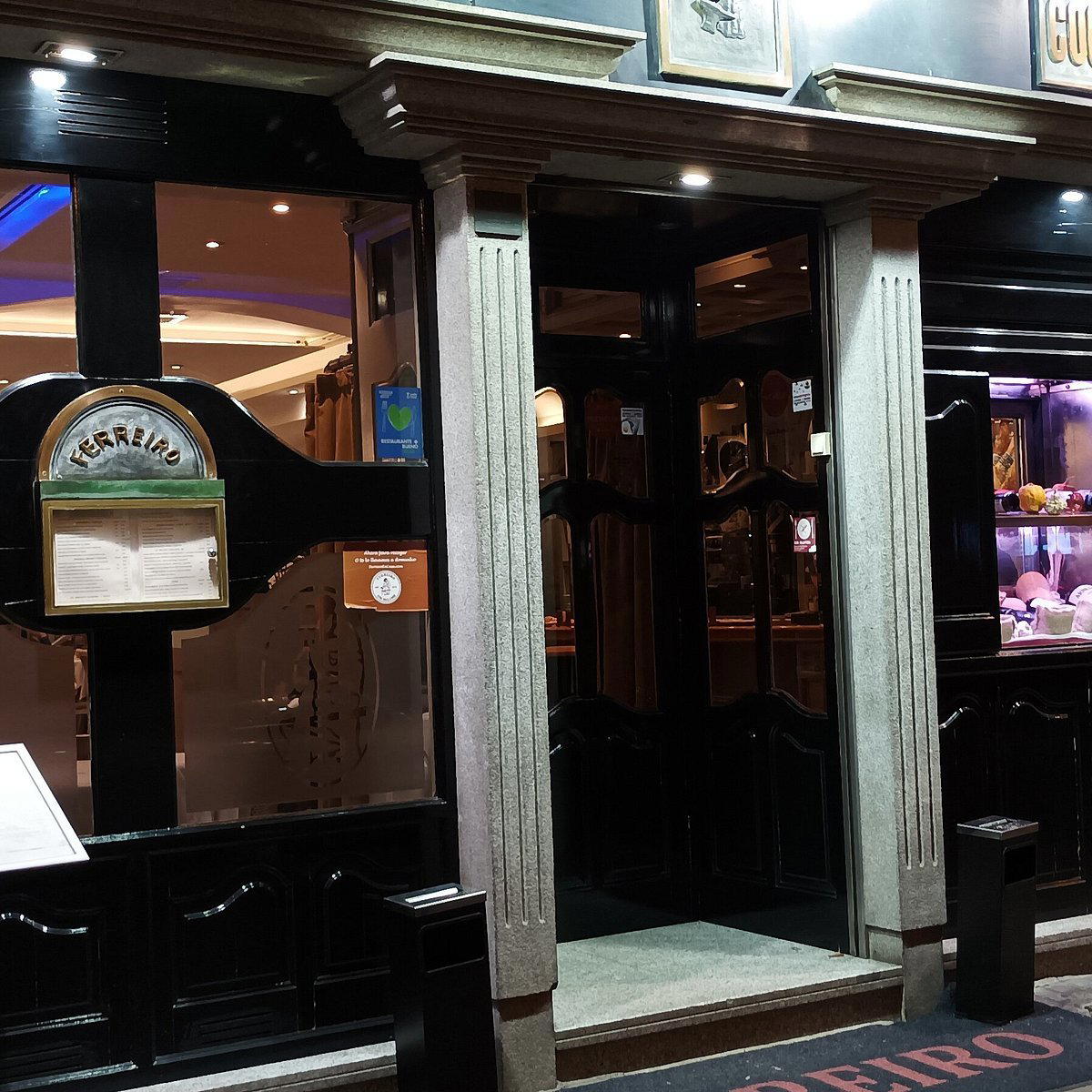
Tetuán and the Case for Eating Outside the Centre
Madrid's restaurant conversation defaults to a familiar arc: the three-star creative rooms of DiverXO, the technically ambitious formats of Coque and DSTAgE, the hotel-backed prestige of Deessa. These rooms occupy a compact geography roughly bounded by Salamanca, Chueca, and the Castellana corridor. Tetuán, the district where Restaurante Ferreiro sits on Calle del Aviador Zorita, is a different kind of neighbourhood — more residential, less trafficked by the international dining circuit, and shaped by the logics of a local clientele rather than by tourism or press cycles.
That geographic displacement is not incidental. In Madrid, as in most large European cities, the restaurants that survive on local repeat custom tend to develop a different discipline from those built partly on destination dining. They cannot rely on novelty or on the gravitational pull of a starred address in a well-mapped district. They have to be worth returning to. Restaurante Ferreiro's position in Tetuán places it squarely inside that logic.
Where Local Produce Meets Borrowed Technique
The broader story of Spanish cuisine over the past two decades is one of productive tension between indigenous ingredients and absorbed technique. The generation of cooks trained in the orbit of Basque and Catalan avant-garde kitchens brought fermentation science, precision temperature work, and textural manipulation back into Spanish dining rooms — including into restaurants that never sought Michelin attention. The result, across the country, has been a visible upgrade in the execution of traditionally anchored menus: products that were always good, now handled with a more rigorous technical vocabulary.
That pattern extends beyond the obvious flagships. Restaurants like Arzak in San Sebastián, El Celler de Can Roca in Girona, and Azurmendi in Larrabetzu set technical reference points that filtered through the entire ecosystem. Closer to Ferreiro's address, the broader Madrid scene has absorbed those influences unevenly: the leading creative tier, represented by venues like Paco Roncero, operates at the outer edge of that technical vocabulary, while the mid-tier and neighbourhood-level rooms apply it more selectively and pragmatically.
The question a neighbourhood restaurant like Ferreiro asks, even if it never states it explicitly, is how much of that imported technical grammar to apply to products that have their own established identity. Spanish cuisine's depth comes from its raw material: Ibérico pork, aged Manchego, Cantabrian anchovies, Galician seafood, Castilian legumes. The technique is in service of those ingredients, not a substitute for them. That hierarchy, when it holds, produces food that is satisfying in a way that pure technique rarely manages on its own.
The Neighbourhood as Context
Tetuán developed through the twentieth century as a working-class and lower-middle-class district, absorbing successive waves of internal migration to Madrid, and more recently, significant international immigration. The food culture that has accumulated there reflects that layered demography: traditional Castilian cooking sits alongside North African and Latin American influences, and the dining expectations of the neighbourhood lean toward value, generosity, and familiarity over prestige signalling.
A restaurant operating on Calle del Aviador Zorita in this context is not positioning itself against the starred dining rooms of the Castellana. It is positioning itself against the other neighbourhood options available to Tetuán residents: the local bars de tapas, the family-run asadores, the casual lunch menus that remain one of Madrid's great undervalued dining formats. That competitive frame is worth understanding before visiting, because it determines the register of the experience.
For comparison, consider what Spain's most geographically distributed creative restaurants, Quique Dacosta in Dénia, Aponiente in El Puerto de Santa María, Ricard Camarena in València, have in common: they are anchored in specific local geographies that shape their ingredient sourcing and their identity. The same principle operates at every level of the dining spectrum, including the neighbourhood level. A restaurant's relationship to its immediate geography is one of the more reliable indicators of what it is actually trying to do.
Placing Ferreiro in the Madrid Context
Madrid's dining scene has expanded and stratified significantly since the early 2000s. The upper tier now includes multiple three-star operations and a dense cluster of creative one- and two-star rooms. Below that, a substantial mid-tier of technically competent, ingredient-focused restaurants has grown in confidence and visibility, aided by a broader food culture that has become more sophisticated in its expectations. Neighbourhood restaurants in districts like Tetuán operate in that context, their customers have eaten in better rooms and bring those reference points with them.
That raises the bar for what a neighbourhood restaurant needs to deliver. Generic execution no longer satisfies the Madrid diner in the way it might have a generation ago. The proliferation of quality cooking across the city, traceable in part to the same generation of cooks who trained through the boom years of Spanish gastronomy, then dispersed into smaller formats as the economy contracted, means that a restaurant in Tetuán competes against real options, not just proximity.
Spain's influence on global technique is also worth noting here. Restaurants like Cocina Hermanos Torres in Barcelona, Martin Berasategui in Lasarte-Oria, and Mugaritz in Errenteria have contributed to a set of culinary standards that now circulate internationally. Even rooms operating at entirely different price points and without star ambitions exist in that cultural context. The influence is visible in how kitchens source, how they handle protein temperatures, how they think about acidity and contrast. For a broader view of where Madrid fits in that conversation, the full Madrid restaurants guide maps the city's tiers and neighbourhoods in detail.
For international reference points, the kind of rooms that define technical benchmarks in other cities, Le Bernardin in New York City and Atomix in New York City illustrate how cities outside Spain have absorbed and reconfigured similar ideas about local product and imported technique. The conversation is not Spain's alone.
Also worth tracking in Madrid's recent evolution: Atrio in Cáceres offers a useful comparison for how Spanish restaurants outside the major cities have repositioned themselves through product identity rather than address prestige.
Planning a Visit
Restaurante Ferreiro is located at C. del Aviador Zorita, 32, Tetuán, 28020 Madrid. The Tetuán district is served by Metro Line 1 (Tetuán station) and several bus routes, making it direct to reach from the city centre without a taxi. Dress: Neighbourhood context suggests casual to smart-casual is appropriate. Timing: Madrid's lunch service (typically 2pm to 4pm) remains the primary meal in neighbourhood restaurants of this type; dinner begins later than most non-Spanish visitors expect, rarely before 9pm in practice.
How Restaurante Ferreiro Madrid compares with similar nearby venues.
| Venue | Cuisine | Price |
|---|---|---|
| Ozio Gastronómico | Italian | €€ |
| Viavélez | Modern Asturian | Not listed |
Recognition history
Dated appearances from independent guides and award organizations, with the underlying list record or original source where available.
Macarfi 6.5 Food Rating
Macarfi
Continue exploring
More in Madrid
Restaurants in Madrid
Browse all →
Bars in Madrid
Browse all →
Hotels in Madrid
Browse all →


At a Glance
- Classic
- Rustic
- Business Dinner
- Special Occasion
- Private Dining
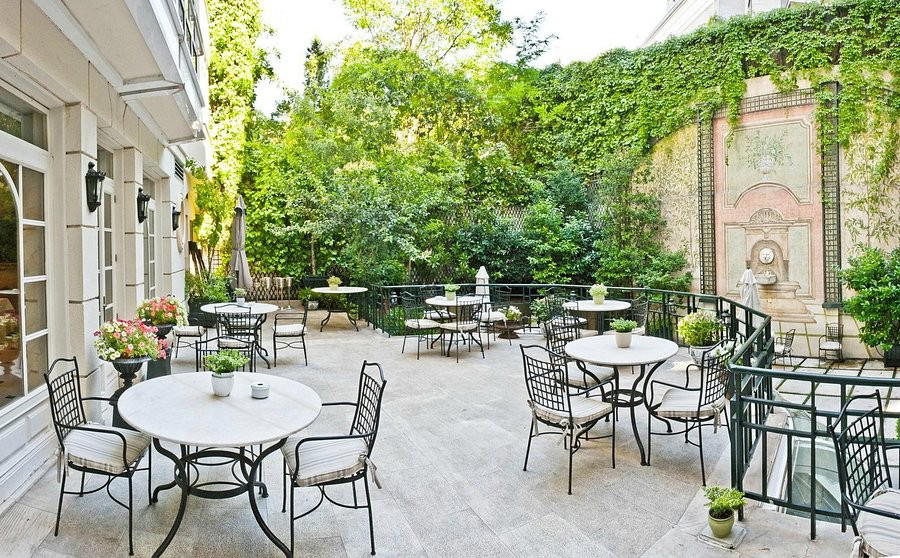
- Terrace
- Extensive Wine List
- Local Sourcing
Current opening hours
- Monday
- 1–4 PM, 8–11:30 PM
- Tuesday
- 1–4 PM, 8–11:30 PM
- Wednesday
- 1–4 PM, 8–11:30 PM
- Thursday
- 1–4 PM, 8–11:30 PM
- Friday
- 1–4 PM, 8–11:30 PM
- Saturday
- 1–4 PM, 8–11:30 PM
- Sunday
- 1–4 PM, 8–11:30 PM
Hours can change for holidays and private events. Last verified .
Classic and traditional atmosphere with attentive table service, evoking nostalgic northern Spanish dining.
Know Before You Go
- Getting there
- C. del Aviador Zorita, 32, Tetuán, 28020 Madrid, Spain