Perched on Mount Srđ above Dubrovnik's Old Town, Restaurant Panorama occupies among the more architecturally distinctive positions on the Dalmatian coast. Where most Dubrovnik dining competes at street level inside medieval walls, Panorama operates in a different register entirely, trading the city's famous limestone lanes for an refined vantage point and a space defined by its relationship to the view below.
Pearl is the En Primeur Club membership app — saves, bookings, and concierge access live there. Same editors, same standards.
- Address
- Srđ ul. 3, 20000, Dubrovnik, Croatia
- Phone
- +38520312664
- Website
- nautikarestaurants.com
- Directions
- Get directions
 Saves & bookings on Pearl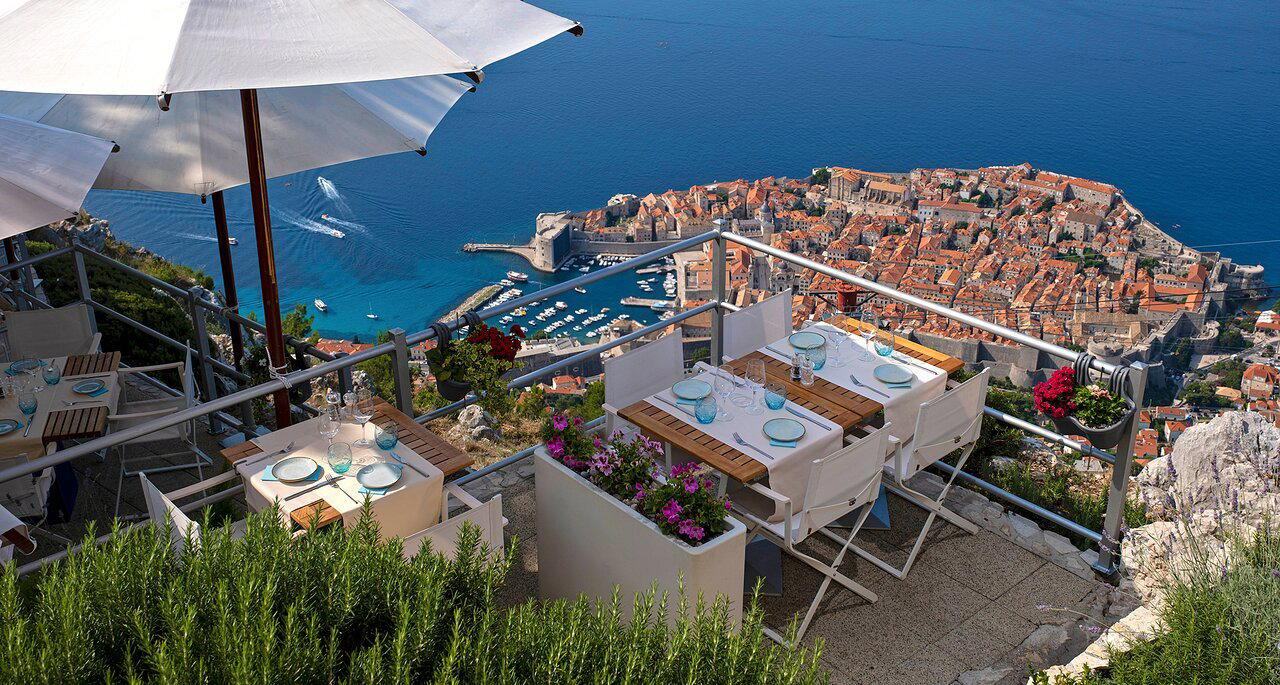
Altitude as Architecture
Most restaurants in Dubrovnik compete for the same thing: proximity to the Old Town walls, a terrace facing the Adriatic, a medieval stone interior that does half the atmospheric work. Restaurant Panorama, positioned on Mount Srđ above the city, operates on a fundamentally different premise. The physical container here is not a centuries-old konoba or a refurbished palace courtyard. It is a purpose-built restaurant where the architecture's primary material is the view itself, and where the glass and open sightlines of the space function as the defining design element rather than any wall finish or furniture choice.
This places Panorama in a category that Dubrovnik has few members of: restaurants where the building's relationship to the landscape is the primary spatial experience. In cities like Oslo or Cape Town, that design language is more common, structures conceived to frame a panoramic condition rather than shelter from it. On the Dalmatian coast, where dining culture has historically centered on shade, stone, and sea-level proximity to the water, a space that turns its back on enclosure and faces outward toward the entire sweep of the Walled City, the islands, and the open Adriatic is a meaningful departure from the regional norm.
Where Panorama Sits in Dubrovnik's Dining Hierarchy
Dubrovnik's premium restaurant tier is relatively compact. Restaurant 360 (International, Modern Cuisine) holds the clearest position at the summit of the market, with a terrace cantilevered over the city walls and a format built around tasting menus at the upper end of local pricing. Nautika, operating in the Modern European register at the same €€€€ price point, occupies the Old Town with a terrace facing the Lovrijenac fortress. These venues compete directly on the question of which dramatic Dubrovnik setting commands the highest premium.
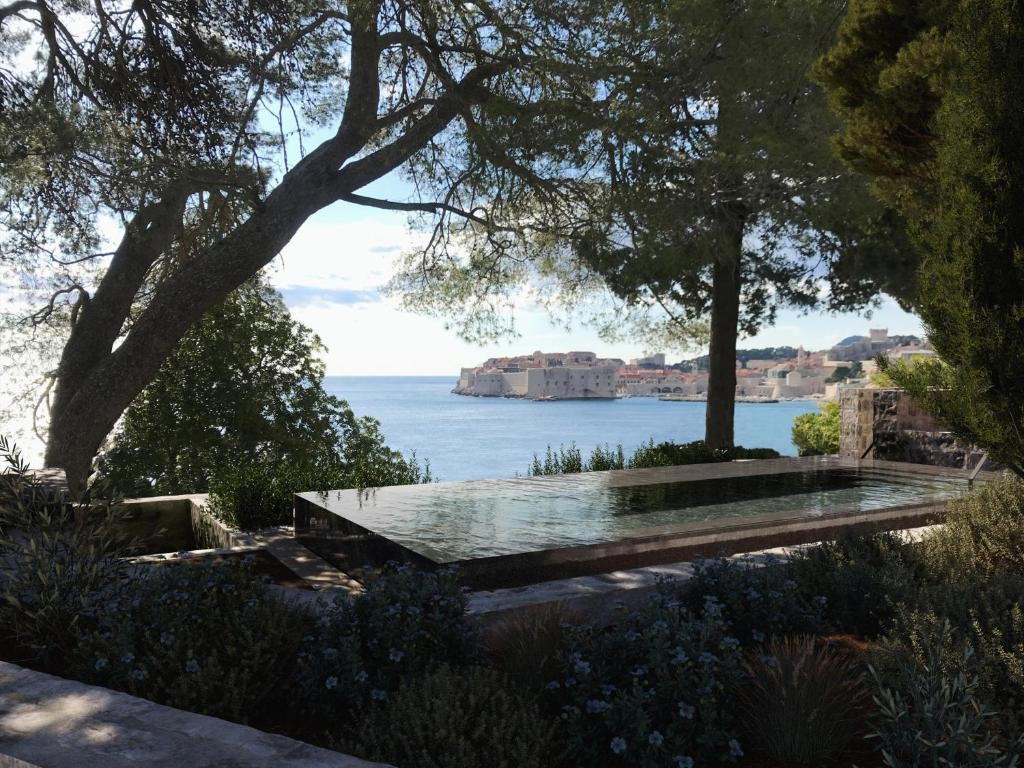
Panorama's proposition is different in kind rather than just degree. The elevation of Mount Srđ means the visual field is not a close-up of the walls or the sea immediately below, but the entire city rendered as a map, with the island of Lokrum in the middle distance and the Elaphiti chain visible on clear days beyond. That spatial scale is not achievable from within the Old Town itself. It positions Panorama against a smaller comparable set: restaurants where arriving is itself part of the experience, typically because the journey involves a cable car, a mountain road, or some mechanism that separates the dining destination from the surrounding city fabric.
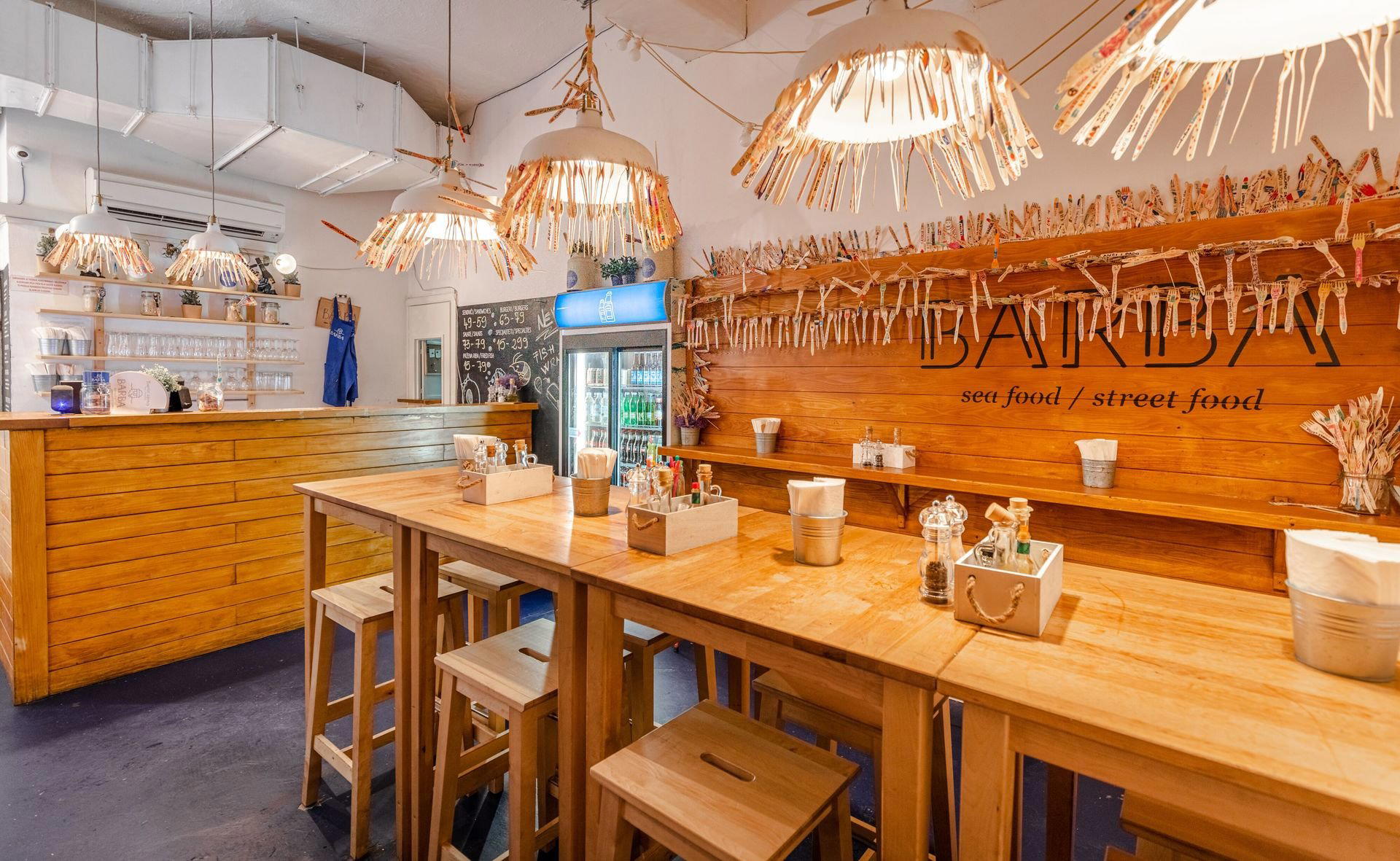
At the mid-market tier, options like Bistro Tavulin (Traditional Cuisine) and Barba serve a more locally-rooted function, with traditional Dalmatian formats at €€ price points that reflect the Old Town's broader restaurant ecology. Bistro 49 and Above 5 round out the mid-range options for visitors working through the city's dining options beyond the flagship tier. Panorama does not sit comfortably in any of these bands, the elevation and access mechanism place it in its own category, closer to a destination experience than a neighbourhood restaurant.
The Srđ Cable Car and What It Means for the Meal
Access to Restaurant Panorama runs through the Dubrovnik cable car, which ascends from a lower station near the Buža gate to the summit of Mount Srđ. The cable car operates on a schedule that varies seasonally, with extended hours during the summer high season and reduced operation in winter months. Visitors planning to dine in the evening should confirm the last descent time in advance, since the return journey is not guaranteed to be available late into the night. This is not a minor logistical detail but a structural condition of the dining format: the cable car creates a natural beginning and end to the experience, separating Panorama from the casual drop-in culture that governs most Old Town restaurants.
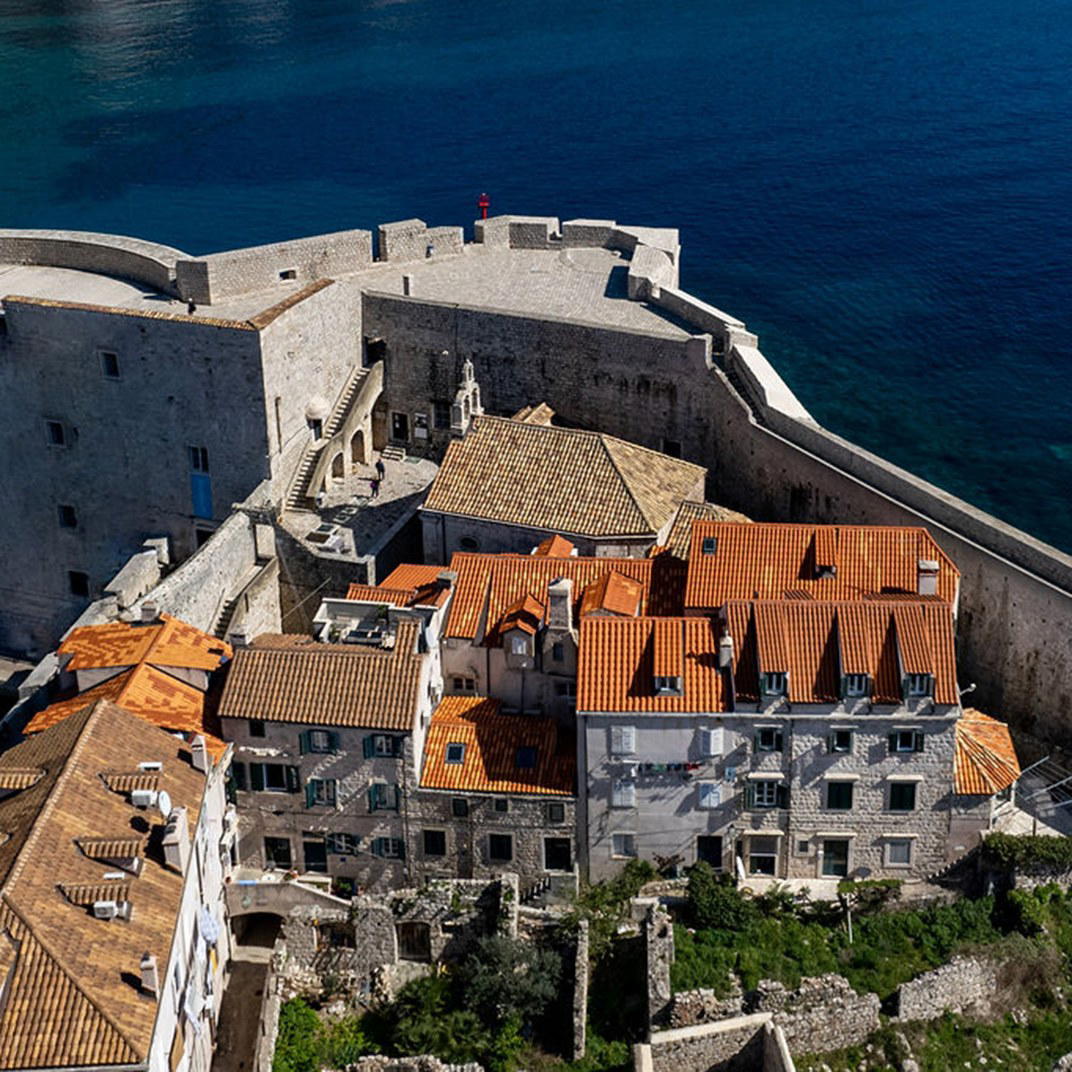
That arrival mechanism also functions as a kind of atmospheric staging. The ascent takes roughly four minutes, and by the time the cabin reaches the summit, the city below has already been reframed from a street-level maze of limestone into a geometric pattern of orange rooftops and fortified walls. Guests arrive at the restaurant already oriented toward the view, which is a design advantage that no ground-level venue can replicate regardless of its terrace or interior quality.
Dalmatian Dining at Altitude: What the Format Delivers
The cuisine at Panorama draws on the broader Dalmatian tradition that runs through Croatian coastal dining: fresh fish and shellfish from the Adriatic, locally sourced ingredients, and preparations that sit somewhere between the traditional konoba format and more contemporary plating. This positions the kitchen in a zone that several Croatian restaurants across the country have occupied with increasing confidence over the past decade.
Across Croatia, a clear division has emerged between venues working in a resolutely traditional register and those applying modern technique to regional ingredients. Pelegrini in Sibenik and LD Restaurant in Korčula both occupy the upper end of that contemporary-regional axis. Nebo by Deni Srdoč in Rijeka and Agli Amici Rovinj in Rovinj have pursued Michelin recognition within that framework. Further inland, Dubravkin Put in Zagreb and Korak in Jastrebarsko represent the continental side of Croatia's emerging fine dining scene, while Boskinac in Novalja, Alfred Keller in Mali Losinj, Krug in Split, and BioMania Bistro Bol in Bol extend the map of serious Croatian dining across the islands and coast. Panorama does not carry the award credentials of the strongest venues in that peer group, but its architectural position gives it a draw that operates independently of kitchen rankings.
Planning Your Visit
The cable car to Mount Srđ departs from near the Buža gate, with the lower station accessible on foot from the Old Town in under ten minutes. Seasonal hours apply to both the cable car and the restaurant, with summer months offering reliable evening access. Visitors should verify current operating hours directly before planning a dinner around the summit, particularly outside the June to September peak. The address, Srđ ul. 3, 20000 Dubrovnik, is the summit location; navigation should be directed to the lower cable car station rather than the summit address itself.
The Quick Read
Comparable venues nearby, for context on price, style, and recognition.
| Venue | Cuisine | Price | Notes |
|---|---|---|---|
| Restaurant PanoramaThis venue — the venue you are viewing | Not listed | $$$ | Not listed |
| Orsan | Lapad, Dalmatian Seafood | $$$ | Not listed |
| Gradska Kavana Arsenal | Old Town, Modern Mediterranean Seafood | $$$ | Not listed |
| Bowa | Not listed | $$$$ | Šipan Island, Traditional Mediterranean Seafood |
| Konoba Tauris | Not listed | $$$ | Sipanska Luka, Traditional Dalmatian Seafood Grill |
| Kod Marka | Not listed | $$$ | Sipanska Luka, Traditional Dalmatian Seafood |
Continue exploring
More in Dubrovnik
Restaurants in Dubrovnik
Browse all →
Bars in Dubrovnik
Browse all →

At a Glance
- Scenic
- Elegant
- Sophisticated
- Date Night
- Special Occasion
- Celebration
- Panoramic View
- Terrace
- Rooftop
- Extensive Wine List
- Waterfront
- Skyline
Current opening hours
- Monday
- 9 AM–9 PM
- Tuesday
- 9 AM–9 PM
- Wednesday
- 9 AM–9 PM
- Thursday
- 9 AM–9 PM
- Friday
- 9 AM–9 PM
- Saturday
- 9 AM–9 PM
- Sunday
- 9 AM–9 PM
Hours can change for holidays and private events. Last verified .
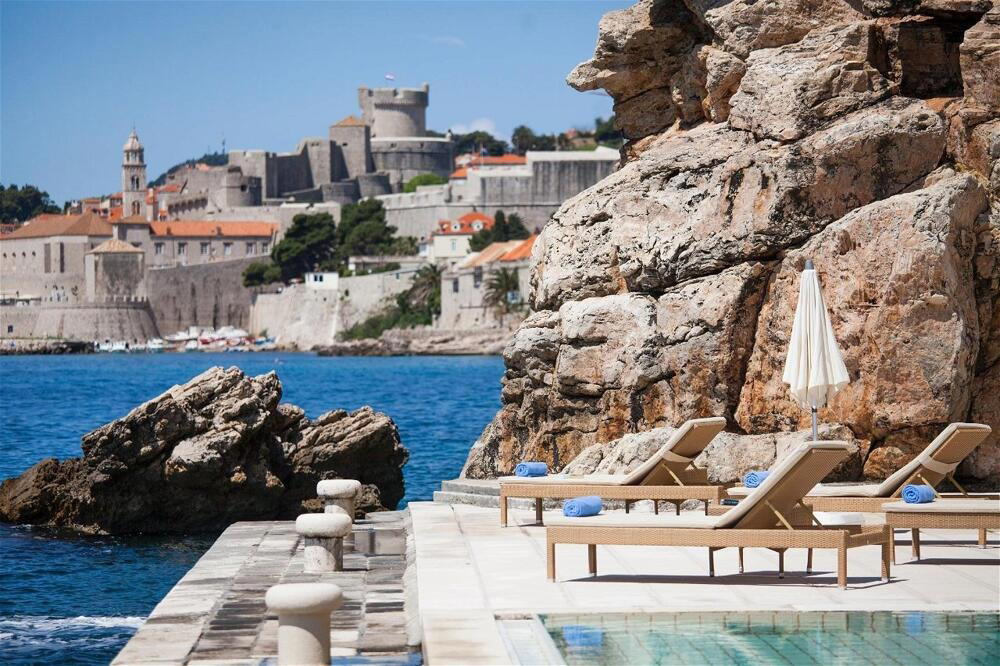
Elegant and welcoming atmosphere praised for its sophistication, with terrace seating offering dramatic scenic vistas.