
Ramen Matsuya belongs to Kanagawa’s serious everyday ramen tier: counter seating, low pricing, and recognition in the Tabelog 100 Ramen KANAGAWA selections for 2024 and 2025. In Chigasaki, where beach-town ease meets commuter-belt practicality, its appeal is less ceremony than discipline: a compact format built for diners who care about broth, noodles, and value.
Pearl is the En Primeur Club membership app — saves, bookings, and concierge access live there. Same editors, same standards.
- Address
- 神奈川県茅ヶ崎市堤73-5
- Website
- tabelog.com
 Saves & bookings on Pearl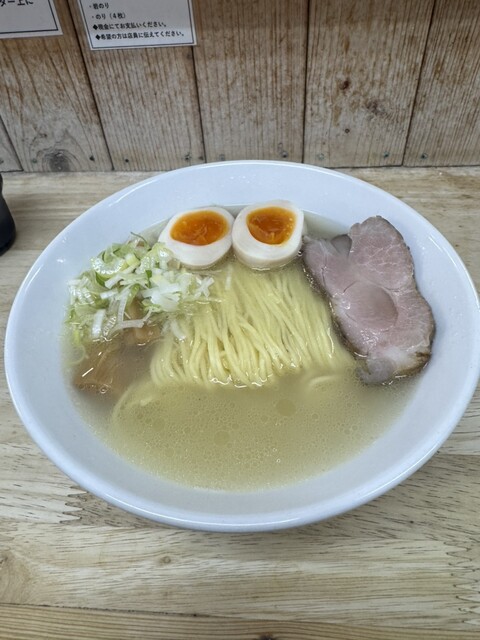
The approach to serious ramen in suburban Kanagawa is rarely theatrical. It is measured in steam on the glass, a short counter, a quick turnover of bowls, and diners who know that a sub-¥1,000 price point can still carry real scrutiny. Ramen Matsuya sits in that Chigasaki rhythm: small, counter-led, and focused on ramen rather than the multi-category sprawl common to casual Japanese dining.
Chigasaki is often read through surf culture and Shonan leisure, but its stronger food pattern is more practical: neighbourhood restaurants that serve residents first and day-trippers second. Ramen, in that setting, has to justify itself without resorting to luxury cues. A 10-seat counter creates the opposite of spectacle; it puts the kitchen’s choices under pressure, because every bowl moves directly from preparation to diner with little room for distraction.
Kanagawa ramen judged by broth discipline, not dining-room theatre
Kanagawa’s ramen culture sits between Tokyo’s density and Shonan’s looser coastal pace. The serious shops compete on repeatability: tare balance, soup concentration, noodle texture, and whether the bowl remains convincing at lunch as well as dinner. Ramen Matsuya’s inclusion in Tabelog 100 Ramen KANAGAWA in both 2024 and 2025 places it inside that local conversation, where recognition is not about imported luxury but about consistency within a crowded prefectural field.
The ingredient question in ramen begins with sourcing, but it ends with control. Broth, noodles, seasoning base, fat, and toppings each carry supply decisions, yet the diner experiences them as one short-form meal. In lower-priced ramen, that compression matters. There is no tasting menu arc to hide weak structure, no wine pairing to soften imbalance, and no extended service script to reframe the meal. The bowl either works quickly or it does not.
That is why a counter-only format can be a strength. It keeps the restaurant close to the cooking process and strips the experience down to heat, timing, and portion rhythm. It also aligns with solo dining, which remains one of Japan’s great restaurant advantages: a diner can eat seriously without needing a group, a reservation ritual, or a special-occasion frame. For a broader read on the city’s dining spread, see Our full Chigasaki restaurants guide.
Where it sits in Chigasaki's low-price ramen tier
Within the immediate Chigasaki comparison set, Ramen Matsuya and Ramen Wara both occupy the sub-¥1,000 ramen bracket. That matters because the decision is not between luxury and convenience; it is between two inexpensive local counters where the margin for distinction comes from the bowl itself. Nearby, bhojan points to a different casual-dining lane, useful when the group wants something outside ramen rather than another noodle counter.
Price also shapes expectations. At this level, diners should not read value as compromise. In Japan, especially outside central Tokyo’s prestige corridors, ramen remains one of the country’s strongest arguments for affordable specialization. A shop can be inexpensive and still be held to a demanding local standard. The restaurant’s Tabelog score of 3.70 and repeated Hyakumeiten selection give that affordability a sharper context: this is not merely a cheap bowl in Chigasaki, but a recognized one in Kanagawa’s ramen category.
The practical reading is simple. A 10-seat counter rewards off-peak timing, and the no-reservations format makes patience part of the calculation. Cash is the sensible assumption, since credit cards, electronic money, and QR-code payments are not accepted. The location is in Tsutsumi rather than the beach-facing part of Chigasaki, with access from Tsujido Station by Kanachu bus routes Tsuji 28 or Tsuji 29 to Tsutsumihanezawa, followed by a short walk. Shared parking for six cars gives drivers a clearer option than many small ramen shops in denser urban wards.
A focused stop for diners mapping Shonan by appetite
For travellers using Chigasaki as part of a wider Shonan or Kanagawa itinerary, the point is precision. The restaurant works as a focused meal rather than a lingering restaurant stop. It suits solo diners, small groups, and families who are comfortable with counter seating and a ramen-first format. Children are welcome, which fits the city’s residential character, though the compact room naturally favours diners who can move with the pace of a small shop.
The surrounding travel plan can pull in several directions. Chigasaki’s restaurant map is one layer; the city’s lodging, drinking, wine, and activity options sit in separate lanes, covered in Our full Chigasaki hotels guide, Our full Chigasaki bars guide, Our full Chigasaki wineries guide, and Our full Chigasaki experiences guide. Those guides make more sense when the meal itself is kept honest: ramen here is a quick, specific anchor, not an all-afternoon production.
Travellers building a wider Japan food file can compare the category shift across regions and formats: beef in Kamakura at -Grilled beef Sukiyaki- KAMAKURA TANUKIAN 鎌倉 たぬき庵 in Kamakura, charcoal and tuna in Tokyo at . 鮪と炭火焼き うお炭 秋葉原店 in Tokyo, café culture at.cafe in Osaka, contemporary dining at.know in Kumamoto, Vietnamese cooking at (Shoku) Vietnam in Kawasaki, curry in Hokkaido at [Curry Senmon Ten] Maruyama Kyoju. in Sapporo, Kyoto dining at [ki:] in Kyoto, beef in Nara Prefecture at #肉といえば松田 奈良本店 in Kashihara, burgers in Ishikawa at 1/3 HAMBURGER FACTORY in Kanazawa, sake-led Los Angeles dining at Jōdo Saké Bar in Los Angeles, and rice-ball specialization at Onigiri Time in Pasadena.
The editorial case for the restaurant is not grandeur. It is the opposite: a small Kanagawa ramen counter with repeated category recognition, tight pricing, and a format that asks the bowl to carry the meal. In a city often framed by the coast, that kind of everyday precision is a better reason to detour inland.
Comparable Spots, Quickly
Comparable venues by cuisine and price in the same metro.
| Venue | Cuisine | Price | Notes |
|---|---|---|---|
| Ramen MatsuyaThis venue — the venue you are viewing | Classic Ramen Shop | $ | Not listed |
| Ramen Wara | Modern Japanese Ramen Shop | $ | Daikan-cho / Tsujido area |
| bhojan | Dining | Not listed | Chigasaki |
| Ramen Nikkou | Traditional Ramen & Tsukemen | $ | Hikone City |
| Suzaki Foods Shop | Sanuki Udon | $ | Takasecho, Mitoyo City |
| Chikara Mochi Ya | Traditional Kamakura wagashi & mochi shop | $ | Kamakura |
Recognition history
Dated appearances from independent guides and award organizations, with the underlying list record or original source where available.
Tabelog 100 #97 · No. 97
Tabelog · Tabelog 100 - Ramen - KANAGAWA - 2025
Continue exploring
More in Chigasaki
Restaurants in Chigasaki
Browse all →



Bars in Chigasaki
Browse all →






At a Glance
- Cozy
- Classic
- Solo
- Family
- Casual Hangout
- After Work
- Standalone
A small, non-smoking counter ramen shop with a relaxing, no-frills atmosphere, focused on quick, solo or casual family meals rather than lingering dining.