
Ramen Wara belongs to Kanagawa’s serious ramen tier rather than the tourist-facing end of Shonan dining. Its Tabelog Ramen KANAGAWA “Tabelog 100” selections in 2024 and 2025 give it a clear credential, while the small counter-led format keeps the experience closer to everyday local ramen culture than destination tasting-menu theatre.
Pearl is the En Primeur Club membership app — saves, bookings, and concierge access live there. Same editors, same standards.
- Address
- Japan, 〒253-0015 Kanagawa, Chigasaki, Daikancho, 5−1 メゾンドピア2
- Phone
- +81 80-9153-1150
- Website
- twitter.com
 Saves & bookings on Pearl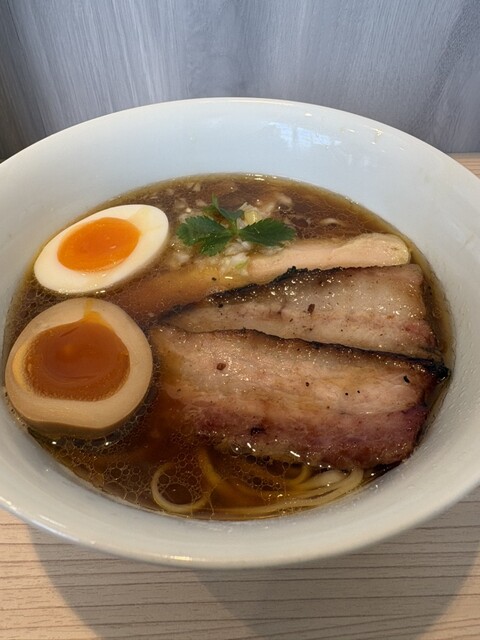
Daikancho sits in the practical orbit of Chigasaki rather than the postcard version of the Shonan coast: train-line routines, compact storefronts, and eating rooms built for regulars who know exactly what they came for. That setting matters for ramen. The better bowls in Kanagawa rarely need ceremony; they rely on broth discipline, noodle texture, seasoning balance, and the kind of kitchen rhythm that can make a short service feel decisive.
Ramen Wara fits that pattern. Its selection for Tabelog Ramen KANAGAWA “Tabelog 100” in both 2024 and 2025 places it within a competitive prefectural category, not just a neighbourhood comfort-food bracket. In a region where ramen ranges from station-adjacent utility to obsessively tuned specialist shops, that recognition is a useful filter: it signals consistency in a field where small differences in stock, tare, oil, and noodle handling separate a casual bowl from a shop people cross town to try.
Kanagawa ramen measured by sourcing, stock and restraint
The ingredient story in ramen is rarely about luxury produce in the fine-dining sense. It is about extraction, ratios, and repeatability. A ramen counter has to turn comparatively modest inputs into a bowl with structure: bones or seafood, aromatics, wheat noodles, seasoned oil, tare, toppings, and timing. Kanagawa’s stronger ramen shops tend to reward close attention to those fundamentals rather than novelty for its own sake.
That is the useful way to read Ramen Wara’s place in Chigasaki. The shop is not competing with full-service dining rooms such as bhojan, where a different price band and dining format shape the meal. It sits closer to the compact, quick-service ramen lane represented locally by Ramen Matsuya, but the Tabelog 100 recognition moves it into a narrower conversation: ramen as craft, not simply ramen as convenience.
For travellers used to Tokyo’s ramen density, Chigasaki offers a useful counterpoint. The city’s dining culture is less about queue-as-spectacle and more about daily utility sharpened by specialist execution. A recognized ramen shop here has to serve locals first, then destination eaters second. That pressure tends to favour clarity over performance: a bowl must make sense at lunch, after work, and for solo diners who do not want a long meal.
A small-room format built for ramen, not lingering
The room’s format reinforces the category. Counter seating dominates, with a limited number of seats overall, which keeps attention on the bowl rather than the table. Ramen is one of Japan’s great solo-dining formats because the service choreography is compressed: order, wait, eat while the noodles hold their texture, leave. The small table component broadens the audience slightly, but the centre of gravity remains counter dining.
That matters when judging value. Ramen in this bracket is not trying to justify itself through linen, wine, or prolonged service. The value sits in repetition and control. A shop recognized in a prefectural ramen list is being judged against peers that also work with fast turnover and tight margins, so the award signal carries a different meaning than it would for a luxury restaurant. It points to execution inside constraints.
Chigasaki’s broader food map helps frame the decision. Readers comparing across the city can start with Our full Chigasaki restaurants guide, then widen the trip through Our full Chigasaki hotels guide, Our full Chigasaki bars guide, Our full Chigasaki wineries guide, and Our full Chigasaki experiences guide. The useful point is not that ramen replaces those categories; it anchors a day with something local, quick, and technically revealing.
Where it belongs on a Japan food itinerary
Ramen Wara works well for travellers who treat ramen as a regional study rather than a snack between headline reservations. Kanagawa sits close enough to Tokyo to be folded into a wider itinerary, but its ramen scene has its own competitive logic. A Chigasaki bowl will not feel like a Ginza counter meal, and it should not be judged that way. The right comparison is with other focused, high-frequency food formats where narrow menus and repeat customers create pressure for precision.
That same logic links it, loosely, to other specialist stops across Japan: beef-focused dining at -Grilled beef Sukiyaki- KAMAKURA TANUKIAN 鎌倉 たぬき庵 in Kamakura, seafood-and-grill formats such as . 鮪と炭火焼き うお炭 秋葉原店 in Tokyo, casual urban stops including.cafe in Osaka, and regional dining rooms like.know in Kumamoto. None is a direct substitute; each shows how Japanese dining often rewards narrow focus over broad menus.
For a wider domestic circuit, compare how format changes the meal at (Shoku) Vietnam in Kawasaki, [Curry Senmon Ten] Maruyama Kyoju. in Sapporo, [ki:] in Kyoto, #肉といえば松田 奈良本店 in Kashihara, and 1/3 HAMBURGER FACTORY in Kanazawa. Overseas Japanese-adjacent references such as Jōdo Saké Bar in Los Angeles and Onigiri Time in Pasadena show the contrast: outside Japan, format often becomes identity; in Chigasaki, a ramen shop can remain plain in presentation and still be judged rigorously on the bowl.
The editorial case for the restaurant is therefore specific. It is not a broad luxury dining recommendation, and it does not need that frame. It is a compact Kanagawa ramen address with repeat Tabelog 100 recognition, a counter-led setup, and a role that suits Chigasaki: efficient, local, technically judged, and better read through sourcing discipline and stock-making than through theatre.
Comparable Spots, Quickly
Comparable venues by cuisine and price in the same metro.
| Venue | Cuisine | Price | Notes |
|---|---|---|---|
| Ramen WaraThis venue — the venue you are viewing | Modern Japanese Ramen Shop | $ | Not listed |
| Ramen Matsuya | Classic Ramen Shop | $ | Chigasaki |
| bhojan | Dining | Not listed | Chigasaki |
| 麺dining 月乃家 | Japanese Ramen | $ | 有田川町 |
| Tonjinchi (貪瞋癡) | Traditional Himi Niboshi Ramen | $ | Himi |
| ラーメン チョンマゲ 大阪天六店 | Traditional Japanese Soy Sauce Ramen | $ | Tenjinbashi |
Recognition history
Dated appearances from independent guides and award organizations, with the underlying list record or original source where available.
Tabelog 100 #48 · No. 48
Tabelog · Tabelog 100 - Ramen - KANAGAWA - 2025
Continue exploring
More in Chigasaki
Restaurants in Chigasaki
Browse all →



Bars in Chigasaki
Browse all →







At a Glance
- Cozy
- Lively
- Solo
- Casual Hangout
- Family
- After Work
- Chefs Counter
- Standalone
- Local Sourcing
- Street Scene
Current opening hours
- Monday
- Closed
- Tuesday
- 11 AM–2:30 PM, 6:30–9 PM
- Wednesday
- 11 AM–2:30 PM, 6:30–9 PM
- Thursday
- 11 AM–2:30 PM
- Friday
- 11 AM–2:30 PM, 6:30–9 PM
- Saturday
- 11 AM–2:30 PM, 6:30–9 PM
- Sunday
- 6:30–9 PM
Hours can change for holidays and private events. Last verified .
A small 12-seat, non‑smoking ramen shop along Route 1 with counter-focused seating, simple modern decor, and a busy but warm, owner-operated feel typical of high-level neighborhood ramen specialists.