
Chikara Mochi Ya places Kamakura’s wagashi culture in a compact, old-town register: traditional sweets, take-out service, and recognition in Tabelog’s 2023 Japanese traditional sweets and sweets-cafe selection for eastern Japan. Near Hase Station, it belongs to the low-price end of the city’s eating map, closer to everyday pilgrimage snacking than formal dining.
Pearl is the En Primeur Club membership app — saves, bookings, and concierge access live there. Same editors, same standards.
- Address
- Japan, 〒248-0021 Kanagawa, Kamakura, Sakanoshita, 18−18 鎌倉市坂ノ下18−18
- Phone
- +81 467-22-0513
- Website
- chikaramochiya.com
 Saves & bookings on Pearl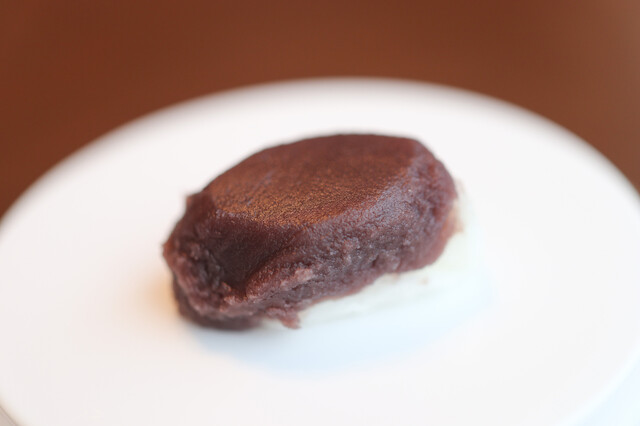
Approaching the Sakanoshita side of Kamakura shifts the city’s rhythm from temple-route sightseeing to smaller, older food habits: sweets bought by hand, eaten between stops, and judged less by ceremony than by freshness, texture, and local memory. In that setting, Chikara Mochi Ya sits inside a tradition that is easy to underestimate from a luxury-travel perspective. Kamakura’s food culture is not only kaiseki rooms and seaside lunches; it is also wagashi counters where the menu is built for movement, weather, and the short pause between Hase and the coast.
The useful way to read the place is through menu architecture. Japanese traditional sweets shops often operate with a narrower grammar than restaurants: rice, bean, sugar, seasonal forms, and a service model that keeps the transaction quick. That compression is the point. A small wagashi selection can say more about local eating than a long tasting menu because every item has to carry a clear role, whether for a family errand, a shrine-day snack, or a visitor moving through Kamakura’s temple corridor.
Wagashi in Kamakura works as a route food, not a dining-room performance
Kamakura rewards a different kind of appetite from Tokyo. The city’s temple clusters, Enoden stops, and beachward lanes create short bursts of eating rather than long, seated meals. A sweets specialist near Hase belongs to that pattern. The format is take-out led, children are welcome, and the experience reads as part of a day’s walking circuit rather than a destination dinner.
That matters because wagashi quality is often misread by visitors looking for spectacle. The category prizes proportion: sweetness restrained enough to avoid fatigue, texture that signals technique, and a size calibrated to tea, walking, or gifting. Chikara Mochi Ya’s selection for Tabelog’s 2023 Japanese traditional sweets and sweets-cafe list for eastern Japan gives it an external quality signal in a field where national guidebooks often pay less attention than they do to sushi or French dining.
Within Kamakura, the comparison set is broad. Taiyaki Namihei works the same low-price snacking lane from a different sweet tradition, while Fuhan also sits in the inexpensive bracket. At the other end, Spanish restaurant Arashida occupies a higher-spend, reservation-driven category, and -Grilled beef Sukiyaki- KAMAKURA TANUKIAN 鎌倉 たぬき庵 or ETE Kamakura point toward a more meal-centred version of the city. The contrast is instructive: Kamakura’s serious food life is not one tier. It ranges from wagashi counters to European kitchens, and the low-price end is where local habits are often clearest.
The menu's discipline is the argument
A wagashi shop does not need the rhetoric of a chef’s table. The stronger signal is discipline: a defined category, a narrow service style, and enough recognition to separate it from generic souvenir sweets. Chikara Mochi Ya is categorized as Japanese traditional sweets, and that category frames expectations better than any invented tasting note could. This is a place to think about form, portion, and timing, not a place to expect a restaurant arc of snacks, mains, and dessert.
The absence of a chef-centred story is not a weakness. In Japan’s older sweets culture, the craft is usually institutional rather than theatrical. The shop matters because it represents a local food form that has survived tourism pressure without needing to mimic restaurant luxury. For readers mapping Kamakura through food, that makes it a useful counterweight to bakery, cafe, curry, and seafood itineraries. Nearby and citywide reference points such as Bergfeld Kamakura honten, Cafe Vivement Dimanche, CALVA, Cabbage Batake, and arbre noir YAKUMI show how varied the city’s casual and specialist food culture has become.
The editorial case is simple: build a Kamakura day with one formal meal if needed, but leave room for sweets. Wagashi has a practical intelligence that suits the city’s geography. It asks less time than lunch, costs less than a planned restaurant stop, and gives the day a local cadence. That is why this sort of address can be more revealing than another polished dining room.
How it fits into a wider Kamakura itinerary
The restaurant works well as part of a Hase-side route rather than as the sole anchor of a food trip. The nearest station is Hase on the Enoshima Electric Railway, and the shop is close enough to fold into a temple-and-coast walk without rearranging the day. The listed operation is daytime and closed midweek, so the safer editorial move is to treat it as an early-to-midday stop rather than an after-dinner plan.
For broader planning, Our full Kamakura restaurants guide gives the clearest citywide dining context, while Our full Kamakura hotels guide, Our full Kamakura bars guide, Our full Kamakura wineries guide, and Our full Kamakura experiences guide help separate a day trip from a slower overnight stay. Travelers building a Japan food map beyond Kanagawa can also compare the role of specialist casual formats at. 鮪と炭火焼き うお炭 秋葉原店 in Tokyo.cafe in Osaka.know in Kumamoto, (Shoku) Vietnam in Kawasaki, [Curry Senmon Ten] Maruyama Kyoju. in Sapporo, and [ki:] in Kyoto. Outside Japan, the same question of format and cultural specificity appears differently at Jōdo Saké Bar in Los Angeles and Onigiri Time in Pasadena.
The verdict is not that a sweets counter should replace Kamakura’s fuller meals. It should correct the itinerary. A city with temples, sea air, local trains, and low-rise shopping streets makes more sense when wagashi is treated as part of the structure of the day. For that role, this is a precise stop: recognized, inexpensive, and rooted in a category that tells the traveler how Kamakura actually eats between meals.
Comparable Options
Nearby venues at a similar price tier for orientation.
| Venue | Cuisine | Price | Notes |
|---|---|---|---|
| Chikara Mochi YaThis venue — the venue you are viewing | Traditional Kamakura wagashi & mochi shop | $ | Not listed |
| Toshimaya Karyo Hatokoji | Traditional Japanese sweets cafe (wagashi) | $ | Kamakura |
| Kamakura Naniwaya | Traditional Japanese Taiyaki & Wagashi Shop | $ | Kamakura |
| Minowa | Traditional Japanese sweets & tea cafe | $ | Kamakura |
| Cuillere | Japanese Curry | $ | Kamakura |
| Nagon Shiruko Ten | Japanese Sweets Cafe | $ | Kamakura |
Recognition history
Dated appearances from independent guides and award organizations, with the underlying list record or original source where available.
Tabelog 100 #8 · No. 8
Tabelog · Tabelog 100 - Japanese traditional sweets / Japanese sweets cafe - EAST - 2023









At a Glance
- Classic
- Well Known
- Solo
- Family
- Casual Hangout
- After Work
- Historic Building
- Standalone
- Local Sourcing
Current opening hours
- Monday
- 9 AM–6 PM
- Tuesday
- 9 AM–6 PM
- Wednesday
- Closed
- Thursday
- 9 AM–6 PM
- Friday
- 9 AM–6 PM
- Saturday
- 9 AM–6 PM
- Sunday
- 9 AM–6 PM
Hours can change for holidays and private events. Last verified .
A small, traditional wagashi shop with a simple, old-fashioned storefront near Goryo Shrine, focused on takeaway rather than eat-in; the atmosphere is calm and nostalgic, reflecting its status as a 300-plus-year-old Kamakura institution.