
Rakkyo & Star places Sapporo-style soup curry inside Yokohama’s everyday dining rhythm rather than the city’s waterfront dining narrative. The draw is its narrow focus: soup curry, cafe service, yoshoku adjacency, 24 seats, take-out, and repeat selection for Tabelog Curry EAST “Tabelog 100” in 2024, with earlier selections across 2017, 2018, 2019, 2020, 2022, and 2023.
Pearl is the En Primeur Club membership app — saves, bookings, and concierge access live there. Same editors, same standards.
- Address
- 神奈川県横浜市港北区綱島西1-2-9 ゴールデンパーク 1F
- Phone
- +81455423939
- Website
- spicegogo.com
- Directions
- Get directions
 Saves & bookings on Pearl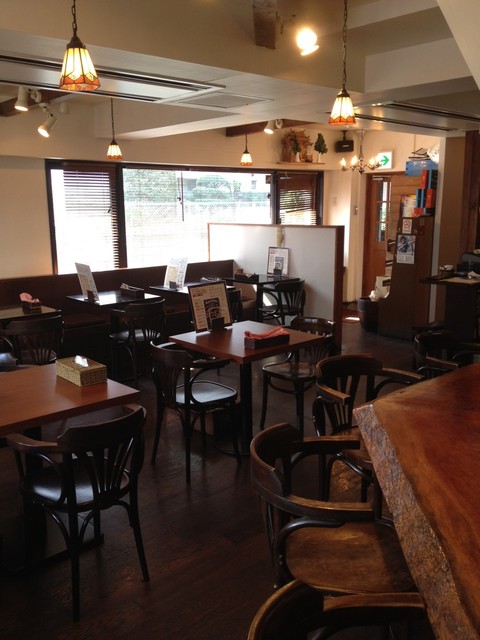
Approaching from Tsunashima Station, the rhythm shifts from Yokohama’s port-city scale to a compact neighbourhood register: station traffic, small commercial blocks, and a dining room built for regular use rather than ceremony. Inside, the useful details matter. There are 24 seats, counter seating is part of the room, and the format is casual enough for children while disciplined enough to have stayed in the curry conversation for years.
Soup curry occupies a different lane from Japan’s thick, rice-hugging curry rice. Its centre of gravity is Sapporo, where broth, spice, vegetables, and protein are typically composed with a looser structure and a clearer sense of progression. In Yokohama, that style reads less like a regional novelty and more like a counterpoint to the city’s Chinese, yoshoku, bakery, ramen, and casual cafe circuits. Rakkyo & Star sits in that counterpoint: soup curry first, cafe and yoshoku signals around the edges, a small room rather than a destination dining stage.
Soup curry in Yokohama works because the meal has a built-in arc
The tasting progression here is not a Western tasting menu with courses announced in sequence. It is the internal pacing of soup curry itself. A good bowl moves through broth, spice, rice, vegetables, and protein in changing ratios, so the diner controls the order without losing the structure. That makes the format unusually well suited to a compact restaurant: the kitchen can focus on a defined category, while each table builds its own tempo.
That structure also explains why soup curry has travelled beyond Hokkaido without becoming interchangeable with ordinary curry shops. The point is not just heat level or portion size. The appeal lies in the way broth carries spice differently from a roux, leaving more room for shifts in texture and temperature across a single meal. Rakkyo & Star’s category listing, Soup Curry, Cafe, and Yoshoku, places it at the intersection of regional curry culture and Japan’s long habit of adapting Western-style dining into local everyday forms.
Recognition gives the format additional weight. The restaurant was selected for Tabelog Curry EAST “Tabelog 100” in 2024, with listed selections also appearing for 2023, 2022, 2020, 2019, 2018, and 2017. In a category where many diners chase Tokyo addresses or Hokkaido origin stories, that repeat presence is the meaningful signal: consistency inside a narrow genre, not a passing spike.
Yokohama’s casual dining range gives useful context. Chuka Soba Efu and TOTSZEN BAKER’S KITCHEN occupy different everyday lanes, while Hi, How Are You shows how the city absorbs smaller-format specialist cooking without turning every meal into an event. Against that backdrop, soup curry’s appeal is practical and specific: it gives the diner a composed meal with more internal movement than a quick cafe plate and less formality than a tasting counter.
A small specialist room rather than a Yokohama spectacle
Yokohama often gets flattened into postcard shorthand: bay views, Chinatown, hotel lobbies, and cruise-terminal polish. Tsunashima is a better setting for this kind of curry because it lowers the temperature. The restaurant is close to the station, operates on a small scale, and reads as part of a local meal circuit rather than a showpiece for visitors. That matters for soup curry, a style that benefits from repeatability. It is the kind of food where the second or third visit teaches the diner more than the first.
The room’s practical character reinforces the point. Private rooms and private use are not part of the setup, and the restaurant lists take-out as a service. Payment is cash-oriented, with credit cards, electronic money, and QR code payments not accepted. Those details place it closer to Japan’s durable neighbourhood specialist tradition than to the frictionless hospitality model aimed at travellers. The trade-off is clarity: come for soup curry, not for a long wine-led evening or a high-touch dining room.
Family usability is also part of the story. Children are welcomed, including babies, preschoolers, and school-age children; a kids menu and baby chairs are listed. That pushes the restaurant away from the narrow collector’s-curry frame and toward a more local reading. In Japan, many category specialists are serious without being solemn. Rakkyo & Star fits that pattern: recognition from a national dining platform on one side, everyday usability on the other.
How to place it in a Yokohama eating itinerary
For visitors building a Yokohama food day, this is not the slot for harbour-view dining or late-night bar archaeology. It is a focused lunch or early dinner anchor in the city’s northern neighbourhood fabric. The better comparison is not a luxury restaurant but other precise, affordable specialists: ramen, bakery, yoshoku, curry, and cafe formats where the kitchen has chosen a narrow lane and stayed there.
Travellers mapping a broader Yokohama itinerary should treat it as one tile in a wider mosaic. Use Our full Yokohama restaurants guide for the city’s dining spread, then separate that from sleep, drink, cellar, and cultural planning through Our full Yokohama hotels guide, Our full Yokohama bars guide, Our full Yokohama wineries guide, and Our full Yokohama experiences guide. Within the restaurant map, contrast the curry lane with 1000 (Yakitori (Grilled chicken skewers)), Aichun, Ajowan, Alpenjiro Honten, and Anzen Shokudo.
For regional perspective, the curry conversation extends beyond Yokohama to [Curry Senmon Ten] Maruyama Kyoju. in Sapporo, while nearby Kanagawa dining can pull in (Shoku) Vietnam in Kawasaki and -Grilled beef Sukiyaki- KAMAKURA TANUKIAN 鎌倉 たぬき庵 in Kamakura. Further afield. 鮪と炭火焼き うお炭 秋葉原店 in Tokyo.cafe in Osaka.know in Kumamoto, Jōdo Saké Bar in Los Angeles, and Onigiri Time in Pasadena show how EP Club tracks specialist formats across different cities.
The editorial read is clear: Rakkyo & Star is strongest for diners who care about category discipline more than spectacle. Its value lies in the way Sapporo soup curry has been absorbed into a Yokohama neighbourhood setting, backed by repeat Tabelog Curry selections and scaled for regulars as much as travellers.
How It Stacks Up
Comparable venues for context, by category and price tier.
| Venue | Cuisine | Price | Notes |
|---|---|---|---|
| Rakkyo & StarThis venue — the venue you are viewing | Hokkaido-style Soup Curry & Café | $$ | Not listed |
| Kuri Yama | Japanese Tsukemen / Ramen | $$ | Kanagawa |
| Shinki | Traditional Yakitori & Izakaya Counter | $$ | Naka |
| hoshinochuukasoba | Ramen and Tsukemen | $$ | Kanazawa |
| Hetchikan Fukutomichou honten | Ramen & Japanese Sake Bar | $$ | Naka |
| 1000 | Japanese | $$ | Naka |
Recognition history
Dated appearances from independent guides and award organizations, with the underlying list record or original source where available.
Tabelog 100 #46 · No. 46
Tabelog · Tabelog 100 - Curry - EAST - 2024











At a Glance
- Cozy
- Lively
- Casual
- Casual Hangout
- Group Dining
- Solo
- Family
- After Work
- Standalone
- Local Sourcing
Casual, café-like neighborhood curry shop with a warm, cozy feel and a lively but comfortable noise level, focused on relaxed meals rather than formal dining.