Prestizh is an artisanal pastry and dessert café on Ulitsa Maslennikova, with counter service and a quick-bite pace that suits breakfast and brunch.
Pearl is the En Primeur Club membership app — saves, bookings, and concierge access live there. Same editors, same standards.
- Address
- Ulitsa Maslennikova, 58, Omsk, Omsk Oblast, Russia, 644010
- Phone
- +79136640889
- Website
- prestige-omsk.ru
- Directions
- Get directions
 Saves & bookings on Pearl
Dining in Omsk: Where Soviet-Era Ambition Meets Modern Russian Hospitality
Ulitsa Maslennikova cuts through one of Omsk's more composed central corridors, a street that carries the layered character typical of Siberian cities that rebuilt their civic identity after decades of industrial priority. In this context, a restaurant named Prestizh, prestige, in direct translation, is making a deliberate claim. The name positions the room before you enter it, signalling an aspiration that sits at the heart of how Siberian dining culture has evolved over the past two decades: a shift from basic provision toward considered hospitality, from functional eating to something closer to occasion dining.
That shift is not distinctive to Omsk. Across Russia's second-tier cities, Tomsk, Yekaterinburg, Novosibirsk, Volgograd, a cohort of restaurants has emerged that takes the cue from Moscow and Saint Petersburg without simply copying the capital's formula. The ambition is local and the audience is local, but the reference points are national. In Omsk, with a population exceeding one million and a professional class that travels frequently, the demand for that tier of dining is real and has been building for years.
The Cultural Weight of "Prestige" Dining in Siberia
To understand a restaurant like Prestizh, it helps to understand what prestige dining has historically meant east of the Urals. During the Soviet period, restaurants in Siberian cities served a dual function: they were places of nominal public catering, but also venues where enterprise, status, and access to imported goods were quietly performed. The dining room was a stage for social distinction in a system that officially denied such distinctions existed. That cultural memory has not fully dissolved. When a Siberian restaurant deploys the word prestige, it is drawing on a long local tradition of dining as social performance, not merely sustenance.
Post-Soviet Russian cuisine went through a long period of identity uncertainty before arriving at something more coherent. The early 2000s saw a wave of themed nostalgia restaurants across Russian cities, followed by an embrace of European formats that often felt transplanted rather than rooted. More recently, the conversation at higher-end Russian establishments has turned toward reinterpreting native ingredients and regional traditions with technical precision. That conversation is most visible at places like Twins Garden in Moscow, where fermentation, foraging, and Russian terroir have become explicit editorial positions. It surfaces differently in Saint Petersburg, where 1913 anchors its identity in pre-revolutionary Russian dining culture. In Siberian cities, the same questions are being worked out against a different set of local ingredients and a different diner psychology.
Omsk's Position in the Wider Siberian Dining Map
Omsk occupies a specific position in the Siberian dining hierarchy. It is larger than Tomsk, where Kukhterin has built a reputation on regional Russian cooking, and sits further west than Novosibirsk, where a younger, more experimental food scene has taken hold around venues like Burger Records. Omsk's dining culture trends toward the established rather than the experimental, which means the prestige-tier rooms here tend to operate with a more conservative format: broader menus, longer wine lists, and a room design that communicates solidity rather than edge.
That conservatism is not a weakness. It reflects the actual preferences of the city's dining-out demographic, which skews toward professionals and business travellers who want a reliable, considered experience rather than a high-concept gamble. Alongside Prestizh, Grisha represents another data point in Omsk's developing upper tier, and the two together sketch the shape of what premium dining looks like in a Siberian city of this scale.
For comparison across Russia's regional cities, the range of ambition is considerable. Georgian-inflected cooking at Khmeli Suneli in Yekaterinburg and Ossetian cuisine at Alanskaya Kukhnya in Krasnodar show how regional kitchens are increasingly drawing on specific ethnic and geographic traditions rather than defaulting to a generic pan-Russian menu. Whether Omsk's prestige tier follows that specificity or maintains a broader European-Russian hybrid format is the live question for the city's dining development.
What the Name Signals About Format and Audience
A restaurant named Prestizh in a Siberian city in 2024 is making a statement about its competitive positioning: it is not a casual cafe, not a fast-service chain, and not a nostalgia-themed canteen. The name advertises a room with some level of formality, a kitchen with aspirations beyond assembly, and a front-of-house operation that considers service part of the offering. That is a specific promise to a specific audience, and it places the restaurant in a narrow tier within Omsk's overall dining market.
Nationally, the markers of that tier are increasingly legible. Formal Russian dining in the mid-to-upper bracket means tablecloths or their design equivalent, a wine programme that extends beyond house pours, and a menu structured around courses rather than sharing plates. At the summit of the national hierarchy, rooms like Cafe Pushkin in Moscow have made pre-revolutionary Russian aesthetics into a globally recognised format. Further along the register, Lev I Ptichka in Saint Petersburg and Dzhani Restorani in Nizhny Novgorod show how the format adapts to different city scales and diner expectations. Prestizh's address on Ulitsa Maslennikova places it in a central Omsk location consistent with that positioning.
Planning a Visit
Prestizh is located at Ulitsa Maslennikova, 58, in central Omsk, an address accessible by public transport and within a reasonable distance of the city's main hotels and business district. Prestizh is open daily from 9 AM to 8 PM, welcomes walk-ins, and is priced at about $15 per person. Those building a Russian regional dining itinerary might also consider krevetka in Voronezh, Knyagininskiy Dvor in Volgograd, or Konditerskaya "Kuzina" in Syktyvkar as regional counterpoints. For reference points outside Russia, the structural ambitions of prestige-tier regional dining find an international parallel in the way technically precise kitchens like Le Bernardin in New York City or Atomix in New York City anchor their identity in a clear culinary tradition while serving a demanding local audience. The comparison is one of structural intent, not scale. For Chinese cuisine in the Russian context, Made in China in St. Petersburg illustrates how international culinary traditions are being absorbed and reformatted within the Russian prestige dining tier.
Cost and Credentials
Comparable venues nearby, for context on price, style, and recognition.
| Venue | Cuisine | Price | Notes |
|---|---|---|---|
| PrestizhThis venue — the venue you are viewing | Not listed | $$ | Not listed |
| Grisha | Central Omsk, European Gastro Pub | $$ | Not listed |
| Kazbek | Presnensky, Authentic Georgian | $$ | Not listed |
| Pyshechnaya | Not listed | $ | Nevskiy, Russian Pyshechnaya (Donut Cafe) |
| Korean BBQ гриль | Not listed | $$ | Northwestern District, Korean Table-Top BBQ Grill |
| Birch | Not listed | $$$ | Tsentralny District, Modern Fusion Tasting Menu |
Continue exploring
More in Omsk
Restaurants in Omsk
Browse all →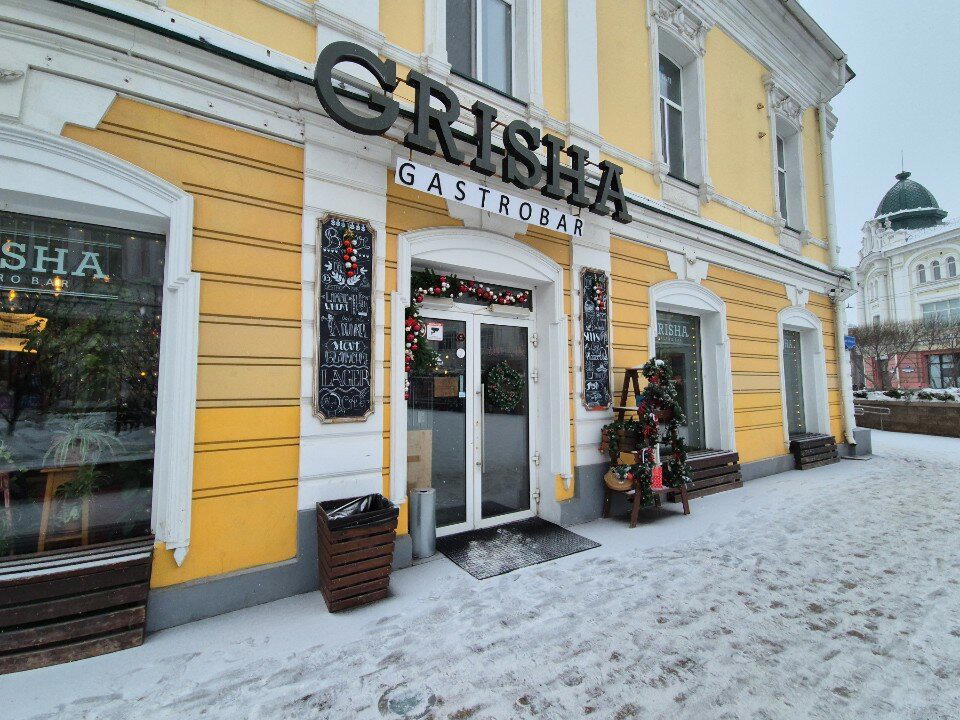
At a Glance
- Classic
- Cozy
- Casual Hangout
- Solo
Current opening hours
- Monday
- 9 AM–8 PM
- Tuesday
- 9 AM–8 PM
- Wednesday
- 9 AM–8 PM
- Thursday
- 9 AM–8 PM
- Friday
- 9 AM–8 PM
- Saturday
- 9 AM–8 PM
- Sunday
- 9 AM–8 PM
Hours can change for holidays and private events. Last verified .
Warm, intimate bakery-café atmosphere with focus on handcrafted pastries and desserts.