
Michelin Bib Gourmand
Our verdict
Por. Pochaya is a Michelin Bib Gourmand-recognised Thai-Chinese kitchen on Wisutkasat Road in Phra Nakhon, earning back-to-back Bib honours in 2024 and 2025. The address sits in one of Bangkok's oldest trading districts, where Sino-Thai food culture has shaped the street for generations.

Pearl is the En Primeur Club membership app, where members save venues, book tables and use the concierge.
The menu
What to order
- Crab omelette
- Stir-fried beef with cumin leaves
The Street Before the Plate
Wisutkasat Road in Phra Nakhon does not announce itself. The stretch runs through Ban Phan Thom, a quarter shaped by Chinese merchant families who settled along the Chao Phraya's eastern bank centuries ago, and the physical environment reflects that layered history: shophouse facades in various states of restoration, motorcycle taxis parked at the intersections, the low hum of activity that never quite tips into tourist noise. This is old Bangkok at street level, and Por. Pochaya sits within it at number 654-656 as a working kitchen rather than a heritage attraction.
The sensory register here matters before you have even ordered. Thai-Chinese cooking in this part of the city carries a specific aromatic signature: rendered fat from slow-braised pork, the dark mineral depth of soy and five-spice, the occasional sharp lift of preserved vegetables. These are smells that have been baked into the district's cooking culture over generations, and Por. Pochaya operates squarely within that tradition. Arriving hungry, mid-morning or at lunch, the kitchen's output is already visible and audible, woks, steam, the rhythmic efficiency of a team that runs the same dishes day after day without variation.
What Bib Gourmand Actually Signals Here
Michelin's Bib Gourmand designation, awarded to Por. Pochaya in both 2024 and 2025, functions differently at the ฿ price point than it does at mid-range or fine-dining tiers. The award is explicitly structured to recognise quality cooking at accessible prices, and in Bangkok's Michelin universe that means the inspector's attention has landed on consistency, technique, and value rather than ambition or transformation. Back-to-back recognition reinforces the point: this is not a kitchen riding a single standout year.
The Bib Gourmand category in Bangkok has grown competitive. The 2025 guide encompasses a wide spread of cuisine types and neighbourhoods, from riverfront Chinese to contemporary Thai, and the Thai-Chinese sub-category is among the most contested. Por. Pochaya's consecutive listings place it in a sustained tier of recognition that separates it from one-cycle entries. For context on where Bangkok's Bib-level Thai-Chinese kitchens sit relative to the city's broader restaurant spectrum, the distance from Por. Pochaya's ฿ price band to Michelin-starred Thai destinations like Sorn or Baan Tepa (both operating at ฿฿฿฿) is substantial in cost but not necessarily in cooking seriousness.
Michelin inspectors visit anonymously and infrequently; Google aggregates hundreds of visits across different times of day and days of the week. When both signals align, the reliability case for a venue becomes considerably stronger.
The Thai-Chinese Kitchen in Phra Nakhon
Understanding Por. Pochaya requires some understanding of what Thai-Chinese cooking means in this specific district. Phra Nakhon's food culture is distinct from Yaowarat, Bangkok's official Chinatown, which runs further south and has developed a more tourist-facing identity over the past decade. The Ban Phan Thom area retains a more residential, neighbourhood-first character. The Chinese culinary traditions that took root here, rooted in Teochew and Hakka migration patterns, evolved over time into a hybrid register that is neither purely Thai nor Chinese in the mainland sense.
The defining characteristics of this tradition are braise-heavy proteins, rice porridges and congees, roasted meats, and preserved ingredient profiles that reflect pre-refrigeration preservation logic. These are dishes designed for early-morning and midday eating, high in energy, precise in their seasoning balance. The tradition also emphasises repetition over variety: a kitchen in this mode builds its reputation on doing the same things correctly across hundreds of services, not on seasonal menu rotations. Por. Pochaya's consecutive Bib Gourmand citations suggest the kitchen adheres to that model.
For a broader orientation to Thai-Chinese cooking in Bangkok at varying price points and district locations, Chop Chop Cook Shop, Jok's Kitchen (Pom Prap Sattru Phai), and Kor Chun Huad represent different corners of the same culinary tradition across the city. For seafood-forward Chinese-inflected cooking, Somboon Seafood (Bang Rak) operates at a higher price tier with a different demographic profile. Tang Jai Yang (Bang Kho Laem) represents the roasted meat strand of the same broader tradition.
The Thai-Chinese format also travels well beyond Bangkok. Baan Heng in Khon Kaen and Heng Khao Moo Daeng in Surat Thani show how the same culinary lineage has taken root across different Thai cities, each adapting to local ingredient availability and eating patterns.
Placing Por. Pochaya in the Wider Bangkok Picture
Bangkok's restaurant scene in 2025 spans an extraordinary range, from Michelin three-star counters to market stalls with inspectors' blessing. Por. Pochaya operates at the accessible end of the recognised tier, which in practical terms means the barrier to entry is time and local knowledge rather than price. The Phra Nakhon address is not a destination district for most international visitors, who tend to cluster around Silom, Sukhumvit, and the riverside. That geographic reality has kept the kitchen's guest profile predominantly local, which in turn has kept its cooking calibrated to neighbourhood standards rather than export-facing adjustments.
For visitors building an itinerary around Bangkok's food culture at different price points and styles, PRU in Phuket and Aeeen in Chiang Mai offer reference points for what Michelin recognition looks like in Thailand's secondary cities. Within Bangkok itself, our full Bangkok restaurants guide maps the broader field across neighbourhoods and price tiers. The Bangkok bars guide, hotels guide, wineries guide, and experiences guide cover the surrounding context for a longer stay. For those extending north, AKKEE in Pak Kret and Angeum in Phra Nakhon Si Ayutthaya represent the day-trip and overnight corridor above the city. Further afield, Agave in Ubon Ratchathani and The Spa in Lamai Beach fill out a national picture of where Michelin attention has reached.
Know Before You Go
- Address: 654-656 Wisutkasat Road, Ban Phan Thom, Phra Nakhon, Bangkok 10200
- Price range: ฿ (accessible, cash-first neighbourhood kitchen)
- Awards: Michelin Bib Gourmand 2024 and 2025
- Cuisine: Thai-Chinese, in the Phra Nakhon shophouse tradition
- Booking: No confirmed booking method in; walk-in is the likely format given price tier and neighbourhood style
- Getting there: Phra Nakhon is most efficiently reached from the riverside; Sanam Luang and Tha Chang pier are nearby reference points
- Leading timing: Thai-Chinese kitchens of this type typically operate on breakfast and lunch rhythms; arriving early avoids the mid-morning peak
What Should I Order at Por. Pochaya?
What the Bib Gourmand designation and the Thai-Chinese tradition of Phra Nakhon together suggest is a menu anchored in braised pork preparations, roasted meats served over rice, and possibly congee or rice porridge formats, all of which are the structural pillars of Teochew-influenced Thai-Chinese cooking. The consecutive Michelin citations point toward a kitchen where the core dishes are the reliable choices rather than specials or seasonal additions. On arrival, observe what neighbouring tables have ordered and what the kitchen is visibly producing: in this format, that real-time read is more reliable than any static recommendation anchored to a specific visit.
Comparable Spots
| Venue | Cuisine | Price | Awards | Notes |
|---|---|---|---|---|
| Por. PochayaThis venue (the venue you are viewing) | Traditional Thai-Chinese | $10–20 | Michelin Bib Gourmand | Not listed |
| Sorn | Fine Southern Thai | $200–300 | 3 Michelin Stars · World's 50 Best #12 | Southern Thai, ฿฿฿฿ |
| Côte by Mauro Colagreco | Riviera Mediterranean Fine Dining | $200–300 | 2 Michelin Stars · World's 50 Best #91 | Mediterranean, Modern Cuisine, ฿฿฿฿ |
| Baan Tepa | Creative Thai Fine Dining | $150–200 | 2 Michelin Stars · World's 50 Best #53 | Thai contemporary, ฿฿฿฿ |
| Gaa | Modern Indian Fine Dining with Thai Influences | $150–200 | 2 Michelin Stars · World's 50 Best #95 | Modern Indian, Indian, ฿฿฿฿ |
| Sühring | Modern German Fine Dining | $200–300 | 3 Michelin Stars · World's 50 Best #18 | German, ฿฿฿฿ |
Recognition history
Dated appearances from independent guides and award organizations, with the underlying list record or original source where available.
Michelin Bib Gourmand
Michelin
Full recognition history (2 entries)
Michelin Bib Gourmand
Michelin
Continue exploring
More in Bangkok
Restaurants in Bangkok
All restaurants in Bangkok →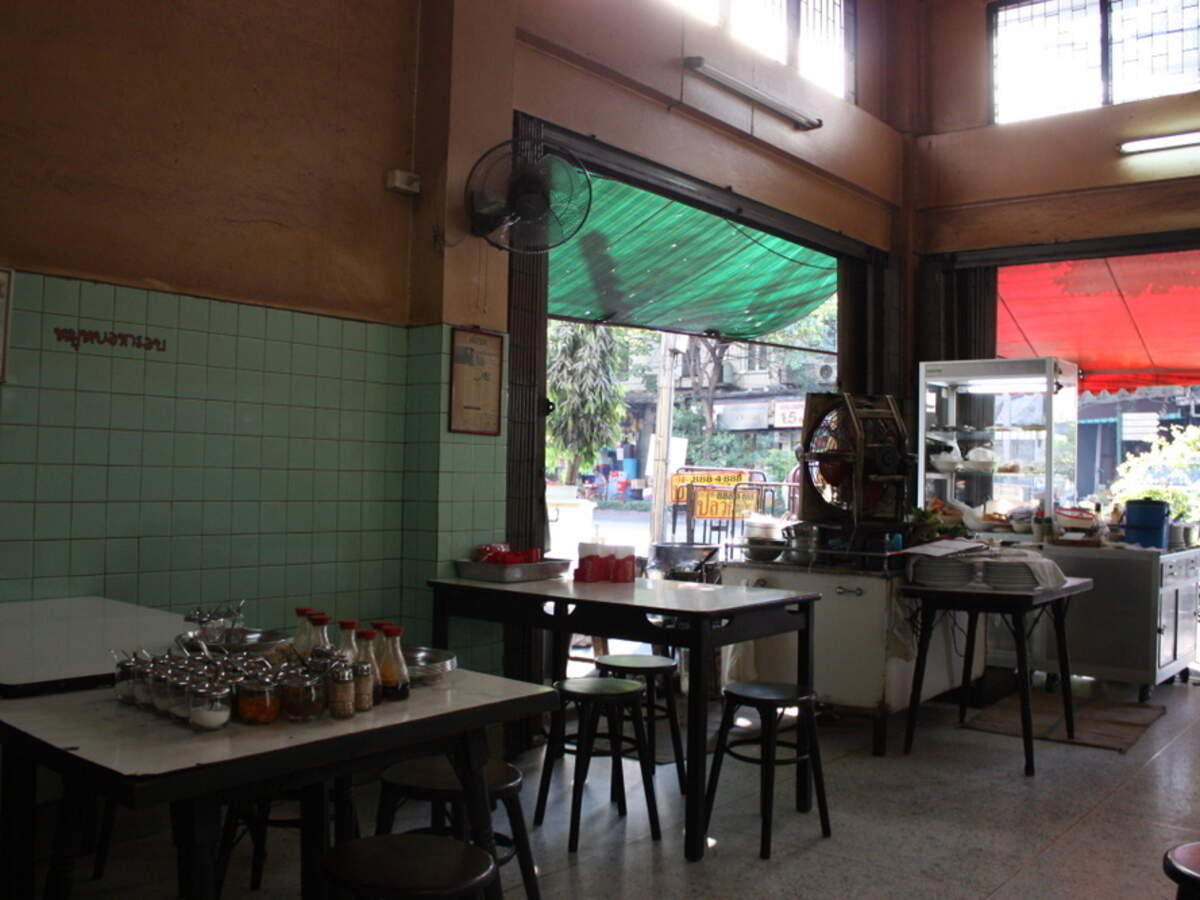
Bars in Bangkok
All bars in Bangkok →


Details
- Cozy
- Classic
- Business Dinner
- Casual Hangout
- Standalone
- Sake Program
- A La Carte
Current opening hours
- Monday
- 9 AM–1 PM
- Tuesday
- 9 AM–1 PM
- Wednesday
- 9 AM–1 PM
- Thursday
- 9 AM–1 PM
- Friday
- 9 AM–1 PM
- Saturday
- Closed
- Sunday
- Closed
Hours can change for holidays and private events. Hours as of .