



On the west bank of the Chao Phraya River, The Peninsula Bangkok has held its position among Bangkok's riverside luxury tier since 1998, earning Michelin 2 Keys (2024) and 97.5 points in the La Liste Top Hotels 2026 ranking. Its W-shaped tower guarantees river views from all 370 rooms, while a fleet of Rolls-Royces, restored rice barges, and a private helipad set the operational register well above the city's midscale riverside competition.
Pearl is the En Primeur Club membership app — saves, bookings, and concierge access live there. Same editors, same standards.
- Address
- 333 Charoen Nakhon Rd, Khwaeng Khlong Ton Sai, Khet Khlong San, Krung Thep Maha Nakhon 10600
- Phone
- +66 2 020 2888
- Website
- peninsula.com
- Directions
- Get directions
 Saves & bookings on Pearl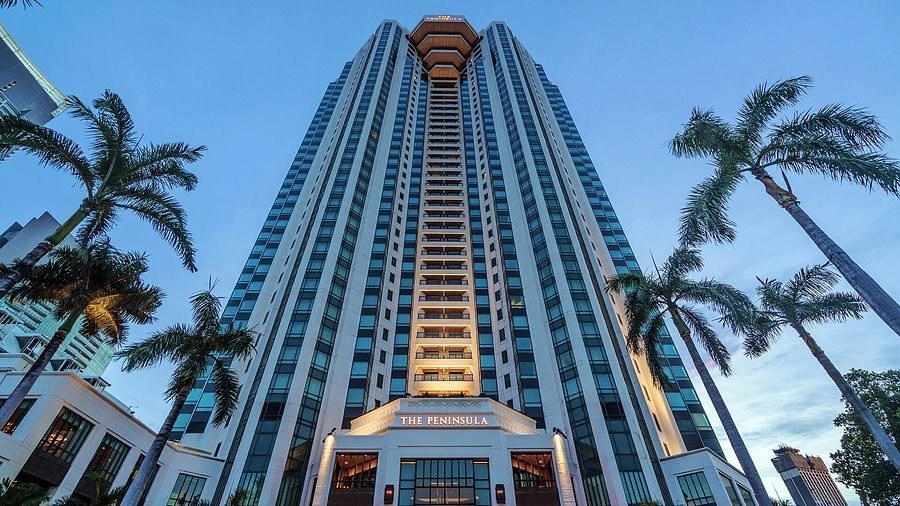
A River Address That Has Earned Its Reputation Over Time
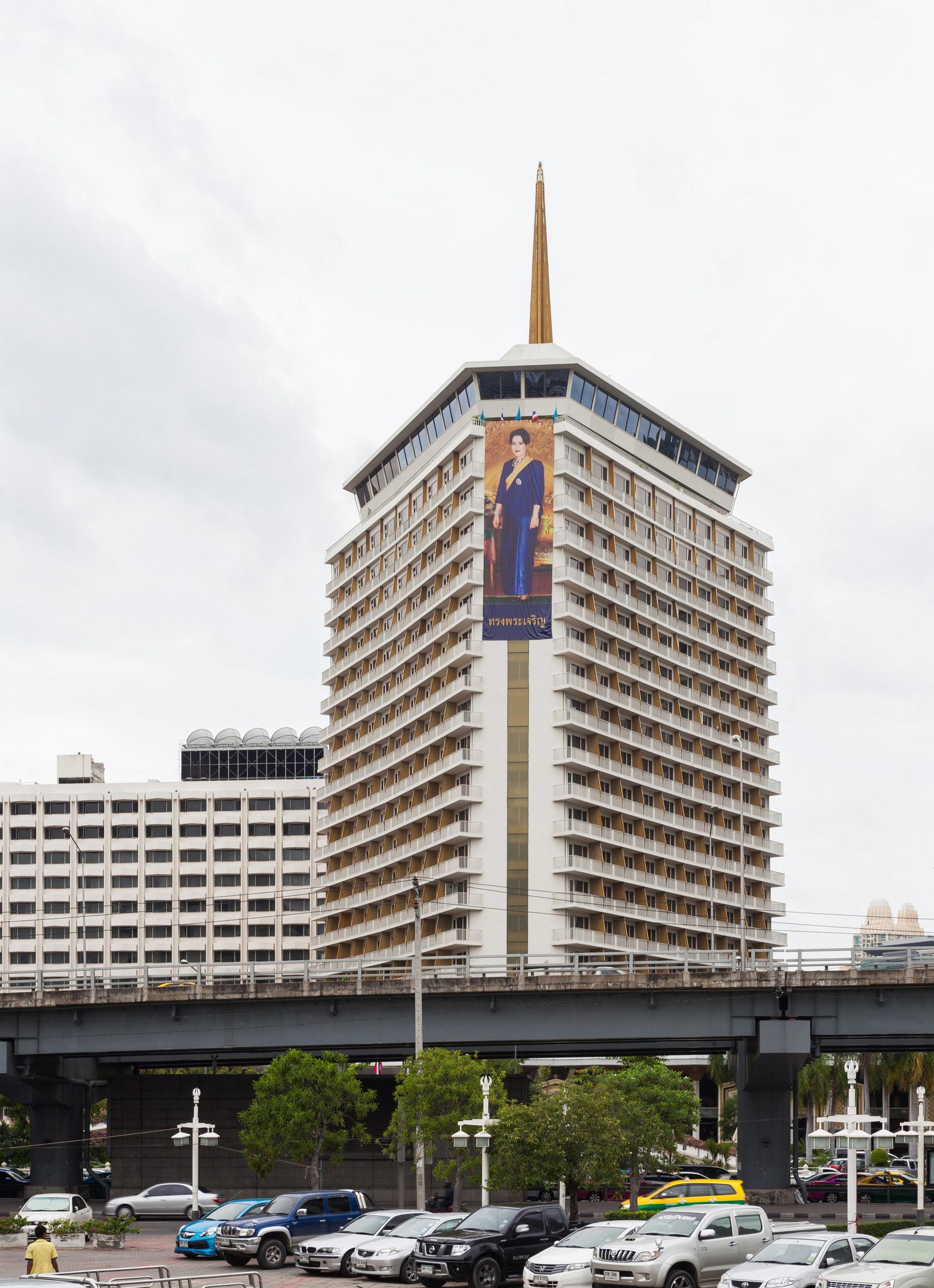
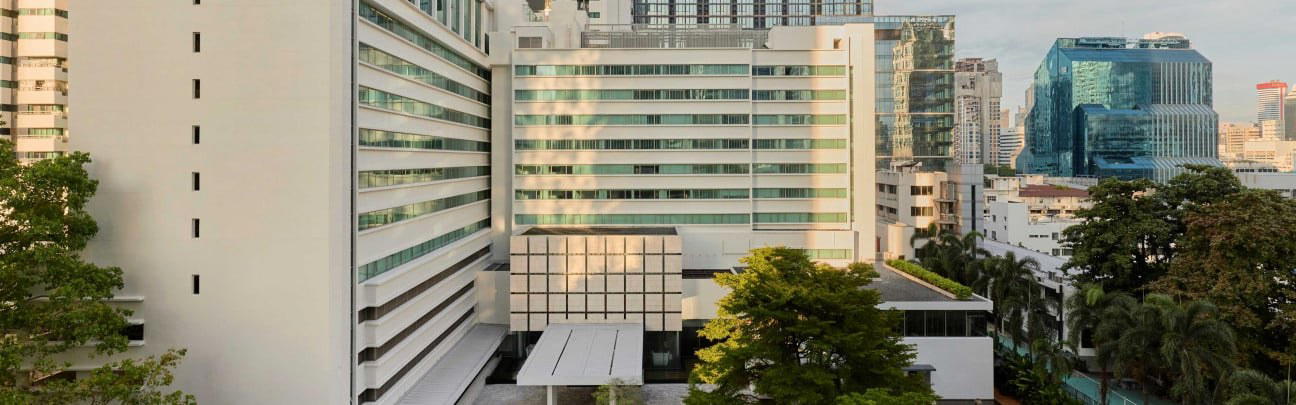
Approaching The Peninsula Bangkok from the Chao Phraya means arriving by water, which remains one of the more instructive ways to take the measure of the city's luxury riverside tier. The hotel's W-shaped tower, opened in 1998, rises on the west bank between Sathorn Bridge and the quieter stretch of Charoen Nakhon Road, its angular silhouette a deliberate architectural response to the site: the geometry was engineered so that every room on every floor captures an unobstructed river view. With only ten rooms per floor across 370 keys, the massing that could produce an anonymous corridor hotel instead delivers a property that reads smaller and more controlled than its room count suggests.
In Bangkok's riverside luxury segment, the west bank has historically operated in the shadow of the east bank's older institutional addresses. The Mandarin Oriental Bangkok has anchored the east bank since the nineteenth century. The Peninsula's answer, when it opened, was not heritage but precision: newer infrastructure, tighter technology integration, and a site that offered panoramic views of the skyline rather than of the river's busier commercial traffic. That strategic positioning has proved durable. The hotel holds Michelin 2 Keys (2024). Capella Bangkok, Four Seasons Bangkok at Chao Phraya River, and the newer Rosewood Bangkok.
How the Property Has Shifted Since Opening
The Peninsula Bangkok's evolution since 1998 tracks a broader shift in Southeast Asian luxury hospitality: from spec-sheet competition, where thread counts and technology platforms were the primary differentiators, toward a more textured identity built on art, cultural programming, and distinctive transport rituals. In its early years, the hotel's in-room technology, including dual-line dataports, fax relay via nightstand panels, and satellite entertainment systems, positioned it as the business traveller's choice on the river. That infrastructure has been absorbed and surpassed by touchscreen environmental controls that manage climate, lighting, communications, and entertainment from both the bedside and the bathroom.
The art dimension emerged more deliberately over time. The hotel now holds an Asian contemporary art collection spanning eight countries and 25 artists, a commitment that places it alongside properties like The Siam, where curatorial intent is part of the guest experience rather than decorative afterthought. Where earlier Peninsula marketing emphasised corporate functionality, the current emphasis falls on the spa building, the river transport fleet, and the restaurants as the primary reasons to choose this address over a Park Hyatt Bangkok or The Okura Prestige Bangkok, both of which operate from refined city-centre positions rather than riverfront sites.
The Rooms: Warm Materials, Sophisticated Controls
Guest rooms resolve a tension that many luxury hotels in the region struggle with: how to feel genuinely contemporary without tipping into the sterile minimalism that ages poorly. Here, the answer is fine teak and makha wood panelling, Thai silk accents, and ceramic details, set against open floorplans that read as generous rather than sparse. The 62 one-bedroom suites, four Theme Suites, and one Peninsula Suite extend that palette into more expansive configurations. At a published rate of around USD 411, the entry point sits in the mid-range of Bangkok's upper-tier riverside competition, below the rates commanded by some newer arrivals in the segment.
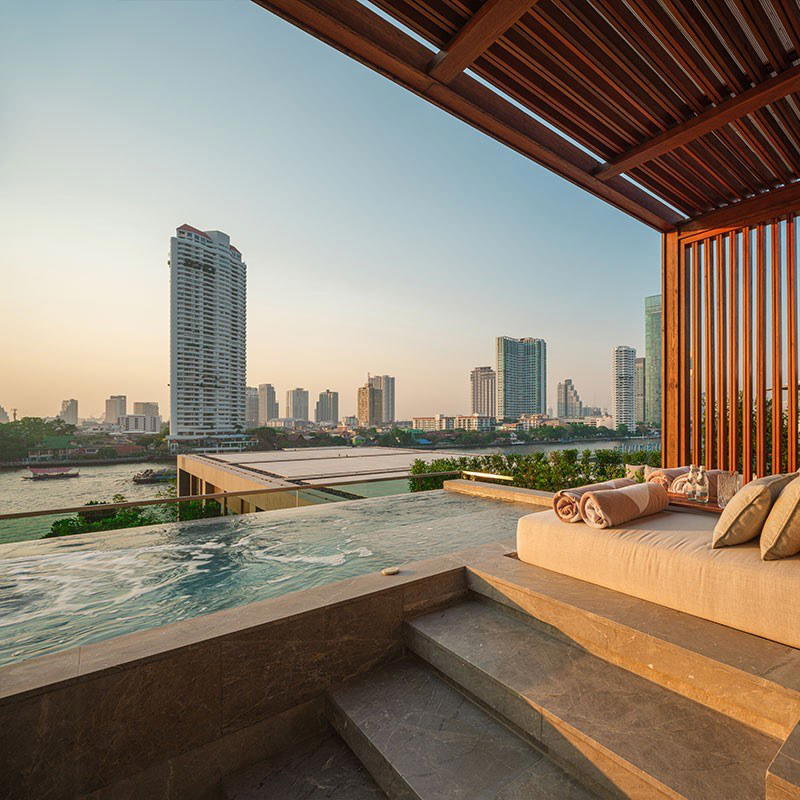
Bathrooms lean into the river orientation: twin marble vanities and freestanding bathtubs are positioned to face the water, with televisions built flush into the wall at bath-level. The room layout itself is designed to preserve a sense of arrival, with the bed angled away from the foyer line so that the full river view reveals itself progressively rather than all at once. That kind of spatial sequencing is a detail that distinguishes considered hospitality design from floor-plan efficiency.
Dining Across Three Registers
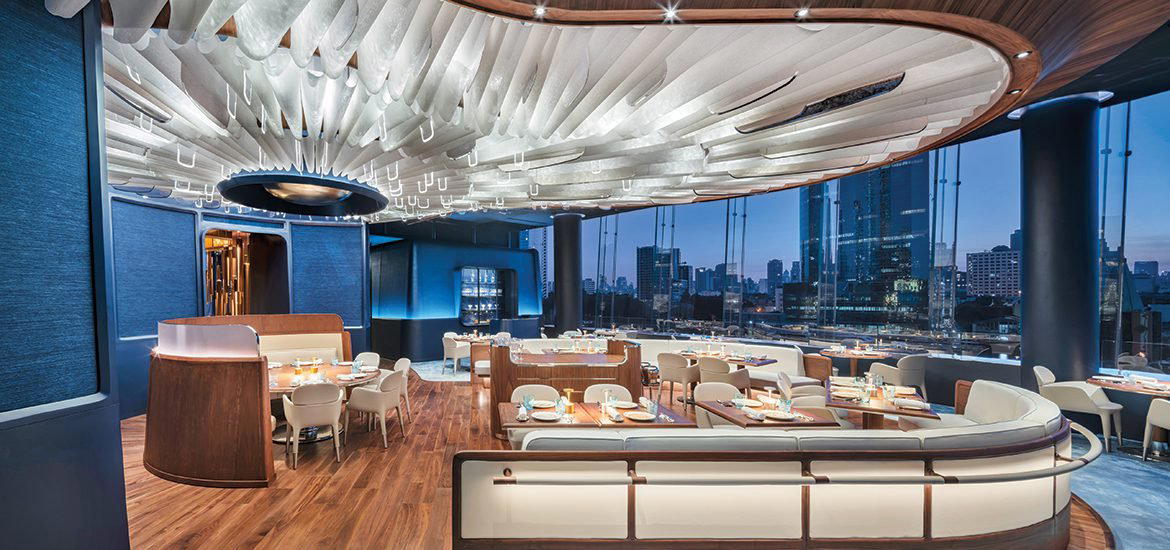
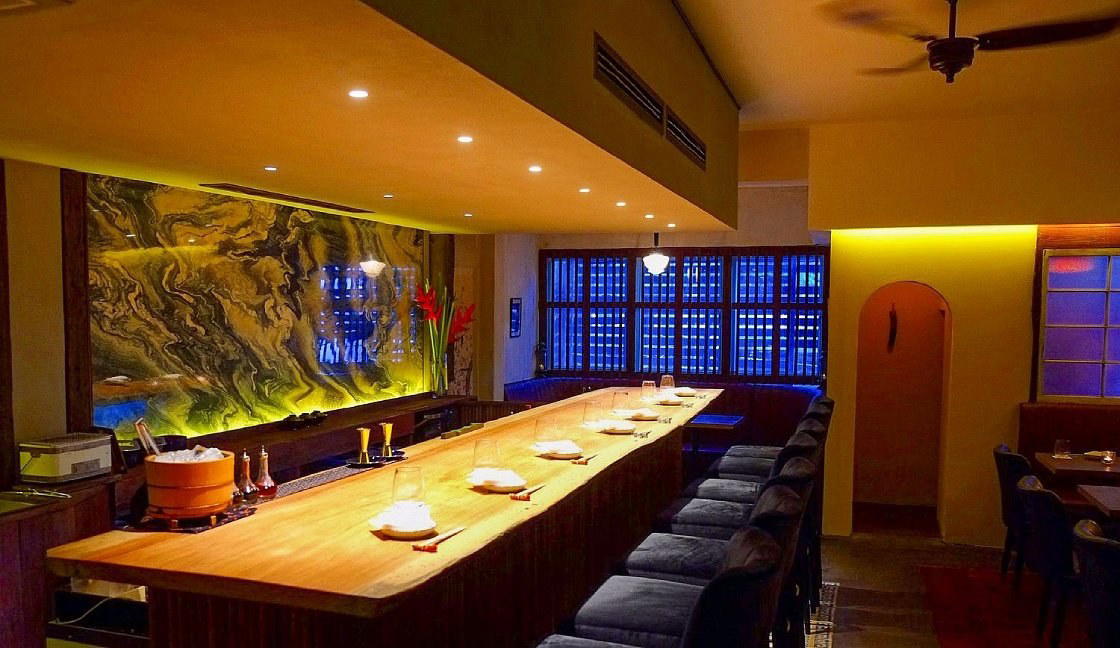
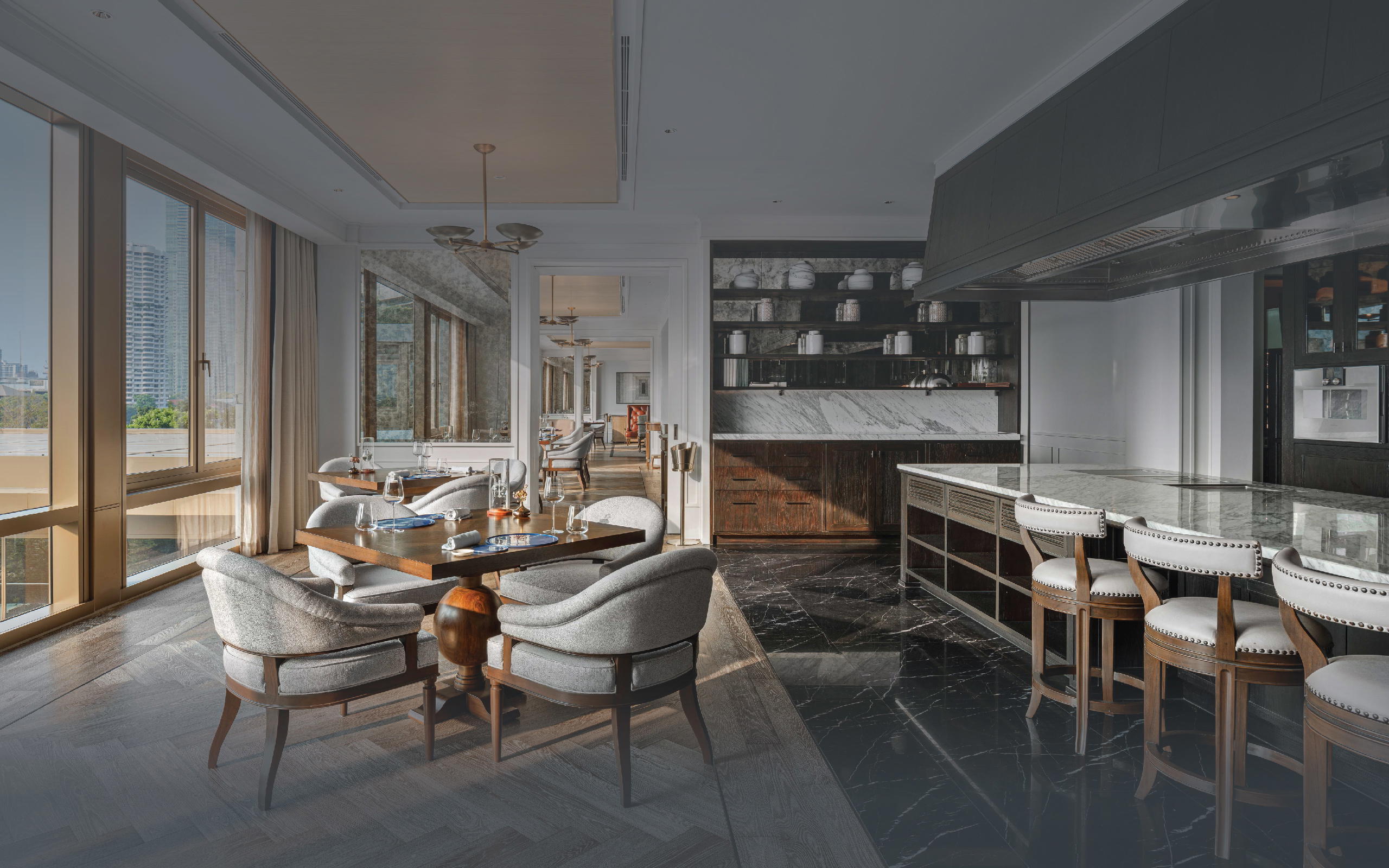
Bangkok's hotel dining scene has become one of the more competitive in Southeast Asia, with freestanding restaurant quality raising expectations for what an in-house kitchen needs to deliver. The Peninsula operates across three distinct registers. Mei Jiang serves classical Cantonese cuisine, a format that connects the property to the broader Peninsula Hotels tradition of anchoring Chinese fine dining at its Asian flagships. Thiptara occupies a riverside garden setting beneath a banyan tree, offering Thai home-style cooking in a format that prioritises ingredient clarity over theatrical presentation. The River Cafe and Terrace handles the broader spectrum: à la carte, buffet, and outdoor barbecue, functioning as the hotel's all-day casual anchor.
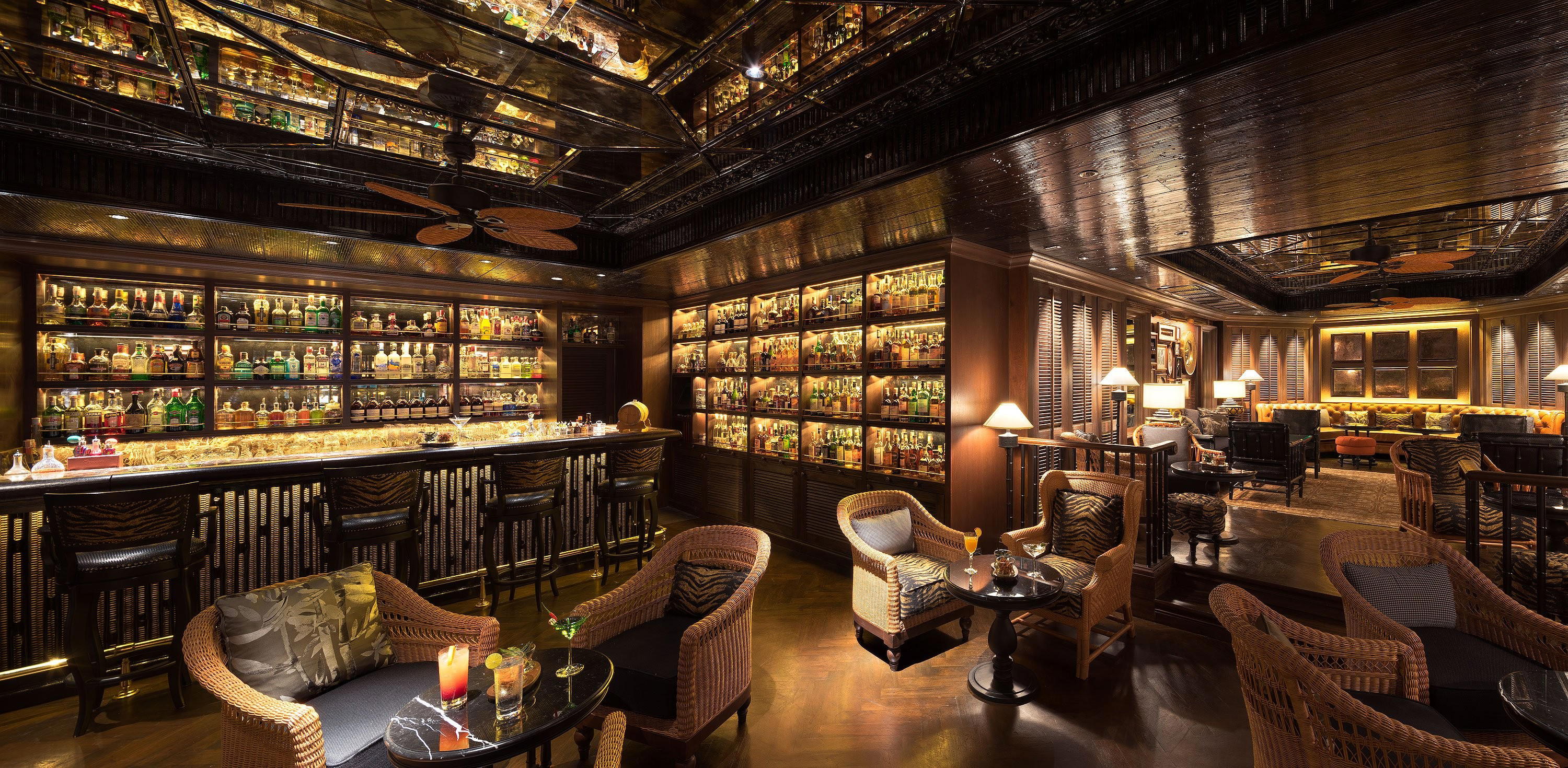
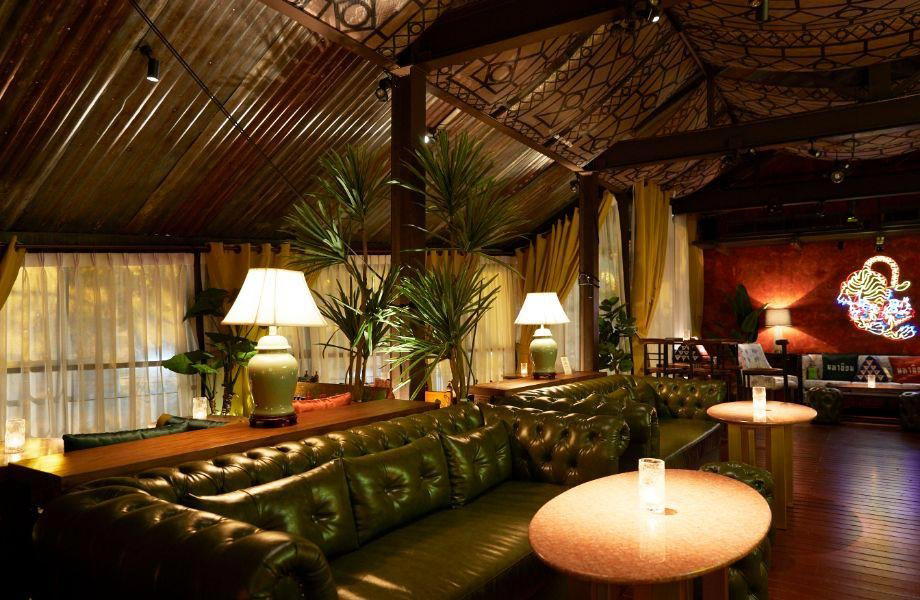
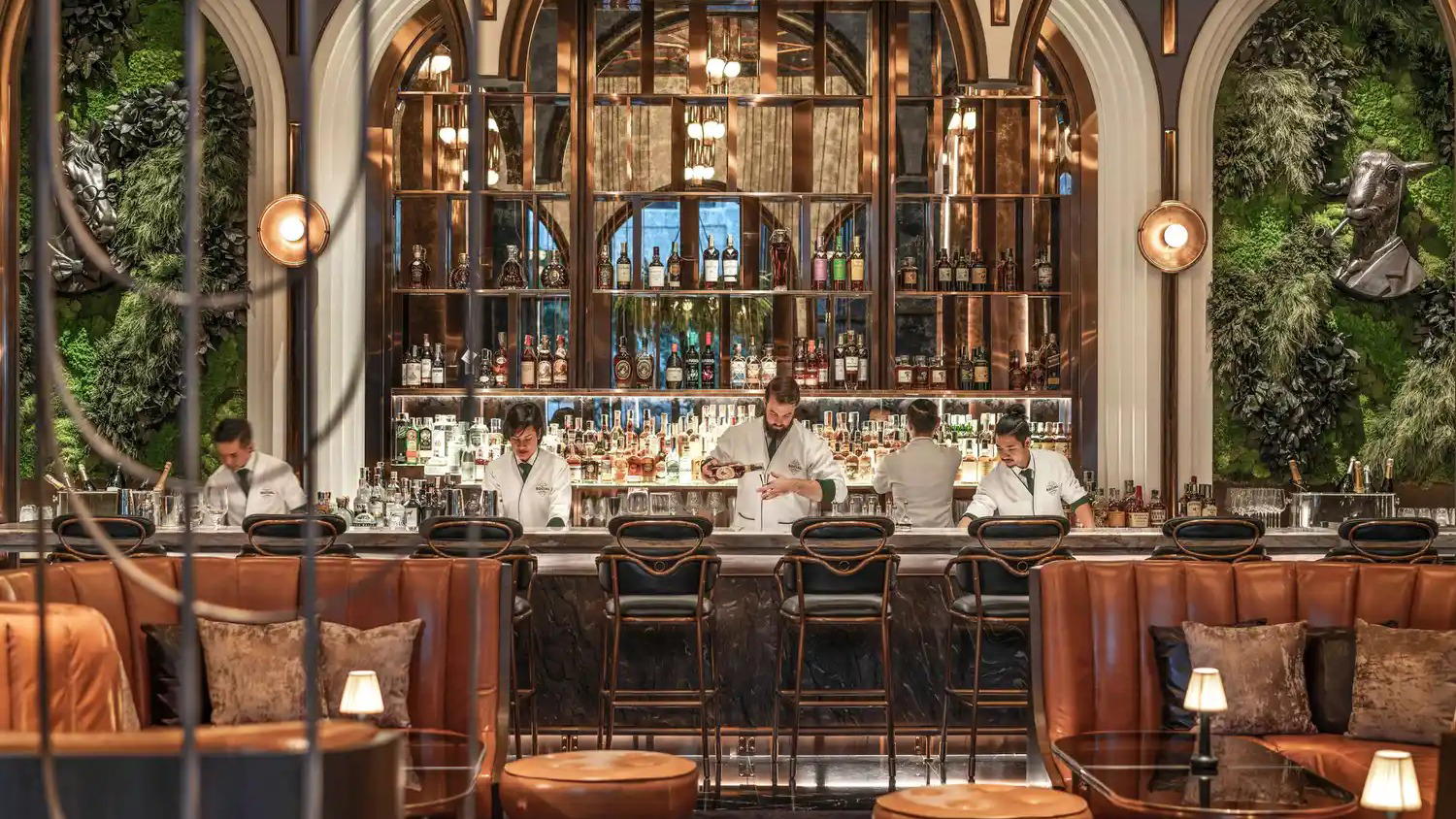
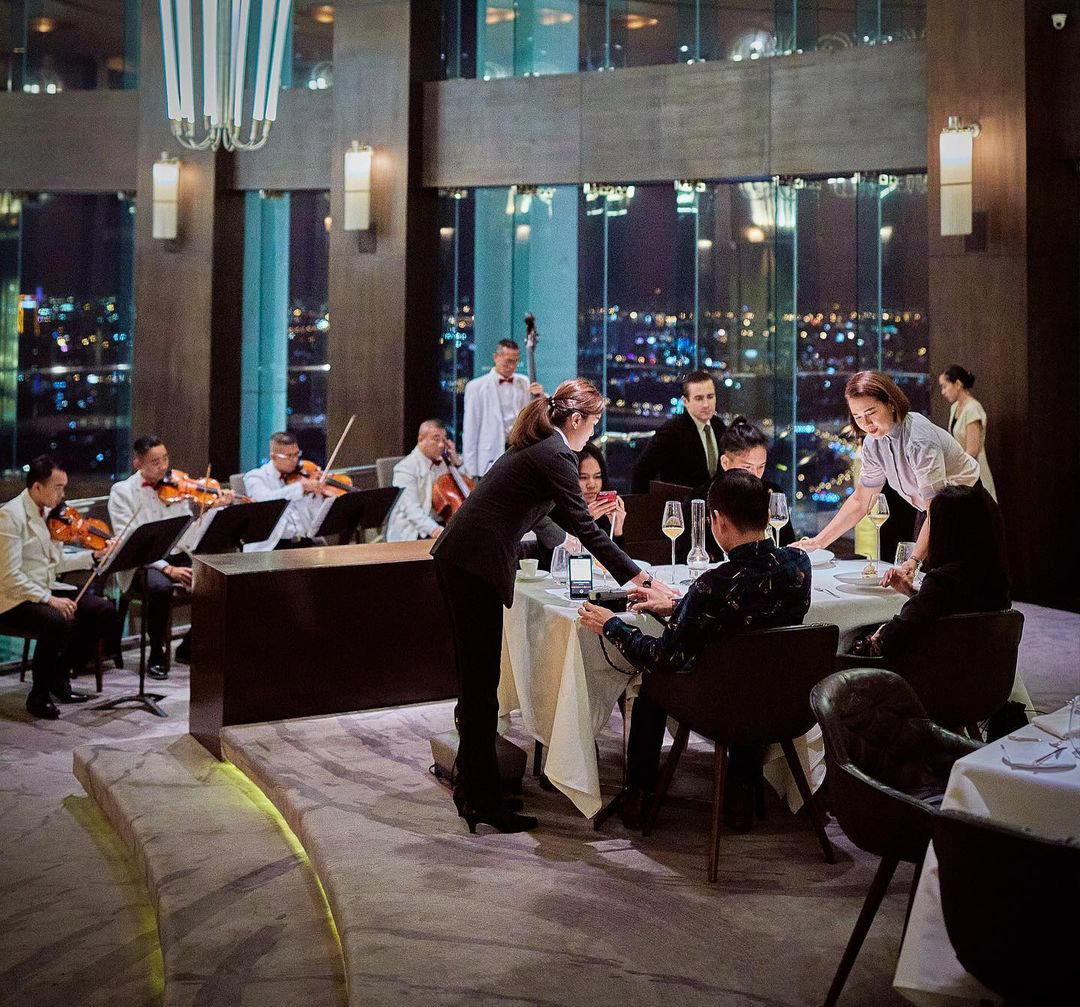
The lobby carries its own food and beverage identity, serving light fare and the Peninsula's signature afternoon tea alongside live music, a format that has remained consistent enough to become a point of reference for regular guests. The River Bar's beverage program includes fresh fruit preparations and a cocktail list by the hotel's mixology team, with the waterfront setting doing considerable atmospheric work.
The Spa Building and Recreational Infrastructure
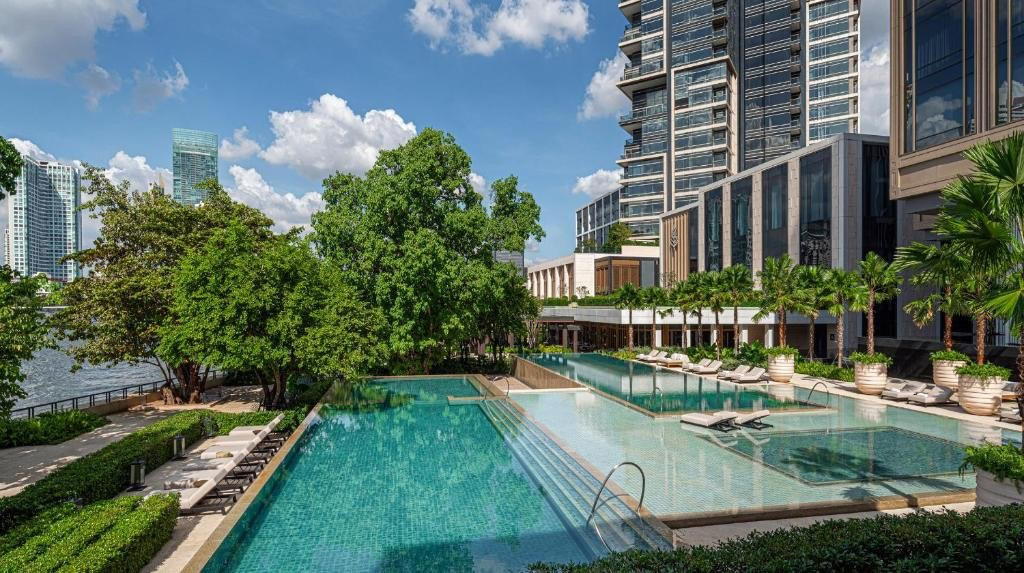
The spa occupies a separate three-storey Thai colonial-style building on the riverbank, housing more than twelve private treatment rooms, each with a steam shower and an ensuite whirlpool positioned to face the Chao Phraya. The treatment menu layers Thai, European, and Ayurvedic approaches rather than committing to a single therapeutic tradition, a format common across the Peninsula group's Asian properties but executed here with the river setting as an amplifying context. The three-tiered, 60-metre outdoor pool, surrounded by twelve traditional Thai salas and a sundeck, handles the recreational centre of gravity for guests who are not using the spa. A fully equipped gym with plunge pools and two floodlit tennis courts, staffed by a resident tennis professional available for sessions, complete the on-site sporting offer.
Transport as an Amenity
One of the more telling signals of how The Peninsula Bangkok has repositioned itself over the years is in its transport fleet. The practical core, a customised fleet of Rolls-Royce Silver Spurs and BMW 7 Series, is standard for properties at this tier. What distinguishes the offer is the supplementary layer: four restored traditional rice barges that ferry guests across the river from the Peninsula Pier Lounge to the BTS Skytrain station, a private helipad for arrivals and departures, and a customised three-wheeled tuk-tuk for guests who want a more textured street-level engagement with the city. The address itself, 333 Charoen Nakhon Road, corresponds numerically to the 333-foot length of the hotel's grand driveway.
Amanpuri in Phuket, Four Seasons Resort Chiang Mai, Six Senses Yao Noi in Phang Nga, or Phulay Bay, A Ritz-Carlton Reserve in Krabi. Those looking for a longer beach extension might also consider Samujana Villas in Koh Samui, Soneva Kiri in Trat, Pimalai Resort and Spa in Koh Lanta, or Anantara Layan Phuket Resort. For a culturally focused northern leg, Anantara Golden Triangle Elephant Camp and Resort in Chiang Rai offers a markedly different register. Within Bangkok itself, alternatives at varying price points include The Sukhothai Bangkok and Grand Hyatt Erawan Bangkok. For those also travelling beyond Thailand, the Peninsula group's operational standards translate well to comparisons with city luxury properties such as Aman New York, The Fifth Avenue Hotel in New York City, and Aman Venice.
Planning Your Stay
The hotel holds 370 rooms and suites, with a published entry rate in the region of USD 411 per night. The property sits at 333 Charoen Nakhon Road in the Khlong San district on the west bank of the Chao Phraya.
Aleenta Resort and Spa in Pranburi or Anantara Hua Hin Resort and Spa for short coastal escapes from the capital, and Anantara Rasananda Koh Phangan Villas for island alternatives. Those preferring Bangkok's city-centre positioning over a riverside site may find The Okura Prestige Bangkok or Rosewood Bangkok worth comparing directly against the Peninsula's river-dependent identity.A Lean Comparison
Comparable venues nearby, for context on price, style, and recognition.
| Venue | Price | Notes |
|---|---|---|
| The Peninsula BangkokThis venue — the venue you are viewing | $$$$ | Not listed |
| The Sukhothai Bangkok | $$$$ | Si Lom, Urban resort with timeless Thai elegance and modern luxury |
| Park Hyatt Bangkok | $$$$ | Makkasan, Upscale urban luxury hotel in an well-known skyscraper. |
| The Okura Prestige Bangkok | $$$$ | Sukhumwit, Luxury urban hotel blending Japanese functionality and contemporary style |
| SO/ Bangkok | $$$$ | Suan Lumphini, Luxury design hotel overlooking Lumpini Park with element-themed interiors. |
| Anantara Siam Bangkok Hotel | $$$$ | Siam Square, Blends traditional Thai and contemporary design with authentic artifacts and teak furnishings |
Recognition history
Dated appearances from independent guides and award organizations, with the underlying list record or original source where available.
Forbes 5-Star
Forbes
La Liste Top Hotels
La Liste
Virtuoso Luxury Hotel Partner
Virtuoso
Forbes 5-Star
Forbes
Michelin 2 Keys
Michelin
Michelin 2 Keys
Michelin
At a Glance
- Classic
- Scenic
- Elegant
- Sophisticated
- Ornate
- Quiet
- Business Trip
- Romantic Getaway
- Wellness Retreat
- Family Vacation
- Weekend Escape
- Waterfront
- Butler Service
- Destination Spa
- Garden
- Terrace
- Panoramic View
- Wi Fi
- Pool
- Spa
- Fitness Center
- Room Service
- Concierge
- Business Center
- Valet Parking
- Kids Club
- Restaurant
- Bar
- Waterfront
- Skyline
- Wi Fi
- Pool
- Spa
- Fitness Center
- Room Service
- Concierge
- Business Center
- Valet Parking
- Kids Club
- Restaurant
- Bar
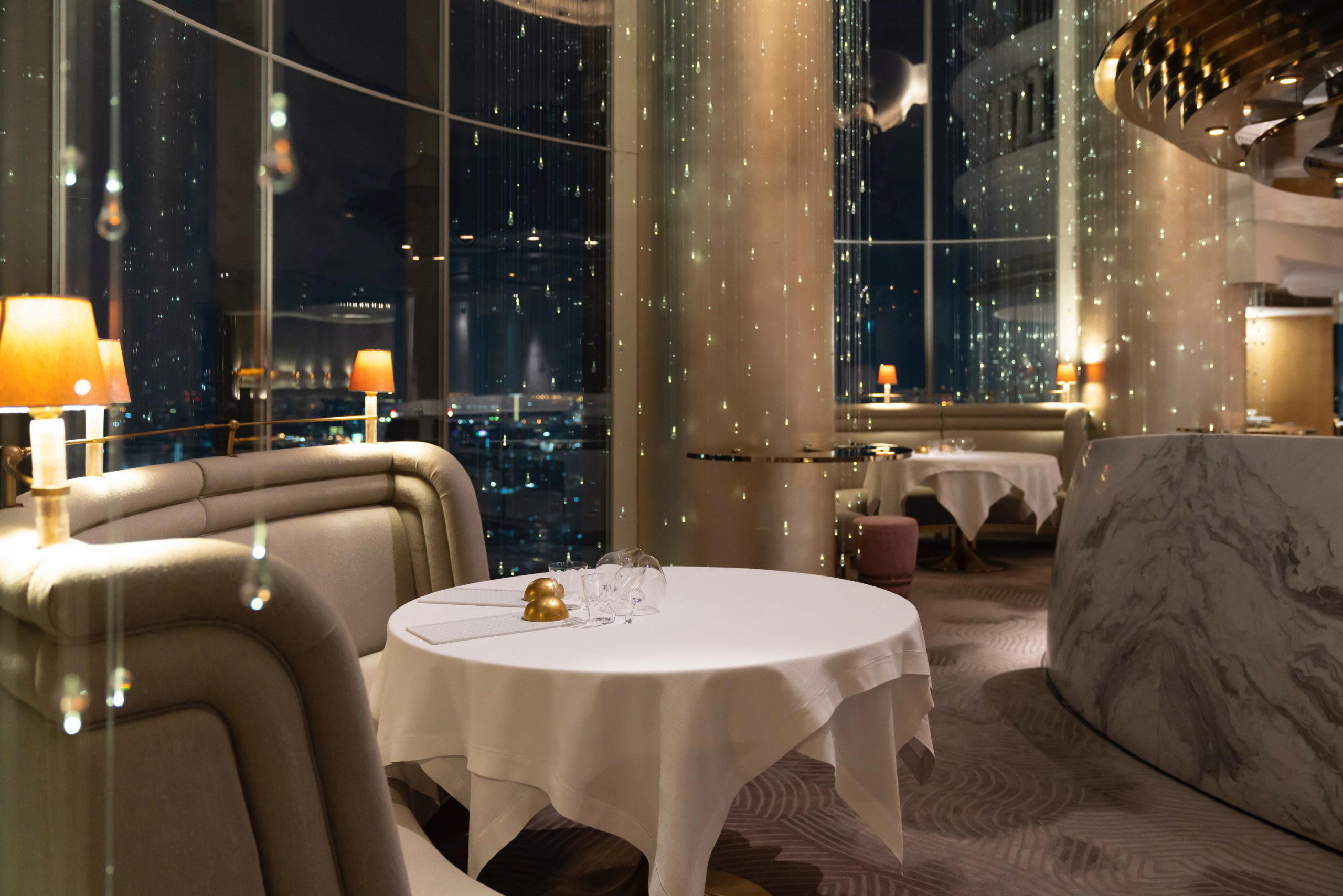
Classic riverside luxury with polished marble, warm woods, Thai silk accents, subtle gold tones, and a calm, refined atmosphere shaped by panoramic river and skyline views.