G-Bombay By Zahid occupies a quietly arresting address on Rue Ibn Aïcha in Marrakesh's Guéliz district, placing Indian subcontinent cooking inside a city already fluent in the art of spice. The kitchen draws on a tradition where aromatic layering is taken seriously, offering a counterpoint to the Moroccan-French dining that dominates the neighbourhood's upper tier. Book ahead where possible; walk-ins depend on the day.
Pearl is the En Primeur Club membership app — saves, bookings, and concierge access live there. Same editors, same standards.
- Address
- 29 Rue Ibn Aïcha, Marrakech 40000, Morocco
- Phone
- +212643669770
- Directions
- Get directions
 Saves & bookings on Pearl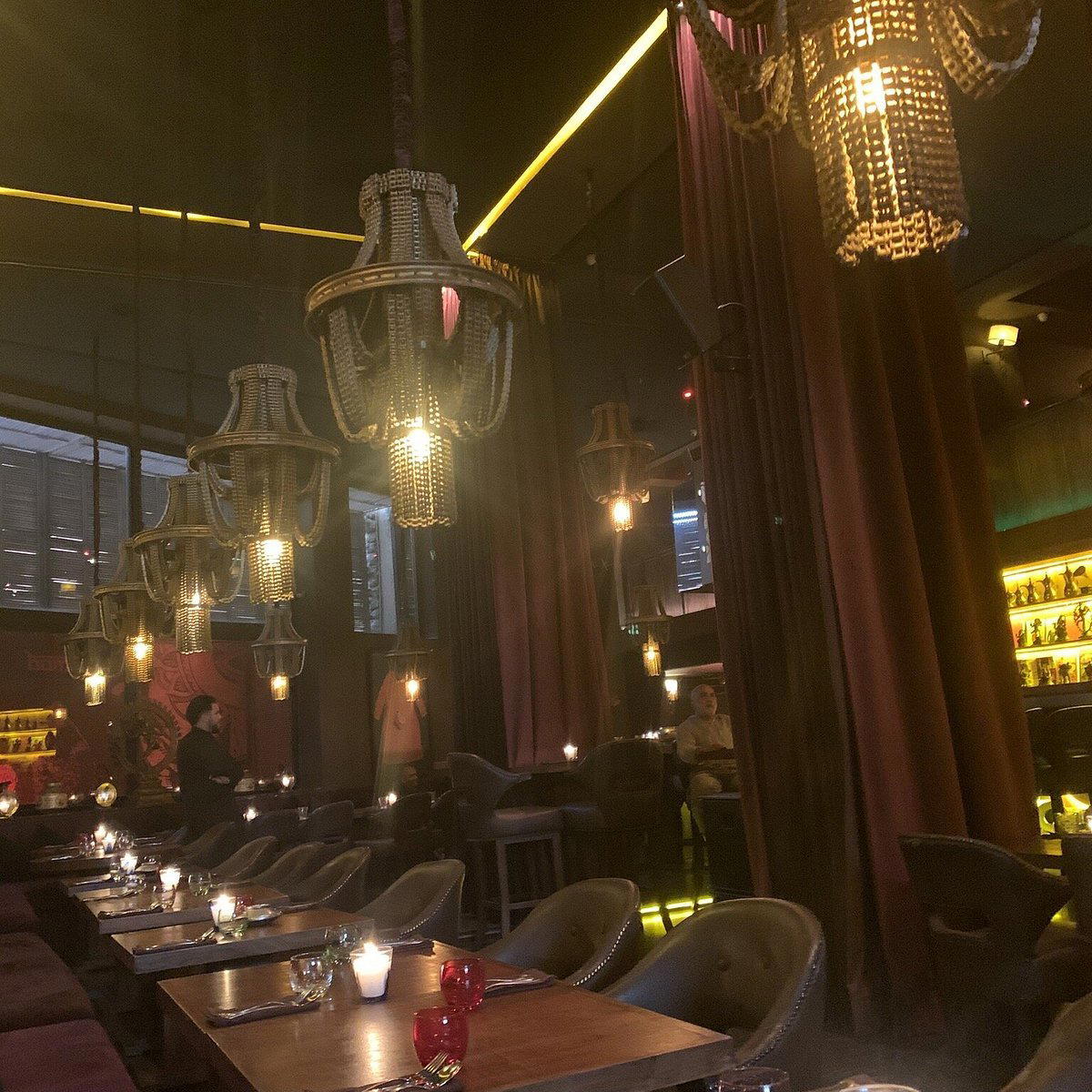
Where Two Spice Cultures Meet on Rue Ibn Aïcha
Marrakesh's medina has long operated as a crossroads of North African, Andalusian, and sub-Saharan cooking traditions, but the city's newer dining neighbourhoods tell a different story. In Guéliz, the French-planned quarter that stretches west from the Koutoubia, the restaurant scene has diversified sharply over the past decade. International kitchens now sit alongside Moroccan institutions, and particularly interesting cases are the ones that find a genuine reason to exist in this particular city rather than any other. G-Bombay By Zahid, at 29 Rue Ibn Aïcha, belongs to that category: an Indian kitchen in a city where the vocabulary of spice is already deeply embedded in the culture, which means the bar for aromatic credibility is higher than it would be elsewhere.
The Sensory Register of the Space
Arrival on Rue Ibn Aïcha places you in one of Guéliz's quieter residential pockets, away from the broader commercial drag of Mohammed V Avenue. The contrast matters: the street-level approach carries the low hum of a neighbourhood address rather than a destination restaurant operating on volume. Inside, the sensory register shifts quickly. Indian restaurant interiors in this price tier tend toward either maximalist palace aesthetics or studied minimalism; the question is whether either approach produces an environment that reads as considered rather than assembled from a mood board.
The olfactory experience in a kitchen that handles subcontinental spice seriously is rarely neutral. Cardamom, fenugreek, and slow-cooked ghee produce a warmth that settles into the room rather than announcing itself at the door. Marrakesh diners, accustomed to cumin and ras el hanout threading through their own cooking traditions, are unlikely to find this register foreign, which creates an unusual hospitality dynamic: the food functions as adjacent rather than exotic, which tends to produce more precise critical reception. A Marrakshi diner who knows what properly bloomed whole spices smell like will notice if something has been shortcuts.
Indian Cooking in a Moroccan Spice City: The Editorial Stakes
La Grande Table Marocaine - Royal Mansour represents the former at its most formal, a kitchen that treats Moroccan tradition as a serious archive worth excavating. La Grande Brasserie by Helene Darroze draws on French lineage with a Moroccan address. What fewer restaurants in the city attempt is a third-culture position: a non-Moroccan, non-French kitchen that does not position itself as a novelty but as a serious participant in the city's dining conversation.
Indian cooking has a structural argument for Marrakesh that, say, Japanese or Scandinavian cooking does not. Both cuisines share an attachment to spice complexity, slow-cooked proteins, and the layering of aromatics over time. Dishes built around a long-reduced sauce or a spice-heavy braise carry an aesthetic familiarity for Moroccan palates even when the specific ingredients differ. This is the terrain G-Bombay By Zahid occupies, and it is more contested than it looks. Getting the spicing right matters more here than in a city where the comparison set is less demanding.
For those exploring Marrakesh's wider restaurant range, Al Fassia remains a notable Moroccan kitchen in the city, and Sesamo occupies a different point on the international spectrum.
Across Morocco: The Wider Dining Context
India-rooted kitchens remain a niche across Moroccan cities. In Fes, Cafe Clock shows how an international sensibility can embed itself into a medina context without losing coherence. In Tangier, Andalus demonstrates the northern city's appetite for Mediterranean-Moroccan crossover. The spice-forward corridor that runs from Le Salon Oriental in Essaouira through the Atlas region and down toward Agadir's coast tells a story about how Moroccan hospitality absorbs international registers differently depending on the city's visitor composition and local palate.
Marrakesh, which draws the highest volume of international visitors of any Moroccan city, has particularly permissive conditions for non-Moroccan kitchens to find an audience. What separates the ones that sustain from those that don't is usually whether the cooking earns its place on culinary terms rather than relying on novelty. The city's dining culture, increasingly shaped by a dual local and tourist audience, has developed enough reference points to judge subcontinental cooking on its own merits. That is the environment G-Bombay By Zahid operates in.
If you are mapping a broader Moroccan itinerary, Amal Gueliz Center offers an interesting social-enterprise angle on Moroccan cooking in the same neighbourhood. Further afield, Gayza in Fès and L'Oliveraie in El Hajeb represent the kind of regional cooking that rarely surfaces in international coverage. For winery-anchored dining in Morocco's interior, Château Roslane is the clearest reference point in the country's emergent wine region.
Planning Your Visit
The address at 29 Rue Ibn Aïcha places the restaurant within walkable distance of Guéliz's central axis, accessible on foot from most of the quarter's hotels and easily reachable from the medina by a short taxi or ride-hail journey. Marrakesh dining peaks in the cooler months between October and April, when the city's visitor volume is at its highest and reservation pressure across the better-regarded restaurants is most acute. Booking ahead during this window is advisable; summer months, when temperatures push above 40°C in July and August, see a different visitor profile and generally lower demand pressure at the city's restaurants.
For comparative context on Marrakesh's upper dining tier, +61 and BÔ ZIN represent different points on the city's international-kitchen spectrum. If you are cross-referencing against global benchmarks for formal dining, Le Bernardin in New York City and Lazy Bear in San Francisco illustrate a useful reference point across price brackets and formats.
Peers in This Market
Comparable venues nearby, for context on price, style, and recognition.
| Venue | Cuisine | Price | Notes |
|---|---|---|---|
| G-Bombay By ZahidThis venue — the venue you are viewing | Authentic Indian | $$ | Not listed |
| Amal Gueliz Center - Restaurant | Authentic Moroccan | $$ | Gueliz |
| Le Jardin Restaurant Marrakech Medina | Moroccan with European Fusion | $$$ | Marrakech-Médina |
| La Famille | Fresh Vegetarian Mediterranean | $$ | Marrakech-Médina |
| Grand Café de la Poste | French Brasserie with Moroccan Accents | $$$ | Gueliz |
| Oban | Refined French and Traditional Moroccan | $$$ | Marrakech-Médina |
Continue exploring
More in Marrakech
Restaurants in Marrakech
Browse all →
Bars in Marrakech
Browse all →
Hotels in Marrakech
Browse all →
Wineries in Marrakech
Browse all →
At a Glance
- Cozy
- Trendy
- Date Night
- Group Dining
- Family
- Private Dining
Current opening hours
- Monday
- 6 PM–2 AM
- Tuesday
- 6 PM–2 AM
- Wednesday
- 6 PM–2 AM
- Thursday
- 6 PM–2 AM
- Friday
- 6 PM–2 AM
- Saturday
- 6 PM–2 AM
- Sunday
- 6 PM–2 AM
Hours can change for holidays and private events. Last verified .
Warm and inviting atmosphere with neat Indian-inspired decoration, bewitching spice scents, and great music.