Our verdict
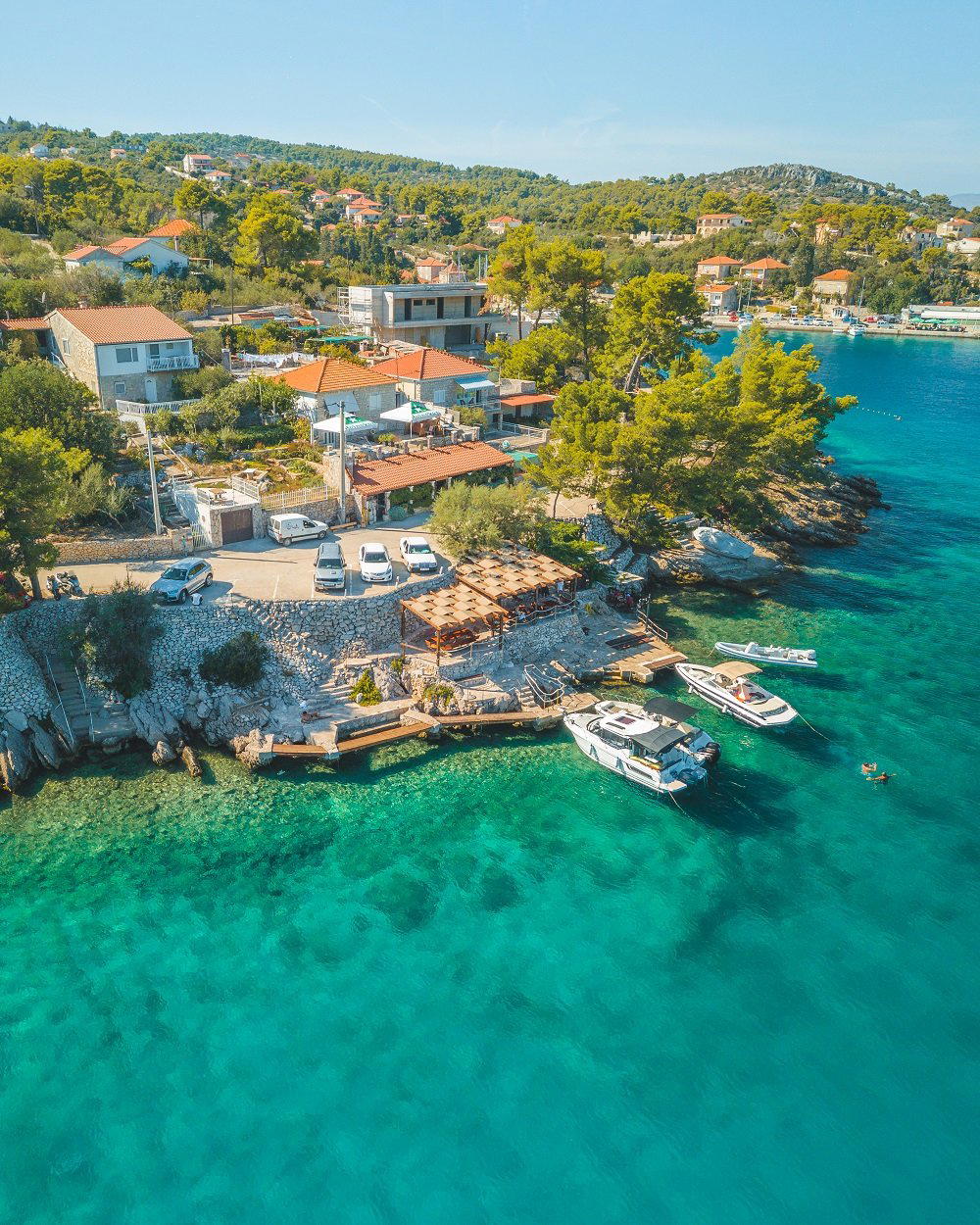
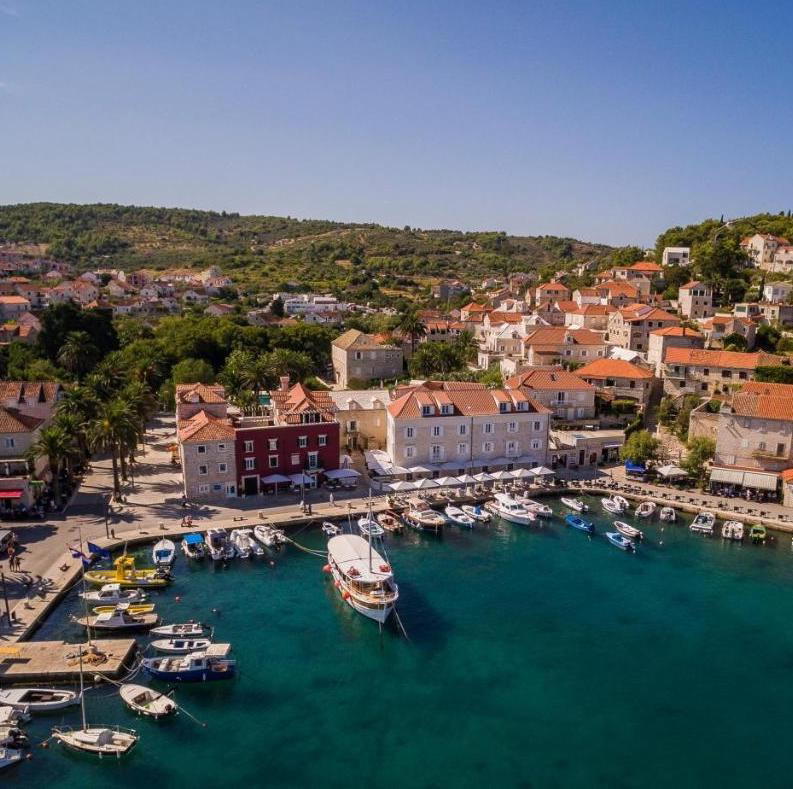
On the waterfront at Rogač, a small ferry port on the island of Šolta, Pasarela occupies the kind of address that rewards those who look beyond Split's better-known dining circuit. The setting is the Dalmatian coast at its least performed: fishing boats at the quay, stone underfoot, and a kitchen drawing on ingredients that travel a very short distance from sea and field to plate.

Pearl is the En Primeur Club membership app — saves, bookings, and concierge access live there. Same editors, same standards.
- Address
- Obala Sv Tereze 29a, 21430, Rogač, Croatia
- Phone
- +385915494986
- Website
- facebook.com
- Directions
- Get directions
Where the Ferry Port Becomes the Point
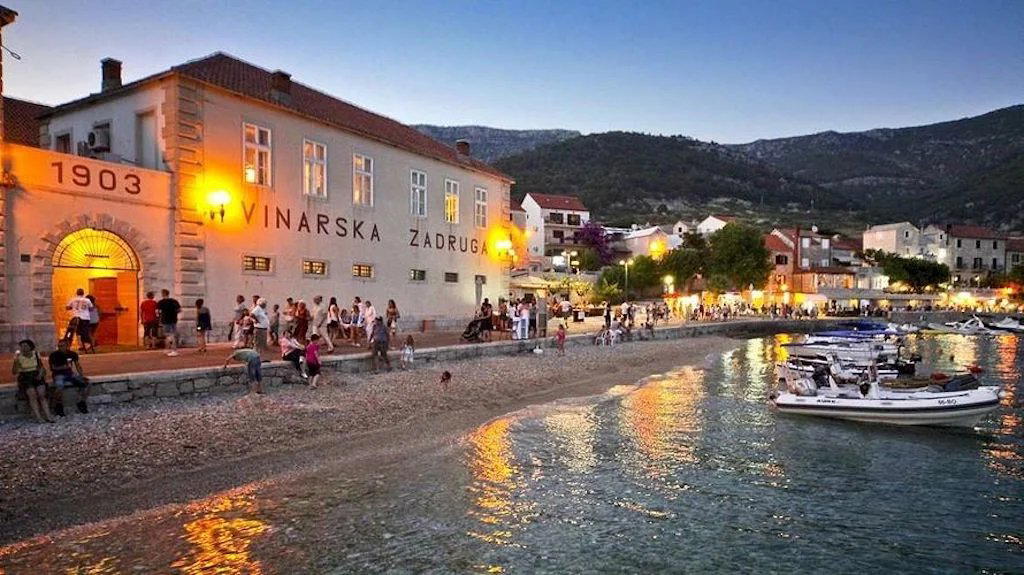
Rogač is not a destination most visitors plan around. It is, for the majority of travellers passing through, the place where the ferry from Split docks before they continue inland to Šolta's villages. That oversight works in favour of anyone who pauses here. The waterfront at Rogač functions the way Dalmatian port towns did before coastal Croatia became a shorthand for high-season overcrowding: quietly, with an orientation toward the water rather than toward the tourist. Pasarela sits on Obala Sv Tereze, the stone embankment that runs along the harbour, and that address is the first thing to understand about it. The sea is not backdrop here; it is context.
Šolta sits roughly fourteen kilometres west of Split by water, close enough that the island's produce has always had a natural market in the city, and far enough that it has maintained agricultural and fishing rhythms that larger, more-visited islands abandoned decades ago. Olive oil from Šolta carries a protected designation; the island's fishermen operate on a scale that has little to do with supply chains built around volume. That proximity and that scale shape what ends up on a plate at a waterfront address like this one.
The Short Supply Chain as Editorial Statement
Across the Adriatic coast, the distance between catch and kitchen has become a meaningful distinction. At the high end of the Croatian dining circuit, venues such as Pelegrini in Sibenik and Restaurant 360 in Dubrovnik have built award-winning reputations in part by making ingredient provenance a visible part of their offer. Both operate in the €€€€ tier and use sourcing narratives as a signal of seriousness. The more interesting question, along this coast, is what happens at addresses where the supply chain is short not because it has been curated for a tasting menu, but because that is simply how the place works.
Rogač answers that question straightforwardly. A harbour-front kitchen in a town this size draws from local fishermen because they are there, from island-grown produce because importing alternatives would cost more than it is worth, and from olive groves that have been producing oil on Šolta for centuries. This is not a philosophy; it is a geography. The result, at its finest, is food that reads as honest rather than constructed, and that distinction matters when you have spent time eating along a coast where sourcing language has, in some venues, outrun the cooking.
For a comparative frame, consider what the broader Croatian dining scene looks like at the moment. Agli Amici Rovinj brings Italian contemporary technique to Istria at the €€€€ level; Boskinac in Novalja on Pag combines estate produce with serious wine; LD Restaurant in Korčula works in a similar coastal register. Each operates with a defined programme and a corresponding price point. Pasarela occupies a different position in that map: a harbour-front address on a small island, serving a catchment that mixes locals, day visitors, and the occasional traveller who has deliberately chosen Šolta over more trafficked destinations.
The Dalmatian Coastal Dining Register
Understanding what to expect from a place like Pasarela requires some familiarity with how Dalmatian coastal cooking actually works at the non-destination tier. The backbone is grilled fish, shellfish depending on season, lamb from island flocks, and vegetables grown in the karst soil that defines this stretch of coast. Technique tends toward restraint: good olive oil, fresh herbs, minimal intervention. The wine list, in any serious version of this format, leans on Dalmatian varieties, Plavac Mali and Pošip most prominently, both of which have genuine depth when sourced carefully.
This register sits at some distance from the direction taken by Croatia's more ambitious urban kitchens. Nebo by Deni Srdoč in Rijeka and Dubravkin Put in Zagreb represent the end of the Croatian dining spectrum that is in dialogue with European fine dining broadly. Krug in Split, the nearest significant city to Šolta, occupies a more local but still polished position. A waterfront address in Rogač is not competing in that conversation, nor should it be. The value proposition is different: place, season, and short provenance rather than technique and programme.
That is a coherent offer, and on the Dalmatian coast, it is one that a certain kind of traveller seeks deliberately. The growth in slower, island-focused itineraries across the Adriatic has created demand for exactly this kind of address: somewhere that rewards the effort of being somewhere quiet, rather than somewhere that has been engineered for volume. BioMania Bistro Bol in Bol on Brač and Bodulo in Pag operate in analogous positions on their respective islands, each serving a local and passing visitor mix with cooking that reflects the specific character of its setting.
Arriving and Planning
Šolta is reached by ferry from Split, with the crossing taking approximately one hour to Rogač harbour. The ferry schedule means that day trips from Split are feasible, though the island makes more sense as an overnight or multi-day stop if the goal is to eat and move slowly rather than to check a crossing off a list. Rogač itself is small; the waterfront where Pasarela sits is within easy walking distance of the ferry terminal, which removes any logistical friction from arriving without a car.
Seasonal timing matters along this coast. Summer months bring higher visitor numbers even to quieter islands like Šolta, which affects both availability and the character of the dining room. Spring and early autumn offer a different experience: fewer visitors, produce at points in its cycle that summer heat alters, and a waterfront that is genuinely quiet rather than relatively quiet. Those planning around ingredient quality rather than weather will find the shoulder seasons more interesting, a pattern that holds across comparable coastal addresses from Burin in Crikvenica to Cubo in Opatija on the Kvarner coast.
For those building a wider Croatian itinerary around serious eating, Pasarela fits as part of a coastal sequence rather than as a standalone destination. Our full Rogac restaurants guide covers the broader options on the island. Further afield, inland alternatives such as Korak in Jastrebarsko and Cantilly Garden Restaurant in Samobor represent the other end of the Croatian table, where continental rather than maritime produce defines what arrives on the plate. The contrast between these two poles, Adriatic coast and Zagreb hinterland, is one of the more instructive things about eating seriously in Croatia.
Frequently asked questions
Is Pasarela a family-friendly restaurant?
Pasarela sits on the harbour front at Obala Sv Tereze 29a in Rogač, a working ferry port village where the pace is relaxed and the setting is open-air facing the water. That kind of environment tends to suit families with children more comfortably than a formal dining room would. Dalmatian coastal restaurants at this level of informality generally accommodate mixed-age groups without issue.
Is Pasarela formal or casual?
The address on Rogač's harbour front places Pasarela firmly in casual Dalmatian dining territory. Rogač is a small ferry-port settlement on Šolta, not a resort town, so the register here is relaxed rather than dress-code driven. Think clean, comfortable clothes suited to a waterfront lunch or dinner rather than anything approximating formal attire.
Is Pasarela worth visiting as a day trip stop from Split on the Šolta ferry?
The Rogač ferry terminal, where Pasarela sits at Obala Sv Tereze 29a, is the first thing foot passengers reach after the one-hour crossing from Split. That geographic fact makes it a natural lunch stop for day-trippers before they explore the rest of Šolta. The ferry schedule from Split typically allows enough time on the island for a meal and a walk before the return sailing, making Pasarela a logical anchor for a half-day itinerary.
What do people recommend at Pasarela?
Along the Croatian coast at this latitude, that typically means whatever the day's catch allows, prepared simply. Asking the host what arrived that morning is a reasonable starting point.
What's Pasarela's location?
Pasarela is located at Obala Sv Tereze 29a, 21430, Rogač, Croatia, Rogac.
What's the best way to book Pasarela?
Given Rogač's size and the ferry-dependent flow of visitors to Šolta, arriving with some flexibility or asking locally at the harbour is a practical approach. If the restaurant operates seasonally, as many Dalmatian island spots do, timing around the Split ferry schedule is worth factoring in.
What makes Pasarela worth seeking out?
Pasarela's address at Obala Sv Tereze 29a puts it directly on the Rogač waterfront, which is the arrival point for the Split ferry — a crossing of roughly one hour. Most visitors treat Rogač as a transit stop rather than a destination, which keeps the restaurant outside the usual tourist circuit. For anyone spending time on Šolta, that lower profile translates to a more genuinely local dining experience than you would find in Split itself.
A Quick Peer Check
Comparable venues nearby, for context on price, style, and recognition.
| Venue | Cuisine | Price | Notes |
|---|---|---|---|
| PasarelaThis venue — the venue you are viewing | Dalmatian Mediterranean Seafood | $20–30 | Not listed |
| Konoba Toma | Traditional Dalmatian Seafood | $20–30 | historic_center |
| Kod Kapetana | Traditional Croatian Seafood | $20–30 | Hvar Town |
| Don Dino Restaurant | Modern Dalmatian Seafood | $20–30 | Trogir Old Town |
| Mario | Traditional Dalmatian Seafood | $30–50 | old part of Rogoznica |
| Stina Winery | Croatian Winery Tasting Room | Not listed | Bol |
Continue exploring
More in Rogac
Restaurants in Rogac
Browse all →
Bars in Rogac
Browse all →
Hotels in Rogac
Browse all →

Details
- Scenic
- Relaxed
- Brunch
- Waterfront
- Terrace
- Local Sourcing
- Waterfront
- A La Carte
- Vegetarian Friendly
- Vegan Options
- Gluten Free Options
Relaxing seaside ambiance with great views.