
Michelin Selected
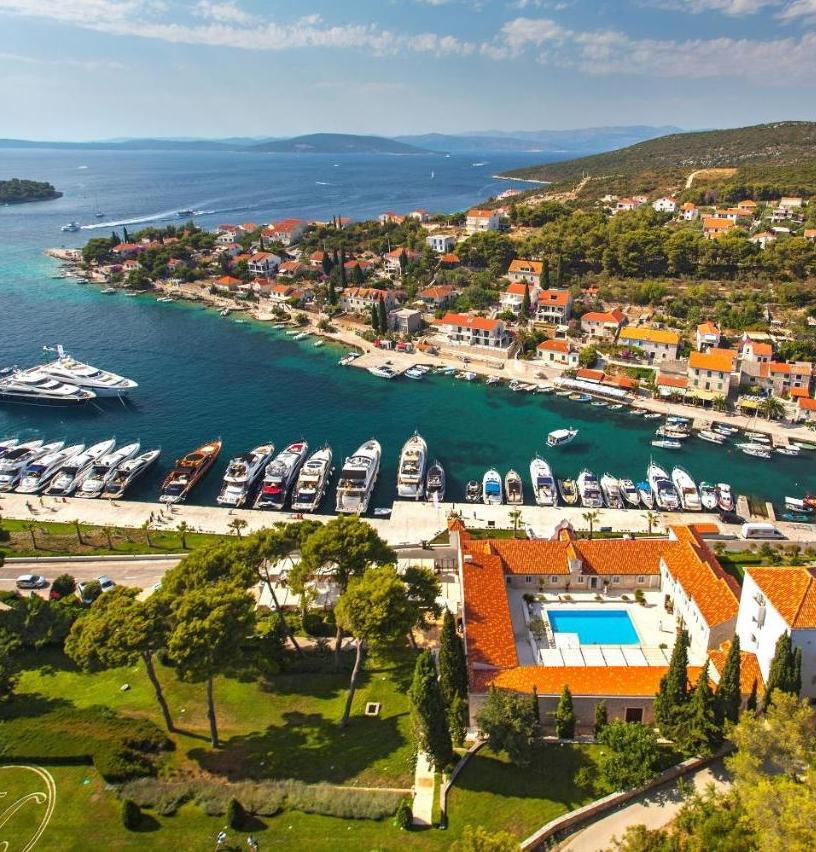
A Michelin Selected heritage property on the Dalmatian island of Šolta, Heritage Hotel Martinis Marchi occupies a restored 18th-century castle in the quiet fishing village of Maslinica. The setting positions it firmly in the small-scale, design-led tier of Croatian coastal accommodation, where architectural provenance and Adriatic seclusion matter more than resort scale.

Pearl is the En Primeur Club membership app, where members save venues, book tables and use the concierge.
A Fortress on a Quiet Shore
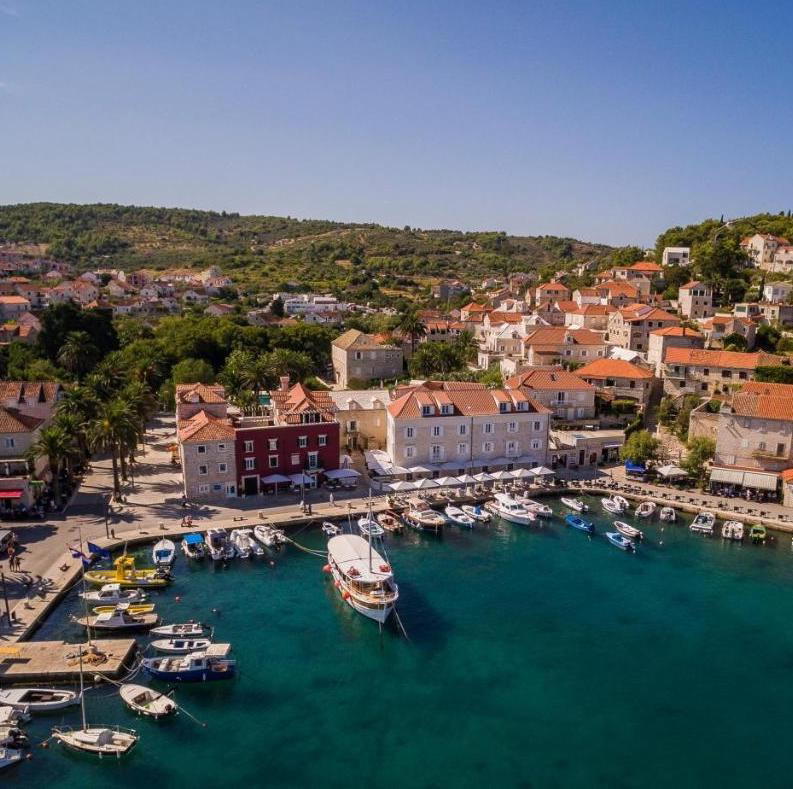
The western tip of Šolta island sits well outside the ferry-and-villa circuit that dominates Croatian summer tourism. Maslinica is a village of perhaps a few hundred residents, a small marina, and the kind of unhurried pace that the more visited islands along the Dalmatian coast shed decades ago. Arriving here by boat, the first thing that orients the eye is a stone castle at the water's edge, its silhouette unchanged in structure since the 18th century. That building is Heritage Hotel Martinis Marchi, and its architecture is not incidental to the experience on offer. It is the experience.
Croatia's premium accommodation has in recent years divided along clear lines: large-footprint resort complexes with spa infrastructure and broad amenity programmes on one side, and a smaller cohort of restored historic properties where the physical fabric of the building carries most of the editorial weight. Lešić Dimitri Palace in Korčula sits in this second group, as does Villa Korta Katarina in Orebić and the Maslina Resort on Hvar. Heritage Hotel Martinis Marchi belongs to this cohort, where architectural provenance substitutes for scale and the building's age is its primary credential.
Stone, Scale, and What Michelin Selection Signals
Michelin's hotel selection programme operates on different criteria than its restaurant stars. For hotels, inclusion signals a consistent standard of hospitality aligned with the guide's editorial framework, not a ranked position on a competitive table. For a small castle property on an island that most international visitors have never heard of, Michelin Selected status in the 2025 guide functions as an access point: it introduces the property to a reader base that arrives with calibrated expectations around service and quality. Properties carrying this designation in Croatia include addresses across Istria, the Dalmatian coast, and the Kvarner Gulf, many of them similarly positioned in restored historic structures. Martinis Marchi sits in that national tier, where setting and architectural character anchor the proposition.
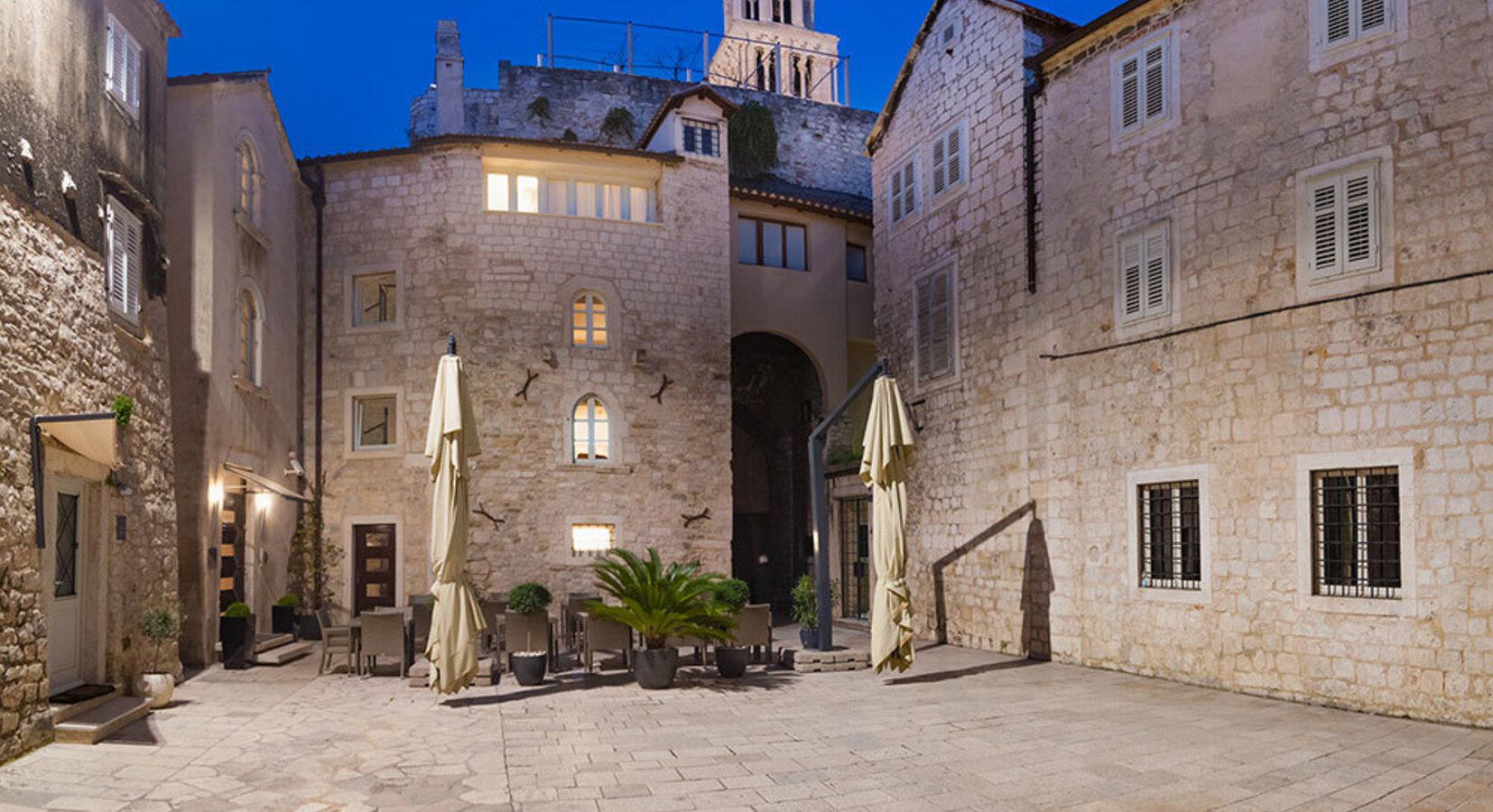
The castle itself was constructed in the early 18th century by the Marchi family, Venetian nobility who held considerable influence across the Dalmatian coast during that period. The building's Venetian heritage shows in its proportions and in the logic of its design: a fortified structure built to command a bay, with the water as both boundary and view. Restoration projects of this kind in Croatia have ranged from sympathetic interventions that preserve original materials and spatial rhythm to more aggressive modernisations that retain only the façade. What the exterior and the building's classification establish is that the architectural shell is intact and functioning as the hotel's primary identity marker.
Maslinica and the Šolta Context
Šolta receives a fraction of the visitor traffic directed at Brač, Hvar, and Vis, the three islands that sit in the same stretch of the central Dalmatian archipelago. That asymmetry is partly a function of transport infrastructure and partly a function of what each island offers. Šolta has no major heritage town comparable to Hvar's old town, no beach with international recognition, and no high-volume nightlife. What it has is olive groves, a working fishing economy, and a quieter relationship with the sea. For a specific type of traveller, that absence of infrastructure is the appeal rather than the problem.
Maslinica itself is the westernmost settlement on the island, a harbour village where the marina is small enough that arrivals by private boat dominate. The ferry connection runs to Split on the mainland, and the journey from Split's ferry terminal to Maslinica typically takes under an hour by sea, making Split the logical staging point for most guests. Our full Maslinica restaurants guide covers the village's limited but locally grounded dining options, which run toward konoba-style cooking using island produce rather than tourist-oriented menus.
The Dalmatian Island Hotel Tier: Positioning and Peers
Across the Croatian islands, the most interesting accommodation addresses of the past decade have been small-key conversions: village palaces, agricultural estates, and coastal fortifications brought into service as hotels without losing their spatial identity. This is a different proposition from the resort model represented by properties like Le Meridien Lav in Split or the large-format Valamar Collection hotels, which compete on amenity breadth and accessibility. The historic-conversion tier competes on atmosphere, exclusivity of location, and the physical character of the building itself.
Comparable Adriatic properties operating in this register include Pomâlo Inn on Vis, Villa Nai 3.3 on Dugi Otok, and VERBENICUM in Vrbnik on Krk. Each occupies an island location with limited access and a small room count that creates a low-density experience by structural necessity rather than marketing intent. Further along the Croatian coast, San Canzian in Buje and Hotel Kastel in Motovun represent the inland Istrian version of the same model, where the building's age and architectural fabric carry the primary appeal. For context on how larger design-led properties in Croatia position themselves within the Michelin framework, Grand Park Hotel Rovinj and Lone Hotel in Rovinj offer a useful architectural contrast, both occupying purpose-built contemporary structures within a similar Michelin selection tier.
Internationally, the castle-hotel format has well-established precedents. The standard of conversion and service quality at historic properties in more travelled destinations like Badrutt's Palace in St. Moritz or Hôtel de Paris in Monte Carlo sets a reference point that travellers moving between European heritage properties carry with them. The Dalmatian context is different in scale and formality, but the underlying question is the same: has the architectural heritage been preserved without sacrificing comfort, and does the building's character justify the room rate?
Planning a Stay: What to Know Before Booking
Šolta's season runs from late spring through early autumn, with July and August representing the peak for both weather and demand. For a small historic property with a limited number of rooms, those peak weeks book ahead, and the shoulder months of May, June, and September offer more availability alongside lower temperatures and calmer water. Access from Split is the standard approach: Split Airport receives direct flights from most major European hubs during the summer schedule, and the ferry or fast boat from Split's ferry terminal provides the sea crossing to Šolta. Guests arriving by private yacht will find Maslinica's marina directly adjacent to the property. The hotel's address is Put Sv. Nikole 51, Maslinica, which places it at the harbour edge of the village rather than inland.
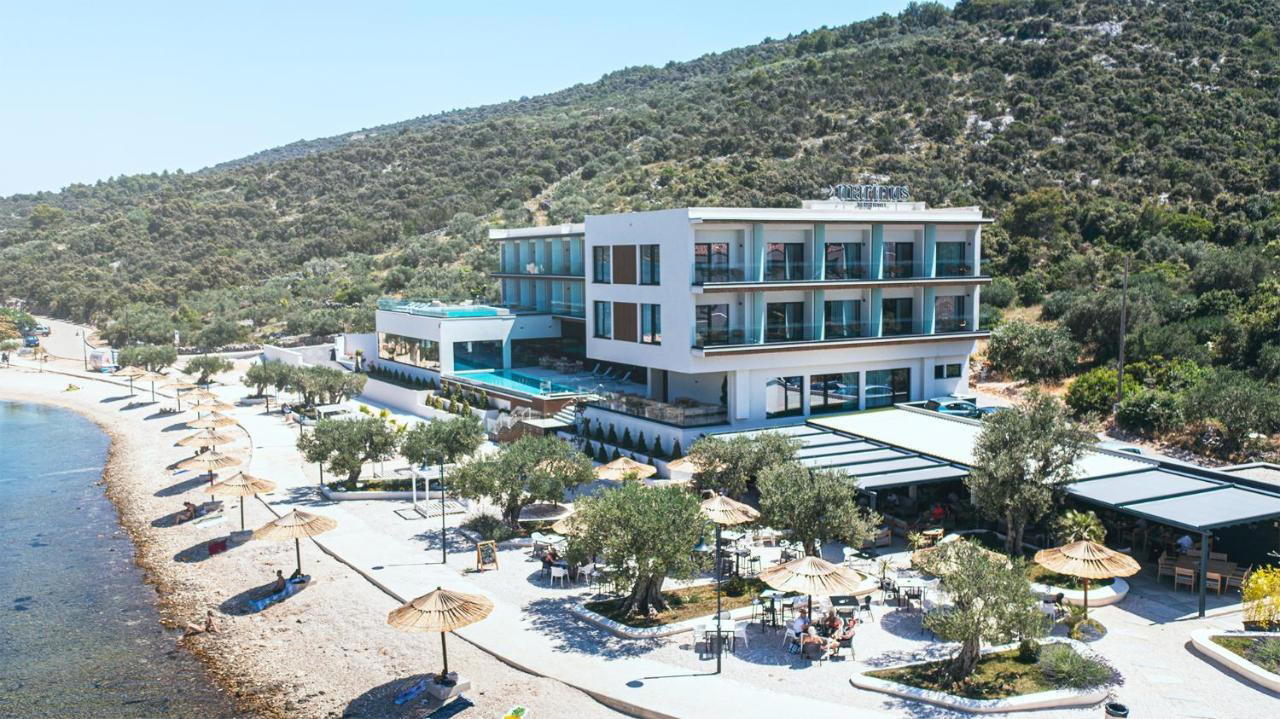
For travellers comparing island options in the region, Boutique Hotel Alhambra in Mali Lošinj, Ikador in Ika, D-Resort Šibenik, LIOQA Resort on Ugljan, and Marinus Beach Hotel in Marina represent the broader spectrum of Adriatic boutique and resort options across different price registers and coastal contexts. The Girandella Resort in Rabac, Marea Suites in Poreč, Hotel Osam in Supetar, Hotel Vela Vrata in Pinguente, Falkensteiner Hotel Iadera in Zadar, and STAYEVA11 in Dubrovnik extend the comparison set across Istria, the Kvarner, and southern Dalmatia.
Fast Comparison
Comparable venues nearby, for context on price, style, and recognition.
| Venue | Cuisine | Price | Awards | Notes |
|---|---|---|---|---|
| Heritage Hotel Martinis MarchiThis venue (the venue you are viewing) | Baroque castle heritage hotel blending 18th-century architecture with 5-star contemporary luxury and Mediterranean elegance. | Not listed | Michelin Selected | Not listed |
| Le Meridien Lav Split | Upscale beachfront resort with contemporary design balancing Mediterranean ambience and mid-century modernism; architectural landmark with yacht-like terraced structure. | $200–300 | Michelin Selected | Podstrana |
| Riva Hvar Yacht Harbour Hotel | Boutique heritage hotel blending original architecture with contemporary style | $100–200 | Michelin Selected | Hvar Town |
| Hotel Ambasador Split | Blends historic legacy from 1937 with modern luxury on Split's promenade | $100–200 | Michelin Selected · Preferred Hotels L.V.X. Collection | West Coast promenade |
| Rixos Premium Dubrovnik | Contemporary cliffside resort blending modern architecture with Dalmatian stone accents. | $100–200 | Michelin Selected | near Old Town |
| Hotel Bellevue Dubrovnik | Luxury beachfront property positioned as an upscale Mediterranean retreat with emphasis on wellness and panoramic coastal views. | $300–500 | Michelin Selected · La Liste Top Hotels | Miramare Bay |
Recognition history
Dated appearances from independent guides and award organizations, with the underlying list record or original source where available.
Michelin Selected
Michelin
Continue exploring
More in Maslinica
Hotels in Maslinica
All hotels in Maslinica →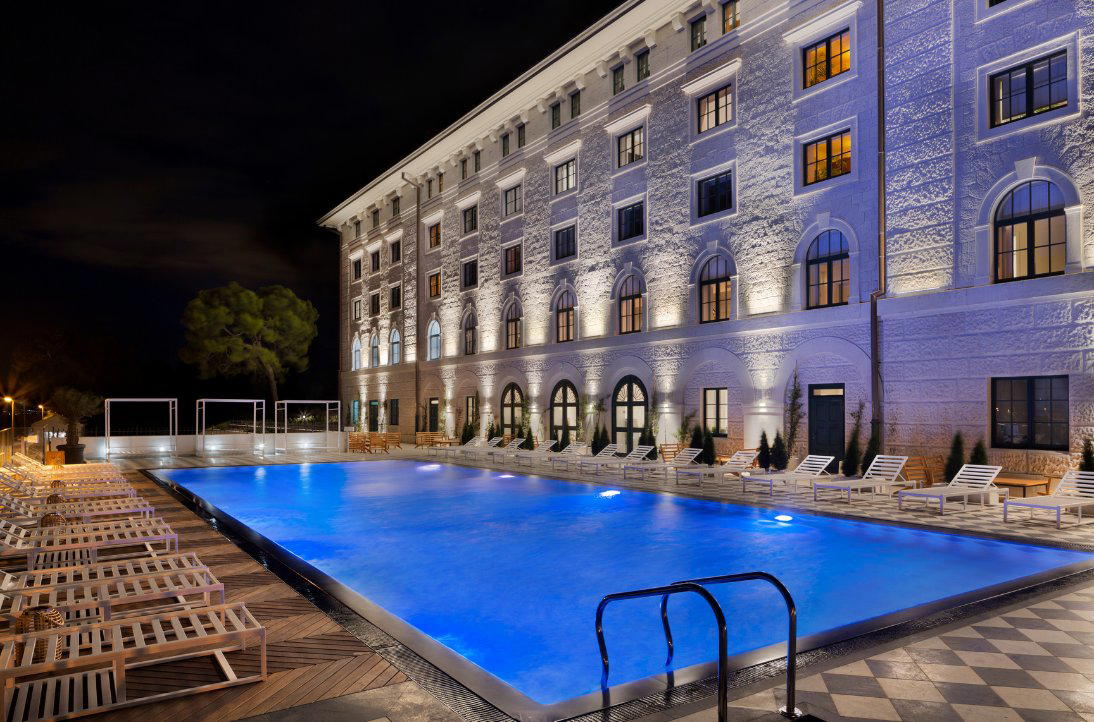
Bars in Maslinica
Browse all →
Restaurants in Maslinica
All restaurants in Maslinica →

Details
- Romantic
- Elegant
- Intimate
- Scenic
- Classic
- Honeymoon
- Romantic Getaway
- Anniversary
- Destination Wedding
- Celebration
- Waterfront
- Historic Building
- Garden
- Terrace
- Panoramic View
- Private Dining
- Destination Spa
- Wi Fi
- Pool
- Spa
- Sauna
- Restaurant
- Garden
- Air Conditioning
- Room Service
- Waterfront
- Garden
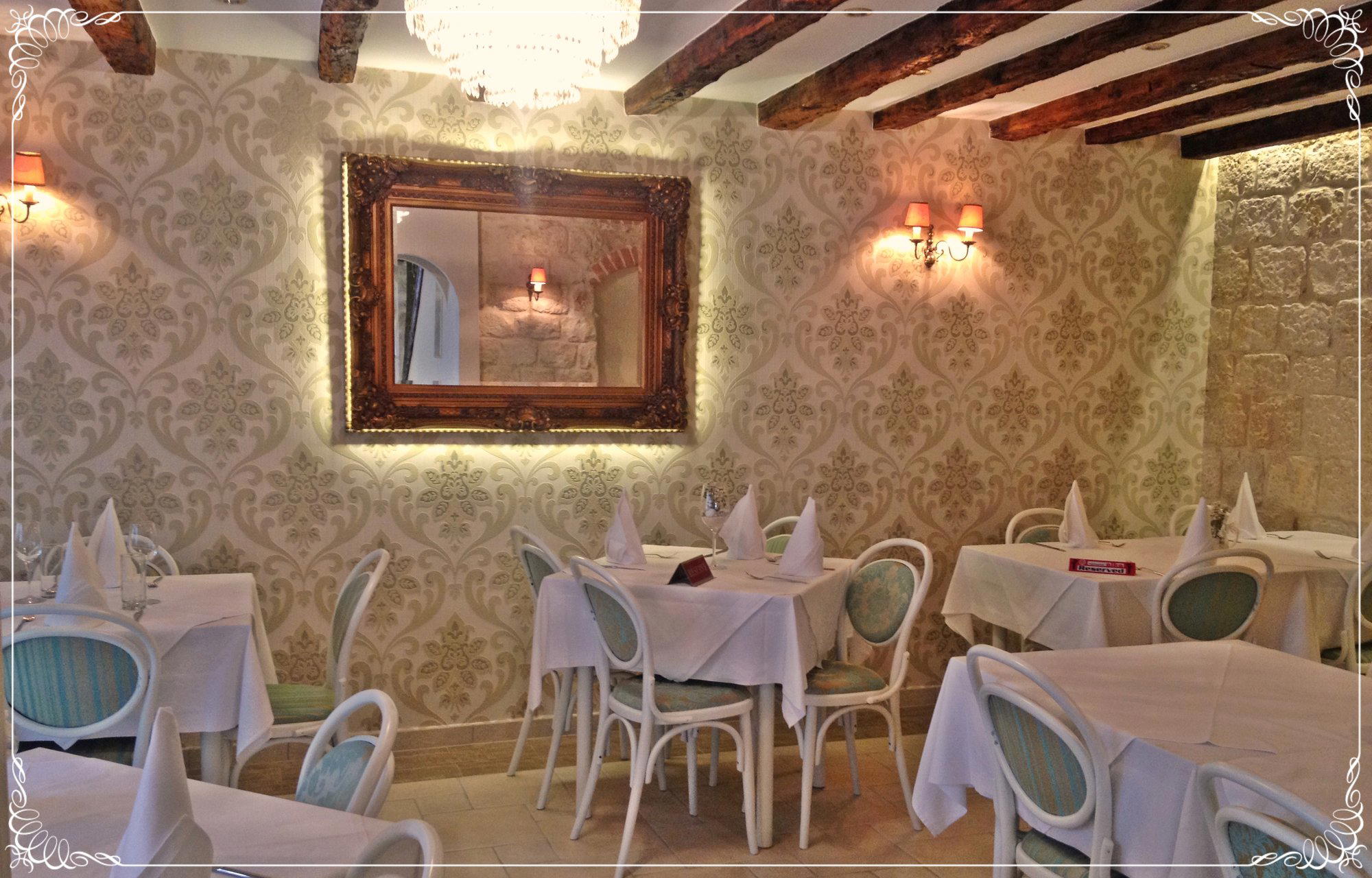
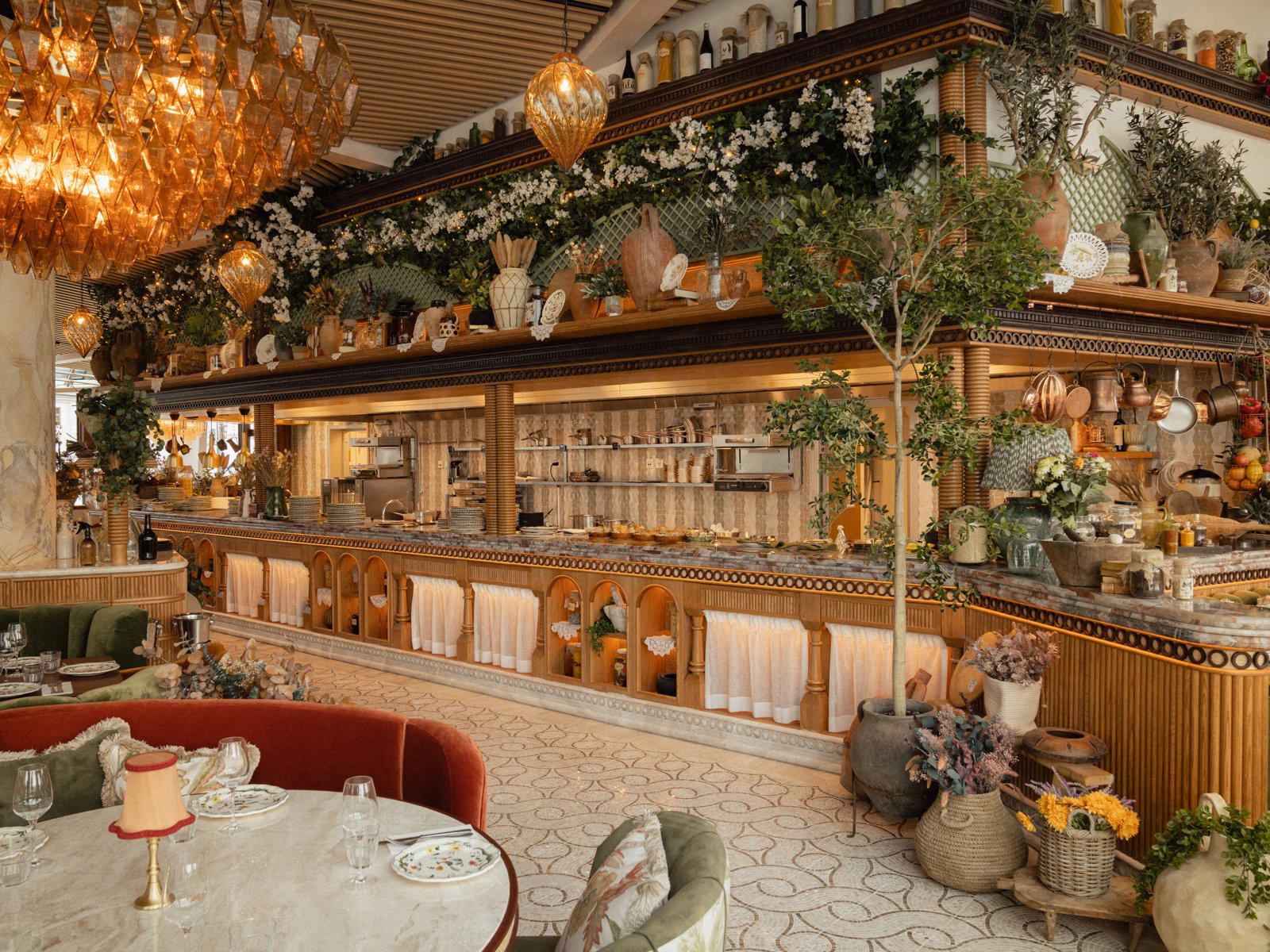
Soft lighting with vaulted ceilings and European antiques create a timeless, romantic atmosphere blending historical authenticity with modern comfort throughout the castle's intimate spaces.