Our verdict
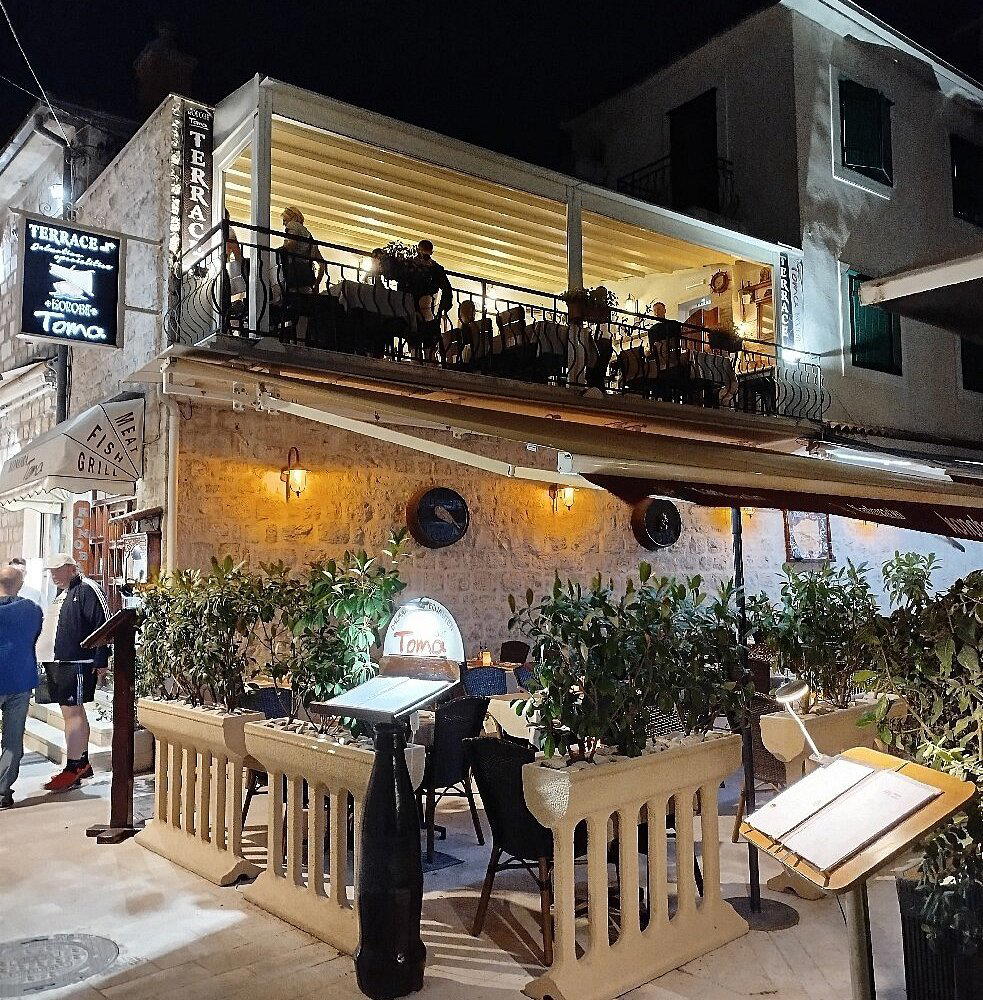
A konoba in the oldest sense of the word, Konoba Toma occupies a stone-walled address at Šubićeva ul. 44 in Trogir's medieval core. The format follows Dalmatian tradition: unhurried, fish-forward, and rooted in the rhythms of the Adriatic catch. For visitors comparing Trogir's dining options, it sits in the informal, locally oriented tier rather than the contemporary-Mediterranean bracket occupied by neighbours like Franka or Il Ponte.

Pearl is the En Primeur Club membership app, where members save venues, book tables and use the concierge.
The menu
What to order
- Grilled squid
- Black risotto
- Cevapi
- Seafood platter
Stone Walls and the Pace of a Dalmatian Meal
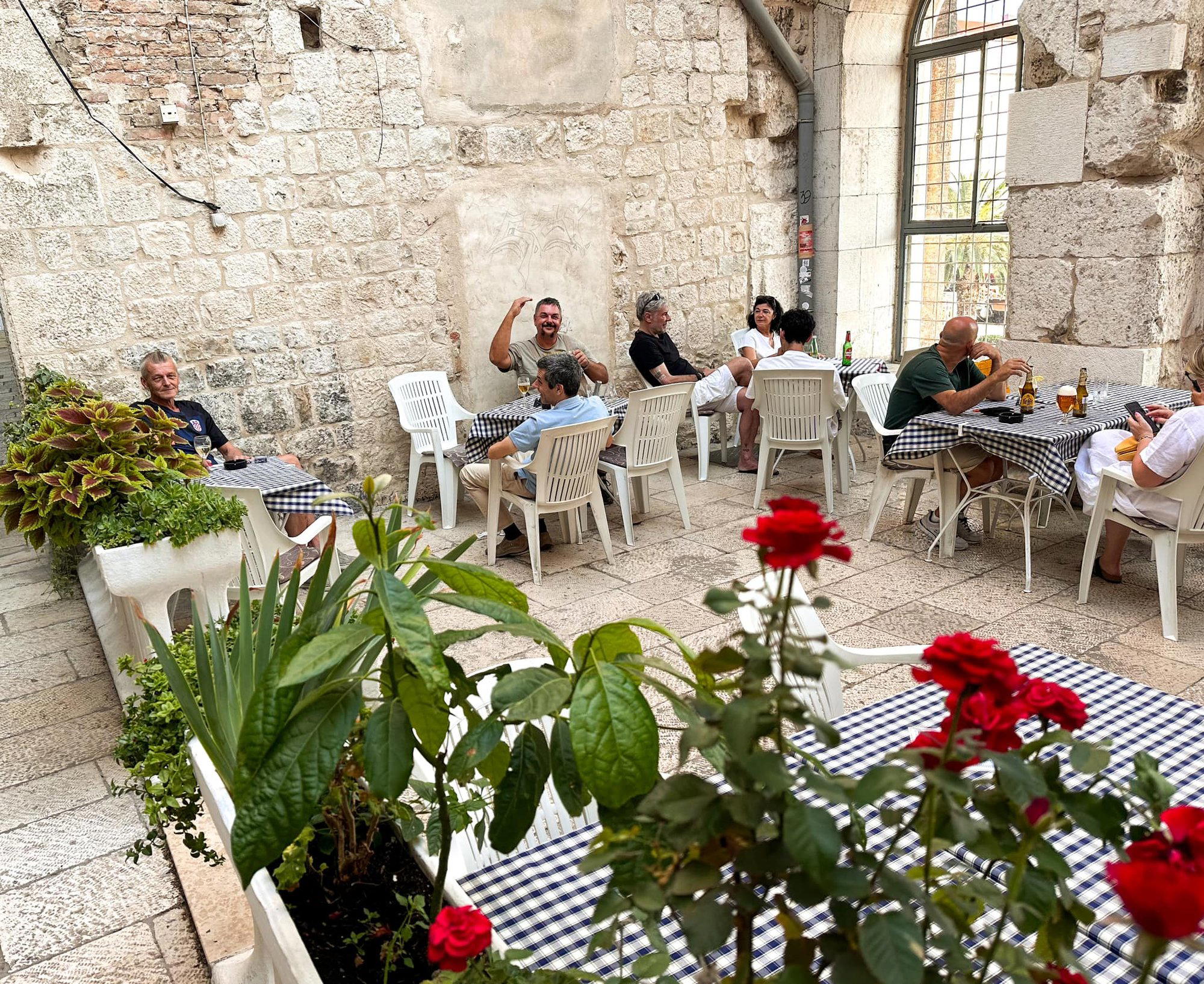
Approach Trogir's UNESCO-listed old town on foot, across the narrow bridge from the mainland, past the Kamerlengo fortress, and the architecture does something to your expectations. The limestone streets narrow to the width of two people walking abreast. Outdoor tables appear without fanfare, tucked against walls that have absorbed centuries of salt air. Konoba Toma, at Šubićeva ul. 44, sits inside that compression of space and time. The address is unremarkable from the outside, which is precisely how traditional Dalmatian konobas have always operated: presence over promotion.
The word konoba carries specific weight on this coast. It does not mean restaurant in the contemporary sense. It refers to a tradition of informal, family-operated eating houses, originally the ground-floor storeroom where wine and food were kept, later the room where guests were received. In Dalmatia, the leading konobas function as a kind of culinary memory, holding the region's fish-forward cooking in place while the towns around them shift toward tourism-facing formats. Trogir has both registers. Franka and Il Ponte represent the contemporary-Mediterranean tier, with polished plating and pricing to match (both sit at €€€). Konoba Toma belongs to a different bracket, closer in spirit to Konoba Bokun, the kind of place where the ritual of the meal matters more than its visual presentation.
The Architecture of a Dalmatian Dinner
The dining ritual in a traditional Dalmatian konoba follows a logic that has little to do with speed. Meals begin slowly, often with a pour of house wine or a small plate of cured meats and olives while the table settles. Fish arrives whole, grilled over open heat or baked with vegetables, and the expectation is that diners will take their time with it, bones require patience, and patience is built into the format. Side dishes appear alongside rather than in sequence. The meal ends not on a sharp pivot to dessert but on a kind of gradual unwinding, often with a small glass of rakija or a local digestif. It is a structure that resists the kind of time pressure common in more tourist-facing environments.
This pacing is not incidental. It reflects the agricultural and fishing rhythms that historically governed meal times on the Dalmatian coast, the mid-afternoon break, the long evening table, the assumption that eating is an activity rather than an errand. In Trogir's old town, where the streets are too narrow for cars and the evenings in summer are warm enough to sit outside past midnight, that rhythm still holds in certain establishments. Konoba Toma is positioned in that tradition. It is not the place to arrive with a tight departure schedule.
Trogir's Dining Spectrum: Where Konoba Toma Fits
Trogir's restaurant scene operates across a clear spectrum. At one end sit destination-format restaurants that pull diners from Split (30 kilometres up the coast) and beyond: Calebotta and ALKA represent that tier. At the other end are the working konobas that predate Trogir's designation as a UNESCO World Heritage Site in 1997 and have continued largely unchanged. Konoba Toma belongs to the latter category. It is not competing with the contemporary-Mediterranean bracket; it is operating on a different premise altogether, the premise that the cooking of this coastline, done simply and with good materials, needs no further elaboration.
For context on what the wider Adriatic dining scene looks like when ambition and tradition meet, Pelegrini in Šibenik and LD Restaurant in Korčula represent the upper end of Croatian coastal fine dining. Agli Amici Rovinj in Istria shows what happens when a family-run format acquires Michelin recognition. These are useful reference points for understanding that Konoba Toma makes no claims in that direction, and is better understood as a different kind of proposition. Across Croatia, the inland register is equally strong: Dubravkin Put in Zagreb and Korak in Jastrebarsko show how the continental tradition holds its own against the coast.
What the Konoba Format Demands of the Diner
Eating well at a traditional konoba requires a particular kind of disposition. Menus tend to be short and seasonally variable, what is on the boat that morning tends to determine what is on the table that evening. Ordering is often a conversation rather than a transaction, and the most satisfying outcomes usually involve letting the kitchen make decisions, especially around the fish. The Dalmatian repertoire is not complicated: grilled fish with olive oil and herbs, peka-cooked meats or seafood (slow-cooked under an iron bell buried in embers), shellfish from the nearby channels, and local vegetables prepared without interference. The restraint is intentional.
Wine selection at this level of establishment typically runs to local bottles from Dalmatia's main varietals, Pošip and Grk from the islands, Plavac Mali for those ordering red alongside heavier dishes. The wine list will not be long. That is a feature, not an oversight. Elsewhere in Croatia's premium wine scene, Boskinac in Novalja operates its own estate and offers a more ambitious cellar. At a konoba, the expectation is different: local, simple, appropriate to the food.
Planning a Visit
Konoba Toma is located at Šubićeva ul. 44 in Trogir's old-town core, which is pedestrianised and most easily reached on foot from the main bridge entrance to the island. Trogir is served by Split Airport, approximately 5 kilometres from the town centre, making it one of the more logistically convenient stops on the Dalmatian coast for international visitors. The summer months (June through August) bring significant visitor numbers to the old town, and informal konobas at this level typically do not take reservations in the same structured way that contemporary restaurants do, arriving early in the evening or at lunch tends to be the more reliable approach. Those planning a wider Trogir dining itinerary can find the full picture in our Trogir restaurants guide.
For visitors moving along the coast, Krug in Split and Nebo by Deni Srdoč in Rijeka extend the conversation about where Croatian coastal dining is heading. And for a sense of how far the format can travel when ambition is not a constraint, Alfred Keller in Mali Lošinj offers an instructive counterpoint. Konoba Toma makes no argument against any of that. It simply occupies its own position, unhurried, salt-edged, and committed to the ritual of the meal as the Dalmatians have always understood it.
Frequently asked questions
Is Konoba Toma child-friendly?
The konoba format in Trogir generally suits families well, meals are unhurried, portions are generous, and the food is straightforward grilled fish, meat, and vegetables without elaborate presentation. Konoba Toma sits at Šubićeva ul. 44 in the pedestrianised old-town core, so the approach on foot is easy and traffic-free. That said, the slow pace of a traditional Dalmatian meal is baked into the experience, so younger children who need a quick turnaround may find the rhythm less accommodating.
What is the atmosphere like at Konoba Toma?
Konoba Toma occupies the old-town core of Trogir, a UNESCO-listed island city where the streets are stone-paved and narrow enough that dining outdoors means sitting close to passing pedestrians. The setting is characteristically Dalmatian: stone walls, no background music competing with conversation, and a pace that follows the meal rather than the clock. It reads as a neighbourhood room rather than a destination venue, which is precisely its function in Trogir's dining spectrum.
How does Konoba Toma differ from the tourist-facing restaurants around Trogir's main square?
Konoba Toma is located at Šubićeva ul. 44, set back from the high-traffic perimeter restaurants that line Trogir's waterfront and catch foot traffic off the ferries. Venues positioned deeper in the old-town grid typically run shorter menus, less standardised service, and pricing that reflects local rather than tourist-market positioning. That address, in a genuinely pedestrianised residential lane, is itself a reasonable indicator of which audience the kitchen is cooking for.
What's the signature dish at Konoba Toma?
What the traditional konoba format in Dalmatia does reliably produce is a short, seasonally driven menu anchored by whatever came off local boats or from nearby farms that day. At a konoba in Trogir, grilled Adriatic fish, peka-cooked lamb or octopus, and house-poured wine are the structural pillars of most meals.
Cuisine and Awards Snapshot
Comparable venues nearby, for context on price, style, and recognition.
| Venue | Cuisine | Price | Awards | Notes |
|---|---|---|---|---|
| Konoba TomaThis venue (the venue you are viewing) | Traditional Dalmatian Seafood | $20–30 | Not listed | Not listed |
| ALKA | Traditional Dalmatian Mediterranean Seafood | $20–30 | Not listed | Old Town |
| Calebotta | Modern Dalmatian Mediterranean | $20–30 | Not listed | Old Town |
| Konoba Bokun | Dalmatian Mediterranean Seafood | $20–30 | Not listed | Trogir |
| Konoba TRS | Mediterranean Fine Dining with Dalmatian Influences | $50–100 | Michelin Plate | Old Town Trogir |
| Konoba Mirakul | Traditional Dalmatian Seafood | $20–30 | Not listed | Trogir old town |
Continue exploring
More in Trogir
Restaurants in Trogir
All restaurants in Trogir →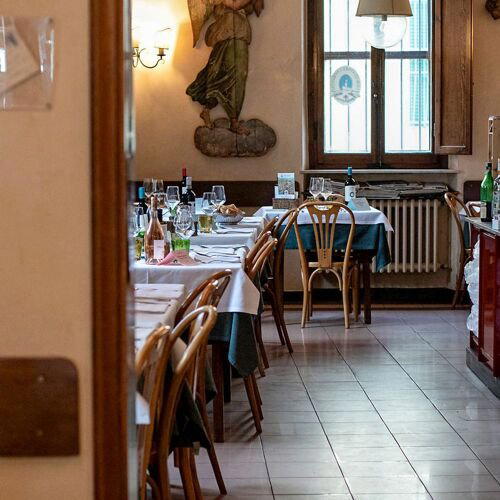
Bars in Trogir
Browse all →

Details
- Rustic
- Cozy
- Scenic
- Family
- Group Dining
- Casual Hangout
- Terrace
- Historic Building
- Street Scene
- A La Carte
- Vegetarian Friendly
- Vegan Options
- Gluten Free Options
Current opening hours
- Monday
- 12 PM–12 AM
- Tuesday
- 12 PM–12 AM
- Wednesday
- 12 PM–12 AM
- Thursday
- 12 PM–12 AM
- Friday
- 12 PM–12 AM
- Saturday
- 12 PM–12 AM
- Sunday
- 12 PM–12 AM
Hours can change for holidays and private events. Hours as of .
Pleasant atmosphere on atmospheric terraces overlooking the old town, with friendly service and a lively yet relaxed vibe.