Don Dino Restaurant
Don Dino Restaurant sits in Trogir, a UNESCO-listed Dalmatian town where the Adriatic supply chain, local catch, island-grown produce, and Dalmatian wine, has shaped coastal cooking for centuries. The kitchen works within that tradition, drawing on ingredients that travel short distances from sea and hinterland to plate. For visitors moving through central Dalmatia, it represents a grounded entry point into the region's seafood-led dining culture.
Pearl is the En Primeur Club membership app — saves, bookings, and concierge access live there. Same editors, same standards.
- Address
- Grad Trogir, Croatia
- Directions
- Get directions
 Saves & bookings on Pearl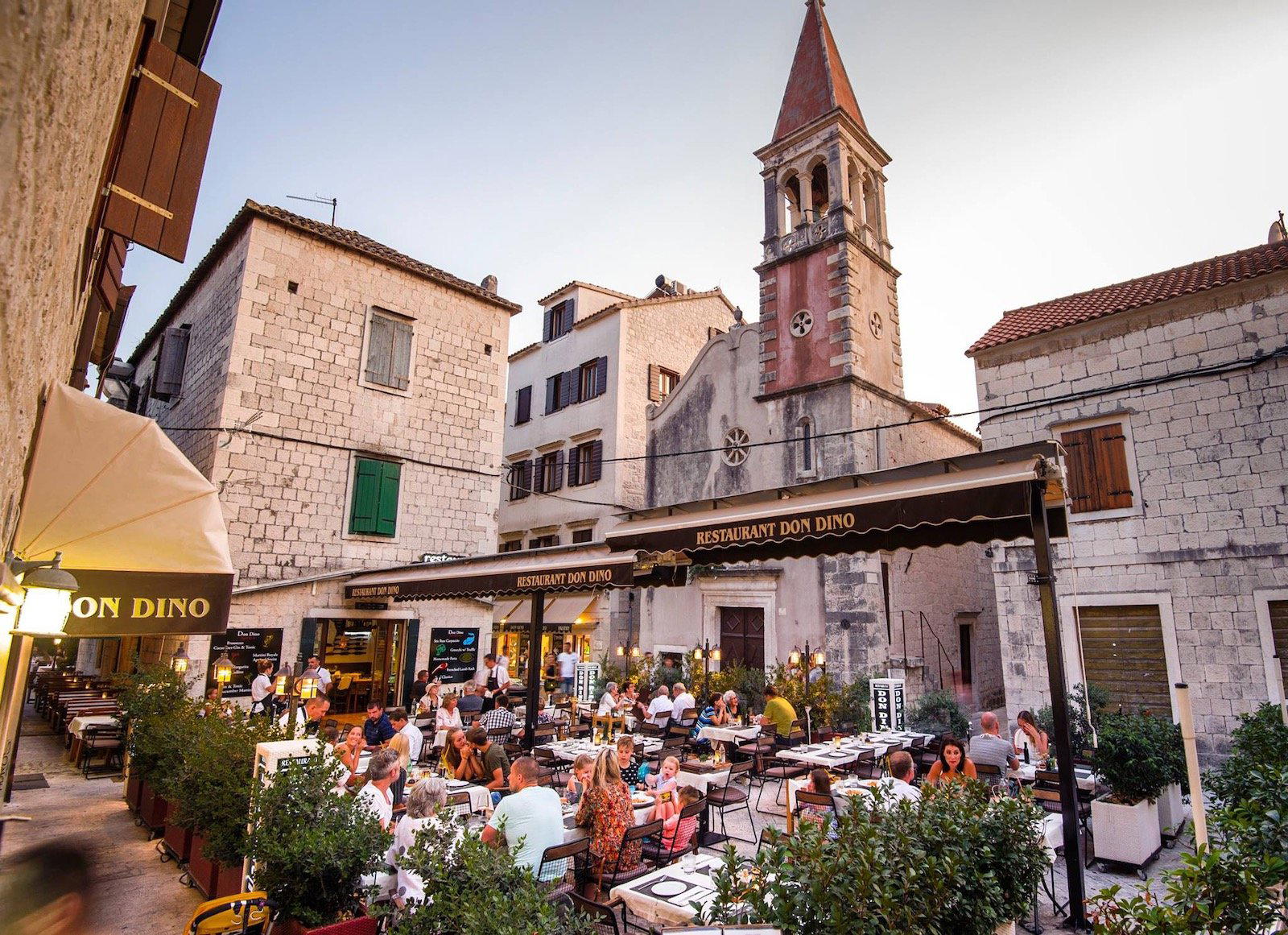
Where the Adriatic Supply Chain Meets the Table
Trogir's medieval core, compressed onto a small island connected by bridges to the mainland and the island of Čiovo, creates an unusual dining geography. The old town's stone lanes channel visitors into a tight concentration of restaurants, and the proximity to open water is not incidental, it shapes what ends up on every plate. The central Dalmatian coast runs a supply chain that most European coastal towns can only approximate: fishing boats working the channels between the islands, market traders carrying the catch directly to kitchen doors, and a short-distance produce network from the Kaštela plain and the Dalmatian hinterland. Don Dino Restaurant operates within that geography, serving Modern Dalmatian Seafood in Trogir at a price tier around $25 per person.
That context matters because Dalmatian cooking at its most credible is not a style layered on top of imports, it is an expression of what the Adriatic actually yields on a given day. The fish counters at Trogir's market reflect seasonal availability with a directness that menus in larger cities rarely match. What the coast produces in volume shifts through the year: spring brings smaller, intensely flavoured specimens; summer the broader tourist-facing abundance; autumn a return to local rhythms as visitor numbers drop and kitchens recalibrate toward what the fishermen bring in. Restaurants anchored to that cycle cook differently from those working from standardised supplier lists.
The Dalmatian Coastal Kitchen: A Sourcing Framework
Central Dalmatia's cooking tradition rests on a short list of sourcing principles that have not changed substantially despite decades of tourism pressure. Fish and shellfish from the Adriatic, sea bass, sea bream, John Dory, various mullets, Pag island lamb where the coast meets the interior, form the primary proteins. Olive oil pressed from Dalmatian groves, particularly from around Kaštela and the islands, replaces the butter-forward logic of northern European cooking. Stone-ground salt from Ston, roughly sixty kilometres southeast of Split, and herbs gathered from the limestone karst define the seasoning register.
Within this framework, the differentiation between Dalmatian restaurants sits less in the sourcing geography, most working kitchens in Trogir draw from the same supply network, and more in the handling. The traditional preparation of fish on the open grill (na žaru), finished with oil and lemon, demands restraint and timing rather than technical elaboration. The peka, meat or fish slow-cooked under an iron bell covered with embers, requires advance planning, often a day ahead, and rewards patient kitchens. These are not formats suited to high-volume operations. Croatia's coastal dining at its most focused, from Pelegrini in Sibenik at the high end to the smaller konoba format throughout the region, tends to succeed when the kitchen's scale matches the ambition of the sourcing.
Trogir's Position in the Dalmatian Dining Conversation
Trogir sits between Split to the east and Šibenik to the north, and that positioning shapes its dining character. Split carries a more developed restaurant scene, including venues like Krug in Split that push beyond traditional frameworks. Dubrovnik, at the southern extreme, has restaurants such as Restaurant 360 in Dubrovnik working at international price points with correspondingly polished formats. Trogir operates at a different register: smaller, more tourist-oriented in the old town core, but sustained by a local population and regional food culture that prevents the complete drift toward visitor-facing simplification that some Adriatic towns experience in peak season.
The broader Croatian Adriatic dining circuit rewards itinerary planning. From the Istrian peninsula, where Agli Amici Rovinj in Rovinj represents Italian-influenced coastal fine dining, through the Kvarner Gulf islands including Alfred Keller in Mali Lošinj, and down the Dalmatian coast to Korčula's LD Restaurant, each zone has its own sourcing identity and cooking register. Trogir fits within the central Dalmatian band, sharing culinary logic with Šibenik and the islands of the Kornati archipelago to the northwest.
What to Expect: Format, Setting, and Timing
Restaurants in Trogir's old town typically operate across extended lunch and dinner services during the tourist season, which runs from late May through September, with hours tightening considerably outside that window. The town's ferry and cruise traffic means peak lunch pressure arrives in waves, and booking ahead, even a day in advance, is advisable for any table in the old town core during July and August. The off-season, from October through April, offers a quieter version of Trogir, with fewer restaurants operating and those that do working closer to local rather than visitor rhythms. Travellers with flexibility will find that shoulder season, particularly late May or early October, balances availability with reasonable weather for outdoor seating.
The pricing tier across Trogir's established seafood restaurants reflects the cost of Adriatic catch, which has risen alongside both fishing regulation tightening and broader food inflation across the region. Comparisons to venues in Split or Dubrovnik are instructive: Trogir generally sits a tier below Dubrovnik's old town pricing, in a range closer to Split's mid-market. For context on what the upper end of Croatian coastal dining commands, properties like Boskinac in Novalja on Pag island illustrate what a dedicated sourcing and wine programme looks like at premium price points. Don Dino, as a Trogir-based operation, sits in a more accessible part of that spectrum.
Practical Planning
Trogir is accessible by local bus from Split in under an hour, and by car via the coastal road or the more direct inland route. The town's old island core is pedestrianised, so vehicles must be left on the mainland side. Arriving by water, ferry or private boat, connects to the town's harbour directly. For visitors building a Dalmatian itinerary, Trogir works as either a day stop from Split or a two-night base for exploring central Dalmatia, with the Krka National Park roughly an hour north and the Kornati islands accessible by organised excursion. Anyone extending the Croatian coast further should look at San Rocco in Brtonigla in Istria for a northern counterpoint, or Humska Konoba in Hum for a different expression of the regional konoba tradition.
Comparison Snapshot
Comparable venues nearby, for context on price, style, and recognition.
| Venue | Cuisine | Price | Notes |
|---|---|---|---|
| Don Dino RestaurantThis venue — the venue you are viewing | Modern Dalmatian Seafood | $$ | Not listed |
| Primizia | Mediterranean Pizza & Istrian | $$ | Brtonigla |
| Restoran Marina | Mediterranean Seafood | $$ | Punat |
| Konoba kod Guste | Traditional Dalmatian Seafood | $$ | Sukosan |
| Bag | Croatian Seafood Mediterranean | $$ | Baška |
| Humska Konoba | Traditional Istrian Croatian | $$ | Hum |
Continue exploring
More in Grad Trogir
Restaurants in Grad Trogir
Browse all →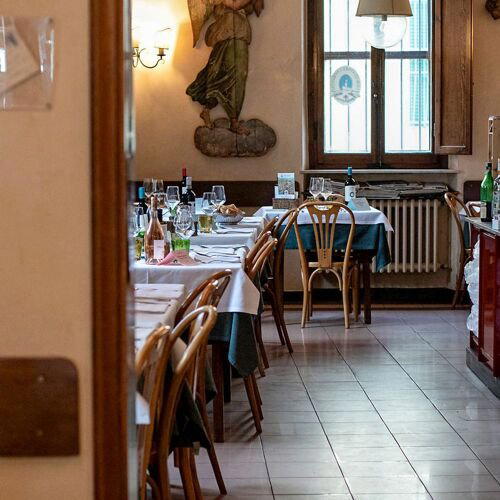
Bars in Grad Trogir
Browse all →
Hotels in Grad Trogir
Browse all →

At a Glance
- Cozy
- Rustic
- Classic
- Family
- Casual Hangout
- Historic Building
- Extensive Wine List
- Local Sourcing
- Street Scene
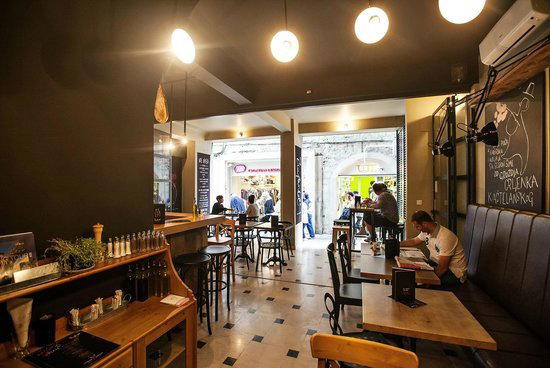
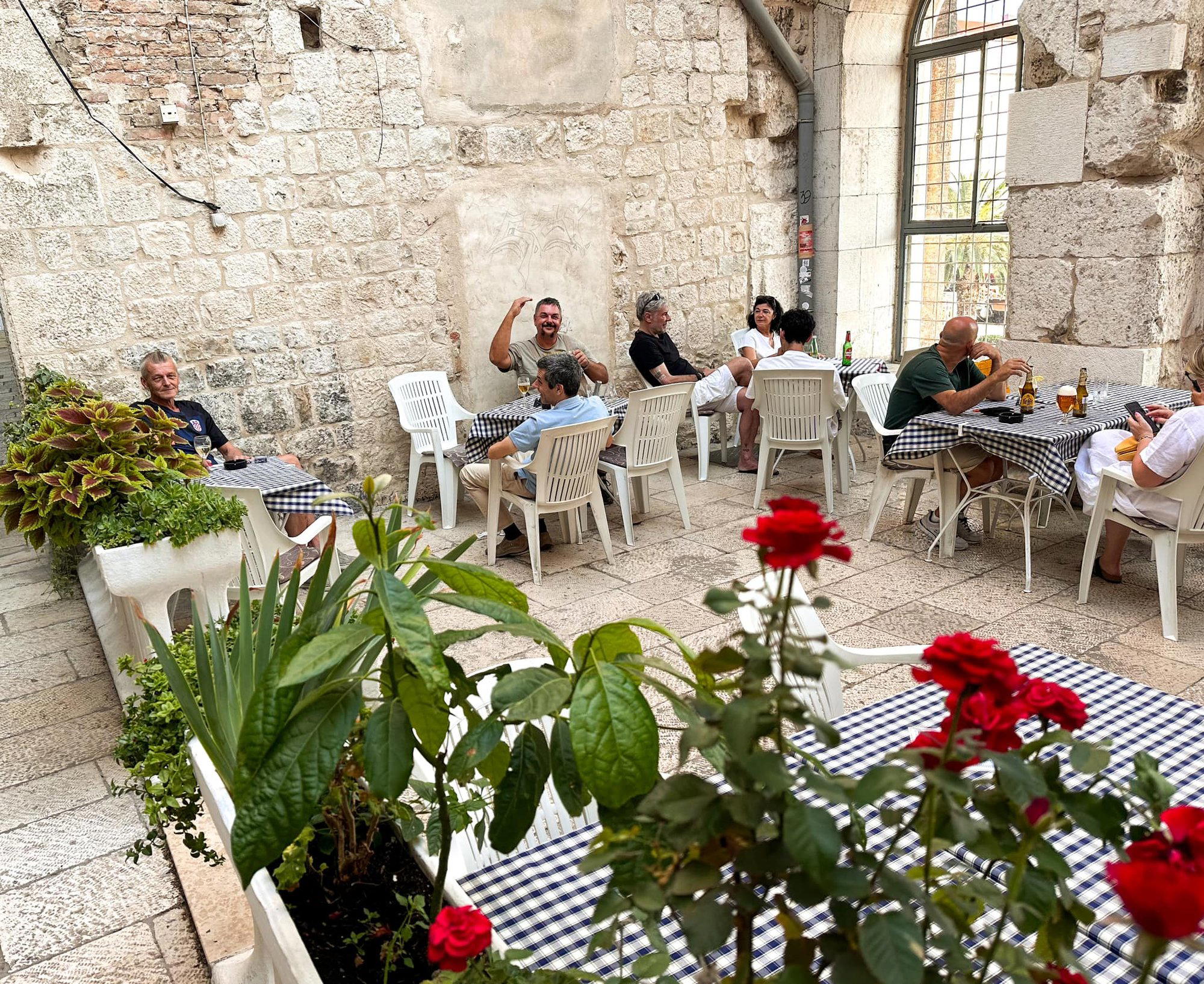
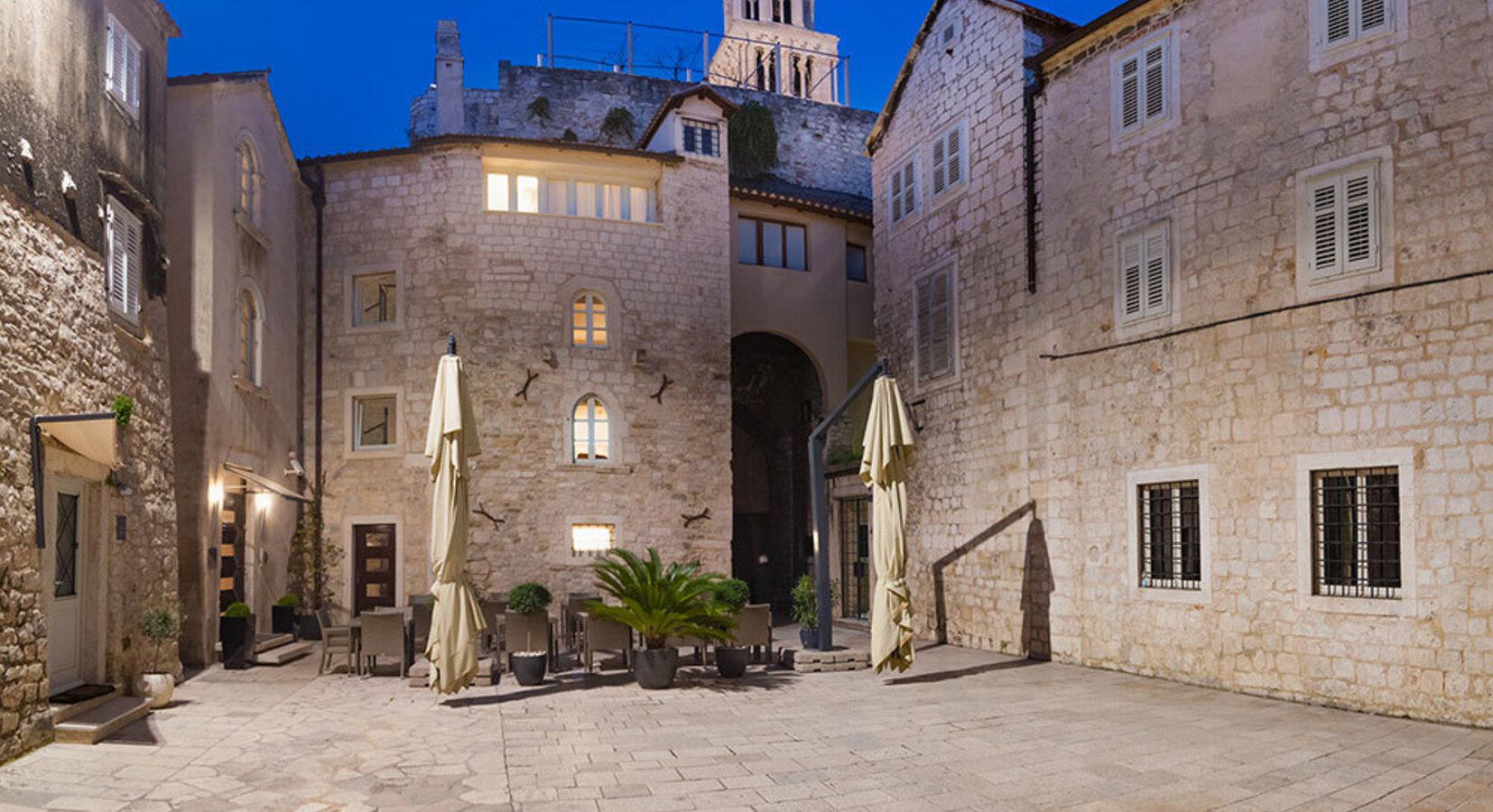
Cozy and homely atmosphere with traditional decor, wooden furniture, and a warm, welcoming vibe.