Malafemmena on Hauptstraße in Berlin's Schöneberg district is a neighbourhood Italian that earns its following through consistency rather than spectacle. The address sits in a residential stretch where dining culture leans local and repeat-visit, placing it in a different register from the city's formal fine-dining tier. For those tracing Italian cooking in Berlin, it functions as a useful reference point.
Pearl is the En Primeur Club membership app — saves, bookings, and concierge access live there. Same editors, same standards.
- Address
- Hauptstraße 85, 12159 Berlin, Germany
- Phone
- +493084183182
- Website
- malafemmena.restaurant
- Directions
- Get directions
 Saves & bookings on Pearl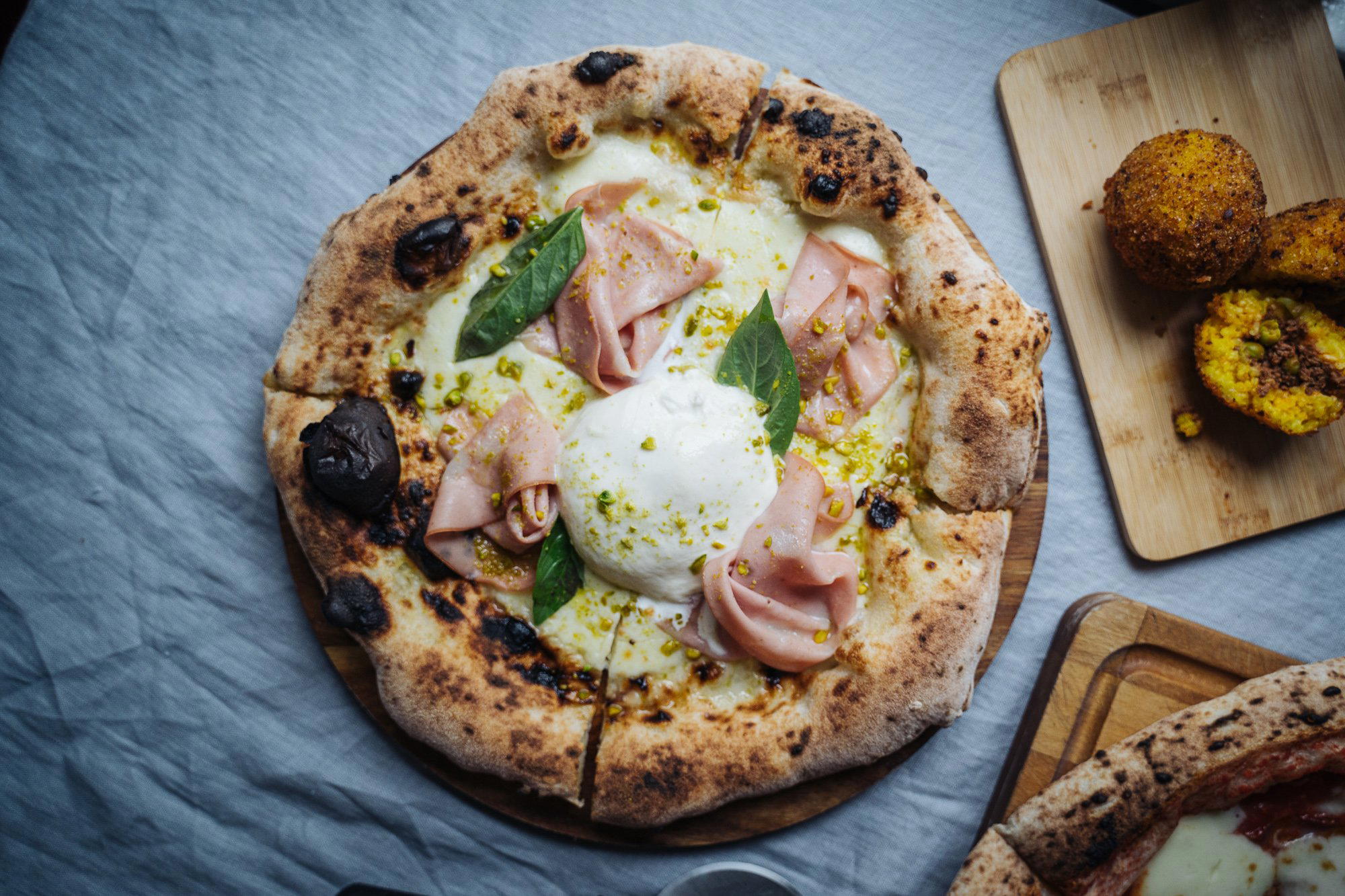
Schöneberg's Residential Dining Belt and Where Malafemmena Sits Within It
Hauptstraße in Schöneberg does not announce itself the way Mitte or Prenzlauer Berg do. The street runs through a denser, more workaday part of the city, where restaurants earn their audiences through neighbourhood loyalty rather than tourist throughput or media cycles. Rutz or FACIL, Malafemmena, at number 85 on that same Hauptstraße, occupies a quieter, more embedded position: the kind of address where the dining room fills with people who live within ten minutes of the front door.
That neighbourhood dynamic shapes the experience before anything arrives at the table. The physical approach is residential rather than destination-designed, no doorman, no notable signage architecture, no deliberate theatre of arrival. What signals the room's character instead is the density of the reservation book and the proportion of familiar faces on any given evening, both reliable proxies for a kitchen that has built trust over time rather than riding a single wave of press attention.
The Progression of an Italian Meal at This Latitude
Italian cooking in northern European cities sits in a particular interpretive position. It is neither the casual trattoria format of a Roman neighbourhood nor the haute-Italian register of somewhere like Le Bernardin's precision-led French-American equivalent. What tends to emerge in cities like Berlin is a mid-register that values sourcing sincerity and technical competence over either rustic informality or formal elaboration. The meal at a room like Malafemmena is best understood through that lens: each course as a statement about ingredient respect rather than transformation for its own sake.
The structure of an Italian-leaning dinner in this format generally moves from lighter, sharper openings, cured items, dressed vegetables, antipasti with acidity doing most of the work, through pasta courses that function as the meal's argumentative centre, and into secondi that are less about drama than about restraint. That arc matters. The pasta moment is where kitchens of this type make their clearest case: whether the dough is made in-house, whether sauces are built from reduction rather than addition, whether portion weight is calibrated to sit inside a progression rather than dominate it. Berlin's Italian dining scene has improved markedly on this metric over the past decade, and Schöneberg has contributed to that shift alongside more conspicuous districts.
Dessert, in Italian traditions that have not been filtered through the French patisserie model, tends to be structural rather than elaborate: something cold, something with coffee integration, something that closes the meal without extending it unnecessarily. This is the opposite approach to what CODA Dessert Dining does with its full dessert-led tasting format, and the contrast is instructive, Malafemmena's register is continuity and closure, not conceptual rupture.
Italian Cooking Inside Berlin's Broader Dining Map
Berlin's leading restaurant addresses skew heavily toward creative European and German-inflected formats. Nobelhart & Schmutzig runs a strict regional-produce ideology, Restaurant Tim Raue works through an Asian-inflected idiom, and the city's Michelin-awarded rooms collectively represent a fairly narrow slice of what Berliners actually eat across the week. The Italian sector, which feeds far more daily covers than the fine-dining tier, operates largely outside that awards framework. That is not a criticism, it is a structural observation about how Italian cooking in Germany is categorised and consumed.
For comparison within Germany's broader restaurant geography, the country's most formally recognised rooms sit outside Berlin: Aqua in Wolfsburg, Waldhotel Sonnora in Dreis, and Victor's Fine Dining by Christian Bau in Perl represent the country's highest Michelin density points. What Berlin offers instead is scale and range: a city large enough to sustain specialist neighbourhood addresses in every cuisine category without each one needing to perform at awards-circuit level to survive. Malafemmena is part of that ecosystem, alongside comparable Italian rooms in Neukölln, Charlottenburg, and Mitte that collectively define the city's Italian cooking register better than any single address could.
Within Germany's Italian-inflected dining context, it is also worth noting how the south-of-Italy naming tradition travels. The word Malafemmena has roots in Neapolitan vernacular, referencing the kind of spirited, difficult woman who appears in folk song and cinema. It is a name that signals southern Italian cultural orientation rather than northern, a distinction that, in food terms, often maps to richer tomato work, more assertive seasoning, and pasta shapes that run toward the hand-formed rather than the extruded. Whether that cultural signal is expressed directly in the kitchen is a question leading answered by visiting, but the framing matters as context.
How Malafemmena Sits Relative to the Booking Curve
Neighbourhood restaurants of this type in Berlin tend to operate with shorter booking windows than the city's tasting-menu rooms. Where CODA or FACIL require advance planning measured in weeks or months, a well-regarded neighbourhood Italian typically opens availability three to ten days ahead for most sittings, with weekend evenings tightening faster than that. This is a practical advantage for visitors with flexible schedules, though it also signals the format: expect a dining room running at neighbourhood pace, with covers turning over at a rate calibrated to full plates rather than extended tasting sequences.
Know Before You Go
- Address: Hauptstraße 85, 12159 Berlin, Germany
- District: Schöneberg
- Format: Neighbourhood Italian; à la carte
- Walk-ins: Possible on weekday evenings; weekends less reliable without a reservation
- Price tier: Mid-range neighbourhood Italian in Berlin
- Awards: None on record
- Hours: Mon to Fri 4 to 11 PM; Sat and Sun 12 to 11 PM
Budget Reality Check
Comparable venues nearby, for context on price, style, and recognition.
| Venue | Cuisine | Price | Notes |
|---|---|---|---|
| MalafemmenaThis venue — the venue you are viewing | Friedenau, Neapolitan Pizza | $$ | Not listed |
| Osteria Centrale | Charlottenburg, Classic Tuscan Italian | $$ | Not listed |
| Nea Pizza 1889 | Mitte, Authentic Neapolitan Pizza | $$ | Not listed |
| Vino & Basilico | Mitte, Modern Italian | $$ | Not listed |
| Sironi | Schoneberg, Italian Spelt Pizza | $$ | Not listed |
| Pizza Nostra | Not listed | $$ | Prenzlauer Berg, Authentic Neapolitan Pizza |
Continue exploring
More in Berlin
Restaurants in Berlin
Browse all →
Bars in Berlin
Browse all →
Hotels in Berlin
Browse all →

At a Glance
- Cozy
- Lively
- Casual Hangout
- Date Night
- Open Kitchen
Current opening hours
- Monday
- 4–11 PM
- Tuesday
- 4–11 PM
- Wednesday
- 4–11 PM
- Thursday
- 4–11 PM
- Friday
- 4–11 PM
- Saturday
- 12–11 PM
- Sunday
- 12–11 PM
Hours can change for holidays and private events. Last verified .
Cozy and lively atmosphere with a humming energy, though sometimes high noise levels.