
Tabelog 100 #7
Our verdict
Pan du Marche belongs to the serious side of Japan’s bakery culture: a takeout-only bread and sandwich shop in Kusatsu with repeated Tabelog Bread 100 recognition, including the WEST 2022 selection. Its low price band keeps the proposition grounded, while the format rewards travelers who treat bread as a morning or early-afternoon plan rather than a sit-down meal.

Pearl is the En Primeur Club membership app, where members save venues, book tables and use the concierge.
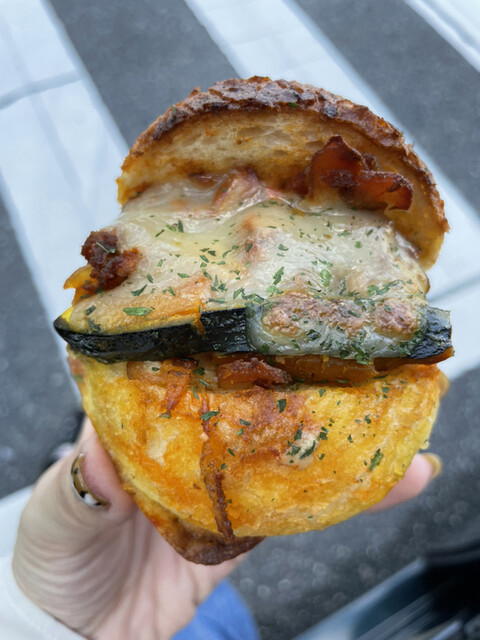
Approaching a Japanese bakery changes the pace of eating. The cues are small: a pre-lunch queue, trays moving through narrow aisles, calculations about what will travel well, and the knowledge that the baking rhythm matters more than any reservation book. In Kusatsu, that rhythm is central. The city’s better eating is not limited to long dinners or counters; it also runs through bread and sandwich formats where everyday buying habits carry local weight.
Pan du Marche sits inside that tradition. Japan’s bakery culture has absorbed French technique, convenience-store precision, and regional shopping habits, but strong addresses are judged less by décor than by turnover, consistency, and whether regulars trust the shelves for home. Its selection for Tabelog Hyakumeiten Bread in 2022 gives it a relevant credential: bread is assessed across a dense field, not as a side act to a larger restaurant experience.
Why Kusatsu's bread culture rewards early, practical eating
Kusatsu is often treated as a transit city, yet its dining map has range. A traveler can spend at the higher end at Glicine, keep dinner casual at SPANISH BAR PLOMO, or use places such as Tezukuri Hamburger steak Apeze and Kogetsu to read the city through everyday appetite rather than ceremony. Bread shops belong to that second reading: functional, local, repeat-driven, and revealing in ways formal dining can miss.
Ingredient sourcing matters because bread exposes shortcuts quickly. Flour handling, fillings, sandwich structure, and bake timing leave less room for theatre than a plated tasting menu. In Japan, where bakeries serve commuters, families, and office workers in the same morning window, serious shops must balance craft with volume. Pan du Marche’s bread-and-sandwich focus places it in that demanding middle ground: approachable enough for routine buying, consistent enough to earn category recognition.
The listed spend band is part of the story, not modest ambition. Kusatsu has dining rooms with different levels of service and pacing. A bakery at this ticket faces a different test: can it justify a detour when the financial risk is small but the timing risk is real? For travelers building a day around Kusatsu, the answer depends less on luxury than on whether breakfast, lunch, or provisions are being treated with intent.
A practical format with award signals, not restaurant theatre
The format is important before assigning it a role in the day. This is not a place to evaluate like a long dining-room progression, and that distinction clarifies the experience. The purchase may be simple; the judgment comes later, whether on a bench, in a hotel room, on a train, or at home. Serious bakeries in Japan often work this way. The craft is measured through selection, portability, and how well bread suits the short journey after purchase.
Tabelog Hyakumeiten Bread recognition in 2022 gives Pan du Marche a useful signal. Tabelog’s Hyakumeiten lists are helpful because they separate categories: ramen is not judged against sushi, and bread is not folded into general dining. In Japan, that distinction matters. Bakery competition can be dense across urban and local markets, and a Kusatsu address appearing in this bread-focused frame indicates recognition beyond neighborhood convenience.
The category also changes how value should be read. A JPY 1,000 to JPY 1,999 spend band is not comparable to full-service dinner; it is comparable to a focused bakery run where the buyer assembles breakfast, lunch, or snacks from the case. Against Kusatsu peers, the venue is closer to an everyday specialist than a destination restaurant. The useful comparison is not whether it replaces a more formal meal, but whether it sharpens the day between larger bookings.
For planning, the city pages work better by category than by single itinerary. The full Kusatsu restaurants guide frames the dining range, while the Kusatsu hotels guide places the bakery into a morning route. Travelers mapping drinks, cellar stops, or cultural time can also cross-check the Kusatsu bars guide, Kusatsu wineries guide, and Kusatsu experiences guide rather than forcing every stop into a restaurant-led plan.
How it fits into a Japan food itinerary
Japan rewards travelers who stop treating bakeries as background. Its food culture is built on specialization, and bread shops deserve the same attention as ramen counters, curry shops, sake bars, and onigiri specialists. A serious itinerary might include casual counters, regional specialists, or café stops elsewhere in Japan; a bakery of this type plays a parallel role in Kusatsu, structuring the day without requiring a full meal slot.
That approach helps international travelers read Japanese casual food with precision. The appeal is not novelty, but how narrow formats become disciplined: a grill specialist, a sake-led bar, or a rice-focused shop each makes one category legible. Pan du Marche does the same for bread in Kusatsu, turning a simple purchase into a reading of local standards.
The editorial case is strongest for travelers already in or near Kusatsu, or those planning food days around category specialists rather than trophy dining alone. It will not satisfy anyone seeking a long seated meal, wine list, or chef-driven narration. It suits a different appetite: morning provisions, a low-cost detour, and a way to understand Japanese bakery craft outside major-city prestige circuits. In that sense it belongs beside other tightly focused stops as evidence that Japan’s food intelligence often appears in compact formats with clear boundaries.
Frequently asked questions
Is Pan du Marche suitable for children?
Pan du Marche serves bread and sandwiches in Kusatsu, with pricing listed in the JPY 1,000–JPY 1,999 range. The format can work well for families who want a straightforward bakery stop rather than a long meal.
Is Pan du Marche better for a quiet night or a lively one?
Pan du Marche is better understood as a practical bread-and-sandwich stop in Kusatsu than as a night-out venue. Plan it around everyday provisions rather than a bar or seated dinner experience.
What should I budget for a meal at Pan du Marche?
Pricing at Pan du Marche is listed as JPY 1,000 - JPY 1,999 JPY 1,000 - JPY 1,999 View spending breakdown.
What is Pan du Marche known for?
Pan du Marche is known for bread and sandwiches in Kusatsu, with Tabelog Hyakumeiten Bread recognition in 2022 and a listed score of 3.69.
Quick Comparison
Comparable venues by cuisine and price in the same metro.
| Venue | Cuisine | Price | Awards | Notes |
|---|---|---|---|---|
| Pan du MarcheThis venue (the venue you are viewing) | Japanese artisan bakery | Not listed | Tabelog 100 #7 | Not listed |
| SPANISH BAR PLOMO | Spanish Bar & Tapas | $30–50 | Tabelog 100 #57 | Kusatsu |
| Hakata Tonkotsu Masao | Hakata-style Tonkotsu Ramen | $10–20 | Tabelog 100 #34 | Anamura-cho |
| Kogetsu | Traditional Japanese Kaiseki | $100–150 | Not listed | Oji |
| 馳走 とし藤 | Traditional Japanese Kaiseki | $30–50 | Not listed | Kusatsu |
| Tezukuri Hamburger steak Apeze | Japanese Western (Yoshoku) Hamburger Steak | Not listed | Tabelog 100 #85 | Minami Kusatsu |
Recognition history
Dated appearances from independent guides and award organizations, with the underlying list record or original source where available.
Tabelog 100 #7 · No. 7
Tabelog · Tabelog 100 - Bread - WEST - 2022
Continue exploring
More in Kusatsu
Restaurants in Kusatsu
All restaurants in Kusatsu →

Bars in Kusatsu
Browse all →

Hotels in Kusatsu
Browse all →


Wineries in Kusatsu
Browse all →
Details
- Cozy
- Classic
- Solo
- Casual Hangout
- After Work
- Standalone
- A La Carte
Current opening hours
- Monday
- Closed
- Tuesday
- Closed
- Wednesday
- 9 AM–7 PM
- Thursday
- 9 AM–7 PM
- Friday
- 9 AM–7 PM
- Saturday
- 7:30 AM–7 PM
- Sunday
- 7:30 AM–7 PM
Hours can change for holidays and private events. Hours as of .
Reviews and local features describe a cozy, unfussy neighborhood bakery atmosphere focused on takeaway bread rather than full-service dining, with a relaxed, quiet environment typical of a small Japanese boulangerie.