Oumi Kaneyasu

Tabelog 100 #53
Our verdict
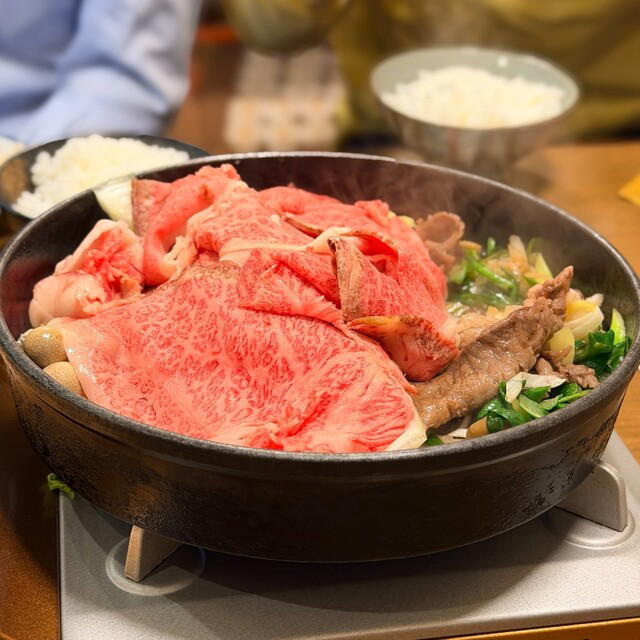
Oumi Kaneyasu puts Omihachiman’s beef culture into a compact sukiyaki-and-cafeteria format rather than a ceremonial dining room. The draw is provenance: Omi beef certification, a butcher-adjacent setting, 20 seats, and a 2024 Tabelog 100 Hot Pot selection place it in a practical, ingredient-led tier of Shiga dining.

Pearl is the En Primeur Club membership app, where members save venues, book tables and use the concierge.
The menu
What to order
- Omi beef sukiyaki
- Beef yakiniku bowl
- Omi beef steak
- Tonkatsu
Approaching a sukiyaki restaurant in Omihachiman is different from approaching one in Tokyo or Kyoto. The city does not need theatrical luxury to explain its appeal; Shiga dining often feels close to local agriculture, Lake Biwa, old merchant routes, and a practical habit of valuing provenance without excessive romance. Oumi Kaneyasu belongs to that matter-of-fact tradition: sukiyaki, cafeteria ease, and a straightforward rhythm that makes the meal feel local rather than abstract.
That grounded angle is the point. Japan’s famous regional dining destinations often sell themselves through polished service rituals, but Omihachiman has a quieter advantage: the diner is close to the local food story. At Oumi Kaneyasu, the appeal is not decorative menu language or hotel-style ceremony. It is a focused, accessible hot pot meal in a city where serious eating can still feel direct, practical, and rooted in place.
Sukiyaki, treated as provenance rather than theatre
Sukiyaki is a useful lens for understanding regional dining because it does not hide behind elaborate presentation. Sweet soy seasoning, heat, fat, and timing make the format feel immediate; a heavily staged room cannot compensate for a weak meal. Oumi Kaneyasu’s 2024 recognition in Tabelog’s Hyakumeiten context gives the restaurant a clear public credential within Japan’s sukiyaki and hot pot category, while its listed Tabelog score of 3.75 adds a useful, if review-based, point of reference.
Within Omihachiman, the comparison set splits neatly. Tokusen Omi Gyu Restaurant Tiffany represents another local beef-focused option, while Shida Saikan occupies a different everyday tier. La Collina belongs to another local pattern altogether: Omihachiman as a place where food tourism can be casual, architectural, and snack-led. Oumi Kaneyasu lands between those modes, not as a grand occasion restaurant, but as a focused sukiyaki address where simplicity carries the weight.
The room’s appeal is best understood in that same practical register. Rather than reading it as a hushed performance space, treat it as a local dining room built around a specific format. The experience suits diners who want directness more than choreography, and it makes sense for travelers folding one memorable hot pot meal into a broader Omihachiman day. The important point is not luxury signaling, but the clarity of the restaurant’s role.
A straightforward Shiga dining room with sukiyaki focus
Omihachiman rewards visitors who understand that its food culture is not only about single famous dishes. The area’s appeal sits in the overlap between craft, confectionery, hot pot, lake-country produce, and the old merchant-town fabric. For a broader read on the city’s dining map, our full Omihachiman restaurants guide is the natural starting point, with parallel planning context in our full Omihachiman hotels guide, our full Omihachiman bars guide, our full Omihachiman wineries guide, and our full Omihachiman experiences guide.
The practical character here is part of the editorial value. This is not a restaurant to frame primarily through elaborate amenities or destination-hotel polish. It works better as a city dining stop: straightforward, focused, and easy to place within an Omihachiman itinerary. For travelers comparing options, the useful question is whether the day needs a dedicated sukiyaki meal rather than another café, snack, or broader sightseeing break.
Pricing also keeps the restaurant in a usable lane. The listed price range is JPY 4,000 - JPY 4,999, with the provided budget shown as Dinner: JPY 4,000 - JPY 4,999; Lunch: -. That range is useful context, not a guarantee of spend, and it places the meal in an approachable bracket for a focused hot pot stop. For travelers building a Shiga food day, this is the sukiyaki anchor rather than the pastry stop or the formal splurge.
How to place it in a Japan-wide hot pot itinerary
Japan’s sukiyaki and hot pot restaurants can be misleading when judged only by polish. A refined room in a major city may offer greater service choreography, but regional dining towns often provide a more legible relationship between place and plate. Oumi Kaneyasu is useful because it keeps that relationship simple: sukiyaki format, cafeteria practicality, and 2024 Tabelog Hyakumeiten recognition all point in the same direction.
Travelers comparing formats across Japan can treat this as a regional counterpoint to more destination-driven meals elsewhere, without needing to force a one-to-one comparison. The broader Japanese dining circuit includes many different registers, from formal rooms to casual counters, snack-led stops, and specialist comfort-food formats. In Omihachiman, the specialty remains close to its local context, and Oumi Kaneyasu is most persuasive when read as part of that quieter, place-specific dining map.
The verdict is direct: choose this restaurant for a sukiyaki meal with accessible pricing, a straightforward format, and less ceremony than more heavily staged dining rooms. It is not the choice if the priority is luxury theatre or a long list of formal amenities. It is the stronger choice when the question is how plainly a restaurant can express a local hot pot tradition in Omihachiman.
Frequently asked questions
Is Oumi Kaneyasu good for families?
It can suit family meals looking for a straightforward sukiyaki or cafeteria-style stop. The JPY 4,000 - JPY 4,999 listed price range keeps it within reach for a casual meal in Omihachiman.
What's the vibe at Oumi Kaneyasu?
Expect a practical dining room rather than a highly polished destination setting. The listing categories point to sukiyaki and cafeteria-style dining in Omihachiman.
How much does it cost to eat at Oumi Kaneyasu?
Pricing at Oumi Kaneyasu is listed as JPY 4,000 - JPY 4,999, with the provided budget shown as Dinner: JPY 4,000 - JPY 4,999; Lunch: -.
What are the operating hours at Oumi Kaneyasu?
Specific operating hours are not provided here; check directly with Oumi Kaneyasu before visiting.
What's Oumi Kaneyasu's location?
Omihachiman.
What is Oumi Kaneyasu known for?
It is known for sukiyaki and cafeteria-style dining, and it has 2024 Tabelog Hyakumeiten recognition with a listed score of 3.75.
At-a-Glance Comparison
Comparable venues by cuisine and price in the same metro.
| Venue | Cuisine | Price | Awards | Notes |
|---|---|---|---|---|
| Oumi KaneyasuThis venue (the venue you are viewing) | Omi beef sukiyaki & meat restaurant | $30–50 | Tabelog 100 #53 | Not listed |
| Tokusen Omi Gyu Restaurant Tiffany | Premium Omi beef steak, shabu-shabu & sukiyaki | $50–100 | Tabelog 100 #21 | Omihachiman |
| La Collina | Japanese & Western sweets café and confectionery park | $10–20 | Tabelog 100 #61 | Kitanoshōcho |
| Shida Saikan | Chinese-Japanese fusion restaurant | $30–50 | Tabelog 100 #97 | Omihachiman |
| のれん/ Noren Akakura Sushi | Authentic Japanese Sushi with European Flair | Not listed | Not listed | Akakura |
| Omi Niku Sennaritei Kyara | Traditional Omi beef kaiseki & sukiyaki | $50–100 | Tabelog 100 #17 | Yume Kyobashi Castle Road |
Recognition history
Dated appearances from independent guides and award organizations, with the underlying list record or original source where available.
Tabelog 100 #53 · No. 53
Tabelog · Tabelog 100 - Hot Pot - 2024
Continue exploring
More in Omihachiman
Restaurants in Omihachiman
All restaurants in Omihachiman →
Bars in Omihachiman
Browse all →
Hotels in Omihachiman
Browse all →
Wineries in Omihachiman
Browse all →
Details
- Lively
- Classic
- Cozy
- Family
- Group Dining
- Casual Hangout
- After Work
- Solo
- Standalone
- Sake Program
- Beer Program
- Local Sourcing
- A La Carte
- Family Style
- Sake
- Beer
Current opening hours
- Monday
- 10 AM–10 PM
- Tuesday
- 10 AM–10 PM
- Wednesday
- Closed
- Thursday
- 10 AM–10 PM
- Friday
- 10 AM–10 PM
- Saturday
- 10 AM–10 PM
- Sunday
- 10 AM–10 PM
Hours can change for holidays and private events. Hours as of .
Casual and old-school with counter seats and small tatami areas, focused on hearty Omi beef dishes rather than design; reviews and photos suggest a busy, no-frills local spot rather than a polished modern interior.