
Michelin Bib Gourmand
Our verdict
A Marches-specialist Italian in Osaka's Nishi Ward, Osteria La Cicerchia holds back-to-back Michelin Bib Gourmand recognition (2024 and 2025) for its Adriatic coastal cooking: meat-stuffed olive fritti, house-made salsiccia, and cicerchia bean minestrone. At the ¥¥ price point, it occupies a different tier from Osaka's high-spend European tables and makes a precise, regionally grounded case for central Italian food in Japan.

Pearl is the En Primeur Club membership app, where members save venues, book tables and use the concierge.
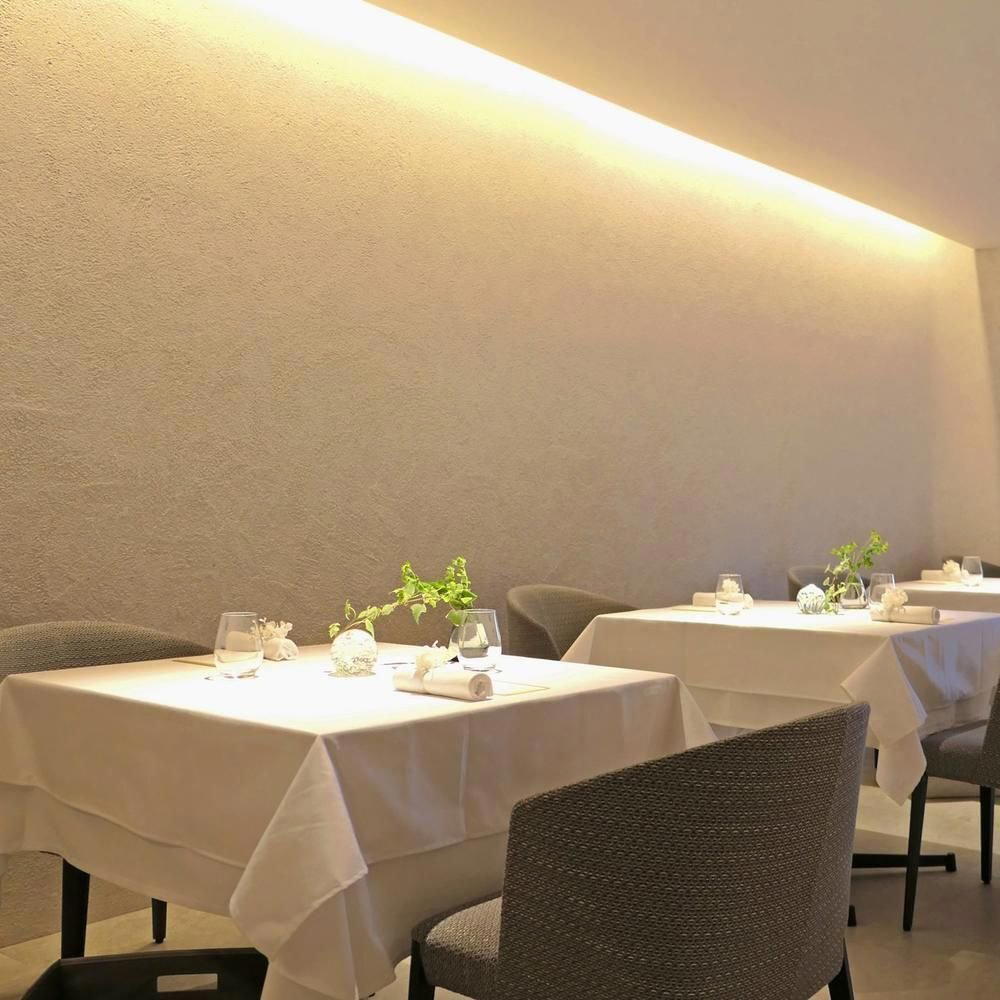
The menu
What to order
- Tortellini in Brodo
- Osso Buco
- Meat-stuffed olive fritti
- Homemade salsiccia
- Rabbit-and-tomato stew
A Third-Floor Room in Kyomachibori
Osaka's Nishi Ward sits just west of the Shinsaibashi retail corridor, and Kyomachibori, a canal-side address with a quieter commercial character, has accumulated a small cluster of European restaurants that operate at mid-range price points with focused, serious menus. The third floor of a building at 2-chome is where Osteria La Cicerchia has built its identity: a walk-up setting that immediately signals this is not a destination built on spectacle or street presence. The room itself communicates through restraint, and the certificate from Italy for Marches cuisine specialty is among the first things you register on the wall. That credential matters: the Marches, or Le Marche, is Italy's Adriatic coastal region, and its food tradition is specific enough that a restaurant holding such a designation is making a narrow, committed claim about what it serves.
Le Marche in Japan: A Narrow Claim Done Seriously
Italian restaurants in Japan span an enormous range, from luxury properties anchored by Michelin stars to informal trattoria-style rooms. Within that spread, regional specificity tends to cluster at opposite ends: either the most celebrated fine-dining formats or small, personality-driven operations where the kitchen's roots are genuinely personal. Le Marche cuisine sits outside the Italian regions, Tuscany, Emilia-Romagna, Sicily, that generate the most global recognition. Osaka hosts several Italian options worth comparing: il Centrino, La casa TOM Curiosa, La Lucciola, P greco, and YUNiCO each occupy their own position within that spread. La Cicerchia's decision to anchor itself to a single, inland-coastal Italian region rather than a broader Italian vernacular represents a specific editorial position that either resonates with a diner or it doesn't. The Bib Gourmand from Michelin in both 2024 and 2025 suggests the position is landing with the people who matter most to the guide's methodology: value relative to quality, not prestige for its own sake.
For context on how Italian restaurants operate across Japan at the premium end, 8 1/2 Otto e Mezzo Bombana in Hong Kong and cenci in Kyoto represent how the Italian format adapts across Asia at higher price tiers. La Cicerchia operates at ¥¥, which places it well below those brackets and within reach of a broader dining audience.
The Marches Repertoire: What the Kitchen Cooks
Le Marche's food identity is shaped by its geography: a narrow strip of land running from the Apennines to the Adriatic, with traditions that mix coastal seafood, inland game, and legume-heavy peasant cooking. The cicerchia bean, a small, rough-skinned legume grown in parts of the region and the source of the restaurant's name, is a useful signal for how seriously the kitchen engages with its source material. The bean appears in the minestrone, which in Marchigian cooking is denser and earthier than the Tuscan versions more familiar to international diners. Cicerchia largely disappeared from Italian tables during the mid-twentieth century and has only been revived by producers committed to preserving regional agricultural heritage, so its presence on a menu in Osaka's Nishi Ward is a deliberate act of curation, not a generic Italian touch.
The meat-stuffed olive fritti, olive ascolane in their native form, are the signature fried preparation of Ascoli Piceno, the province in southern Le Marche, and they function as both an antipasto and a regional calling card. The homemade salsiccia signals a commitment to in-house charcuterie traditions, and the rabbit-and-tomato stew places the kitchen firmly in the braised, slower-cooked section of the Marchigian repertoire. These are dishes that take their identity from technique and ingredient origin, not from visual composition or luxury inputs, which aligns with the Bib Gourmand designation's emphasis on cooking over theatre.
How the Venue Has Evolved Within Osaka's European Dining Scene
Osaka's higher-end European restaurant space is dominated by French and French-influenced kitchens. HAJIME, La Cime, and Fujiya 1935 all operate at the ¥¥¥¥ tier with menus built on technique-led innovation. Kashiwaya and Taian anchor the premium Japanese end. Into that context, La Cicerchia represents a different evolutionary path: not an escalation toward fine dining, but a consolidation of identity around a specific regional cuisine at a price point that removes the formality barrier. Two consecutive Bib Gourmand recognitions indicate that the kitchen has held its standard rather than drifted, which in a city with strong competition at both the high and casual ends of Italian dining is its own form of achievement.
The French chef team, Thomas Hubert and Aurélie Marion, operating a Marches-specialist Italian restaurant in Japan is itself a reflection of how European culinary knowledge now circulates globally. Chefs trained in one tradition frequently develop deep fluency in another through extended time in a region, and the Le Marche certificate on the wall functions as a public credential for exactly that kind of acquired expertise rather than assumed origin. What the kitchen has built is not a nostalgic recreation of Italian home cooking but a sustained, documented engagement with one region's food tradition executed in a Japanese city context.
Planning Your Visit
La Cicerchia sits in the ¥¥ tier, which in Osaka's mid-range means it competes on value with a wide field of Japanese and European options. The Kyomachibori address in Nishi Ward is walkable from Hommachi and Awaza subway stations. For Osaka restaurant context beyond Italian options, the city's Japanese fine dining at venues like those in our full Osaka restaurants guide operates across a distinct set of price tiers and traditions. For broader Osaka planning, see also our full Osaka hotels guide, our full Osaka bars guide, our full Osaka wineries guide, and our full Osaka experiences guide.
Elsewhere in Japan's restaurant scene, Harutaka in Tokyo, Gion Sasaki in Kyoto, akordu in Nara, Goh in Fukuoka, 1000 in Yokohama, and 6 in Okinawa each represent the regional range of serious dining across the country.
| Venue | Cuisine | Price Tier | Recognition |
|---|---|---|---|
| Osteria La Cicerchia | Italian (Le Marche) | ¥¥ | Michelin Bib Gourmand 2024, 2025 |
| HAJIME | French / Innovative | ¥¥¥¥ | Michelin starred |
| La Cime | French | ¥¥¥¥ | Michelin starred |
| Fujiya 1935 | Innovative | ¥¥¥¥ | Michelin starred |
| Kashiwaya | Japanese | ¥¥¥ | Michelin starred |
Frequently asked questions
What should I expect atmosphere-wise at Osteria La Cicerchia?
The restaurant occupies a third-floor room on Kyomachibori, a canal-side street in Osaka's Nishi Ward sitting clear of the Shinsaibashi tourist corridor. The setting is low-key and room-scale, consistent with the ¥¥ pricing tier and the osteria format. Two consecutive Michelin Bib Gourmands signal a kitchen taken seriously by the guide, which tends to reinforce a local, repeat-visitor crowd rather than a tourist-heavy one.
Does Osteria La Cicerchia have a Michelin star or similar recognition?
Osteria La Cicerchia has received recognition including: The ‘Marches cuisine specialty restaurant’ certificate from Italy proudly adorns the wall, and indeed the gastronomy of this region on Italy’s Adriatic coast is what the chef excels in. Meat-stuffed olive fritti, homemade salsiccia and rabb….
What should I order at Osteria La Cicerchia?
The Marches cuisine certificate on the wall is the clearest guide to what matters here: meat-stuffed olive fritti in the Ascoli Piceno style, homemade salsiccia, and a rabbit-and-tomato stew drawn directly from the Marchese table. Cicerchia bean minestrone is the dish that names the restaurant itself, the legume being a regional staple from the Apennine towns where chef Aurélie Marion trained. These are not menu items that appear on generic Italian menus in Japan, which makes them the point of the visit.
At a Glance
| Venue | Cuisine | Price | Awards | Notes |
|---|---|---|---|---|
| Osteria La CicerchiaThis venue (the venue you are viewing) | Authentic Marche Italian | $50–100 | Michelin Bib Gourmand | Not listed |
| HAJIME | Avant-Garde Japanese Fine Dining | $300–500 | 3 Michelin Stars · World's 50 Best #83 | French, Innovative |
| La Cime | Modern French with Japanese Ingredients | $150–200 | 2 Michelin Stars · World's 50 Best #13 | French |
| Kashiwaya Osaka Senriyama | Seasonal Kaiseki Omakase | $200–300 | 3 Michelin Stars · La Liste Top Restaurants | Japanese |
| Taian | Traditional Japanese Kaiseki Omakase | $150–200 | 3 Michelin Stars · La Liste Top Restaurants | Kaiseki, Japanese |
| Fujiya 1935 | Modern Japanese with European influences | $100–150 | 2 Michelin Stars · La Liste Top Restaurants | Innovative |
Recognition history
Dated appearances from independent guides and award organizations, with the underlying list record or original source where available.
Michelin Bib Gourmand
Michelin
Full recognition history (3 entries)
Michelin Bib Gourmand
Michelin
Michelin Bib Gourmand
Michelin
Continue exploring
More in Osaka
Restaurants in Osaka
All restaurants in Osaka →

Bars in Osaka
All bars in Osaka →




Hotels in Osaka
All hotels in Osaka →



Wineries in Osaka
Browse all →
Details
- Cozy
- Intimate
- Rustic
- Elegant
- Date Night
- Solo
- Special Occasion
- Extensive Wine List
- Local Sourcing
- A La Carte
- Wine
Current opening hours
- Monday
- 6 PM–12 AM
- Tuesday
- Closed
- Wednesday
- 6 PM–12 AM
- Thursday
- 6 PM–12 AM
- Friday
- 6 PM–12 AM
- Saturday
- 6 PM–12 AM
- Sunday
- 2–11 PM
Hours can change for holidays and private events. Hours as of .
Cozy 10-seat space with warm, welcoming atmosphere, aromas of freshly baked bread and simmering sauces, stylish and relaxing with counter seating.