On Borgo San Iacopo in the Oltrarno quarter, Osteria del Cinghiale Bianco occupies one of Florence's older dining addresses, its name referencing the wild boar that has anchored Tuscan cooking for centuries. The menu reads as a structured argument for regional tradition rather than a showcase of technique for its own sake. For travellers moving between the city's contemporary fine-dining circuit and its trattoria culture, this falls usefully between both registers.
Pearl is the En Primeur Club membership app — saves, bookings, and concierge access live there. Same editors, same standards.
- Address
- Borgo San Iacopo, 43r, 50125 Firenze FI, Italy
- Phone
- +39 055 215706
- Website
- cinghialebianco.net
- Directions
- Get directions
 Saves & bookings on Pearl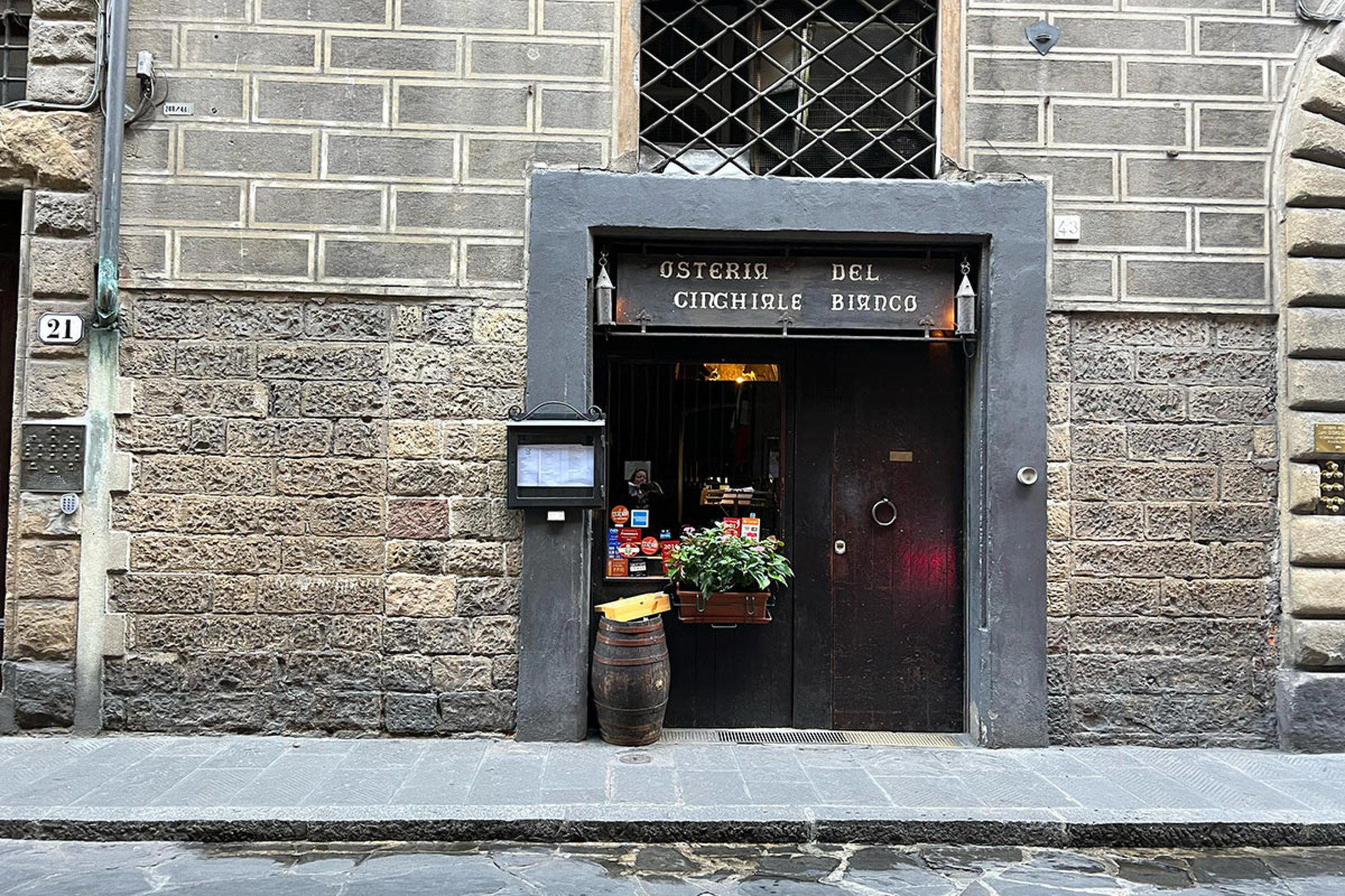
Oltrarno, the Arno, and the Logic of a Florentine Osteria
The south bank of the Arno operates on different terms from the centro storico across the water. Oltrarno has always been the artisan quarter, the neighbourhood where workshops, enotecas, and family-run restaurants have held ground against the tide of tourist infrastructure longer than almost anywhere else in the city. Borgo San Iacopo runs parallel to the river through this district, and the address at number 43r places Osteria del Cinghiale Bianco within a stretch that has housed Florentine dining institutions across several generations. The street itself is worth noting as context: it is also home to Borgo San Jacopo, a modern-cuisine address at the four-euro-sign price tier, which means the same few hundred metres now contain two quite different arguments about what Florentine cooking should look like in the current period.
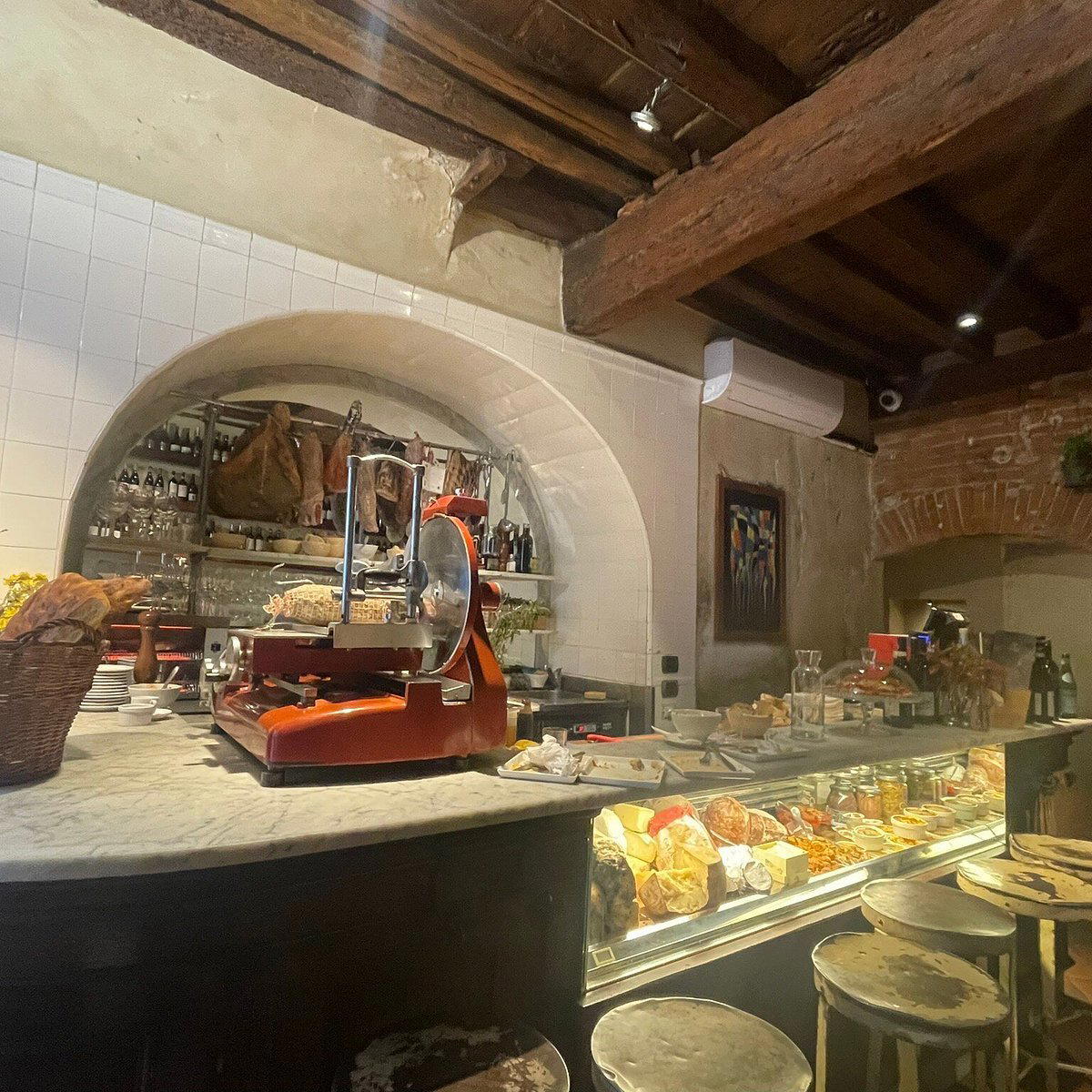
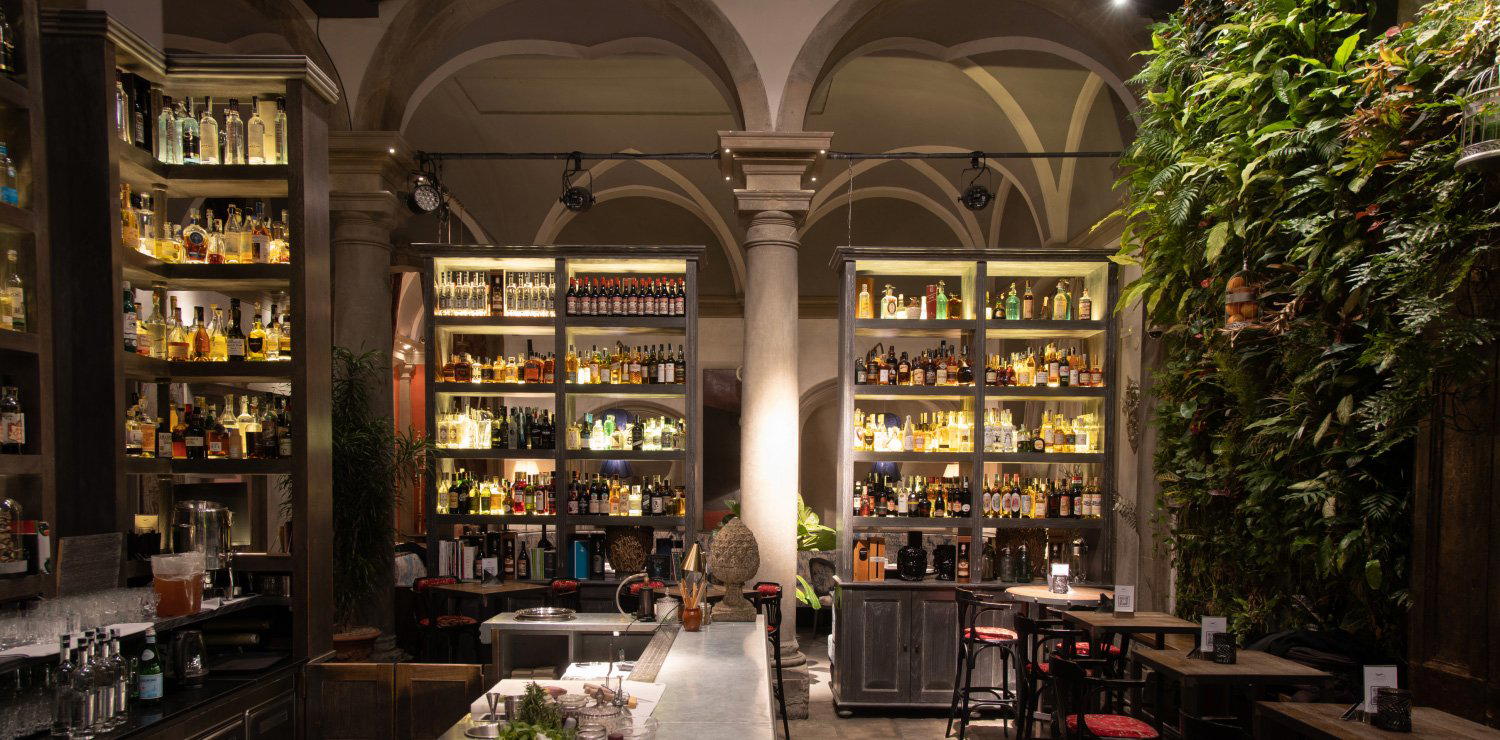
The physical approach to Cinghiale Bianco is of the kind that Oltrarno tends to produce: stone walls, a doorway that requires a moment of adjustment from the brightness outside, and interiors that communicate age without having been designed to do so. Florence's osteria format has historically meant a specific contract with the diner: seasonal ingredients, a menu that does not change its architecture from year to year, and a price relationship that sits below the city's formal ristorante tier. The name and the format have long signalled where it sits in the local taxonomy.
The Wild Boar and What the Menu Reveals About Tuscan Priorities
Name translates as the White Wild Boar, and cinghiale is not incidental to understanding the menu's logic. Wild boar has been the Tuscan kitchen's defining game protein for centuries, appearing in ragù, in pasta fillings, and as braised main courses across the region from the Maremma coast to the Chianti hills. A restaurant that takes the animal as its emblem is making a structural claim about where its cooking is rooted: in the cucina povera tradition of using the whole animal, long cooking times, and fat as flavour rather than fat as something to be managed or removed.
Tuscan menus organised around this tradition tend to follow a recognisable architecture. Antipasti lean on cured meats and liver-based crostini, the latter being so specific to Florentine cooking that its absence would read as a refusal of identity. First courses feature handmade pasta or pappardelle with game ragù. Second courses are where the braised and roasted proteins appear, alongside seasonal vegetables that the kitchen treats as structural elements rather than garnish. Desserts are typically few and regional: cantucci with Vin Santo, a semifreddo or a seasonal fruit preparation.
This architecture contrasts with the approach taken at Florence's contemporary fine-dining addresses, where tasting menus impose a different logic entirely. At Enoteca Pinchiorri, the menu is a sequence of courses where each dish is a discrete statement, and the wine list, one of Italy's most documented, drives a different kind of engagement. At Santa Elisabetta and Atto di Vito Mollica, creative interpretation of Italian tradition is the explicit project. Gucci Osteria da Massimo Bottura operates at the intersection of brand identity and culinary reference, which is a different project again. Cinghiale Bianco's implied position is that none of this creative apparatus is necessary when the source material is strong enough and the technique serves it honestly.
Across Italy's broader restaurant geography, the same argument gets made at different scales. Dal Pescatore in Runate represents the long-run version of a family kitchen committed to regional identity over decades. Uliassi in Senigallia takes Adriatic seafood in a more technically ambitious direction. The contrast is useful: Italian cooking at the serious end of the spectrum now occupies a wide range of positions between tradition-as-discipline and tradition-as-starting-point. Florence's osteria format sits firmly in the first category, and the Cinghiale Bianco name anchors it there.
Where This Fits in Florence's Current Dining Scene
Florence's restaurant scene in the current period has bifurcated more sharply than in most comparably sized Italian cities. At the leading, a cluster of destination addresses compete for the international fine-dining traveller, with Michelin recognition, elaborate booking systems, and price points that align them with peer restaurants across Europe rather than with the city's everyday dining culture. At the other end, trattorie and osterie that have traded for thirty or more years continue to serve a clientele that is partly local, partly tourists who have learned to look past the tourist-facing restaurants near the Duomo and Piazza della Signoria.
For a broader view of how Florence's dining scene has organised itself across both tiers, the EP Club Florence restaurants guide maps the city by neighbourhood. Among Italy's reference-point restaurants further afield, Osteria Francescana in Modena, Piazza Duomo in Alba, Le Calandre in Rubano, and Reale in Castel di Sangro represent the technically ambitious end of the argument, while addresses like Atelier Moessmer Norbert Niederkofler in Brunico and Quattro Passi in Marina del Cantone demonstrate how regional identity can be handled with serious technique. Enrico Bartolini in Milan and Casa Perbellini 12 Apostoli in Verona add further reference points for the northern tier. For readers whose frame of reference extends to international addresses, Le Bernardin in New York City and Lazy Bear in San Francisco represent how comparable commitments to a fixed culinary identity operate in a different cultural context entirely.
Cinghiale Bianco is not competing with any of those addresses, and that is precisely the point. Its frame of reference is the Oltrarno neighbourhood, the Tuscan season, and the specific proteins and preparations that the region has organised itself around for generations.
Planning a Visit
The restaurant sits on Borgo San Iacopo in the Oltrarno district, reachable on foot from the Ponte Vecchio in under five minutes. The neighbourhood is also well-served from the Santa Maria Novella train station, roughly a twenty-minute walk across the river. Given that Oltrarno osterie in this reputation bracket tend to fill on both weekend evenings and at lunch during high season, booking ahead is the practical approach. Dress codes at this format level are informal by Florentine standards, which means smart casual is appropriate rather than required.
Recognition Snapshot
Comparable venues nearby, for context on price, style, and recognition.
| Venue | Cuisine | Price | Notes |
|---|---|---|---|
| Osteria del Cinghiale BiancoThis venue — the venue you are viewing | Authentic Tuscan Trattoria | $$ | Not listed |
| Trattoria Mario | Traditional Tuscan Trattoria | $$ | Santo Spirito |
| Osteria Santo Spirito | Traditional Tuscan Trattoria | $$ | Santo Spirito |
| I’Brindellone | Traditional Tuscan Trattoria | $$ | San Frediano |
| Pitti Gola e Cantina | Tuscan Wine Bar | $$ | Santo Spirito |
| Gustapizza | Neapolitan Pizza | $ | Santo Spirito |
Continue exploring
More in Florence
Restaurants in Florence
Browse all →
Bars in Florence
Browse all →
Hotels in Florence
Browse all →
At a Glance
- Rustic
- Cozy
- Classic
- Family
- Casual Hangout
- Historic Building
- Local Sourcing
- Street Scene
Current opening hours
- Monday
- 6–10:30 PM
- Tuesday
- 6–10:30 PM
- Wednesday
- 6–10:30 PM
- Thursday
- 6–10:30 PM
- Friday
- 6–10:30 PM
- Saturday
- 12–2:30 PM, 6–10:30 PM
- Sunday
- 12–2:30 PM, 6–10:30 PM
Hours can change for holidays and private events. Last verified .
Atmospheric and unpretentious with a relaxed yet refined historic setting.