
Kyoto’s ramen culture is not confined to the city-center queue. Ore no Ramen Appare Ya sits in Joyo, south of central Kyoto, where a car-led location, counter format, Tabelog Ramen WEST 100 recognition, and ramen-tsukemen focus place it in a different rhythm from station-area bowls built for quick turnover.
Pearl is the En Primeur Club membership app — saves, bookings, and concierge access live there. Same editors, same standards.
- Address
- 京都府城陽市奈島下小路11
- Website
- ameblo.jp
 Saves & bookings on Pearl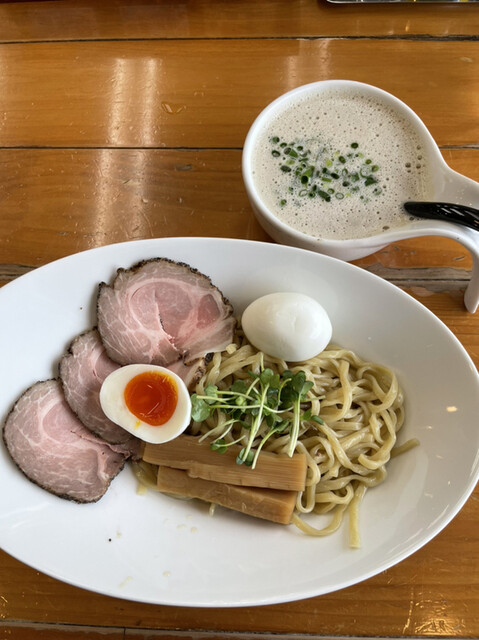
As Kyoto thins out into southern road territory, ramen changes. Joyo is not temple lanes, department-store basements, or compact dining alleys; a serious bowl here can demand planning, transport patience, and queue rituals. Ore no Ramen Appare Ya belongs to the ramen tradition where the trip filters the audience: diners are not browsing between sightseeing stops, but arriving with intent.
That intent is supported by one of Japan’s useful ramen signals. The shop was selected for Tabelog Ramen WEST 100 in 2025, with selection history running repeatedly through recent years. In a category where national fame can arrive through social media before consistency is proven, repeated Hyakumeiten recognition is sturdier. It places the restaurant in western Japan’s specialist ramen tier, not Kyoto’s broader casual lunch field.
Joyo ramen, not downtown Kyoto ramen
Central Kyoto rewards compact movement: Nishiki Market grazing, Gion reservations, Karasuma counters, and quick detours from major rail lines. Joyo asks whether a meal is worth building a half-day around when the reward is not a view, kaiseki room, or hotel dining room, but a counter bowl. In Japanese ramen culture, the answer is often yes, especially when the shop sits outside the tourist grid and the audience is regulars, drivers, and ramen-focused travelers.
The format reinforces that. Ramen and tsukemen are the core categories, in a counter-led room rather than a lounge-like one. Attention stays on pace, bowl construction, and turnover, not the long-form performance of fine dining. Compared with Kyoto peers such as Menya Takei Honten, also in the ramen and tsukemen price band, this is part of the same western Kyoto-area conversation about destination noodles: affordable by luxury-travel standards, but demanding in time and logistics.
It also complicates the usual Kyoto food itinerary. A visitor can eat beautifully for days in the center without seeing how much of the region’s strongest casual food culture lives beyond the postcard core. Tea rooms in Uji, residential bakeries, soba shops with local gravity, and ramen counters on road corridors all belong to that wider map. Ore no Ramen Appare Ya pulls Kyoto dining away from atmosphere-first consumption and back toward a Japanese truth: particularly serious casual meals happen in ordinary places with inconvenient access.
A small counter with a destination-shop logic
Counter-only ramen shops do not need many seats to create a following; limited seating can sharpen the experience because the room runs on sequence, not leisure. Here, the stated format is 18 seats, with counter seating and a wheelchair-accessible seat noted. That scale can move a line, but timing still matters. The shop is non-smoking, increasingly expected yet relevant for travelers choosing ramen stops with children or mixed-age groups.
The food category is direct. Ramen and tsukemen place the restaurant in the branch of Japanese noodle culture where broth density, noodle texture, dipping concentration, and serving temperature carry the argument. Tsukemen especially rewards shops that manage contrast: noodles served separately, broth strong enough to cling, and pacing that keeps the meal from feeling heavy before it feels complete. No single dish needs mythologizing. The appeal is narrow-category discipline, done consistently enough to stay visible in a crowded western Japan field.
That is why the Tabelog score, listed at 3.72, should be read carefully. On Tabelog, high-3 scores can indicate serious local consensus, especially where users compare many similar shops. This is not a Michelin-style signal and should not be treated like one; it is a sign that a specialist audience has kept paying attention over time.
For travelers comparing Kyoto categories, this differs from a polished French table such as Abbesses, a contemporary city restaurant such as [ki:], or a compact urban stop like 3TOKU6MI Shijo karasuma ten. It is closer in spirit to the everyday Kyoto that values repetition, queue discipline, and a narrow specialty over ceremony.
How to fit it into a Kyoto food trip
The practical case is simple: this is a purposeful detour, not a filler meal. It sits in Nashima, Joyo, south of central Kyoto, and transport notes favor car access. Bus access exists from Kintetsu Shintanabe or JR Kyotanabe on route 62 toward Ujitawara, but frequency is limited, so the meal suits travelers who can plan around transit rather than improvise between appointments. Parking is listed, not a minor detail in this part of Kyoto Prefecture.
Payment is another ramen-shop contract. Cash is the safe assumption when cards, electronic money, and QR payments are not accepted. Average spend sits in the low ramen band, so the luxury is not price but time allocation. A traveler staying centrally may get more conventional convenience from 551蓬莱 or a historic snack stop such as Aburi Mochi Honke Nemoto Kazariya. A traveler who wants to understand regional noodle obsession outside the hotel-and-temple circuit should make space for Joyo.
The strongest use is as part of a wider southern Kyoto or Uji day, not a standalone dash from downtown. That context makes the distance intentional and places the restaurant in conversation with Kyoto Prefecture beyond Kyoto City, where everyday dining is less curated for visitors and more accountable to local repeat traffic.
For broader planning, compare it against Our full Kyoto restaurants guide, then build the rest of the trip through Our full Kyoto hotels guide, Our full Kyoto bars guide, Our full Kyoto wineries guide, and Our full Kyoto experiences guide. For readers mapping casual Japanese dining beyond Kyoto, EP Club also covers -Grilled beef Sukiyaki- KAMAKURA TANUKIAN 鎌倉 たぬき庵 in Kamakura. 鮪と炭火焼き うお炭 秋葉原店 in Tokyo.cafe in Osaka.know in Kumamoto, (Shoku) Vietnam in Kawasaki, [Curry Senmon Ten] Maruyama Kyoju. in Sapporo, Jōdo Saké Bar in Los Angeles, and Onigiri Time in Pasadena.
Just the Basics
Nearby venues at a similar price tier for orientation.
| Venue | Cuisine | Price | Notes |
|---|---|---|---|
| Ore no Ramen Appare YaThis venue — the venue you are viewing | Joyo, Japanese Ramen | $$ | Not listed |
| Tasuki Pass The Baton | Not listed | $$ | Gion, Traditional Japanese Tea Room & Kakigori |
| Shubaku | Uji, Japanese Soba | $$ | Not listed |
| Gion Negiyaki Kana Higashi ten | Not listed | $$ | Higashiyama, Kyoto-style Negiyaki & Okonomiyaki Counter |
| Gion Komori | Not listed | $$ | Higashiyama, Traditional Kyoto Japanese sweets & tea house |
| 瓢亭 | Sakyō, japanese | Not listed | Not listed |
Recognition history
Dated appearances from independent guides and award organizations, with the underlying list record or original source where available.
Tabelog 100 #83 · No. 83
Tabelog · Tabelog 100 - Ramen - WEST - 2025
Continue exploring
More in Kyoto
Restaurants in Kyoto
Browse all →
Bars in Kyoto
Browse all →
Hotels in Kyoto
Browse all →
Wineries in Kyoto
Browse all →
At a Glance
- Classic
- Cozy
- Rustic
- Solo
- Casual Hangout
- Group Dining
- Standalone
- Mountain
- Street Scene
A modest, tucked-away ramen shop with a no-frills, destination feel; the atmosphere is quiet and utilitarian rather than polished or upscale.