Our verdict
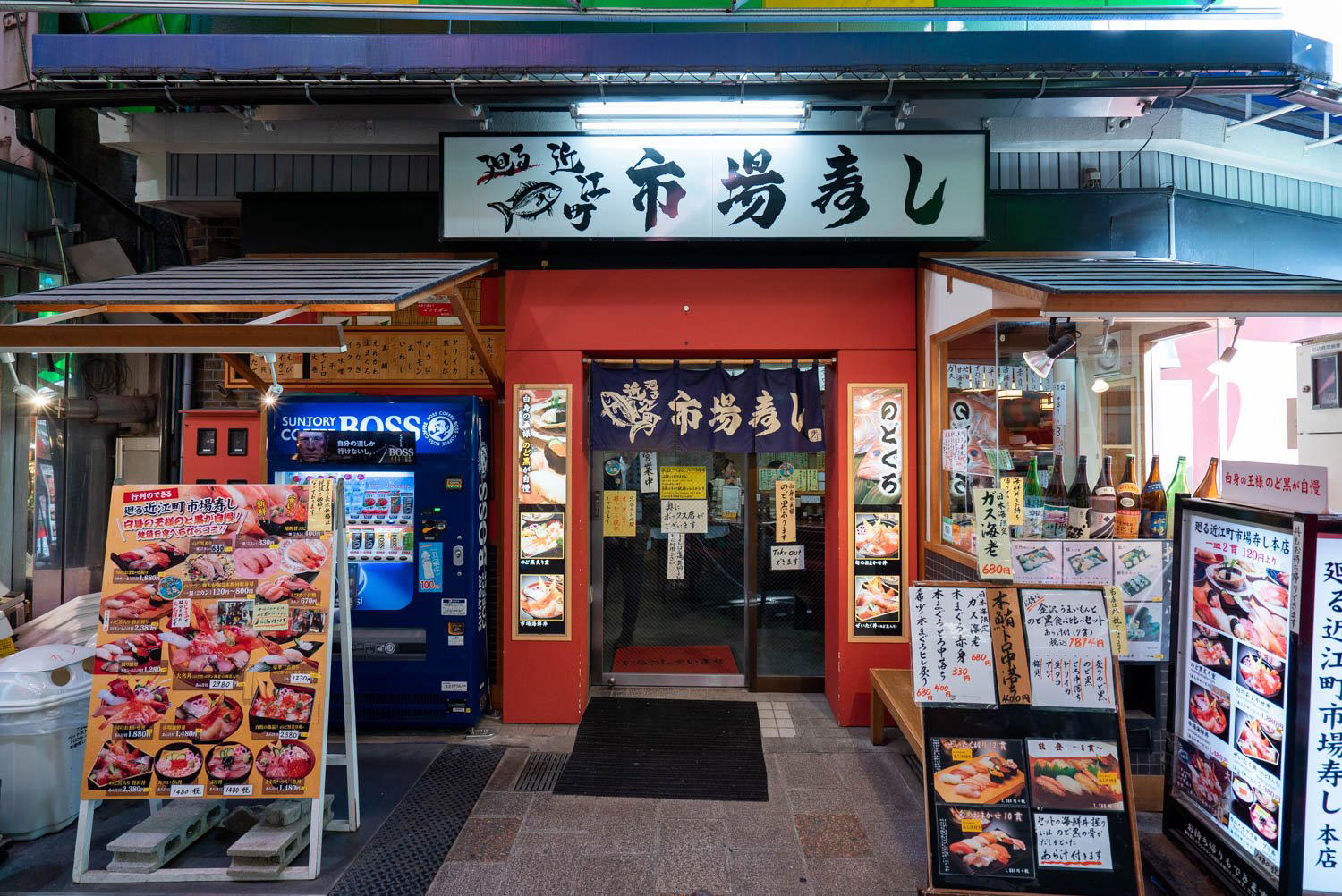
Omicho Ichibazushi sits inside Kanazawa's Omicho Market, one of Japan's most active fresh-fish markets, serving sushi that draws directly from the stalls surrounding it. The format is counter-forward and deliberately unfussy, placing the proximity to Ishikawa Prefecture's seafood supply at the center of the experience. It occupies a tier of market sushi that has evolved considerably as Kanazawa's culinary profile has risen nationally.

Pearl is the En Primeur Club membership app — saves, bookings, and concierge access live there. Same editors, same standards.
- Address
- 下近江町28-1, 金沢市, 石川県, 920-0904
- Directions
- Get directions
The menu
What to order
- Luxury Seafood Bowl
- Nodoguro Sushi
Market Sushi in the City That Refuses to Simplify Seafood
Walk through Omicho Market on a weekday morning and the density of seafood on display reads less like a shopping destination and more like an argument for why Kanazawa developed its own distinct food culture independent of Tokyo or Osaka. Snow crab stacked in wooden trays, buri (yellowtail) thick enough to cut with a look, and nodoguro (blackthroat seaperch) priced at a premium even here, in the city most associated with it. Omicho Ichibazushi occupies a position inside this market that is not incidental. The restaurant and the building around it are part of the same ecosystem: fish moves from the stalls outside to the counter inside with minimal distance and, at this format's leading, minimal delay.
Market sushi as a category sits in an interesting middle tier in Japanese culinary geography. It is not the austere, appointment-only omakase counter that now defines how foreign audiences imagine premium Japanese dining, as seen in venues like Harutaka in Tokyo or the reservation-intensive rooms attached to HAJIME in Osaka. It is also not the conveyor-belt format that competes on speed and price. It sits in a practical, supply-led tradition that Kanazawa has historically done well, where the fish quality speaks before the ceremony does.
How Kanazawa's Food Scene Changed Around This Format
Kanazawa's culinary reputation has shifted significantly over the past decade and a half. The city had long been acknowledged domestically as a serious food destination — a secondary capital, in some interpretations, of Japanese refined cuisine — but its international profile expanded considerably as Michelin and travel media began covering it more systematically in the 2010s. That expansion brought kaiseki to wider attention. Venues like Zeniya and Kataori represent the city's deepest kaiseki tradition, and the kaiseki format tends to dominate how Kanazawa is framed abroad.
What that framing sometimes obscures is the parallel track of more direct, market-anchored eating that the city has always maintained. Sushi at the market, yakitori at counters like Dokkan, or the kind of straightforwardly executed daily-fish lunch that Omicho has always supplied, these formats didn't need rebranding when the city's international profile rose. They were doing the same thing before the attention arrived. The evolution at Omicho Ichibazushi, in that context, is less about reinvention and more about a format that held its position while the scene around it became more internationally legible.
The market itself has undergone gradual modernisation. Omicho operates around 170 shops and has been running in some form since the Edo period, though its current configuration reflects post-war redevelopment and subsequent updates. The sushi restaurant within it carries that layered history without advertising it heavily. What has changed more visibly is the calibre of visitor. Kanazawa now draws serious food travellers who arrive having researched French-inflected kaiseki at Budoonomori Les Tonnelles alongside the city's traditional confectionery, seen in places like Amanatto Kawamura. Omicho Ichibazushi now sits inside a dining circuit that includes this broader range, which means it is read differently by the contemporary visitor than it was by the domestic lunch crowd of two decades ago.
Ishikawa Seafood as the Constant Anchor
Whatever the shifts in visitor profile, the underlying argument for eating sushi in this specific market remains the same: Ishikawa Prefecture's access to Japan Sea seafood is among the strongest in the country. The Japan Sea runs colder and less trafficked than the Pacific side, and the prefectural coastline picks up species, particularly in winter, that don't reach Tokyo's Tsukiji or Toyosu in the same condition. Nodoguro, in particular, has become something of a Kanazawa signature, appearing across restaurants from the kaiseki rooms documented in our full Kanazawa restaurants guide to market counters like this one.
The crab season (roughly November through March) changes the calculation considerably. During that window, Omicho Market operates at a different intensity, and the sushi counter reflects the supply directly. Visitors planning around the crab season will find a different version of this counter than the one that operates in, say, September. That temporal dimension is worth factoring into any planning.
For a broader picture of how Japan's regional cities handle seafood-anchored dining at a range of price points and formats, the comparison set extends beyond Kanazawa. Goh in Fukuoka and Gion Sasaki in Kyoto represent different expressions of how regional Japanese kitchens use local supply chains at the higher end. Venues in smaller prefectural centres, including a sushi counter in Nanao on the Noto Peninsula, show how Ishikawa's seafood supply disperses across formats and geographies. The market counter at Omicho sits at a different price and formality register from all of these, but it connects to the same underlying supply network.
Planning a Visit
Omicho Market is in the centre of Kanazawa, reachable on foot from the major hotel cluster near Kanazawa Station in around fifteen to twenty minutes, or by the Kanazawa Loop Bus, which stops nearby. The market operates primarily in the morning and early afternoon, and the sushi restaurant's busiest hours align with the market's rhythm, meaning a late-morning or lunchtime visit positions you correctly. The evening dynamic is different and worth confirming before arriving late. Given the market setting and the format, this is not a venue where advance booking several months ahead is the expectation, though peak season and weekend demand may warrant earlier planning than a casual walk-in would suggest. Dress is entirely informal; the market context makes that self-evident.
For visitors building a longer Kanazawa itinerary, the contrast between this counter and the city's higher-formality restaurants is part of what makes the city worth multiple meals. The Hakuichi experience, focused on gold-leaf craft rather than food, sits nearby and illustrates how tightly Kanazawa's cultural and culinary identity overlaps geographically. And if the broader Japanese regional dining circuit interests you, the contrast with something as far removed in format as Atomix in New York City or Le Bernardin in New York City underlines how differently the market-sushi tradition positions itself against globally prominent fine dining, not as a competitor, but as a separate and entirely coherent argument for what a meal can be.
Frequently asked questions
Where is Omicho Ichibazushi (近江町市場寿し) in Kanazawa?
Omicho Ichibazushi (近江町市場寿し) is located at 下近江町28-1, 金沢市, 石川県, 920-0904, Kanazawa.
How does Omicho Ichibazushi differ from other sushi options in Kanazawa?
The counter sits inside Omicho Market itself, at 下近江町28-1, which means the supply chain between catch and plate is shorter than at most Kanazawa sushi restaurants. The format is casual and transactional by design — this is market eating, not a studied omakase sequence. For visitors comparing options, that positions Omicho Ichibazushi alongside the city's other market-adjacent counters rather than against formal kaiseki venues like Zeniya.
What should I order at Omicho Ichibazushi (近江町市場寿し)?
Order whatever came in from Omicho Market that morning. In Kanazawa, that points toward Ishikawa Prefecture specialties: nodoguro (blackthroat seaperch), kani (crab, in season), and locally sourced white fish from the Sea of Japan. Avoid the impulse to default to tuna — the regional catches are the reason to eat sushi at this address rather than anywhere else.
Can I walk in to Omicho Ichibazushi (近江町市場寿し)?
Walk-ins are part of the market-sushi tradition in Kanazawa, and the format here is considerably more accessible than the city's reservation-only omakase counters. That said, the lunch window draws steady foot traffic from both locals and visitors moving through Omicho Market, so arriving early or at off-peak hours reduces wait time. No booking infrastructure is documented for this counter.
Where the Accolades Land
| Venue | Cuisine | Price | Awards |
|---|---|---|---|
| Omicho Ichibazushi (近江町市場寿し)This venue — the venue you are viewing | Market Conveyor Belt Sushi | $20–30 | Not listed |
| Kataori | Hyperseasonal Hokuriku Kaiseki Omakase | $200–300 | World's 50 Best #82 · La Liste Top Restaurants |
| Respiracion | Modern Spanish with Kanazawa Ingredients | $200–300 | World's 50 Best #92 · La Liste Top Restaurants |
| Sushi Kibatani | Edomae-Style Hokuriku Omakase | $150–200 | Tabelog Bronze #174 |
| Zeniya | Kaga-Style Kaiseki | $200–300 | La Liste Top Restaurants · Relais Chateaux Award |
| Hamagurizaka Maekawa | Yakitori | $150–200 | Not listed |
Continue exploring
More in Kanazawa
Restaurants in Kanazawa
Browse all →
Bars in Kanazawa
Browse all →
Hotels in Kanazawa
Browse all →
Wineries in Kanazawa
Browse all →
Details
- Lively
- Classic
- Casual Hangout
- Open Kitchen
- Sake Program
- Local Sourcing
- Sustainable Seafood
- Counter Dining
- A La Carte
- Sake
- Pescatarian Friendly
Lively market atmosphere with counter seating focused on fresh sushi preparation.