Omakase @ Barracks Row

Omakase @ Barracks Row brings the counter-service discipline of Japanese tasting-menu dining into one of Washington, D.C.’s most restaurant-dense neighborhood corridors. Its clearest public signal is Washingtonian recognition: rank 4 on the magazine’s 100 Best Restaurants 2026 list, placing it in the city’s serious reservation conversation.
Pearl is the En Primeur Club membership app — saves, bookings, and concierge access live there. Same editors, same standards.
- Address
- 522 8th St SE
- Directions
- Get directions
 Saves & bookings on Pearl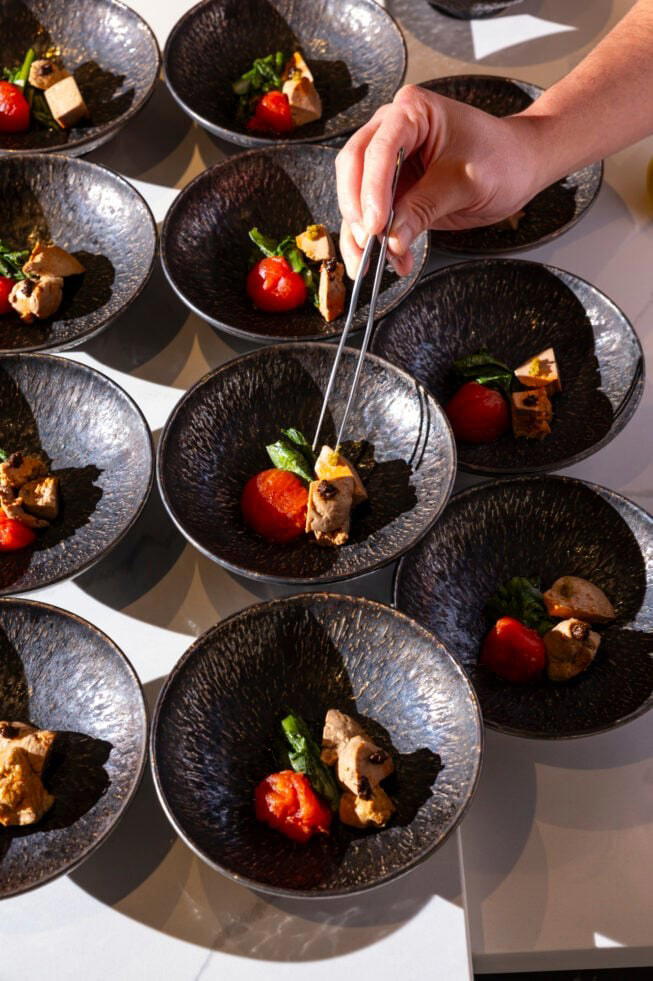
Barracks Row has a different kind of arrival rhythm from downtown dining rooms: brick storefronts, narrow sidewalks, and a neighborhood crowd moving between dinner, drinks, and Eastern Market routines. In that setting, omakase reads less as spectacle than as ritual. The format asks diners to give up the usual American habits of scanning a menu, negotiating courses, and pacing the table independently. The counter controls tempo, sequence, and attention.
That matters in Washington, D.C. where the city’s ambitious restaurants often define themselves through thesis-driven cooking: regional American sourcing, immigrant culinary memory, tasting-menu architecture, or vegetable-led technique. For broader context on the city’s dining range, see our full Washington, D.C. restaurants guide, alongside reference points such as Albi, Causa, Oyster Oyster, The Dabney, and Jônt. Omakase @ Barracks Row belongs to a narrower lane: a meal organized around trust, repetition, and the discipline of receiving courses in the order chosen for the counter.
Getting to Omakase @ Barracks Row
The address on 8th Street SE places the restaurant in Barracks Row, a corridor with enough evening foot traffic to feel urban without the formality of hotel-lobby dining. That neighborhood context is part of the appeal. Omakase can feel severe when separated from the street; here, the ritual sits inside a lived-in D.C. district rather than a purpose-built luxury enclave.
The useful planning lens is not distance or décor but commitment. Omakase dining rewards punctuality, appetite, and attention. The format is less forgiving than à la carte service because the meal is structured as a sequence, not a collection of independent choices. Diners who want conversation to dominate the night may find the counter’s cadence more demanding; diners who care about pacing, craft, and the tension between restraint and repetition will understand why this format keeps gaining ground in U.S. cities.
Restaurant-focused visitors often pair a serious dinner with a hotel base and a lighter drinking itinerary rather than treating the meal as one stop in a crowded night.
Omakase @ Barracks Row awards and recognition
The strongest public credential is Washingtonian’s 100 Best Restaurants 2026 list, where the restaurant is ranked No. 4. In a city where local recognition can carry more practical weight than national noise, that placement is not a decorative badge. It signals that the restaurant is being judged within Washington’s current high-performance dining tier, not merely within a niche Japanese category.
The ranking also says something about the city’s appetite in 2026. D.C. diners have grown more fluent in fixed-format meals, but the omakase contract remains specific: the guest accepts the chef’s order of service, the room runs on precision, and value is measured in control rather than abundance. That is a different proposition from the hospitality grammar at tasting-menu institutions across the country, including Benu in San Francisco, Le Bernardin in New York City, Emeril’s in New Orleans, Alinea in Chicago, Single Thread Farm in Healdsburg, The French Laundry in Napa, Atomix in New York City, and Lazy Bear in San Francisco. Those names illustrate how American destination dining can be built around different service languages: French formality, Korean tasting-menu structure, farm-linked California hospitality, or technical modernism. Omakase works by another code.
That code is why advance planning is sensible. A ranked omakase counter in Washington is not a casual backup plan; it is a meal type built around limited turns, synchronized pacing, and a guest who arrives ready to be led. The reward is not variety for its own sake. It is the clarity of a dining ritual with little room for drift.
Comparable venues nearby, for context on price, style, and recognition.
| Venue | Cuisine | Price | Notes |
|---|---|---|---|
| Omakase @ Barracks RowThis venue — the venue you are viewing | Modern Japanese Sushi Omakase | $$$$ | Not listed |
| KYOJIN Sushi | Modern Japanese Sushi | $$$ | West Village Georgetown |
| Zeppelin | Edomae-Style Sushi & Yakitori | $$$ | Shaw |
| Uchi | Modern Japanese Omakase | $$$ | Downtown D.C. |
| Nobu DC | Japanese-Peruvian Fusion | $$$$ | West End |
| Roof Terrace Restaurant | Modern American with French Techniques | $$$$ | Foggy Bottom |
Recognition history
Dated appearances from independent guides and award organizations, with the underlying list record or original source where available.
Washingtonian 100 Very Best Restaurants #4
Washingtonian
Continue exploring
More in Washington DC
Restaurants in Washington DC
Browse all →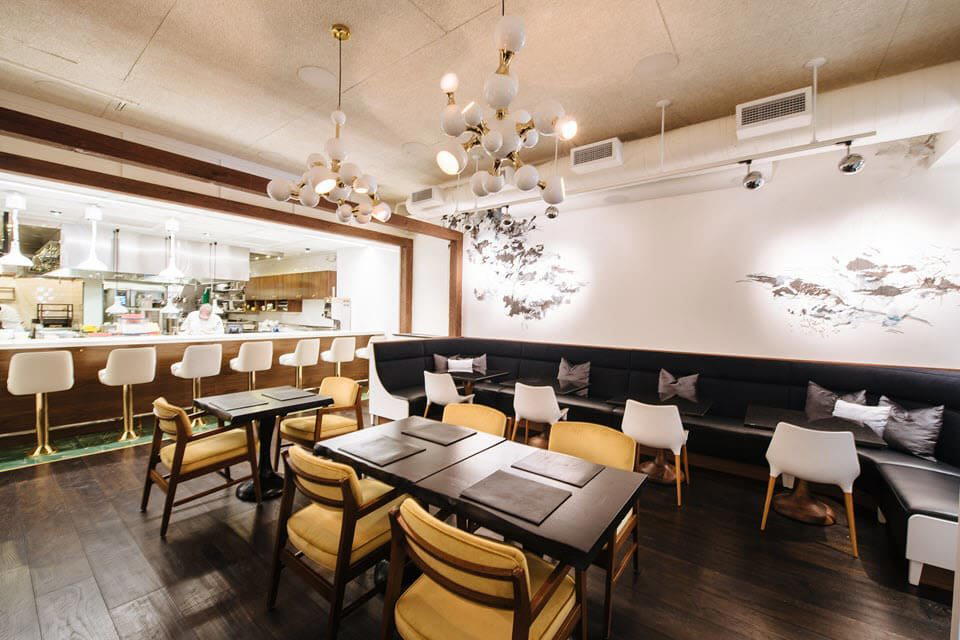
Bars in Washington DC
Browse all →
Hotels in Washington DC
Browse all →
At a Glance
- Intimate
- Minimalist
- Elegant
- Cozy
- Sophisticated
- Date Night
- Special Occasion
- Celebration
- Business Dinner
- Solo
- Chefs Counter
- Design Destination
- Standalone
- Private Dining
- Sake Program
- Sustainable Seafood
A minimalist second-floor sushi counter with a cozy, softly lit, communal setting where the chef’s detailed craftsmanship and interaction with guests are the focus.