OBA Turkish Grill
OBA Turkish Grill occupies a well-worn corner of Georgetown's Wisconsin Avenue corridor, drawing on the meze-and-grill tradition that has made Turkish cooking one of the Mediterranean's most architecturally complete cuisines. The kitchen leans into seafood alongside the expected charcoal-driven grill work, placing it in a small comparable set of DC restaurants that treat the eastern Mediterranean as a serious culinary reference rather than a passing trend.
Pearl is the En Primeur Club membership app — saves, bookings, and concierge access live there. Same editors, same standards.
- Address
- 1834 Wisconsin Ave NW, Washington, DC 20007
- Phone
- (202) 338-1748
- Directions
- Get directions
 Saves & bookings on Pearl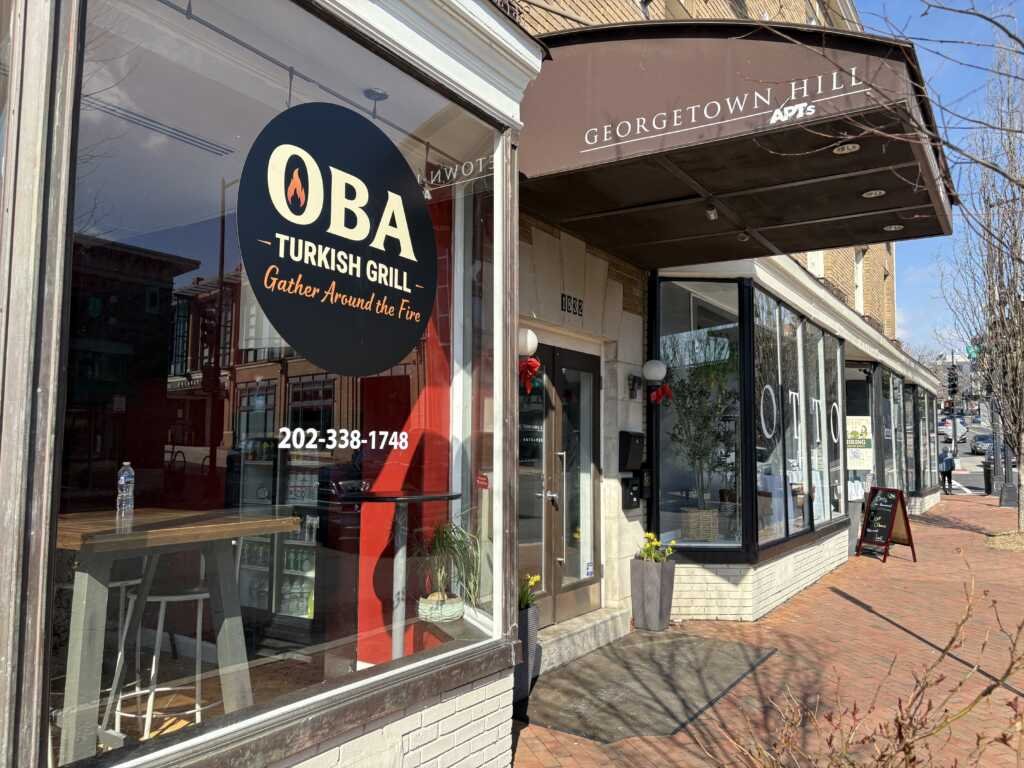
Georgetown's Eastern Mediterranean Anchor
Wisconsin Avenue in Georgetown does not lack for restaurants, but the strip between M Street and the residential blocks above Dumbarton rewards walking. The storefronts grow quieter and more residential past the tourist surge, and it is in that stretch, at 1834 Wisconsin Ave NW, that OBA Turkish Grill has established itself as one of the few places in Washington where the meze table is treated as a serious opening act rather than an afterthought. The room's pull is immediate: the smells arrive before the door opens, charcoal and herb-flecked fat, the particular register of a wood-and-smoke kitchen working through its service.
Turkish dining in American cities has historically occupied a mid-market lane defined by doner plates and laminated menus. OBA operates in a different register, drawing on the meze-and-grill tradition that has shaped Turkish coastal cooking for generations. That tradition is architecturally complete on its own terms: cold meze of pureed vegetables and cured fish, warm meze that arrive fresh off a griddle or out of a clay pot, then grilled protein built around charcoal heat rather than sauce. The sequence has its own internal logic, and restaurants that respect it tend to eat at a different pace than those that treat meze as optional starters.
The Seasonal Argument for Seafood
The editorial angle that matters most here is not the grill, Washington has grill restaurants in abundance, but the seafood. Turkish coastal cooking, particularly from the Aegean and Marmara traditions, is deeply seasonal in its relationship with fish. Autumn and winter in Turkey mark the arrival of bluefish runs, hamsi (Black Sea anchovy) season, and the broader cold-water migration patterns that have structured fishing calendars on the Bosphorus for centuries. Spring shifts toward sea bass and bream. Summer brings lighter, smaller fish and a greater emphasis on raw preparations and cold meze.
At a restaurant like OBA, operating thousands of miles from those coasts, the seasonal logic translates imperfectly but still meaningfully. The meze-and-seafood format is inherently better calibrated to the colder months, when the menu's richer preparations, warm meze, charcoal-kissed proteins, dense herb sauces, read as comfort rather than excess. Diners who arrive in late autumn or winter are likely to find the kitchen working in its most natural register. That is not a claim about OBA's sourcing calendar specifically, but a structural truth about the cuisine type: Turkish seafood cooking was designed around cold-water fish and cold-season eating.
In Washington's dining context, that places OBA in an interesting position. The city's seafood-serious restaurants, including the coastal American formats that dominate the fine dining tier, generally track Chesapeake and mid-Atlantic seasons. An eastern Mediterranean frame brings a different harvest logic into the room, one organized around different waters and different migration patterns.
Georgetown's Dining Position and OBA's comparable set
Georgetown sits outside the downtown dining cluster that attracts most of Washington's high-profile restaurant attention. The neighbourhood's dining scene skews toward neighbourhood regulars and Georgetown University proximity rather than destination seekers, which shapes both the competitive set and the service register. Alfie's permanent Georgetown location represents the neighbourhood's more experimental edge, with a natural wine and Thai fine-tuning format that positions it toward a different audience entirely. The original Alfie's built credibility before that Georgetown foothold. OBA occupies a more grounded register: a cuisine with centuries of tradition behind it, a format that rewards repeat visits, and a price positioning that makes it a neighbourhood anchor rather than a special-occasion destination.
Across the city, the restaurant that most clearly defines the ceiling of Washington fine dining is The Inn at Little Washington, which operates in an entirely different tier and competitive set. The meat-focused end of Washington's dining spectrum has its own high-profile entrants in Bazaar Meat and Bazaar Meat by José Andrés, both of which carry the José Andrés organizational weight and corresponding profile. OBA operates without that kind of institutional backing, which in Georgetown's more quietly residential dining culture is not a disadvantage.
For a broader sense of where OBA fits in the Washington picture, the EP Club Washington restaurants guide maps the city's dining across neighbourhoods and cuisine types. Among seafood-forward restaurants nationally, the reference points that define the high end of the form include Le Bernardin in New York City and Providence in Los Angeles, both operating in the French and California frameworks that have defined American fine dining seafood for decades. OBA's eastern Mediterranean frame is not competing with those formats; it is working from a different culinary grammar entirely.
The farm-to-table and seasonal tasting menu tier, represented nationally by Blue Hill at Stone Barns, Single Thread Farm in Healdsburg, and Smyth in Chicago, has institutionalized the seasonal argument in American fine dining. Lazy Bear in San Francisco, Addison in San Diego, Frasca Food and Wine in Boulder, and Atomix in New York each represent a version of the high-commitment tasting format. OBA sits entirely outside that tier, which is the point: the meze format is by nature less linear, less architect-designed, and more suited to the kind of evening where the table orders broadly and shares without a fixed sequence imposed from the kitchen.
The Korean tasting format at Atomix and the New American ambition at Emeril's in New Orleans both represent the kind of destination commitment that pulls diners across cities. OBA is not building that kind of gravity. It is doing something quieter and in many ways harder: making a specific regional tradition legible and appealing to a neighbourhood audience that did not grow up eating it. The closest international parallel for the format discipline involved, small plates, charcoal grill, seafood-seasonal, might be the alpine precision of Atelier Moessmer Norbert Niederkofler in Brunico, though the idioms are entirely different. The French Laundry in Napa defines the other pole of American dining ambition. OBA is neither of those things, and does not need to be.
Category Peers
Comparable venues nearby, for context on price, style, and recognition.
| Venue | Cuisine | Price | Notes |
|---|---|---|---|
| OBA Turkish GrillThis venue — the venue you are viewing | Turkish Grill | $$ | Not listed |
| Meze | Turkish Mediterranean Small Plates | $$ | Reed-Cooke |
| Cafe Divan | Authentic Turkish | $$ | West Village Georgetown |
| Los Cuates | Authentic Mexican & Tex-Mex | $$ | East Village Georgetown |
| Kramers | Modern American with French influences | $$ | Dupont Circle |
| Umai Nori | Modern Japanese Sushi & Temaki | $$ | Dupont Circle |
Continue exploring
More in Washington DC
Restaurants in Washington DC
Browse all →
Bars in Washington DC
Browse all →
Hotels in Washington DC
Browse all →
At a Glance
- Casual
- Lively
- Casual Hangout
- Group Dining
- Family
- Standalone
Current opening hours
- Monday
- 11 AM–10 PM
- Tuesday
- 11 AM–10 PM
- Wednesday
- 11 AM–10 PM
- Thursday
- 11 AM–10 PM
- Friday
- 11 AM–11 PM
- Saturday
- 11 AM–11 PM
- Sunday
- 11 AM–9 PM
Hours can change for holidays and private events. Last verified .
Casual dining atmosphere with warm Mediterranean influences, featuring traditional Turkish grilling techniques and fresh seafood-forward preparations.