Our verdict
A Chinese restaurant operating in Svolvær, the main town of Norway's Lofoten archipelago, Ni Hao sits at an address where Arctic geography and imported culinary tradition intersect. It represents a category of dining that has taken hold in even the most remote Norwegian communities: cuisine that travels far from its origin to serve a local population and the visitors who pass through.

Pearl is the En Primeur Club membership app, where members save venues, book tables and use the concierge.
The menu
What to order
- Nihao’s homemade spring rolls
- Deep-fried cod tongues
- Har Gow
- Siu Mai
- Cha Siu Bao
Where Arctic Norway Meets a Different Kitchen
Svolvær sits at roughly 68 degrees north, a small working town on Austvågøya island where the fishing industry still sets the rhythm of daily life and the mountains drop almost vertically into the Vestfjorden. The restaurant scene here is shaped by that geography in every sense: seasonal visitors arriving for the Northern Lights or the Lofoten Wall hiking routes, a modest year-round population, and proximity to some of Norway's most productive cold-water fisheries. Against that backdrop, the presence of a Chinese restaurant at John E. Paulsens gate 12B tells its own story about how food culture travels and takes root in places far removed from a cuisine's origin.
That pattern is not specific to Lofoten. Chinese restaurants have been part of Norway's dining fabric since at least the 1970s, establishing themselves in cities, coastal towns, and remote communities alike. In many smaller Norwegian settlements, a Chinese kitchen has historically been one of the few alternatives to the local fish-and-meat tradition, filling a gap that neither the cafeteria nor the pub kitchen could address. Ni Hao, operating under a name that translates simply as the standard Mandarin greeting, fits that lineage, a kitchen defined less by a specific regional Chinese identity than by its function as a point of contrast within a narrow local dining field.
The Sourcing Reality at 68° North
Ingredient sourcing in Arctic Norway operates under constraints that most restaurant kitchens in larger cities never encounter. The fjords and surrounding waters deliver cod, skrei, and coalfish in volume, these are among the most abundant cold-water species in European commercial fishing, and Lofoten's reputation for dried stockfish (tørrfisk) is centuries old. What a Chinese kitchen in Svolvær cannot draw from local waters or fields, it must bring in. Fresh vegetables, aromatics like ginger and garlic, specialty proteins, and dry goods all travel supply chains that extend far beyond the island.
That friction between local abundance and imported necessity defines what Chinese cooking in remote Norway actually looks like. The menu at any such establishment tends to be calibrated to what can be sourced consistently rather than to a precise regional Chinese tradition. The result is a practical kitchen that adapts to availability, a different kind of sourcing intelligence than the hyper-local, foraged-produce approach that has become the calling card of Norway's fine-dining circuit. Venues like Maaemo in Oslo or RE-NAA in Stavanger have built international reputations on the premise that Norwegian terroir, precisely sourced, is the story worth telling. Ni Hao operates from an entirely different premise: that a community needs variety, and that a kitchen can serve that need honestly without claiming a local identity it doesn't possess.
For comparison, consider how other Norwegian coastal restaurants handle the same geographic tension. Anita's Sjomat in Lofoten leans hard into the Arctic seafood tradition, and Fiskekrogen in Henningsvær makes the fish itself the entire editorial argument. Ni Hao makes a different wager: that the appetite for something other than skrei and lamb ribs is real and consistent enough to sustain a kitchen year-round.
Svolvær's Dining Field in Context
The dining options in Svolvær are necessarily compact. As the administrative centre of Lofoten, it holds more restaurants per capita than the smaller island villages, but the total count remains modest by any urban standard. Børsen Spiseri anchors the local fine-dining end, trading on seafood and the harbour setting. Ni Hao occupies a different tier and a different purpose, accessible, familiar in format, and positioned for repeat local use rather than single-visit tourism.
Across Norway's northern regions, this split between occasion-driven seafood restaurants and everyday ethnic dining is consistent. Aurora Restobar in Kirkenes and Umami Harstad in Harstad occupy related positions in their respective towns, restaurants that serve a practical dining need in communities where the alternative is limited. Further south, venues like Underhuset Restaurant in Reine and Karoline Restaurant in Ramberg demonstrate how even small Lofoten communities sustain a degree of dining variety beyond the obvious seafood offer. See our full Svolvær restaurants guide for a complete picture of how the local field maps out.
Norway's Michelin-tracked dining, concentrated in Oslo, Stavanger, Trondheim, and Bergen through venues like FAGN in Trondheim and Gaptrast in Bergen, operates in a different register entirely. The gap between those tasting-menu kitchens and a Chinese restaurant in Svolvær is not a failure of ambition on either side; it reflects the practical reality that culinary infrastructure scales with population density. Under in Lindesnes and Hardanger House in Jondal are further evidence that serious cooking reaches into remote Norway, but these are self-conscious destination formats, built for visitors willing to travel for the experience. Ni Hao is not in that category and does not appear to position itself there.
Planning a Visit
Ni Hao is located at John E. Paulsens gate 12B in central Svolvær, within walking distance of the harbour and the town's main accommodation cluster. Svolvær is reached by ferry from the mainland, by the E10 road from the south, or by scheduled flights into Svolvær Airport (SVJ), which operates connections to Bodø. The town is most heavily visited between November and February for the Northern Lights season and again in summer for hiking and the Lofoten Masters fishing festival, so capacity at smaller restaurants can tighten during these windows. For broader options in the area, restaurants like Brasserie 8622 in Mo i Rana and Experience Restaurant in Steinkjer offer points of comparison for the broader northern Norway dining scene if your itinerary extends beyond Lofoten.
Frequently asked questions
Is Ni Hao good for families?
Ni Hao's location at John E. Paulsens gate 12B in central Svolvær puts it within walking distance of the town's main accommodation cluster, making logistics straightforward for families staying nearby. Chinese restaurant formats in this category typically offer a range of dishes suited to varied appetites, which works well for group dining. For specific children's menu options or high chair availability, check the venue's official channels before visiting.
Is Ni Hao formal or casual?
No dress code is documented for Ni Hao. In the context of Svolvær, a working fishing town at 68 degrees north, dining culture skews informal across the board. Practical, comfortable clothing is the local norm rather than the exception.
What makes Ni Hao unusual among restaurants in the Lofoten Islands?
Ni Hao appears to be one of the very few Chinese-cuisine kitchens operating in the Lofoten archipelago, a region where the restaurant offer is defined almost entirely by Norwegian seafood traditions. That positioning, running a non-Nordic kitchen in a remote Arctic island town of roughly 4,500 people, places it in a distinct category within Svolvær's dining field. The address at John E. Paulsens gate 12B puts it close to the harbour, where the fishing economy that shapes local ingredient supply is most visible.
What's the best thing to order at Ni Hao?
Specific menu details are not available in current documentation. What is notable is the sourcing context: operating in Arctic Lofoten, any kitchen at this latitude works within ingredient constraints that differ considerably from Chinese restaurants in larger Norwegian cities. Visiting in person and asking staff about current availability is the most reliable approach.
Where is Ni Hao located?
Ni Hao is located at John E. Paulsens gate 12B, 8300 Svolvær, Svolv R.
Do I need a reservation for Ni Hao?
Paulsens gate 12B. Svolvær's dining scene is compact, and demand concentrates during the summer midnight-sun season and the winter northern lights period, so booking ahead during peak months is a reasonable precaution.
In Context: Similar Options
| Venue | Cuisine | Price | Awards | Notes |
|---|---|---|---|---|
| Ni HaoThis venue (the venue you are viewing) | Chinese and Asian | Not listed | Not listed | Not listed |
| Maaemo | New Nordic Fine Dining | $300–500 | 3 Michelin Stars · World's 50 Best #47 | New Nordic, Modern Cuisine |
| RE-NAA | Modern Nordic Coastal Tasting Menu | $500+ | 3 Michelin Stars · La Liste Top Restaurants | New Nordic, Creative |
| Kontrast | Modern Nordic Fine Dining | $200–300 | 2 Michelin Stars · La Liste Top Restaurants | New Nordic, Scandinavian |
| FAGN | Modern Nordic Fine Dining | $200–300 | 1 Michelin Star · Star Wine List | Nordic, Modern Cuisine |
| Speilsalen | Contemporary Norwegian Seafood Fine Dining | $200–300 | 1 Michelin Star · Star Wine List | Nordic, Contemporary |
Continue exploring
More in Svolvær
Restaurants in Svolvær
All restaurants in Svolvær →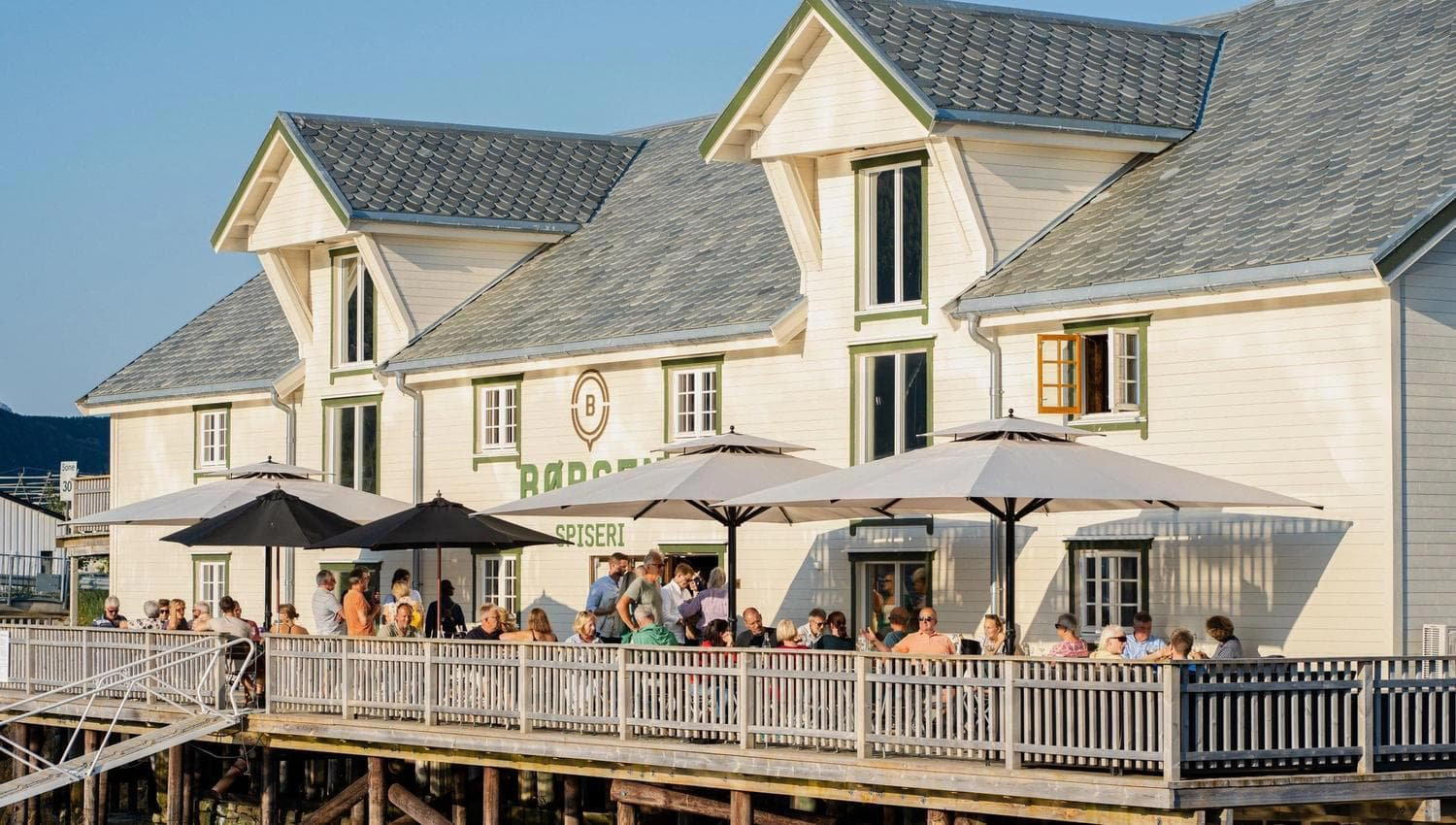
Hotels in Svolvær
Browse all →
Details
- Casual
- Cozy
- Casual Hangout
- Family
- Waterfront
- Standalone
- Local Sourcing
- Waterfront
- A La Carte
- Vegetarian Friendly
Casual, conversational Chinese dining in the heart of Svolvær by the quay promenade.