Our verdict
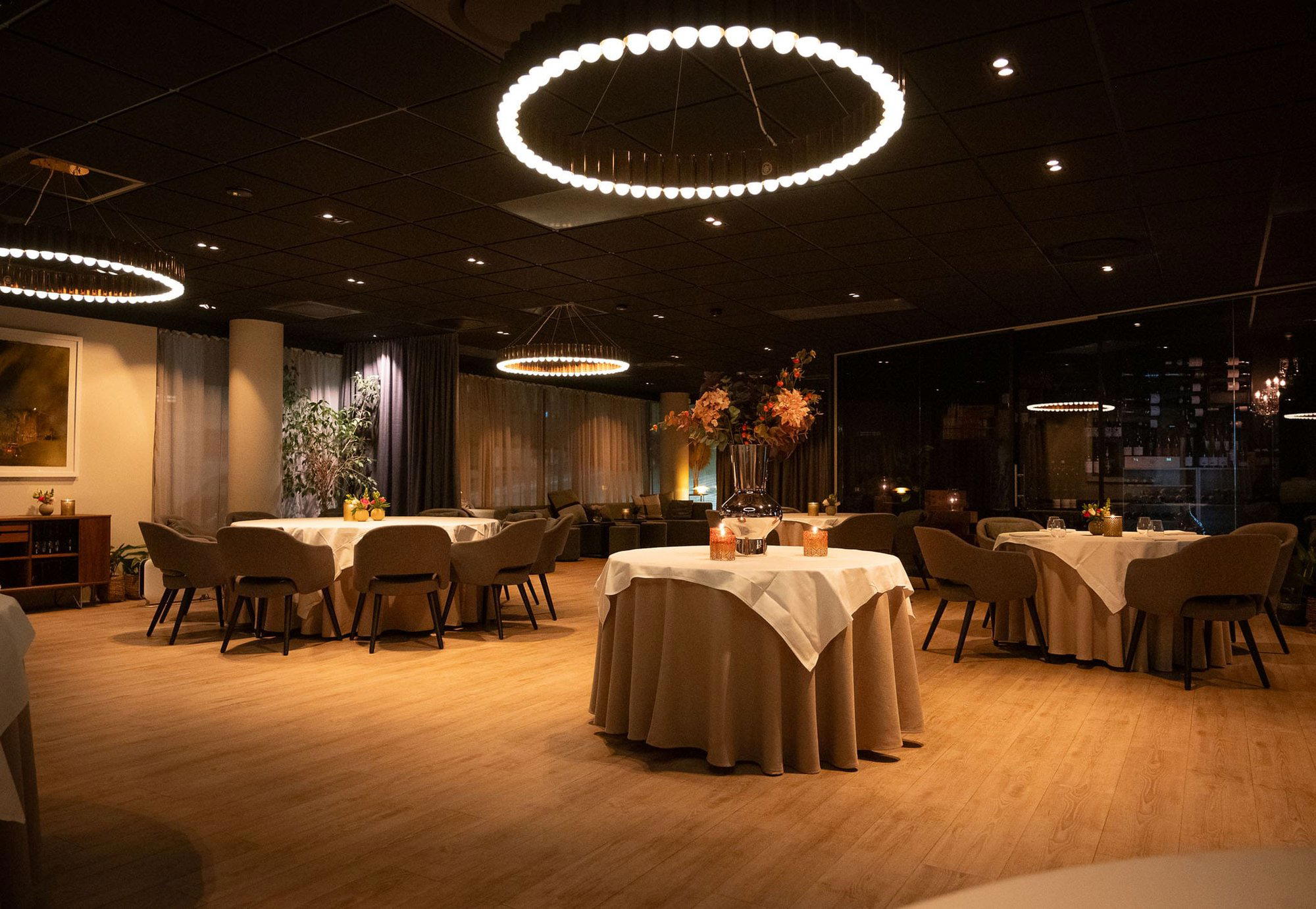
Umami Harstad is a formal, conversational dinner room for modern Nordic seasonal fine dining, with an open kitchen, sommelier-led drinks, and seasonal veal, rhubarb dessert, and game dishes.

Pearl is the En Primeur Club membership app, where members save venues, book tables and use the concierge.
The menu
What to order
- Seasonal veal with lovage
- Rhubarb dessert
- Game and mutton dishes
Harstad at the Table: Sourcing in Norway’s Far North
Harstad sits on the island of Hinnøya, roughly 250 kilometres north of the Arctic Circle, in a stretch of coastal Norway where the supply chain for a serious kitchen looks nothing like it does in Oslo or Bergen. The sea here is cold enough and clean enough to produce shellfish and finfish that arrive at a restaurant address with a provenance most southern Norwegian kitchens have to engineer at considerable cost. That geography is the starting point for understanding what Umami Harstad, at Hans Egedes gate 12, is attempting to do. It occupies a position in Harstad’s dining scene that is less common than it sounds: a restaurant that takes the name “umami” not as a marketing device but as a structural commitment to depth of flavour derived from local sourcing rather than imported technique.
The address itself is within the compact commercial centre of Harstad, a city of around 25,000 that functions as a regional hub for the Tromsø county interior. Arriving on foot from the harbour, the street is more workaday than atmospheric, which is consistent with how serious northern Norwegian kitchens tend to present themselves. The region has little appetite for the kind of designed arrival sequence you find at destination restaurants further south. What you get instead is a directness that mirrors the sourcing logic: the product is the point.
The Sourcing Argument in Arctic Norwegian Cooking
Norway’s New Nordic movement, anchored by places like Maaemo in Oslo and RE-NAA in Stavanger, built its critical reputation on exactly this kind of argument: that the raw materials of the Nordic coastline and interior, handled with precision and restraint, produce results that imported luxury ingredients cannot replicate. What distinguishes kitchens in the far north from their Oslo-tier counterparts is proximity. The distance between the boat and the plate is shorter in Harstad than almost anywhere in Norway with a serious dining scene. Skrei cod from the Lofoten waters, king crab from the Barents Sea corridor, reindeer and game from the Troms interior: these are not “local sourcing” as a marketing posture. They are the default supply chain of a kitchen operating this far north, provided the kitchen bothers to use them.
That distinction matters when placing Umami Harstad in its regional context. Compared to the multi-course tasting menus at FAGN in Trondheim or the landscape-referencing plates at Gaptrast in Bergen, a Harstad kitchen operates without the institutional framework of a major city food scene behind it. There is no cluster of peer restaurants driving competitive pressure upward, no culinary school pipeline, and fewer international visitors generating demand for the kind of tasting menu format that supports high per-cover investment. What exists instead is a local customer base that expects honest product and a sourcing geography that, if used well, more than compensates for the structural disadvantages of operating in a city this size.
For context on how far northern Norwegian kitchens can push the sourcing argument, Anita’s Sjomat in Lofoten and Fiskekrogen in Henningsvær have both built reputations on product-first simplicity in settings with even less urban infrastructure than Harstad. The model works when the sourcing is genuine and the kitchen has the discipline to stay out of the product’s way.
What “Umami” Signals in a Northern Norwegian Context
The term umami, now widely used in restaurant naming across Scandinavia and beyond, carries a specific implication when applied in a coastal Arctic context. Umami concentration, the savoury depth that results from amino acid accumulation, occurs naturally in aged, fermented, and slow-cooked preparations, and in certain raw materials at the far end of cold-water maturation cycles. Norwegian brown cheese, fermented fish preparations, and aged coastal shellfish all carry high umami loads without any intervention beyond correct handling. A kitchen that uses the term in its name in this geography is, at minimum, signalling awareness of that biochemistry, and ideally building a menu logic around it.
That framing connects Umami Harstad to a broader trend in Nordic kitchens that runs parallel to the headline tasting-menu scene: a renewed focus on fermentation, ageing, and the extraction of depth from local materials rather than the application of imported luxury. It is a less expensive model to execute and, in the right hands, a more honest one. Restaurants like Under in Lindesnes and Hardanger House in Jondal have demonstrated that Norwegian kitchens outside the major urban centres can build serious reputations on exactly this kind of material intelligence.
Harstad in the Wider Northern Norway Dining Map
For travellers moving through northern Norway, Harstad is a logical stop on an itinerary that might include Aurora Restobar in Kirkenes to the northeast or Børsen Spiseri in Svolvær and Underhuset Restaurant in Reine in the Lofoten archipelago. The region as a whole represents a different kind of Nordic dining argument than the one being made in Oslo or Trondheim: less conceptually ambitious at the tasting-menu level, but often more directly connected to the raw materials that the tasting-menu version is trying to evoke. Harstad’s restaurant scene sits within that regional pattern, with Umami Harstad holding a position as one of the more considered addresses in a city where the competition is limited.
For broader context on northern Norwegian dining, Brasserie 8622 in Mo i Rana and Karoline Restaurant in Ramberg offer points of comparison on how kitchens in mid-sized northern Norwegian towns approach the balance between local sourcing and broader menu ambition. Experience Restaurant in Steinkjer and Elysée in Voss show how the same sourcing logic plays out in different Norwegian regional contexts. For readers interested in how the argument scales internationally, Le Bernardin in New York City and Atomix in New York City represent the high-investment end of the product-focused tasting menu format.
Planning a Visit
Harstad is accessible by coastal ferry, regional flight via Harstad/Narvik Airport Evenes (EVE), or by road from Tromsø, approximately two hours south. The city’s restaurant scene is compact, and Umami Harstad at Hans Egedes gate 12 sits within walking distance of the central harbour. Given Harstad’s size and the limited number of serious dining options, reservation capacity at the better addresses tends to be modest; contacting the restaurant directly in advance of a visit is advisable, particularly during the northern lights season from October through March and the midnight sun period from late May through July, both of which drive increased visitor numbers to the region. Our full Harstad restaurants guide covers the broader dining scene across the city.
Frequently asked questions
Is Umami Harstad good for families?
Harstad is a small city on Hinnøya with a community-oriented dining culture, and restaurants here typically serve a broad local clientele rather than a narrow demographic. The Arctic Norwegian dining context generally leans toward relaxed, produce-driven formats rather than formal tasting-only environments.
How would you describe the vibe at Umami Harstad?
Harstad sits roughly 250 kilometres north of the Arctic Circle, which shapes the pace and character of dining there: unhurried, seasonally conscious, and anchored in the landscape's own logic. Restaurants in this part of Norway tend toward intimate room counts and a local regular crowd rather than tourist-facing theatrics. Umami Harstad, at Hans Egedes gate 12, operates within that northern Norwegian register, specific atmospheric details are best confirmed with the venue ahead of your visit.
What kind of cuisine does Umami Harstad focus on, and how does it fit into the northern Norway dining scene?
The name Umami applied in a coastal Arctic setting like Harstad points toward a kitchen interested in depth of flavour through local fermentation, aged fish, seaweed, and cold-water shellfish, the ingredient categories that give northern Norwegian cooking its distinct profile. Harstad sits within a regional circuit that includes Aurora Restobar in Kirkenes to the northeast and the broader Tromsø dining scene to the south, placing Umami Harstad at Hans Egedes gate 12 in a small but growing cohort of far-north Norwegian restaurants building on New Nordic principles outside the major cities.
What's the must-try dish at Umami Harstad?
What the name does signal is a focus on umami-forward cooking in a coastal Arctic context, where the ingredient list almost certainly includes cold-water fish, shellfish, and foraged components that define the New Nordic far-north pantry. Contact the restaurant at Hans Egedes gate 12 in Harstad for current menu information before your visit.
Where is Umami Harstad located?
Umami Harstad is located at Hans Egedes gate 12, 9405 Harstad, Norway, Harstad.
Should I book Umami Harstad in advance?
Harstad is a city of around 25,000 people, and serious restaurants at this latitude serve a compact local market rather than a high-turnover tourist volume, which means the better tables fill quickly despite the smaller population base. Booking ahead is advisable, particularly in summer when northern Norway sees extended daylight and increased visitor traffic along the coastal ferry routes. Reach the venue at Hans Egedes gate 12 to confirm current reservation policy.
What makes Umami Harstad worth seeking out?
Harstad is not on the mainstream Norwegian restaurant circuit that routes through Oslo, Bergen, or Tromsø, which means Umami Harstad operates in a part of the country where serious cooking has to justify itself on ingredient sourcing and local identity rather than destination foot traffic. That constraint tends to produce sharper, more focused cooking in the New Nordic tradition. For travellers on a northern Norway itinerary, Hans Egedes gate 12 represents a concrete reason to schedule time in Harstad rather than pass through.
Comparison Snapshot
Comparable venues nearby, for context on price, style, and recognition.
| Venue | Cuisine | Price | Notes |
|---|---|---|---|
| Umami HarstadThis venue (the venue you are viewing) | Modern Nordic Seasonal Fine Dining | $150–200 | Not listed |
| Kjerag Panoramic Restaurant | Norwegian Cafe Fare | Not listed | Lysebotn |
| Ni Hao | Chinese and Asian | Not listed | Svolvær |
| Fiskeriet | Norwegian Seafood | $20–30 | Gardermoen Airport |
| Gabba Restaurant | Arctic Nordic Grill | $50–100 | Kirkenes |
| Restaurant Bro | Modern Norwegian Coastal Gastronomy | Not listed | city center |
Details
- Elegant
- Intimate
- Sophisticated
- Cozy
- Special Occasion
- Celebration
- Date Night
- Open Kitchen
- Standalone
- Sommelier Led
- Farm To Table
- Local Sourcing
- Set Menu
- Tasting Menu
- Wine Pairing
- Champagne
- Gluten Free Options
- Allergy Accommodating
Current opening hours
- Monday
- Closed
- Tuesday
- Closed
- Wednesday
- 6:30 PM–12 AM
- Thursday
- 6:30 PM–12 AM
- Friday
- 6:30 PM–12 AM
- Saturday
- 6:30 PM–12 AM
- Sunday
- Closed
Hours can change for holidays and private events. Hours as of .
Elegantly designed interior emphasizing comfort with an inviting atmosphere that allows diners to immerse themselves in the gastronomic experience while observing the chefs at work.