Our verdict
Brasserie 8622 sits on Fridtjof Nansens gate in Mo i Rana, a town that sits closer to the Arctic Circle than to Oslo and whose food scene reflects that geographic reality. In a region where serious dining has long meant driving south, a brasserie at this address represents something worth paying attention to. Check current hours and booking directly with the venue before visiting.

Pearl is the En Primeur Club membership app, where members save venues, book tables and use the concierge.
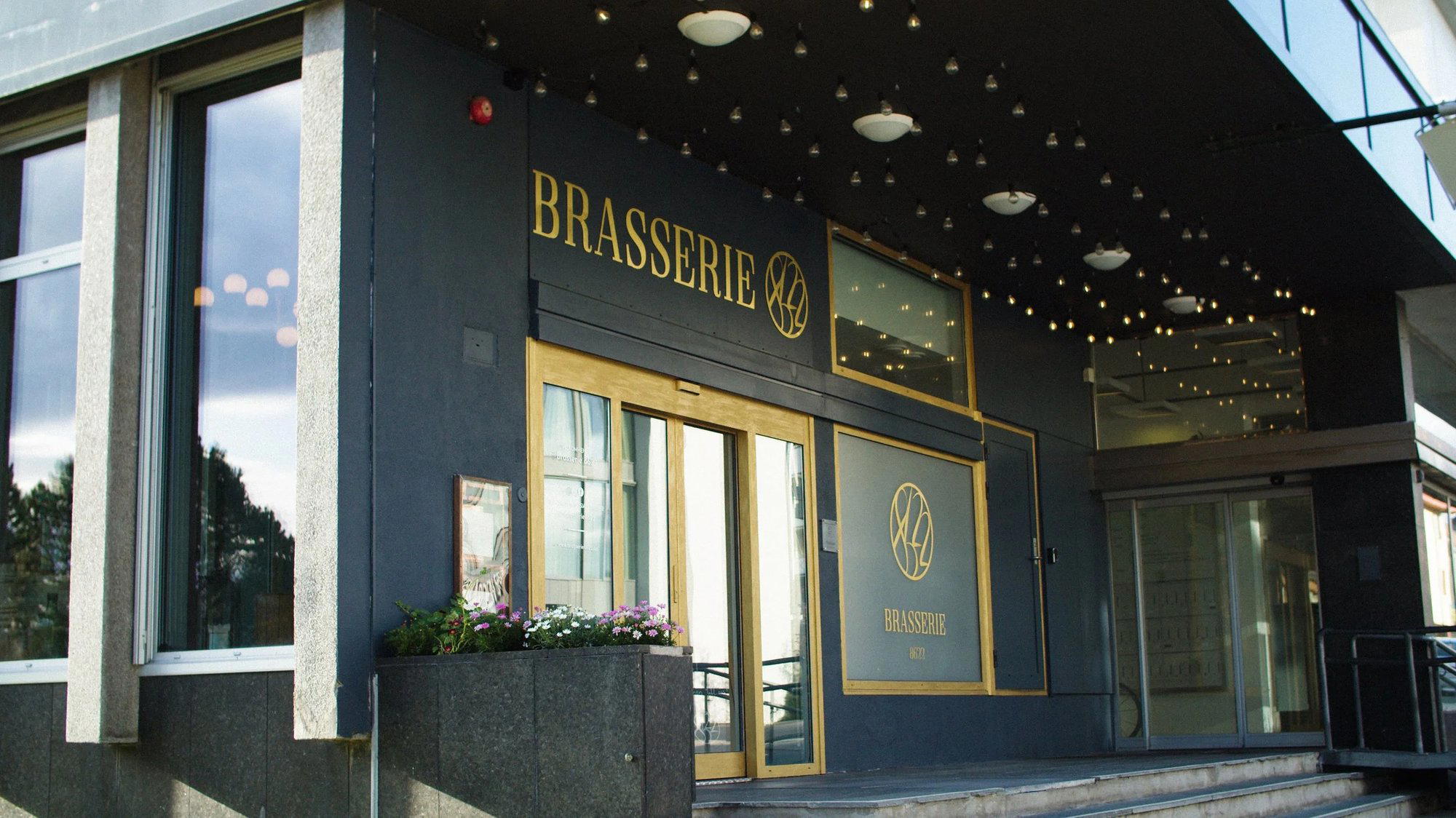
Dining at the Edge of the Arctic: Mo i Rana's Brasserie 8622
Fridtjof Nansens gate runs through a town that most Norwegians associate with steel industry history and the Svartisen glacier rather than restaurant reservations. Mo i Rana sits roughly 30 kilometres south of the Arctic Circle, which means the ingredients available to any kitchen here are shaped by conditions that chefs further south rarely contend with: a short growing season, cold-water fisheries in the Ranfjord, and a food culture built around preservation, function, and the rhythms of the far north. When a brasserie opens at street level in this context, the question worth asking is not whether it fits a recognisable urban dining template, but how it positions itself against the actual larder of the region.
For broader context on how serious Norwegian dining has developed beyond Oslo, see our full Mo i Rana restaurants guide, which maps the town's dining options against the wider Helgeland region.
What the Arctic Supply Chain Means on the Plate
Norway's fine and casual dining scenes share a foundational advantage: proximity to some of the most carefully managed cold-water seafood in the world. The cod, halibut, and shellfish pulled from northern Norwegian waters carry a different fat content and texture than their southern counterparts, a function of water temperature and feeding conditions rather than any kitchen technique. In Mo i Rana's case, the Ranfjord connects directly to the Norwegian Sea, which means local supply lines for seafood can, in principle, be shorter than those feeding restaurants in Bergen or Stavanger.
This is the sourcing logic that defines the most credible northern Norwegian kitchens: not importing the assumptions of urban Scandinavian cuisine wholesale, but working with what the latitude actually produces. The country's most awarded restaurants, including Maaemo in Oslo and RE-NAA in Stavanger, have built reputations in part by treating Norwegian ingredient provenance as a competitive asset rather than a limitation. Both operate at the €€€€ tier with New Nordic frameworks that foreground seasonal and regional sourcing. A brasserie in Mo i Rana is working in a different register and at a different price point, but the underlying sourcing logic of the far north remains the same: the closer you are to the source, the more the quality argument works in your favour.
The Brasserie Format in a Northern Town
The brasserie as a format occupies a specific middle ground in European dining: more formal than a café, less ceremony-driven than a full tasting-menu restaurant. In Scandinavian cities, this format has evolved to accommodate a cuisine that prizes clean presentation and ingredient legibility over classical French elaboration. In a town the size of Mo i Rana, the brasserie format carries additional weight because it often serves as the single venue where the town's dining ambitions are concentrated, functioning simultaneously as a neighbourhood restaurant, a business lunch destination, and the closest thing to a special-occasion room.
The address at Fridtjof Nansens gate 29 places the restaurant in the town centre, accessible on foot from Mo i Rana's main accommodation options. The practical details of hours, pricing, and booking are best confirmed directly with the venue, as the information is not currently published in accessible databases. Given the town's size, reservations for weekend evenings are advisable rather than optional.
Comparable northern Norwegian destinations, including Restaurant 1893 in Stokmarknes and Vianvang in Vågå, illustrate how kitchens operating in smaller Norwegian towns tend to anchor their identity in hyper-local sourcing and seasonal adaptation rather than in the chef-as-personality frameworks more common in urban markets.
Northern Norway's Dining Scene in Context
The Norwegian dining map has become meaningfully distributed over the past decade. Recognition has moved well beyond Oslo, with Michelin coverage extending to cities including Trondheim, where Speilsalen operates at the €€€€ tier, and Bergen, where Lysverket has built a sustained profile in Nordic cuisine. At the more architecturally ambitious end, Under in Lindesnes demonstrated that conceptually serious dining could establish itself in remote coastal Norway and attract international attention.
Further along the regional spectrum, Glime Restaurant in Hardanger Fjord and MiraBelle by Ørjan Johannessen in Bekkjarvik represent kitchens where the fjord and coastal environments function as active sourcing infrastructure rather than scenic backdrop. The pattern across these venues is consistent: distance from Oslo has stopped being a barrier to culinary seriousness, and in some cases has become the argument itself.
Mo i Rana sits further north than most of these reference points, which means the seasonal constraints are more pronounced and the sourcing network necessarily more compact. That compression can work for a kitchen or against it, depending on how the menu is designed. Kitchens like Buer Restaurant in Odda and Hvelvet in Lillehammer have found ways to make regional constraints legible on the plate; the question for Brasserie 8622 is how fully it commits to that northern identity versus operating as a more generalist brasserie that happens to be located at this latitude.
Planning Your Visit
Mo i Rana is reachable by direct flights from Oslo to Mo i Rana Airport (Røssvoll), which is served by domestic carriers on the route from Oslo Gardermoen. The town centre is a short drive from the airport. For visitors combining a meal here with wider regional travel, the Helgeland coast and Svartisen glacier are the primary draws, which means Brasserie 8622 fits naturally into an itinerary structured around the landscape rather than around dining alone. The venue's address on Fridtjof Nansens gate is central enough to reach without a vehicle if you are staying in the town centre. Confirm current opening hours directly before your visit, as hours in smaller Norwegian towns can shift seasonally. For a sense of how other regional Norwegian kitchens handle the transition between seasons, Smakeriet in Geilo and Lily Country Club in Kløfta offer useful reference points, as does Boen Gård in Tveit for estate-rooted sourcing models. For those interested in how the brasserie format scales at the highest level internationally, Le Bernardin in New York City and the collaborative format at Lazy Bear in San Francisco show what disciplined sourcing and format clarity can achieve at full commitment. Similarly, Smag & Behag Grimstad in Grimstad is worth consulting for how Norwegian kitchens further south handle the regional identity question at the casual end of the spectrum.
Frequently asked questions
Is Brasserie 8622 okay with children?
The brasserie format, as a category, generally sits between a casual café and a tasting-menu restaurant in terms of formality, which tends to make it more accommodating for families than fine-dining rooms. Brasserie 8622 is located on Fridtjof Nansens gate in Mo i Rana, a working town rather than a resort destination, so the clientele and setting are unlikely to skew formal. check the venue's official channels to confirm any specific policies around seating or menus for younger guests.
What should I expect atmosphere-wise at Brasserie 8622?
Mo i Rana is known primarily for its steel industry heritage and proximity to the Svartisen glacier, not for high-ceremony dining, and Brasserie 8622 sits within that context. The brasserie format signals a room designed for sustained, relaxed meals rather than occasion-driven theatre. Fridtjof Nansens gate is a central address in town, so the setting is urban and accessible rather than remote or destination-resort in character.
Is Brasserie 8622 worth visiting as a dining destination in Mo i Rana?
Mo i Rana has no documented Michelin-starred restaurants, which makes Brasserie 8622 one of the few sit-down dining options with a named European format in a town of roughly 20,000 people. For travellers passing through on the way to Svartisen or along the Helgeland coast, it represents the most structured dining option in the immediate area. The brasserie format at this address on Fridtjof Nansens gate fills a gap in the local scene that would otherwise require driving to Bodø or Trondheim for comparable service.
What should I order at Brasserie 8622?
Northern Norway's position within one of the world's most carefully managed cold-water fisheries means seafood is a reasonable expectation at any serious brasserie in the region. For current menu information, reaching out to the venue at its Fridtjof Nansens gate address in Mo i Rana is the most reliable approach.
What part of town is Brasserie 8622 in?
Brasserie 8622 is located at Fridtjof Nansens gate 29, 8622 Mo i Rana, Norway, Mo I Rana.
Fast Comparison
Comparable venues nearby, for context on price, style, and recognition.
| Venue | Cuisine | Price | Awards | Notes |
|---|---|---|---|---|
| Brasserie 8622This venue (the venue you are viewing) | French Brasserie with Local Norwegian Ingredients | Not listed | Not listed | Not listed |
| Restaurant Bro | Modern Norwegian Coastal Gastronomy | Not listed | Not listed | city center |
| Thai City Wok | Asian Fusion Wok & Grill | Not listed | Not listed | Alesund |
| Rive Gauche | French Bistro | Not listed | Star Wine List | Øvre Bakklandet |
| Gammelbua Restaurant | Traditional Norwegian Seafood | $50–100 | Not listed | Reine |
| Anita's Sjomat | Traditional Norwegian Seafood Bar | $20–30 | Not listed | Sakrisøy |
Details
- Elegant
- Cozy
- Sophisticated
- Special Occasion
- Date Night
- Group Dining
- Business Dinner
- Private Dining
- Extensive Wine List
- Local Sourcing
- A La Carte
Current opening hours
- Monday
- Closed
- Tuesday
- 5–11 PM
- Wednesday
- 5–11 PM
- Thursday
- 5–11 PM
- Friday
- 5 PM–2 AM
- Saturday
- 5 PM–2 AM
- Sunday
- Closed
Hours can change for holidays and private events. Hours as of .
Nice, pleasant atmosphere in newly renovated premises with stylish interior, good sound attenuation despite being busy, and a warm, informal feel.