








3 Michelin Stars · La Liste Top Restaurants · Star Wine List
Our verdict
RE-NAA holds three Michelin stars in Stavanger, placing it among Norway's small group of fine-dining addresses that have sustained the country's New Nordic reputation beyond Oslo. Chef Sven Erik Renaa's kitchen operates Thursday through Saturday, with La Liste scoring it 94 points in 2026 and Les Grandes Tables du Monde recognition confirming its position within Europe's upper tier of creative tasting-menu restaurants.

Pearl is the En Primeur Club membership app, where members save venues, book tables and use the concierge.
The menu
What to order
- Cured squid tagliatelle with seaweed and black fermented garlic
- Grilled scallop with sea buckthorn and pumpkin sauce
- Sea urchin with shrimp and finger limes
Where Stavanger Sits in Norway's Fine-Dining Map
Norway's three-star Michelin count is short. Maaemo in Oslo built the international case for Norwegian haute cuisine over the past decade; RE-NAA, operating out of Nordbøgata 8 in Stavanger's city centre, is one of the very few addresses outside the capital that has reached and held the same ceiling. The contrast matters. Oslo carries the weight of Scandinavian culinary reputation by default, with press attention and visiting-critic traffic concentrated there. Stavanger, an oil-industry city on the southwest coast with a relatively compact dining scene, has produced a three-star kitchen largely on its own terms, without the institutional scaffolding of a capital.
That positioning places RE-NAA in an interesting comparative set. Within Norway, the relevant peers are FAGN in Trondheim, Under in Lindesnes, and Iris in Rosendal, each working within the New Nordic tradition but from different regional starting points. Across the wider Scandinavian region, the frame extends to Geranium in Copenhagen and VYN in Simrishamn, both operating at a similar awards tier and price point. RE-NAA's 2026 La Liste score of 94 points, up from 77 points the previous year, signals upward momentum within that peer group.
New Nordic Through a West Norwegian Lens
The New Nordic framework that defines RE-NAA's cuisine is now old enough to have internal divergence. What began as a set of manifesto principles around locality, fermentation, and seasonal restraint has fractured into distinct regional expressions. Coastal Norway's version is shaped by access to cold-water fish, shellfish, and a foraging tradition tied to the country's fjord geography. The southwestern coastline around Stavanger gives a kitchen like RE-NAA a different larder than, say, a forest-proximate inland address, heavier on seafood, lighter on the root-vegetable austerity that sometimes defines New Nordic cooking further inland.
The editorial tradition that the cooking sits within is not the open-faced sandwich lunch culture that defines everyday Danish or Norwegian eating, rye bread, pickled herring, leverpostei, the quiet ritual of the cold table. RE-NAA operates at the far end of the formality spectrum from that tradition, translating similar source ingredients into a multi-course evening format. The connection to smørrebrød and the Norwegian cold-table heritage shows up not in the format but in the ingredient logic: preserved fish, aged dairy, foraged elements, and the principle that restraint applied to quality raw material is a complete culinary statement in itself. Where a smørrebrød counter might express that principle through simplicity and precision on rye bread, a three-star kitchen expresses it through technique density and sequencing across an evening menu.
The Evening Format and Atmosphere
RE-NAA opens Thursday through Saturday from 6 pm, closing at 1 am, and remains closed Sunday through Wednesday. That four-night-per-week operation is common among European fine-dining kitchens working at this awards tier; it concentrates service and maintains kitchen consistency across a smaller number of covers. The late closing time of 1 am suggests the format extends well past a two-hour dinner, consistent with multi-course tasting menus at this price range (€€€€) that typically run three to four hours including wine service.
Approaching a room that operates this way, a small city, a three-star address, a Thursday-through-Saturday schedule, the physical experience tends toward concentration rather than spectacle. Stavanger's dining scene at this level is not trying to match the scale or theatricality of a major capital. Hermetikken and Sabi Omakase Stavanger represent two other high-end formats in the same city, both operating in the €€€€ tier. The overall density of serious dining in Stavanger is low relative to population, which means RE-NAA carries a disproportionate share of the city's international dining identity.
Awards Architecture and Critical Standing
RE-NAA holds three Michelin stars in both 2024 and 2025, indicating sustained performance rather than a single strong year. The Les Grandes Tables du Monde recognition in 2025 adds a second major institutional endorsement; that organisation tends to weight classical technique and service coherence alongside creativity, suggesting the kitchen scores well on both axes. The Opinionated About Dining ranking, #152 in Europe for 2025, up from #212 in 2024, with a Highly Recommended flag for new restaurants in 2023, tracks a consistent upward trajectory through the OAD peer-review system, which draws assessments from a network of serious diners rather than a single publication's critics.
La Liste aggregates scores from multiple major guides and publications into a single ranking; a jump from 77 to 94 points in a single year represents a substantial move within a compressed scoring band at the top of the list. At that score, RE-NAA sits in the same La Liste tier as several restaurants in Paris and Tokyo that operate with considerably more international press infrastructure around them. For a restaurant in a Norwegian city of roughly 145,000 people, that position within the ranking reflects well on the sustained level of the kitchen's output.
Within Stavanger's dining tier, the awards gap between RE-NAA and its near-peers is significant. K2 and BELLIES operate at €€€ and represent serious cooking without the same awards architecture. Bravo, operating at €€ in the Norwegian category, sits in an entirely different tier.
Norwegian Fine Dining Beyond Oslo
The broader Norwegian fine-dining picture is worth mapping for anyone planning a trip around it. The country has a small number of addresses working at the international awards level, spread across geography in a way that makes route planning relevant. Oslo anchors the circuit with Maaemo. RE-NAA anchors the southwest. Gaptrast in Bergen and Boen Gård in Tveit extend the map further. The distances between these cities are substantial enough that combining two or three of them in a single trip requires planning around transport, particularly given that RE-NAA's Thursday-through-Saturday window limits scheduling flexibility.
Stavanger is served by direct flights from several European hubs and connects to Bergen by ferry across the Boknafjord, a route that takes roughly two and a half hours. Visitors combining RE-NAA with other Norwegian fine-dining addresses typically route through Oslo or use Stavanger as a standalone destination, staying at least two nights to allow for a single dinner booking. The city's other dining options, covered in our full Stavanger restaurants guide, extend across a range of price points and styles that can fill a short stay around a single high-end evening. Further guides covering hotels, bars, wineries, and experiences in Stavanger provide additional planning depth for the surrounding visit.
Planning Your Visit
Chef Sven Erik Renaa leads the kitchen at RE-NAA, located at Nordbøgata 8 in central Stavanger. The restaurant operates Thursday through Saturday, with dinner service beginning at 6 pm and the kitchen running until 1 am, which reflects the extended format typical of tasting-menu dining at this price tier. Reservations at three-star addresses in this awards bracket typically require advance booking of several weeks to months, and the four-night operating window narrows the scheduling options further, anyone travelling specifically for this dinner should secure a booking well before confirming travel arrangements. The restaurant's website is the authoritative source for current booking availability and any format or pricing updates.
Frequently asked questions
What is the vibe at RE-NAA?
RE-NAA sits at the formal end of Stavanger's dining spectrum. Three Michelin stars, a Les Grandes Tables du Monde award, and a La Liste score of 94 points in 2026 place it in the same bracket as major European fine-dining rooms, despite the city's relatively modest scale. The €€€€ price point and Thursday-through-Saturday schedule signal an evening format built around a multi-course tasting menu with considered service pacing, closer to a Copenhagen or Paris fine-dining room in rhythm than to a casual Norwegian dinner. Expect a composed, attentive room rather than a loud or informal one.
What should I order at RE-NAA?
At a three-star kitchen operating a tasting-menu format in the New Nordic tradition, the menu is not typically à la carte, the kitchen sets the sequence. Chef Sven Erik Renaa's approach draws on the coastal larder of southwest Norway, where cold-water seafood and locally sourced ingredients define the New Nordic expression of the region. The OAD recognition and La Liste trajectory both suggest consistent kitchen output, meaning the menu as a whole is the order rather than any individual dish within it.
Would RE-NAA be comfortable with kids?
At €€€€ and three Michelin stars in Stavanger, RE-NAA is not configured for young children.
Reputation First
| Venue | Cuisine | Price | Awards | Notes |
|---|---|---|---|---|
| RE-NAAThis venue (the venue you are viewing) | Modern Nordic Coastal Tasting Menu | $500+ | 3 Michelin Stars · La Liste Top Restaurants | Not listed |
| K2 | Modern Scandinavian Tasting Menu | Not listed | 1 Michelin Star · Star Wine List | Modern Cuisine |
| Sabi Omakase Stavanger | Modern Japanese Omakase with Nordic Influence | $200–300 | 1 Michelin Star · La Liste Top Restaurants | Sushi |
| BELLIES | Plant-Based Vegan Tasting Menu | $50–100 | Michelin Plate | Not listed |
| Bravo | Modern Norwegian Small Plates | $100–150 | Michelin Plate | Not listed |
| Hermetikken | Seasonal Nordic Fine Dining | Not listed | 1 Michelin Star · Star Wine List | Modern Cuisine |
Recognition history
Dated appearances from independent guides and award organizations, with the underlying list record or original source where available.
Michelin 3 Stars
Michelin
La Liste Top Restaurants
La Liste
Star Wine List
Star Wine List
Falstaff Restaurant - 100 Falstaff Points
Falstaff
Les Grandes Tables du Monde Member
Les Grandes Tables du Monde
Full recognition history (19 entries)
Opinionated About Dining Top Restaurants in Europe Ranked #135
Opinionated About Dining
White Guide Nordic Restaurants - Global Masters Level
White Guide
La Liste Top Restaurants
La Liste
Michelin 3 Stars
Michelin
Opinionated About Dining Top Restaurants in Europe Ranked #152
Opinionated About Dining
The Best Chef Two Knives
The Best Chef
World Culinary Awards Norway's Best Restaurant 2025 #1
World Culinary Awards
Michelin 3 Stars
Michelin
Opinionated About Dining Top Restaurants in Europe Ranked #212
Opinionated About Dining
Star Wine List
Star Wine List
Opinionated About Dining Top New Restaurants in Europe Highly Recommended
Opinionated About Dining
Star Wine List
Star Wine List
Star Wine List
Star Wine List
Star Wine List
Star Wine List
Continue exploring
More in Stavanger
Restaurants in Stavanger
All restaurants in Stavanger →
Bars in Stavanger
All bars in Stavanger →


RE-NAA
The wine
- Wine program
- Deep wine list
- Extensive wine list
- Sommelier-led
Details
- Elegant
- Intimate
- Sophisticated
- Modern
- Special Occasion
- Date Night
- Celebration
- Open Kitchen
- Chefs Counter
- Waterfront
- Extensive Wine List
- Sommelier Led
- Local Sourcing
- Sustainable Seafood
- Farm To Table
- Waterfront
- Tasting Menu
- Set Menu
- Wine Pairing
- Local Norwegian Wines
- Gluten Free Options
- Pescatarian Friendly
- Allergy Accommodating
Current opening hours
- Monday
- Closed
- Tuesday
- Closed
- Wednesday
- 5:30 PM–1 AM
- Thursday
- 5:30 PM–1 AM
- Friday
- 5:30 PM–1 AM
- Saturday
- 5:30 PM–1 AM
- Sunday
- Closed
Hours can change for holidays and private events. Hours as of .
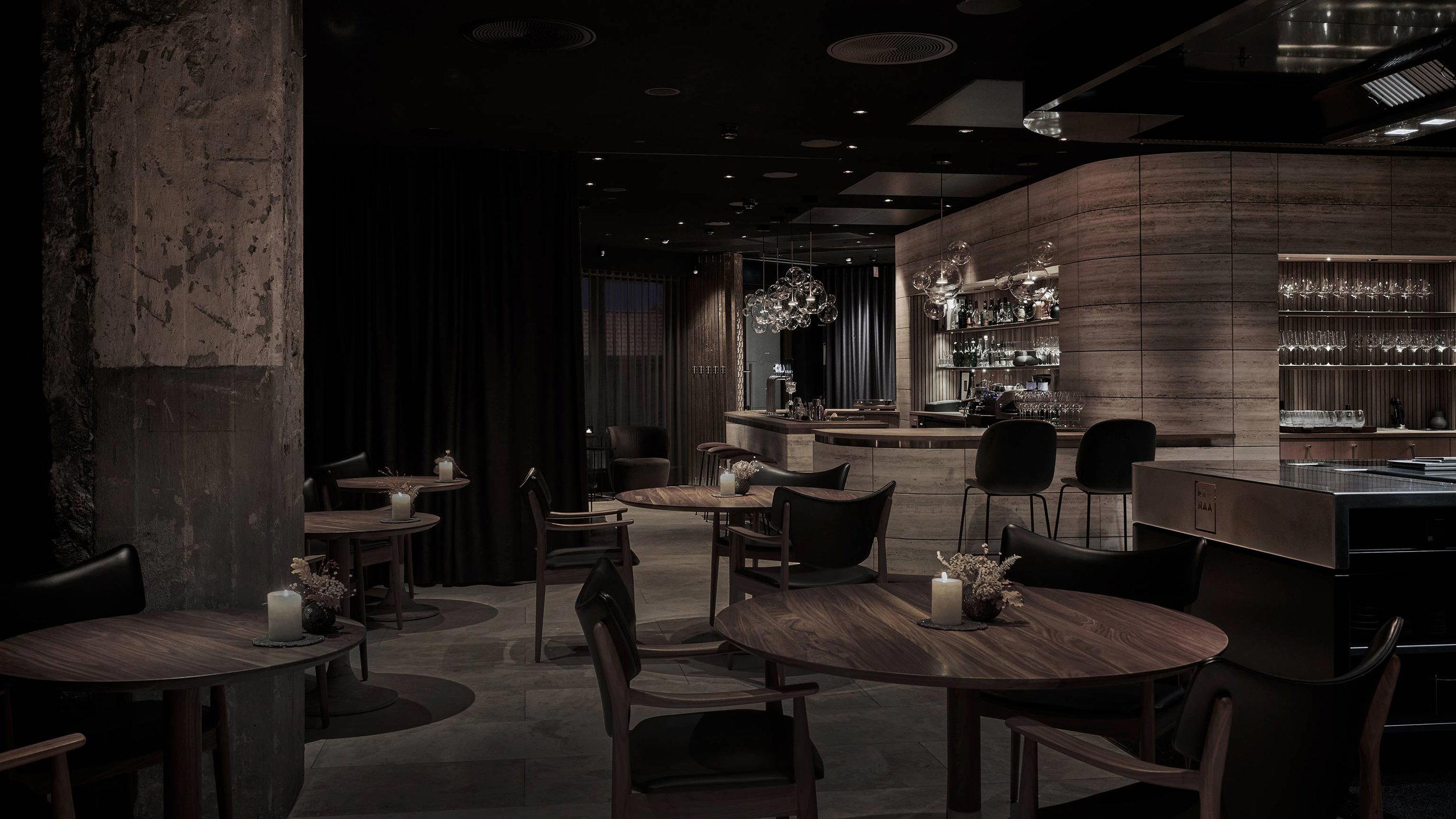
Modern Scandinavian minimalism with warm brown and beige tones in the lounge contrasting with a dramatic black dining room; brightly lit open kitchen provides theatrical focal point; intimate tables with wooden tops and no tablecloths create refined, contemporary elegance.