Our verdict
Experience Restaurant sits on the outskirts of Steinkjer in Trøndelag, a region that has quietly become one of Norway's most compelling areas for ingredient-driven cooking. With sparse public data and a rural address at Såseggvegen 399, it occupies the niche of destination dining away from Norway's larger culinary centres, a format where the surrounding land tends to be as much the point as the plate.

Pearl is the En Primeur Club membership app, where members save venues, book tables and use the concierge.
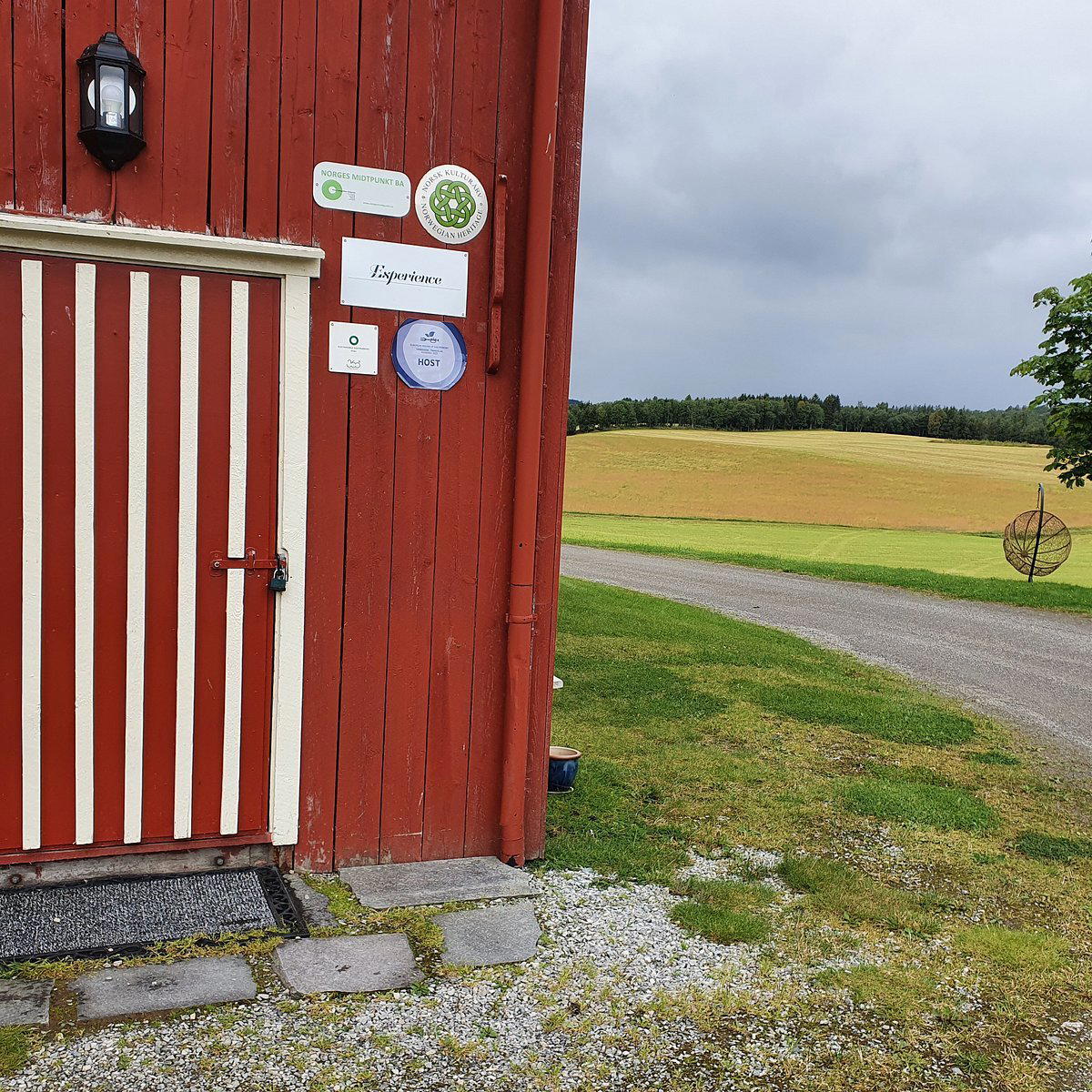
Arriving in Trøndelag's Culinary Interior
The road out to Såseggvegen 399 tells you something before you sit down. Steinkjer sits at the head of the Trondheimsfjord, roughly 130 kilometres north of Trondheim, in a part of Trøndelag that remains agricultural in the way that actually matters to a kitchen: working farms, intact river systems, and the kind of low-density land use that makes serious sourcing possible. Arriving at a restaurant this far from Norway's urban dining belt is itself a statement about what the meal intends to be. The surroundings are not incidental scenery; in this part of Norway, they are the supply chain.
Norway's fine dining conversation tends to anchor on Oslo and its New Nordic flagships, with Trondheim a secondary tier, see Speilsalen in Trondheim, and coastal destinations like RE-NAA in Stavanger and Lysverket in Bergen representing the west. The interior of Trøndelag, by contrast, has fewer institutional signals and more of the raw conditions that restaurants in those cities are paying premiums to reference: proximity to farms, forests, and water. Experience Restaurant operates inside that geography rather than importing from it.
What Trøndelag Actually Grows
The sourcing argument for Trøndelag is not abstract. The region produces some of Norway's most recognised lamb, Trøndersk lam is seasonally distinct, pasture-raised on upland terrain that gives the meat a characteristic lean density. The fjord system brings shellfish and fish within close reach. Inland, the forested zones around Steinkjer yield game, mushrooms, and the kind of foraged material that restaurants further south reconstruct from preserved or transported components. In late summer and autumn particularly, the raw ingredient pool available to a kitchen at this latitude and this remove from logistics hubs is arguably richer than what reaches the loading docks of Oslo's restaurant row.
This is the structural context that defines what ingredient-led cooking means in a place like Steinkjer. Where coastal Norway has long produced destination dining built around marine access, Under in Lindesnes being the most architecturally arresting example, MiraBelle by Ørjan Johannessen in Bekkjarvik a more intimate one, inland Trøndelag offers a different ingredient register: terrestrial, seasonal, heavily dependent on the calendar rather than the tide table. Restaurants that sit inside this geography inherit a distinct pantry, which shapes what ends up on the plate in ways that a kitchen importing regional produce cannot fully replicate.
The Format of Destination Dining at Distance
Rural destination restaurants across Norway tend to fall into two structural types. The first anchors to a farm estate or historic property and draws identity from that physical heritage, Boen Gård in Tveit and Restaurant 1893 in Stokmarknes both work this way. The second is less defined by a building's history than by the decision to operate in a specific natural environment, letting the surrounding land determine the menu's character season by season. Both formats ask something of the diner: you travel to reach them, and that travel is part of how the meal accumulates meaning.
Experience Restaurant's address on Såseggvegen places it in the second category. The name itself functions less as a descriptor of style than as a declaration of intent: the visit is the point, and what happens at the table is inseparable from the effort involved in getting there. Across Norway, a small number of restaurants have built serious followings on exactly this logic, Vianvang in Vågå, Smakeriet in Geilo, and Buer Restaurant in Odda are comparable examples of kitchens that use remoteness as a filter rather than a disadvantage.
Planning the Visit
Steinkjer is accessible by train from Trondheim on the Nordlandsbanen line, a journey of around two hours. By car from Trondheim, the E6 northward covers the distance in similar time, with the road running through the kind of open Trøndelag farmland that contextualises the sourcing conversation before you arrive. For visitors combining this with broader Norwegian fine dining, Glime Restaurant in Hardanger Fjord and Hvelvet in Lillehammer represent other points on a route through Norway's non-urban dining tier. Oslo anchors remain the logical starting point for any such trip, with Maaemo in Oslo the reference-point for what New Nordic sourcing looks like at peak institutional recognition.
Because public data on booking method, operating hours, and price is not available for Experience Restaurant, direct contact via the venue or a local concierge is the practical step before planning around this address. For further context on the Steinkjer dining scene, our full Steinkjer restaurants guide covers the broader options in the area.
For international points of comparison on what destination dining away from a major city can achieve, Lazy Bear in San Francisco and Le Bernardin in New York City represent the urban counterpoint: high-capital, high-density environments where the sourcing story has to be actively constructed. In Steinkjer, the ingredients are already there. The question is what the kitchen does with the access.
Elsewhere in Norway's smaller-city dining circuit, Smag & Behag Grimstad in Grimstad and Lily Country Club in Kløfta demonstrate how kitchens outside the Oslo-Bergen-Stavanger triangle are building distinct identities on local terms rather than metropolitan templates.
Frequently asked questions
Would Experience Restaurant be comfortable with kids?
The venue sits on Såseggvegen 399 outside Steinkjer, a rural setting that suits unhurried visits rather than quick family meals. Destination restaurants in this format typically run longer tasting-focused sittings, which can be a poor fit for young children. Confirming directly with the restaurant before booking with kids is the sensible step, as the format and pacing are not designed around a children's menu model.
What's the overall feel of Experience Restaurant?
The address alone sets expectations: Såseggvegen 399 is a road-end destination outside Steinkjer, roughly 130 kilometres north of Trondheim, which filters the room toward guests who have planned and travelled deliberately. The feel is closer to a Nordic farmhouse sitting than an urban dining room, unhurried, place-specific, and structured around what Trøndelag's interior produces seasonally. It is not a drop-in venue.
Is it worth travelling from Trondheim specifically to eat at Experience Restaurant in Steinkjer?
Steinkjer is around two hours from Trondheim by train on the Nordlandsbanen line, and the E6 northward covers the same distance by car in roughly 90 minutes. That commitment places Experience Restaurant in the category of deliberate destination dining rather than a city evening out. Visitors already heading into Trøndelag's interior, or those specifically tracking Norwegian regional-produce cooking, will find the detour coherent, but the journey requires advance planning and a confirmed reservation.
What should I eat at Experience Restaurant?
Trøndelag's most recognised produce centres on lamb, Trøndersk lam is among Norway's most season-specific meats, alongside the fjord fish and coastal shellfish that the region's latitude and cold waters yield. Any kitchen operating at this address and drawing from local supply would orient its menu around these anchors. Specific current dishes should be confirmed with the restaurant directly, as seasonal menus shift with availability.
What's Experience Restaurant's location?
Experience Restaurant is located at Såseggvegen 399, 7718 Steinkjer, Norway, Steinkjer.
A Quick Peer Check
Comparable venues nearby, for context on price, style, and recognition.
| Venue | Cuisine | Price | Awards | Notes |
|---|---|---|---|---|
| Experience RestaurantThis venue (the venue you are viewing) | Scandinavian Fine Dining Tasting Menu | $150–200 | Not listed | Not listed |
| Ekebergrestauranten | Modern Scandinavian & Norwegian | $100–150 | Not listed | Gamlebyen |
| Bula Neobistro | Modern Fusion Neobistro | Not listed | Star Wine List | city centre |
| Bula Bistro | Modern Scandinavian Neobistro | Not listed | Not listed | city centre |
| Brasserie Posten | Norwegian Brasserie | $30–50 | Not listed | Geiranger sentrum |
| Kombo | Modern Global Fusion | $100–150 | Star Wine List · Bartenders' Choice Awards Best Restaurant Winner | City Centre |
Experience Restaurant
The wine
- Wine program
- Deep wine list
- Extensive wine list
Details
- Rustic
- Intimate
- Cozy
- Elegant
- Special Occasion
- Date Night
- Historic Building
- Extensive Wine List
- Local Sourcing
- Organic
- Street Scene
- Tasting Menu
- Vegetarian Friendly
- Gluten Free Options
Current opening hours
- Monday
- Closed
- Tuesday
- Closed
- Wednesday
- 7 PM–2 AM
- Thursday
- 7 PM–2 AM
- Friday
- 7 PM–2 AM
- Saturday
- 7 PM–2 AM
- Sunday
- Closed
Hours can change for holidays and private events. Hours as of .
Rustic yet atmospheric dining space in a converted barn with cozy, intimate lighting and sweeping countryside views.